INTRODUCTION
Overview and Purpose
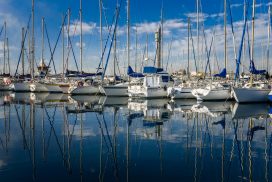
House Joint Resolution 448 requests the Virginia Department of Health (VDH) to study the feasibility of establishing No Discharge Zones (NDZs) for boats. NDZs require that boats equipped with installed or portable toilets cannot release toilet waste into the surrounding waters.
The resolution directs VDH to study the effect of boat discharge on the waters of the Commonwealth and the ability of the Commonwealth to meet current United States Environmental Protection Agency (USEPA) standards for the establishment of NDZs by:
1.) examining data regarding the extent of pollution loadings;
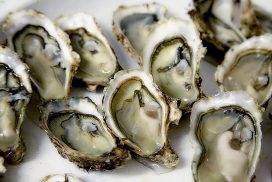
2.) considering sensitivity of affected waters with particular attention to the existence of productive or potentially productive shellfish areas, and;
3.) determining availability of operational pump-out facilities.
The Department is also directed to evaluate compliance with existing regulations and the feasibility of requesting additional federal moneys through the Clean Vessel Act (CVA).
Currently, it is legal to discharge treated waste from certain Marine Sanitation Devices (MSD) that provide treatment of sewage (types 1 and 2). Type 3 MSDs are holding tanks and must be pumped out at appropriate facilities throughout the state. MSDs are an arrangement of piping and tanks that handle sewage on boats for which specific functional standards have been promulgated by the U.S. Coast Guard.It is illegal to discharge any raw, untreated sewage overboard into any state bodies of water, and such discharge can only be done when boaters are three miles offshore or more in the territorial sea.
NDZs have far-reaching, positive implications. Through the establishment of NDZs, boaters would be required to safely dispose of their sewage waste in marine pump-out facilities or dump stations. No discharges of boat sewage waste, whether treated or untreated, would be allowed in these designated areas. The establishment of NDZs would improve overall water quality in Virginia which, in turn, would have positive results for the citizens of Virginia.
These benefits include:
1.) reduced potential incidence of illness due to recreational activities (swimming, etc.) in contaminated waters;
2.) reduced potential incidence of illness due to raw shellfish consumption;
3.) reopening of some portions of seasonally condemned shellfish areas, thus allowing the direct harvest of shellfish.
Should NDZs be established, an extensive educational effort would be necessary to make boaters aware of the need for no-discharge in those areas along with making them aware of the services available to protect the waters from sewage contamination.
METHODOLOGY
VDH will examine data related to the effects of pollution from boats on sensitive and productive waters of the Chesapeake Bay and its tributaries. The VDH will also determine the availability of operational marine holding tank pump-out facilities and dump stations in these waters and evaluate compliance with the Sanitary Regulations for Marinas and Boat Moorings (Marina Rules and Regulations) as promulgated by the State Board of Health. By this analysis, VDH will evaluate the possible establishment, through petition to the USEPA under the Clean Water Act (CWA), of NDZs in these waters.
Data from the Division of Wastewater Engineering Marina Program will be used to determine compliance with the Marina Rules and Regulations in the Chesapeake Bay region and the numbers and the locations of pump-out facilities now in place. The Division of Shellfish Sanitation will estimate the acreage that possibly could be reopened on a year-round basis if pump-out facilities were more widely available and used. The Virginia Marine Resources Commission (VMRC) will identify the productive and potentially productive shellfish growing areas that are presently seasonally condemned due to boating activity. A study of the literature on the effects of boat pollution will be carried out, and the specific standards and guidelines of the USEPA for the establishment of NDZs will be used to determine feasibility. These standards include pump-out facility locations, numbers, descriptions, hours of operation, vessel draft requirements, waste treatment information, and vessel population and usage information. Also of importance will be estimates of the number of boaters, amount of sewage released into the waters along with amount of Biological Oxygen Demand (BOD) and fecal coliform contribution, and other factors such as the chemical additives that are used by boaters as deodorizers and disinfectants.
An advisory committee was formed consisting of representatives from various state agencies and private organizations including the following: Chesapeake Bay Foundation, Department of Game and Inland Fisheries, Virginia Association of Marine Industries, Virginia Institute of Marine Science (VIMS), Chesapeake Bay Commission, Department of Environmental Quality (DEQ), and the VDH's Divisions of Wastewater Engineering and Shellfish Sanitation. The advisory committee conducted its first meeting on Thursday, May 25, 1995, to discuss initial ideas, anticipated content of the final report, and concerns. Future meetings to discuss progress are planned throughout the development of the study.
BACKGROUND/HISTORY
In 1967, a Virginia Marine Resources Study Commission found that Virginia had a serious and growing problem from boat and marina type pollution. This Commission concluded that water quality problems resulting from recreational boats using open waters were negligible, but serious water quality problems resulted from the activities associated with boats at marinas and other places where boats congregate. The Commission's recommendations included development of laws or regulations relative to the installation or operation of marine toilets on vessels. Other sources of sewage and pollutants associated with the use of boats could originate due to inadequate onshore sewage facilities at marinas. Such requirements were to be similar to the laws or regulations used by other states along the Atlantic seaboard. Subsequently, the Virginia State Water Control Board, now known as the DEQ, was charged with controlling boat pollution with specific and permissive legislative authority to control by regulation the discharge of sewage and other wastes from both documented and undocumented boats and vessels on all waters of the State. The State Water Control Board adopted these requirements as Regulation Number Five (5). The Study Commission recommended that VDH should adopt by regulation the minimum requirements for sewerage facilities adequate to serve the number of boats and people for which the marina or mooring facility was designed to accommodate. The marina rules and regulations were subsequently adopted by the State Board of Health to provide standards for onshore sanitary facilities at marinas and other places where boats are moored. Thus, the State of Virginia has established regulations that provide for NDZ designations.
The current DEQ Regulation Number 5 provides that:
1.) No human excrement shall be discharged from a vessel into State waters.
2.) All vessels with an installed toilet which are regularly moored in State shellfish growing waters shall be equipped with a holding tank.
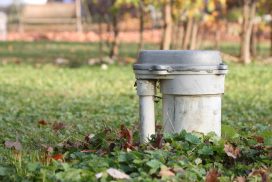
3.) All waste from sewage holding tanks and self-contained toilets shall be pumped or carried ashore for treatment in facilities which are approved.
However, this regulation is to become effective for all vessels on a body of water in the State only after USEPA has declared that body of water as a no-discharge area. The requirements imposed on states in order to obtain approval for NDZ designation are described in section 312 of the Federal Clean Water Act (CWA). The CWA provides that a state may petition the USEPA for a body of water to be designated as a no-discharge area, if adequate boat sewage holding tank pump-out facilities are provided. The DEQ and the VDH petitioned the USEPA to declare a portion of the Rappahannock River as a no-discharge area in 1979. Subsequent to this petition, the VDH, DEQ and USEPA received letters of opposition from representatives of marine trades and special interest groups which expressed concern that a precedent would be set and all vessels would be required to use sewage holding tanks. USEPA delayed ruling on the petition until completion of a study it had initiated on MSD federal requirements. Following completion of that study in 1984, USEPA requested that Virginia resubmit a new no-discharge petition in order to update information on the availability of holding tank pump-out equipment located in the petition area. This request included USEPA recommendations to decrease the scope of the petition by limiting the NDZ area requested. No action was taken on these recommendations as broader water quality concerns were being expressed for the entire Chesapeake Bay area at the time. Such concerns established other initiatives with a relatively higher priority than NDZ designation.
Extensive studies initiated by the USEPA and completed in 1985 documented a decline in water quality and a loss of natural resources for Chesapeake Bay waters. These reports sparked renewed public interest in the control of all pollution sources in the Chesapeake Bay area. Priorities were established by Federal and State agreements to investigate these concerns including the water quality impacts from boat usage. The VDH was requested to develop an educational program aimed at the boater and marina operator on the importance of properly protecting the waters of the Chesapeake from sewage contamination. Some of the concerns raised in the studies were addressed by making revisions to the marina regulations but others required that additional studies be conducted before the need for NDZs could be clearly established.
A two-phase study of the factors important to the consideration for designation of an area as NDZ was initiated using funds obtained from the National Oceanic and Atmospheric Administration (NOAA) through Virginia's Coastal Resources Management Program. The first phase of the study conducted by VIMS focused primarily on identification of significant aquatic resource areas. A review of other NDZ programs in various states was also completed. A full digitizing of environmental sensitivity index maps was needed to more easily locate and prioritize potential NDZ areas; this effort was not completed due to incompatible information sources. The second phase of the project developed through DEQ involved the work of a multi-agency committee to develop recommendations for NDZ priorities. The committee reviewed the environmental sensitivity index information, marina locations, boating data, location of existing pump-outs and dump stations during 1994, but deferred any final recommendations on NDZ designations until more extensive boat pollution educational efforts could be initiated.
Recently, the City of Virginia Beach inquired about the possibility of establishing a NDZ for Rudee Inlet and Lynnhaven. Although DEQ staff prepared a final report concerning the issue of NDZ environmental factors, the technical difficulties with the mapping information prevented development of positive recommendations for NDZ development. Thus, no action was taken on the Virginia Beach request.
During the revision of the marina regulations in 1987, the majority of marina operators voiced objections to several issues during the public hearings and in written comments to VDH. Operators opposed pump-out installations, expressing concern that the odor retardants used in boat sewage holding tanks would be detrimental to the operation of the on-site sewage disposal system, as well as sewage treatment systems. They also objected to the buffer zone criteria that the VDH utilizes to condemn shellfish beds around marinas for the taking of shellfish for human consumption. Various marina operators challenged the requirements to install pump-out facilities on the basis that boaters would not request to use the facility. To evaluate these objections, the Department initiated studies to address these areas of concern. As a result of study on educational needs, public information and boater educational material were subsequently published and distributed. In addition, a time transport hydraulic dispersion analytical model was developed by VIMS to establish buffer zones around marinas in a more scientific manner. A study of the effect of holding tank chemical additives was completed by the Virginia Water Resources Research Center; this study established that there was a relatively limited impact of holding tank chemicals when discharged to sewage treatment and disposal systems.
Over the past ten (10) years, VDH, working with the VIMS, has developed public information material concerning the protection of waters around marinas. This effort initially focused on the proper use of installed toilets and MSDs on boats. Previous water quality studies verified that pollution in marina waters increased significantly during periods of boating activity. However, the elimination of overboard discharges of sewage by boaters will require that adequate onshore sanitary facilities be provided. Also necessary is a commitment to protect water quality by both the marina management and the boating public. Thus, the Virginia public education program for promoting voluntary "no sewage discharge," included an encouragement for marina owners to provide reasonably available boat sewage pump-out equipment to serve the boating public.
To address both the issues of education and availability of pump-out service, the VDH conducted a summer educational program in the Lynnhaven Bay system in 1994. Field service agents were placed in this system 10 hours daily on Fridays, Saturdays and Sundays throughout the boating season from Memorial Day to Labor Day. Using brochures, informational talks and portable pump-out facilities, the field agents informed boaters and marina operators of the need to properly protect water quality. The field agents demonstrated the use of pump-out equipment by offering free pump-out service. Two portable pump-out units were used to persuade boaters to use proper pump-out equipment instead of overboard disposal. It is estimated that more than several thousand gallons of raw sewage were prevented from entering the Lynnhaven system during that boating season. It has been proposed to continue this highly effective educational effort in combination with the development of more comprehensive information sources to promote the proper onshore disposal of boat sewage and other wastes.
Virginia's approach to the development of a more comprehensive educational program involves use of the Virginia CVA Coordinating Committee as the framers of the major themes and concepts for voluntary no-discharge promotion. The final production of educational materials such as brochures, has been privatized and placed in the hands of professional advertising or promotional agencies. A new brochure was developed through the CVA Educational Program using the brochure developed for the Lynnhaven Bay project. This new brochure has been mailed to all boaters with Virginia addresses. Today, more than 300,000 boats and vessels use the Chesapeake Bay and other Virginia waterways and that number is growing rapidly each year. In fact, studies of population growth in the Chesapeake Bay area predict a thirty-five (35) percent increase in population along some portions of the Virginia-Maryland coastline by the year 2020. This additional shoreline development will put added pressure on coastal zone resources.
As vessel traffic continues to increase in volume, potentially harmful discharges of human sewage from these boats also increases proportionately in importance relative to water quality issues. Even individual discharges can significantly affect water quality and contaminate shellfish populations which in turn can have deleterious effects on human health and the shellfish industry. A 1991 report developed for the Chesapeake Bay Program regarding this growing problem made this statement:
"Perhaps more than any other boat-generated pollutant, discharges of human wastes from boats have the potential threat to degrade water quality. For the most part, vessel discharges pose the greatest threat to water quality in places where boats tend to congregate. These marinas, recreational boating centers, and raft-up sites are often located in quiet, protected waters. Unfortunately, these waters are also often ecologically fragile areas with restricted circulation, which are slow to flush themselves of pollutants. They are common locations for oyster beds, fish spawning and nursery habitats, and large beds of submerged aquatic vegetation." (1).
In addition, the degradation of critical environmental habitats is accelerated by the introduction of human waste, which in turn threatens the ecological, aesthetic, and commercial values of Virginia's waters. The primary mechanism for addressing this issue is through the implementation of NDZs where the overboard disposal of human waste from boats would be prohibited.
The Department anticipates making the following determinations during the course of the study:
I.) Compliance with the VDH Marina Rules and Regulations
1.) Locations of marinas
2.) Number of boats at marinas
3.) Number of marinas with boat holding tank pump out facilities
4.) Number of marinas with porta pottie sewage dump stations
II.) Extent of pollution loadings
1.) Estimated amount of sewage from large recreational boats (26 feet and over)
2.) Estimated amount of sewage from small recreational boats (under 26 feet)
3.) Estimated amount of sewage from work boats (watermen)
4.) Total estimated sewage from boatsa.) Estimated total resulting BOD input into Chesapeake Bay
b.) Estimated total fecal coliforms input into Chesapeake Bay
c.) Estimated total nitrogen input into Chesapeake Bay
d.) Estimated total phosphorus input into Chesapeake Bay
III.) Ability of the Commonwealth to meet current USEPA standards for the establishment of no-discharge zones
1.) Numbers and location of sewage receiving equipment at marinas and other places in Virginia
2.) Number of boats that could be served by existing sewage receiving equipment in Virginia
3.) Availability of existing sewage receiving equipment in Virginiaa.) Location, depth, hours of operation, cost, etc.
b.) Time it would take to get pumped out4.) Compare 1-3 above to EPA’s standards for NDZ designation
IV.) Sensitivity of affected waters with emphasis on productive or potentially productive oyster beds
1.) Determination of total acres closed due to boats
a.) Determination of numbers of acres that are productive oyster growing areas
b.) Determination of numbers of acres that are potentially productive oyster growing areas2.) Determination of total acres that could be opened should NDZs be placed around marinas
a.) Determination of numbers of acres that are productive oyster growing areas
b.) Determination of numbers of acres that are potentially productive oyster growing areas
V.) Feasibility of requesting additional federal moneys from the U.S. Fish and Wildlife Service (USFWS) through the CVA
1.) Determine amount of funds available
2.) Pump-out facilitiesa.) Determine need for pump-out facilities
b.) Funding from USFWS based on need3.) Education
a.) Contact USFWS for estimate of available funds for education
CONCLUSIONS
The information currently available on the feasibility of developing NDZs in Virginia waters suggests that the following conclusions may be developed:
1.) Adequate resources are not currently available to quantitatively determine the extent and environmental quality impact of boat sewage discharges in Virginia waters.
2.) Adequate sewage receiving equipment can be located at marinas and other places where boats are moored in order that requests for NDZ designations can be forwarded to EPA.3.) Adequate resources to enforce NDZ requirements are not presently available.
4.) Previous boater and marina owner NDZ educational efforts have shown promising results and should be expanded to the maximum possible extent within available resources.
RECOMMENDATIONS
Depending upon the findings and conclusions of this study, any one or more of the following recommendations may apply:
1.) No change to current programs. Maintain the "status quo" and do not petition the USEPA for NDZs.
2.) Increase current enforcement measures of proper disposal of boat sewage.
3.) Petition the USEPA to establish NDZs where USEPA required facilities exist and are applicable.
4.) Apply for additional federal CVA grant funds to assist marina operators in the installation of adequate and reliable facilities. CVA funds should also be requested for education of marina owners/operators, the general public and especially boat owners, both recreational and watermen.
5.) Increase current educational efforts by all state agencies to the general public, watermen and recreational boaters.
REFERENCES CITED
1.) The Implementation Committee of the Chesapeake Bay Program. 1991. Recreational Boat Pollution and the Chesapeake Bay. A Report to the Chesapeake Executive Council.