VIPTA is a statewide infection prevention and control education collaborative, led by the Virginia Healthcare-Associated Infections Advisory Group. Through partnership, VIPTA curates IPC resources for Virginia’s healthcare, congregate care, and public health settings.


Ready Before the Rush: Respiratory Disease Season Resources
Respiratory disease season is on the way. October is a great time to get prevention messages in front of staff, patients, and residents before respiratory illness activity picks up.
Check out the Guidance, Recommendations, & Regulatory Updates section for new respiratory disease season updates. Learn what’s new for sick or exposed healthcare workers and how to prevent the spread of respiratory diseases at your workplace.
Then, grab a few ready-to-use training tools to help your team put prevention into action.
What to Expect:
- VDH Respiratory Disease Resources: Find flyers, social media graphics, and healthy habits tools. You’ll also find vaccine information, flu materials, and more.
- CDC Respiratory Illness Season Toolkit: Find posters, handouts, social media graphics, and videos. Use them to help your team prepare for respiratory disease season.
- National Foundation for Infectious Diseases (NFID) Respiratory Disease Resources: Mix up your flu education with 30-second videos and graphics. You’ll also find the “Wild to Mild” campaign and an antiviral infographic.
Put it into Action:
- Start early. Add a reminder to your next staff huddle. Post one in a waiting area.
- Keep it quick. Show a short video at a meeting.
- Mix it up. Share a new message each week. Cover vaccines, healthy habits, symptoms, or treatment.
- Know what’s going around. Check Virginia respiratory disease data. Share key updates with your team.
Start now and keep it simple. You’ll have tools ready when you need them.
Target Audience: Foundational & Intermediate IPC Education Level


Virginia Long-Term Care Infrastructure Pilot Project (VLIPP)
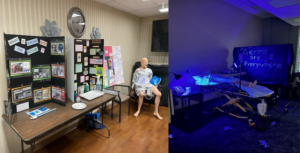
Carilion Clinic’s Virginia Long-Term Care Infrastructure Pilot Project (VLIPP) is a grant-funded program focused on improving infection prevention and control practices within local long-term care (LTC) facilities. The team has been working on various projects since the program’s launch, collaborating with LTC facilities across the Southwest Region. A keystone of the project is staff education on setting-specific infection prevention and control practices. The team provides education in fun and engaging ways including escape rooms and simulated training that incorporates real-life scenarios. The program also hosts a quarterly “Staying in the Know” webinar series aimed at providing updates and guidance on current infection prevention and control issues. Visit Carilion Clinic Infection Prevention and Control for additional information about Carilion Clinic VLIPP.
In addition to education, training, and onsite technical support, a peer-to-peer network has been launched for LTC facility infection preventionists (IPs). The network’s goal is to create a safe space for LTC IPs to connect, share resources and perspectives, and support one another. The network provides an avenue for IPs to talk about IP challenges in the facility, problem solve, and promote mentorship relationships between the IPs. The inspiration for the network arose from feedback received from facility IPs. Interest in knowing how other IPs practice in the LTC setting and navigate their roles and responsibilities was identified as a recurring theme.
The successful launch of the peer-to-peer network demonstrates the devotion of the LTC IPs to the work they do. The Carilion Clinic VLIPP team is excited to see a positive response to the network. LTC IPs in Virginia are welcome to join the network. For additional information about joining, reach out to either of the Carilion Clinic VLIPP infection preventionists listed below.
Steve Carter – stcarter@carilionclinic.org
Matthew Skinner – mrskinner@carilionclinic.org