
April 15, 2026
Media Contact: Brookie Crawford, brookie.crawford@vdh.virginia.gov
Virginia Health Officials Issue Fish Consumption Advisory for John W. Flannagan Reservoir
Contaminants Identified in Walleye, Channel Catfish, Largemouth Bass
RICHMOND, Va. – Effective immediately, the Virginia Department of Health (VDH) is issuing a fish consumption advisory for the Flannagan Reservoir due to elevated polychlorinated biphenyls (PCBs) levels in specific fish species. The affected species include walleye, channel catfish, and largemouth bass.
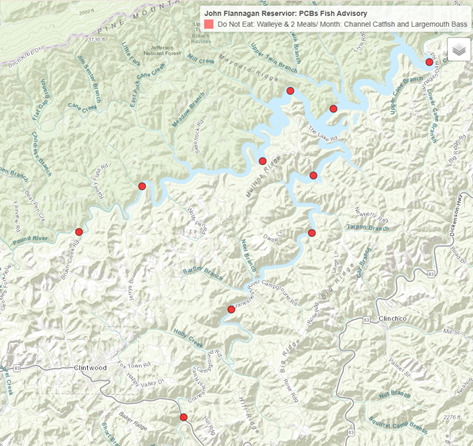
This advisory for Flannagan Reservoir includes:
- The Cranesnest River arm upstream to the Highway 83 Bridge.
- The Pound River arm upstream to the Lower Georges Fork Hollow (Route 621) Bridge.
Fish tissue sample results collected from May 2022 through September 2025 show PCBs levels in walleye, channel catfish, and largemouth bass exceed the amount considered safe for long-term human consumption.
VDH advises eating no more than two fish meals per month of channel catfish and largemouth bass and not eating walleye from the advisory area. A meal is defined as eight ounces of fish.
|
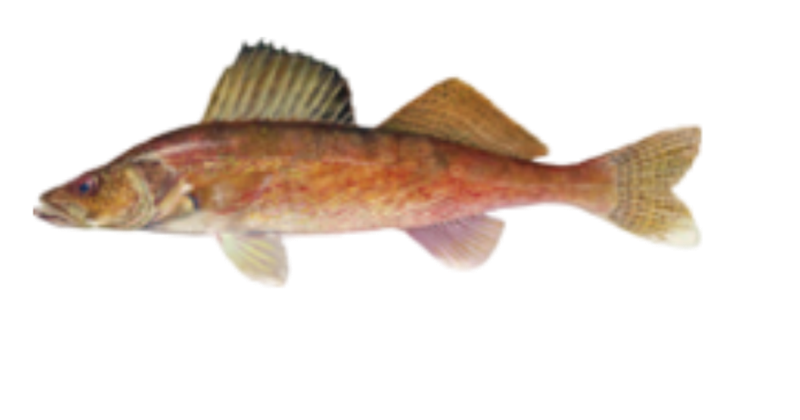
Walleye |
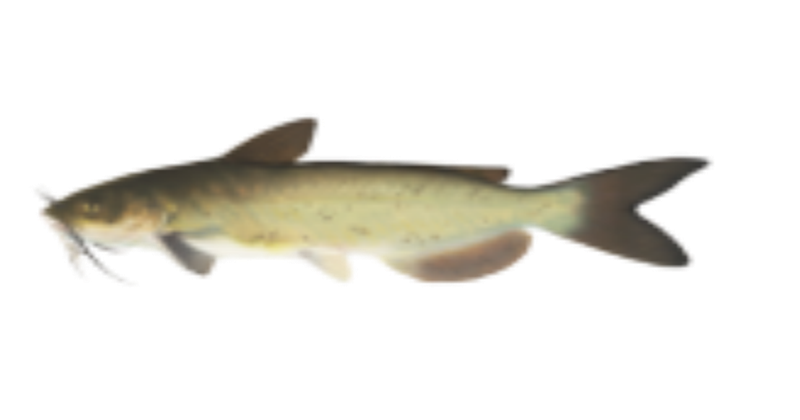
Channel Catfish
|
Largemouth Bass
|
|
| Flannagan Reservoir |
No Meals |
≤ 2 Meals/Month |
≤ 2 Meals/Month |

Eating fish that contain PCBs may increase your risk of cancer.
Fish consumption advisories alert people to contaminants present in affected fish species. They do not prohibit people from eating fish. Children and women who are pregnant or who may become pregnant have an increased health risk. Nursing mothers and young children should not eat fish from this advisory area.
Currently, this advisory area poses no health risk for recreational activities. Swimming, water skiing, and boating can continue in the advisory area.
Other ways to reduce your exposure to PCBs in fish:
- Eat smaller, younger fish (within the legal limits). Younger fish are less likely to contain harmful levels of contaminants.
- Remove the skin, the fat from the belly and top, and the internal organs before cooking the fish.
- Bake, broil, or grill on an open rack to allow fats to drain. Avoid pan frying in butter or animal fat because these methods hold fat juices.
- Discard the fat that cooks out of the fish and avoid or reduce the amount of fish drippings that are used to flavor the meal.
- Eat less deep-fried fish since frying seals contaminants into the fatty tissue.
For more information, visit the VDH Fish Consumption Advisory page.
# # #