


On This Page
Emergency Preparation | Power Outages | Hurricanes/Severe Storms | Winter Weather | Other Resources
Emergency Preparation
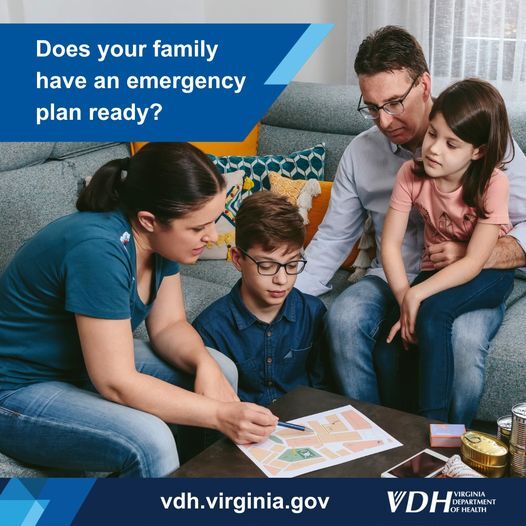
Know where to go if you're ordered to evacuate. Know the local hurricane evacuation route(s) to take and have a plan for where you can stay. www.vaemergency.gov/know-your-zone
Do you have a disaster supply kit? Remember to include a flashlight, batteries, cash, first aid supplies, and copies of your critical information if you need to evacuate. Learn more: vaemergency.gov/prepare/emergency-kit

Plan ahead: Before a storm, stock up on supplies. Lean more about what to stock up on: vaemergency.gov/prepare/emergency-kit
Plan ahead: Before a storm refill your prescriptions. Lean more: vaemergency.gov/prepare/make-a-plan
Make sure your food is safe when the power goes out. Lean more: vdh.virginia.gov/environmental-health/food-safety-in-virginia/emergencies/
Be tech ready. Make sure your phone is charged and you have emergency apps download. Learn more: ready.gov/get-tech-ready

Bring your pets inside before a storm and make sure they're a part of your emergency plan. Lean more: redcross.org/get-help/how-to-prepare-for-emergencies/pet-disaster-preparedness.html


Do you know the difference between a storm watch and a storm warning?
A watch means that you should be prepared, as severe weather is possible in your area. A warning means that severe weather has been spotted or is on radar in your area. A warning means you need to take action by seeking shelter and finding safety immediately.
Learn more: https://www.weather.gov/sjt/WatchWarningAdvisoryExplained
Power Outages
Take steps to protect yourself when the power goes out: cdc.gov/natural-disasters/response/what-to-do-protect-yourself-during-a-power-outage.html
If you lose power, use battery powered flashlights and lanterns. If you have to use candles, keep away from anything that can catch fire. Learn more: cdc.gov/natural-disasters/response/what-to-do-protect-yourself-during-a-power-outage.html
Take steps to protect yourself when the power goes out: cdc.gov/natural-disasters/response/what-to-do-protect-yourself-during-a-power-outage.html
Portable generators can cause carbon monoxide poisoning, electrical shock/electrocution or fire. Learn how to protect yourself at www.cdc.gov/natural-disasters/psa-toolkit/use-a-generator-safely.html
Remember to keep generators and other alternate power/heat sources outside, at least 20 feet away from windows and doors and protected from moisture; and NEVER try to power the house wiring by plugging a generator into a wall outlet. See tips at www.cdc.gov/natural-disasters/psa-toolkit/use-a-generator-safely.html
Using a space heater? Practice proper safety procedures www.cdc.gov/winter-weather/safety/stay-safe-during-after-a-winter-storm-safety.html
If you lose power, discard any perishable food that has been above 40°F for two hours or more. Learn more: vdh.virginia.gov/environmental-health/food-safety-in-virginia/emergencies/
If your power goes out during a storm, keep your fridge door closed! It will keep cold for about 4 hours unopened. Learn more: vdh.virginia.gov/environmental-health/food-safety-in-virginia/emergencies/
Hurricanes/Severe Storms
A hurricane is coming, learn how prepare your home and stay safe: vaemergency.gov/threats/winter-weather
During the storm, stay indoors during the hurricane and away from windows and glass doors. Because of the strong winds associated with a hurricane, flying debris and falling trees are possible. Learn more: cdc.gov/hurricanes/safety/index.html#cdc_preparedness_steps_h2-be-ready-to-evacuate-or-stay-at-home
Seek shelter in an interior area of your home and refrain from going outside; winds often pick up strength as the eye of the storm passes. Learn more: cdc.gov/hurricanes/safety/index.html#cdc_preparedness_steps_h2-be-ready-to-evacuate-or-stay-at-home
Stay inside and away from windows, skylights and glass doors. Find a safe area in your home (an interior room, a closet or bathroom on the lower level). Learn more: cdc.gov/hurricanes/safety/index.html#cdc_preparedness_steps_h2-be-ready-to-evacuate-or-stay-at-home
 Don't drive in flooded areas. Cars and other vehicles won't protect you from floodwaters. They can be swept away or may stall in moving water. Learn more about staying safe after a storm: cdc.gov/hurricanes/safety/how-to-safely-stay-safe-after-a-hurricane-or-other-tropical-storm.html
Avoid floodwater. If you have to be in or near floodwater, wear a life jacket—especially if the water is rising. cdc.gov/hurricanes/safety/how-to-safely-stay-safe-after-a-hurricane-or-other-tropical-storm.html
Stay away from downed powerlines and call your power company to report them. Learn more: cdc.gov/hurricanes/safety/how-to-safely-stay-safe-after-a-hurricane-or-other-tropical-storm.html
Winter Weather

A winter storm is coming, learn how to stay safe: vaemergency.gov/threats/winter-weather
Learn with your kids about what to do before, during, and after a winter storm: ready.gov/kids/disaster-facts/winter-weather
Take caution in cold weather. Know the signs of frostbite and hypothermia: cdc.gov/winter-weather/prevention/preventing-frostbite.html
During a winer storm follow directions from local officials. If you're instructed to stay off the roads, only travel in an emergency. cdc.gov/winter-weather/safety/stay-safe-during-after-a-winter-storm-safety.html
Using a space heater? Don’t use extension cords to plug in your space heater. Practice proper safety procedures cdc.gov/winter-weather/safety/stay-safe-during-after-a-winter-storm-safety.html#cdc_preparedness_home_inside-indoors
Stay safe outdoors and avoid slips and falls. Walk slowly and carefully on icy surfaces and packed snow. Learn more: cdc.gov/winter-weather/safety/stay-safe-during-after-a-winter-storm-safety.html#cdc_preparedness_home_outside-outdoors