
Last Updated: January 25, 2026
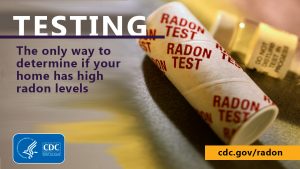 Radon Awareness Week is January 26-30
The Norfolk Health District encourages community members to protect their health by testing their homes for radon. The Virginia Department of Health has a limited supply of short-term, do-it-yourself radon test kits that can be shipped directly to Virginia residents. Test kits are free with $4 shipping fee. They can be ordered at www.vdhradon.org.
Radon is a naturally occurring radioactive gas that results from the decay of Uranium which is found in certain types of soil and bedrock. It is not visible, and it has no smell. Radon can only be detected by testing.
Radon Awareness Week is January 26-30. January is one of the best times to test your home. Radon levels are highest during the winter when windows and doors are kept closed.
The United States Environmental Protection Agency (USEPA) estimates that as many as 21,000 lung cancer deaths per year in the United States may be associated with exposure to radon. Radon is considered second only to smoking as the leading cause of lung cancer.
There is no safe level of radon. Reducing radon inside your home will always help reduce your risk of lung cancer.
Additional steps that you can take to help lower radon levels in your home include.
- Seal cracks in floors and walls with plaster, caulk, or other similar materials.
- Cover the earth floor in crawl spaces with a high-density plastic sheet. A vent pipe and fan can be used to blow the radon from under the sheet and vent it outdoors.
- Increase air flow in your house by opening windows and using fans and vents to circulate air.
- Test radon levels again after you’ve made any of these changes to ensure these actions reduced the radon levels.
Testing your home is the only way to know for sure if an indoor radon problem exists. For more details about radon testing and mitigation, contact your Local Heath District at [contact info] or visit www.vdh.virginia.gov/radiological-health/indoor-radon-program/