

C. diff Awareness Month
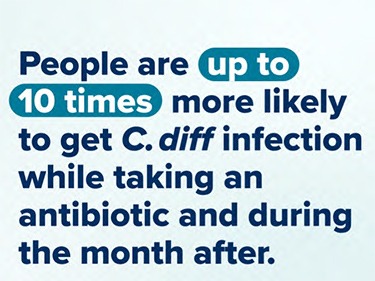
Clostridioides difficile (C. diff), a germ that causes diarrhea and inflammation of the colon, can affect anyone. It’s estimated to cause more than 400,000 infections in the United States each year. C. diff infection can be life-threatening.
For more than a decade, C. diff infection prevention, diagnosis, and response in U.S. health care have significantly improved. A newly released update to Antimicrobial Resistance Threats in the United States (AR Threats Report) identifies 19 bacterial and fungal pathogens (germs), categorized by the level of threat they pose to human health. C. diff, previously an urgent threat, is now categorized as a serious threat. Rates of C. diff declined 21% overall from 2018 to 2020 and remained stable in health care from 2020 to 2023. This is due in part to improvements in C. diff diagnosis and the success of efforts to prevent infections. U.S. progress against this threat shows that a comprehensive public health response—grounded in targeted infection prevention, antibiotic stewardship, diagnostic excellence, and increased treatment options—works.
Despite this progress, C. diff continues to cause substantial infections, deaths, and healthcare costs. It remains one of the most common causes of healthcare-associated infections in U.S. hospitals, and there is an even greater number of community-associated cases. Sustaining progress against C. diff requires a strong, ongoing commitment to effective infection control, appropriate antibiotic use, and diagnostic testing.