RHHD Encourages Severe Weather Awareness

March 9, 2026
Media Contact: Bryan Hooten, 804-807-1727, bryan.hooten@vdh.virginia.gov

RHHD Encourages Severe Weather Awareness

March 9 – 13 is Severe Weather Awareness Week

RICHMOND, Va. — Richmond and Henrico Health Districts (RHHD) encourage residents to protect themselves and their families by making preparations for severe weather. March and April are traditionally the most active months for tornadoes in Virginia. Severe Weather Awareness Week is March 9 – 13.

“Severe weather can happen with little to no warning, said Richmond and Henrico Health Districts Acting Local Health Emergency Coordinator Alyssa Lewis. “While we can’t control the weather, we can control how prepared we are! It’s never too late to make sure you, your family, friends, and neighbors are signed up for trusted community alerts, have an emergency plan, and have well-stocked emergency kits. Taking a little time now to prepare can give us peace of mind year-round!”

RHHD recommends the following tips for preparing for severe weather:

  • Locate safe shelters in the places you spend the most time. In each location, find a small room or hallway with no windows, preferably in a basement or first floor. Once you’ve identified your shelter, communicate that plan with family members or coworkers so everyone knows where to go when a tornado warning sounds.
  • Choose a reliable news source and stay up to date on the weather.
  • Consider participating in Virginia’s statewide tornado drill March 10 at 9:45 a.m.
  • Register for an in-person or online SKYWARN class to learn how to spot and report dangerous storm systems.

RHHD recommends the following tips for staying prepared for emergency situations:

  • Store important family documents, such as copies of insurance policies, identification documents, and bank account records, in a waterproof, portable container or save them electronically.
  • Keep medications in a central location for easy evacuation if needed.
  • Prepare a “go-bag” with clothes, toys and toiletries for five days.
  • Know, and practice, your safe spaces and exits.
  • Identify friends, neighbors, and relatives who might need extra help during an emergency, including older adults, people with disabilities, and those without transportation. Create a phone tree or contact strategy to check in on them.
  • Choose a central spot to reunite with your family if separated.
  • Richmond residents should sign up for Richmond Ready Alerts. Henrico County residents should sign up for Henrico County Community Emergency Notifications.
  • Update your insurance yearly and consider flood insurance. Most insurance companies do NOT pay for flooding damage through a standard homeowner’s policy.

Visit ready.gov for more emergency preparedness tips. Visit rhhd.gov for more health and safety information. Follow RHHD on Instagram (@richmondcity_hd) and Facebook.

# # #

Cumberland Plateau and LENOWISCO Health Districts Offer Safety Tips to Stay Warm During Extreme Cold

January 29, 2026
Media Contact: Daniel Hunsucker, Daniel.Hunsucker@vdh.virginia.gov

Cumberland Plateau and LENOWISCO Health Districts Offer Safety Tips to Stay Warm During Extreme Cold

WISE, Va. As southwest Virginia continues to see dangerously cold temperatures, hypothermia and frostbite are real concerns. The Virginia Department of Health’s Cumberland Plateau and LENOWISCO Health Districts urge you to take steps to keep you and your family warm, dry, and healthy throughout this winter season.

“Even if you’re a cautious winter driver, it’s helpful to prepare for any scenario, from a flat tire to sliding off the road,” said Reisa Sloce, Director Cumberland Plateau and LENOWISCO Health Districts. “Emergency preparedness is even more critical during the winter, with freezing temperatures that can become dangerous if you’re stranded for too long.”

Hypothermia occurs most commonly at very cold environmental temperatures but can occur even at cool temperatures (above 40°F) if a person becomes chilled from rain, sweat, or submersion in cold water. Signs to look out for include shivering, exhaustion or fatigue, confusion, fumbling hands, memory loss, slurred speech and/or drowsiness. In babies look for bright red, cold skin and very low energy.

Frostbite is a type of injury caused by freezing. If you notice redness or pain in any skin area, get out of the cold. The skin will feel numb, unusually firm or waxy, and can also appear white or grayish yellow. If you have frostbite, you may not know until someone else points it out because the frozen parts of your body are numb.

The Cumberland Plateau and LENOWISCO Health Districts encourage you to take these steps to prevent hypothermia, frostbite and other potential injuries.

Staying Warm

  • Stay indoors and limit your exposure to the cold.
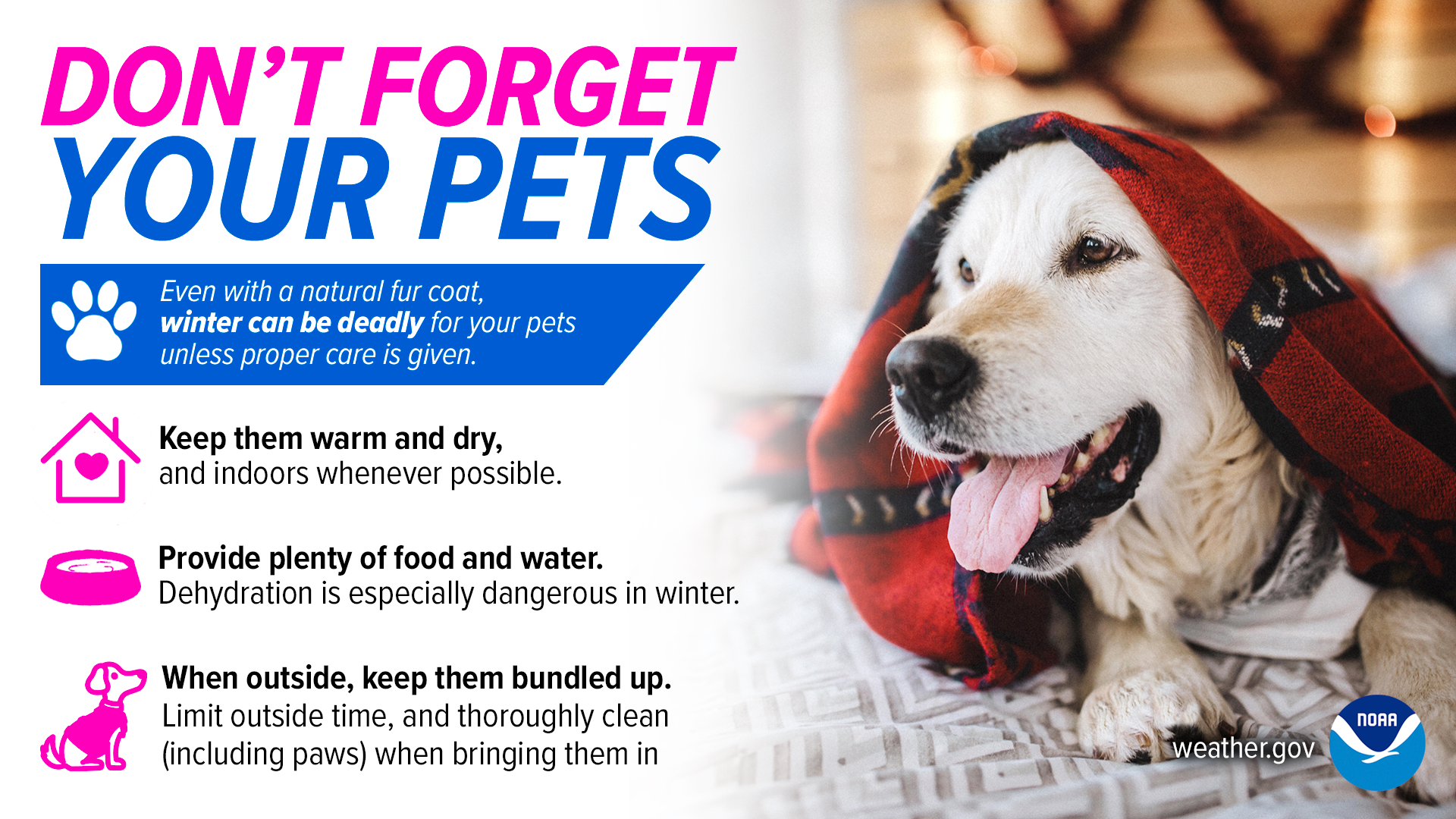
  • Bring your pets indoors and ensure they have water.
  • Eating healthy meals will help to keep your body temperature warm.
  • Stay hydrated even during the cold to prevent hypothermia. Avoid alcohol and caffeine. They cause your body to lose heat faster. Drink warm beverages or broth.
  • Keep extra blankets, sleeping bags, and warm winter coats on hand for use in cold rooms.
  • Charge all your devices (medical equipment, phone, computer, tablet, radio, etc.).
  • Check on neighbors, friends, and family.
  • For a list of warming centers in your area, call 2-1-1 or visit org/

If You Go Outside

If you must go outside, please take these precautions:

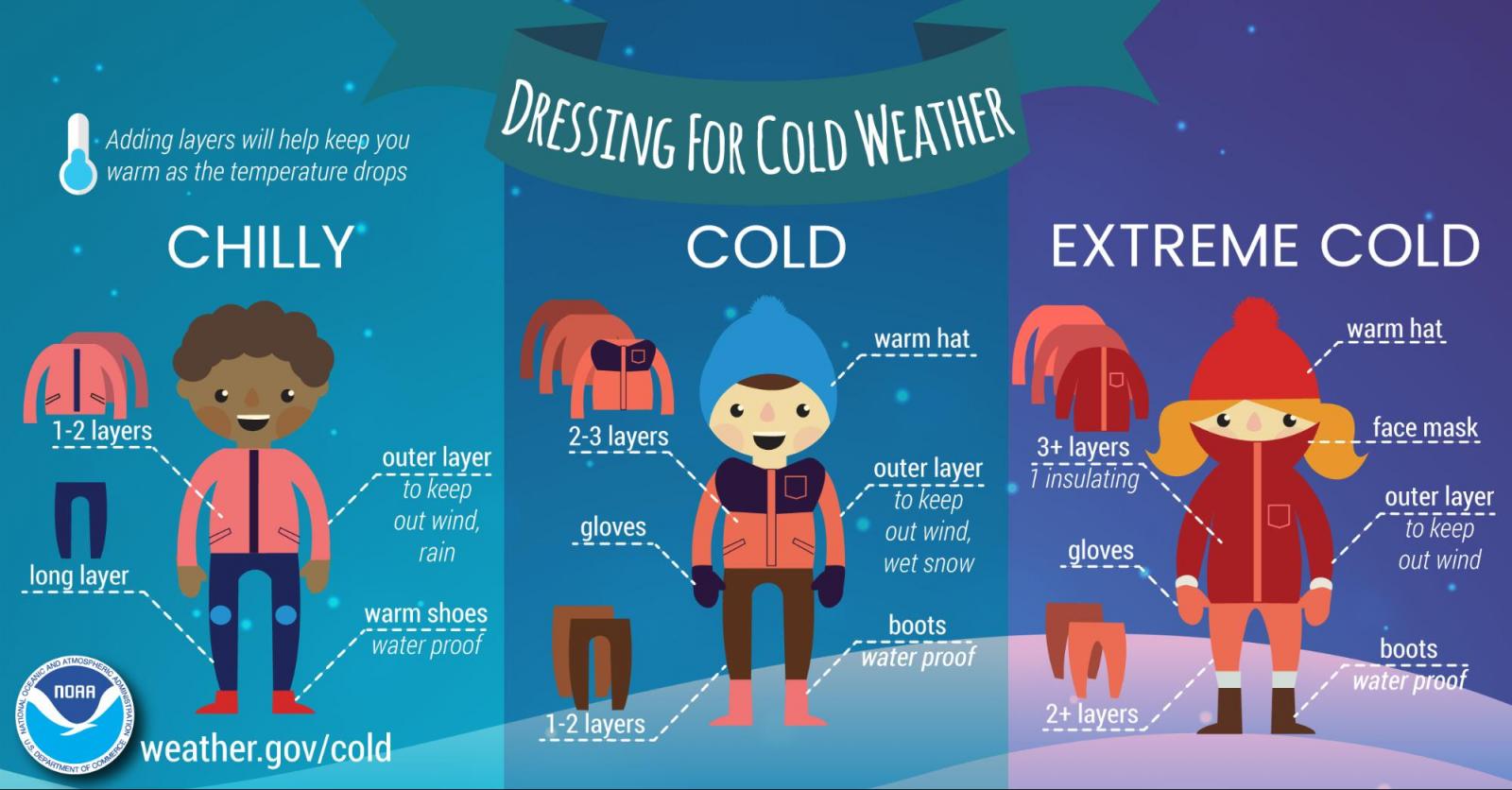
  • Dress warmly and in layers. Make sure you cover your head, fingers and toes to prevent frostbite.
  • Be aware of the wind chill factor.
  • Wear proper footwear for traction. Take slow, short steps.
  • Avoid getting wet. If you get wet, change out of wet clothes as soon as possible to prevent hypothermia.
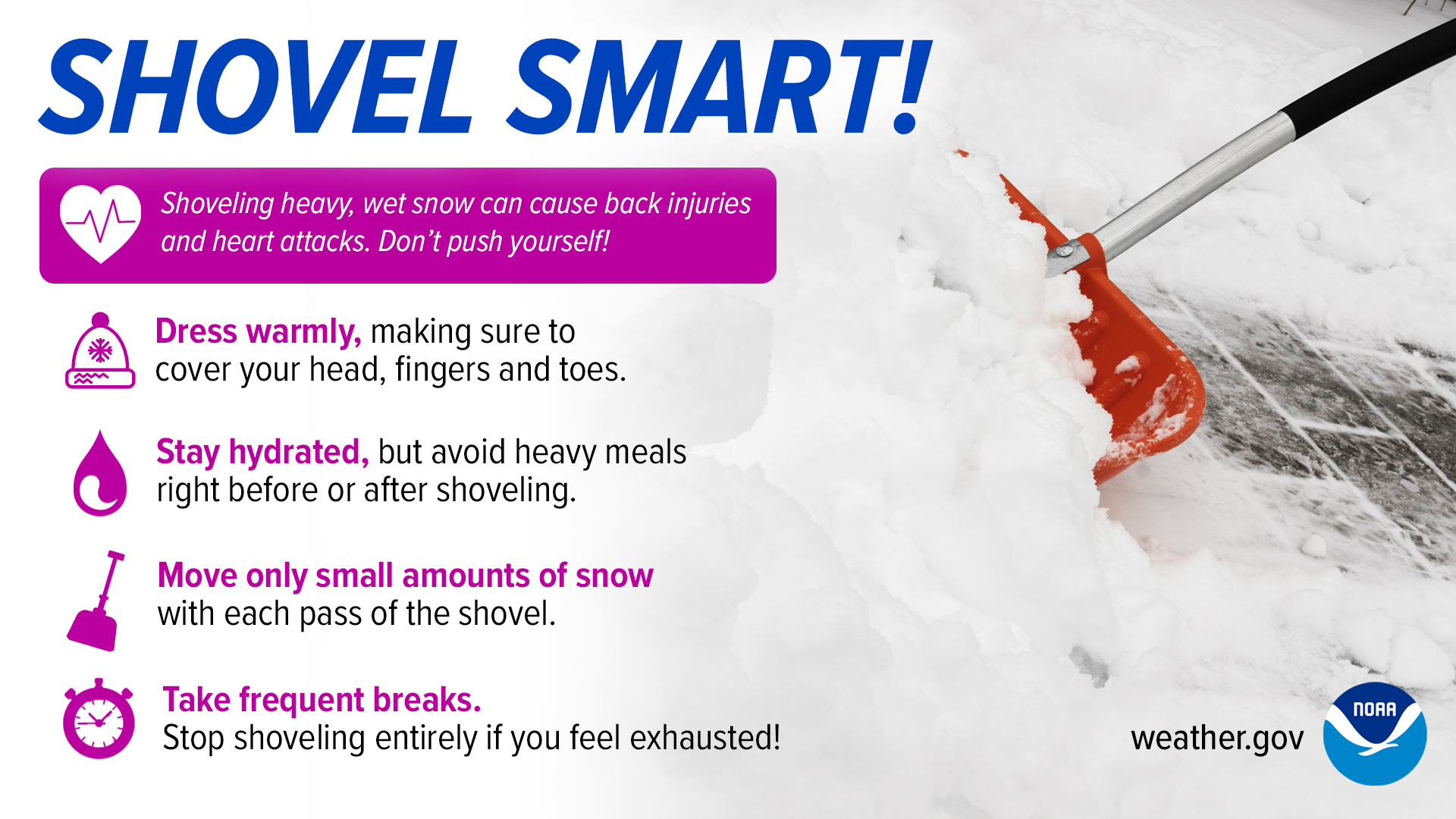
  • Take frequent breaks if shoveling snow or working outdoors.

If You Must Drive

  • Stay at home and avoid travel. If you must travel, check the road conditions and your route first.
  • Allow extra time and follow these tips from the Virginia Department of Transportation.
  • If you must travel, let someone know your destination and when you expect to arrive. Ask them to notify authorities if you are late.
  • Always carry extra warm clothing and blankets with Don’t rely on a car to provide enough heat.
  • Have a winter emergency kit inside your car that includes:
    • Ice scraper
    • Warmth items such as blankets, extra gloves, etc.
    • Portable shovel
    • Flashlight
    • Extra batteries and a cell phone charger
    • A first aid kit
    • Jumper cables
    • A small container of sand or kitty litter for traction
    • Nonperishable food and water
    • Items for handling a flat tire

If you have chronic health conditions, please reach out to your healthcare provider to work together and ensure you have a care plan in place. Organize and protect your prescriptions, over-the-counter drugs, home-use medical devices, and vitamins. Talk to your doctor or pharmacist about how you can create an emergency supply of medicines.

If you notice signs of frostbite and hypothermia, seek medical attention immediately.

If you have questions, contact the Cumberland Plateau Health District at (276) 889-7621 or the LENOWISCO Health District at (276) 328-8000.

Richmond and Henrico Health Districts Encourages Everyone to Make a Plan in Honor of National Preparedness Month

RICHMOND, VA Richmond and Henrico Health Districts encourage the public to observe National Preparedness Month (NPM) this September by making a plan for emergencies.   

“Emergency preparedness starts with a few simple, cost-free steps,” says Ed Porner, Richmond and Henrico Health Districts emergency preparedness and response coordinator. “Talk to your family, gather important information, and find out what your friends and neighbors will need. The more prepared we are as a community, the better we will fare.”  

The theme of this year’s NPM is “Start a Conversation” The best way to begin the development of your family emergency plan is to start with a conversation. The U.S. Department of Homeland Security advises that the best time to start talking about emergency preparedness is when everyone is calm and relaxed. Hold the discussions over a small time period so decisions aren’t rushed, and everyone can feel more comfortable talking about the topic. Ensure everyone has input and is on board! Talk about steps you’ve taken to prepare in the past, things that have gone well (or not gone well) as a result of planning and encourage others to ask questions about preparedness actions that might work for them. 

Make sure your plan includes everyone! Consider supporting those in the community that might need your help, like an elderly neighbor or someone with a disability. Don’t forget to plan for your pets 

Ed Porner offers these tips to help you and your family stay prepared: 

  • Prepare your family AND your household. Disasters can happen unexpectedly and without warning. Hurricanes and storms may give us some time to gather things together, but fires, floods, and other disasters could give us only seconds to get to safety. Gather important documents like birth certificates, citizenship papers, or backup medical prescriptions and place them in a secure location close to an exit, preferably in a fireproof box. 
  • Talk openly with kids about preparedness. Talk with children often, honestly, and openly about the potential for emergencies while empowering them to take charge of their own preparedness. “Comfort items” for both kids and older adults should be an important part of an emergency kit think a favorite toy or a keepsake that’s important to that person. Discussions should include procedures for reuniting if separated, trusted people in their lives that they can call, and how to access emergency services if they’re alone. Prepare with Pedro from Ready.gov is a fun resource that families can use to help kids think about preparedness. 
  • Meet your neighbors. Planning with your community in mind can help counteract some of the ways way age, income, or disabilities impact someone’s readiness for emergency situations. Have conversations about the needs your neighbors might have and what type of assistance they might need in an emergency.  
  • Practice your plan. Turn preparedness into a game like a treasure hunt for emergency kit items, or a car trip around the neighborhood highlighting meeting points of safe areas. Ready.gov has many more ideas. 

# # # 

Virginia Department of Health Participates in Tranquil Passport Exercise 

June 25, 2025
Media Contact: Brookie Crawford, brookie.crawford@vdh.virginia.gov  

Virginia Department of Health Participates in Tranquil Passport Exercise
Exercise Validates Capabilities to Move Infectious Patients 

VDH COO Christopher Lindsey, Northern Regional Epidemiologist Denise Sockwell, and Deputy Northern Regional Epidemiologist Monica Solis at Tranquil Passport exercise

RICHMOND, Va. – This week the Virginia Department of Health (VDH) joined with state, local and federal partners to take part in the four-day Tranquil Passport exercise. The purpose of the exercise is to test and validate Virginia and the nation’s capabilities to safely and efficiently transport highly contagious patients to regional treatment facilities. 

“Exercises like this one allow the rare opportunity to fully simulate the communication, coordination, and collaboration necessary to ensure the movement safely of American citizens who may have been exposed to a highly infectious disease and need to be brought back to the United States for treatment,” said Northern Region Emergency Preparedness Coordinator Jeffrey Walker. “It takes a full complement of federal, state, regional, local, and private sector agencies and their resources to conduct an operation like this safely and securely. Our partners here in Virginia with the Virginia State Police, Metropolitan Washington Airports Authority (MWAA), Northern Virginia Emergency Response System (NVERS), and Virginia Department of Emergency Management all work together to ensure we meet the needs of our citizens.” 

The exercise is the culmination of months of planning with more than 50 partner organizations. The scenario for the full-scale exercise involved the moving of several American patients with a simulated highly infectious disease from Toronto, Canada to hospital facilities from New York to Georgia over the course of four days. 
Staff from VDH and the above-mentioned Virginia agencies participated on Tuesday and Wednesday, June 24 and 25. Simulated patients were transported by air to Virginia, where they were moved using a Portable Biocontainment Unit (PBCU) to Medstar Washington Hospital Center, Children’s National Medical Center, and Johns Hopkins Hospital in Baltimore. 

The PBCU is a new resource used to isolate and transport patients with highly infectious diseases. The unit can be customized to transport up to 10 patients via air or on a specialized trailer pulled by a semi-truck. The PBCU allows for continuous treatment of multiple patients isolated in the unit and for onboard care teams to switch out during longer transportation.  Take a tour of the PBCU.

Tranquil Passport is just one of many preparedness exercises that the VDH participates in routinely to test and validate processes and procedures. Lessons learned from exercises like Tranquil Passport help VDH enhance readiness to respond to all hazards, including bioterrorism, infectious disease outbreaks and other public health emergencies. 

For more information about the mission of VDH, please visit our website. 

# # # 

Mount Rogers Health District Highlights Achievements in 2024 Annual Report

January 30, 2025
Media Contact: Brianne Kilbourne, 276-781-7450

Mount Rogers Health District Highlights Achievements in 2024 Annual Report

MARION, Va. – The Mount Rogers Health District (MRHD) has unveiled its 2024 Annual Report, spotlighting a year of significant progress in improving community health and well-being across its eight localities. The report underscores the district’s ongoing commitment to addressing pressing public health challenges while fostering collaboration with community partners.

The report highlights a range of clinical achievements, including the administration of more than 7,000 immunizations, which played a critical role in preventing vaccine-preventable diseases. Through the Every Woman’s Life program, 173 women received essential screenings for breast and cervical cancer, offering life-saving early detection. Additionally, the Oral Health program expanded its reach to over 1,100 students, a nearly 200% increase from the previous year. These efforts reflect MRHD’s focus on equitable access to preventive healthcare services.

In response to the opioid epidemic, MRHD made substantial strides in substance use disorder prevention. The district’s REVIVE! training educated over 810 participants on recognizing and responding to overdoses, while more than 1,800 doses of naloxone were distributed to those in need. Comprehensive Harm Reduction services, which support individuals at high risk of overdose, reached 578 participants, offering life-saving resources and a pathway to recovery.

Emergency preparedness efforts were another cornerstone of MRHD’s work in 2024. The district earned the prestigious Project Public Health Ready designation, highlighting its robust readiness to address public health emergencies. Medical Reserve Corps volunteers contributed over 970 hours of service, providing critical support during both emergency and non-emergency events. Training initiatives, such as CPR and Stop the Bleed programs, equipped community members with essential skills to save lives in critical situations.

Programs supporting family and child health also made a significant impact. The BabyCare program conducted over 1,400 home visits, offering personalized support to 225 mothers and infants. Meanwhile, the Child Safety program provided 309 free car seats, accompanied by hands-on education, to families across the district. These initiatives underscore MRHD’s dedication to nurturing the health and safety of future generations.

MRHD also conducted a comprehensive Community Health Assessment (CHA) across its eight localities, gathering feedback from over 1,600 residents. This process identified key health priorities, including mental health, obesity, substance use disorders, and access to care, which will shape the district’s future strategic planning and health improvement efforts.

Promoting health equity remained a central focus throughout 2024. The district launched a Spanish-language phone line to improve access for non-English-speaking residents, handling over 100 calls since its inception. The health equity team also attended more than 70 community events, ensuring resources and services reached underserved populations.

Health Director Dr. Meagan Helmick reflected on the district’s accomplishments: “The 2024 Annual Report demonstrates Mount Rogers Health District’s steadfast dedication to protecting and promoting the health of our communities. From addressing the opioid epidemic to enhancing emergency preparedness, our team continues to respond to the evolving needs of our residents.”

For the full Annual Report or more information about MRHD services, visit the district’s website at Virginia Department of Health – Mount Rogers Health District.

Richmond and Henrico Health Districts Encourage Winter Weather Safety 

December 12, 2024
Media Contact: 
Bryan Hooten, RHHDpr@vdh.virginia.gov, 804-807-1727

Richmond and Henrico Health Districts Encourage Winter Weather Safety

RICHMOND, Va. – Richmond and Henrico Health Districts RHHD encourage community members to prepare for winter weather at home and on the road by building emergency kits and understanding cold weather hazards.

“Winter weather can be sneaky and unpredictable,” said Richmond and Henrico Health Districts Emergency Preparedness and Response Coordinator Ed Porner. “Whether you’re staying close to home with family and friends or making a long trip, be prepared with a winter emergency kit, get smart on the unique hazards presented by cold weather, and above all, know your limitations.”

RHHD offers these tips to help you and your family prepare for winter weather:

  • Keep at least one emergency kit at home and one in your vehicle.gov has a great list of basic kit necessities and options for making low-cost kits. If there’s a baby in the home, make sure the kit includes formula and/or breast milk supplies, diapers, and other necessary items. Anyone with prescription medications should place a few weeks’ worth in their kit. If you freeze or refrigerate breast milk or prescription medication, add a cooler to your kit checklist. Finally, Don’t forget about your pets.
  • Keep warm safely. The improper use of some heat sources can lead to carbon monoxide poisoning or death. In the event of a power outage and freezing temperatures:
    • Avoid using stovetop burners or an oven to heat your home.
    • Keep generators outdoors and separate from the home.
    • If your car becomes stranded:
      • Clear snow from the exhaust pipe.
      • Run the motor about 10 minutes each hour for heat.
      • While running the motor, open an upwind window slightly for ventilation to avoid carbon monoxide poisoning.
    • Write down the contact information and directions to your local Inclement Weather Shelter or warming center.
      • Richmond Inclement Weather Shelter (IWS)
        1900 Chamberlayne Parkway
        Richmond, VA, 23222
        Call for availability at 804-653-5706
        Open 5 p.m. — 8 a.m.
        Line up for admission to IWS begins at 4 p.m. The IWS is for single men and women and can accommodate service animals. All guests will be provided a cot, dinner, snack, and breakfast.
      • 50-Bed Year-Round Family Shelter (no age requirements)
        7 North 2nd Street
        Richmond, VA 23219
        Access: Regional Coordinated Entry System: Greater Richmond Continuum of Care Homeless Connection Line at 804-972-0813.
  • Check weather conditions before driving. If you’re not familiar with driving in the snow, or your vehicle isn’t built for extreme weather, consider delaying your trip. A wet day with freezing temperatures overnight can create icy streets the following day. Visit the Virginia Department of Transportation for more winter driving tips.
  • Check for impairment before driving. Distractions, drowsiness, drugs, and alcohol can impair your driving. Traffic crashes are preventable. Keep loved ones and community members safe by arranging for a designated driver, making use of rideshares or the Greater Richmond Transit Company’s (GRTC) fare-free bus lines, or by gathering at home.

For more information and winter weather safety tips, visit ready.gov/winter-ready.

# # #

Richmond and Henrico Health Districts Encourages Everyone to Make a Plan in Honor of National Preparedness Month

September 9, 2024

Media Contact: RHHDpr@vdh.virginia.gov
804-807-1727

Richmond and Henrico Health Districts Encourages Everyone to Make a Plan in Honor of National Preparedness Month

RICHMOND, Va. – Richmond and Henrico Health Districts encourage the public to observe National Preparedness Month (NPH) this September by making a plan for emergencies.

“Emergency preparedness starts with a few simple, cost-free steps,” says Ed Porner, Richmond and Henrico Health Districts emergency preparedness and response coordinator. “Talk to your family, gather important information, and find out what your friends and neighbors will need. The more prepared we are as a community, the better we will fare.”

The theme of this year’s NPH is “Start a Conversation” The best way to begin the development of your family emergency plan is to start with a conversation. The U.S. Department of Homeland Security advises that the best time to start talking about emergency preparedness is when everyone is calm and relaxed. Hold the discussions over a small time period so decisions aren’t rushed, and everyone can feel more comfortable talking about the topic. Ensure everyone has input and is on board! Talk about steps you’ve taken to prepare in the past, things that have gone well (or not gone well) as a result of planning and encourage others to ask questions about preparedness actions that might work for them.

Make sure your plan includes everyone! Consider supporting those in the community that might need your help, like an elderly neighbor or someone with a disability. Don’t forget to plan for your pets!

Ed Porner offers these tips to help you and your family stay prepared:

Prepare your family AND your household. Disasters can happen unexpectedly and without warning. Hurricanes and storms may give us some time to gather things together, but fires, floods, and other disasters could give us only seconds to get to safety. Gather important documents like birth certificates, citizenship papers, or backup medical prescriptions and place them in a secure location close to an exit, preferably in a fireproof box.
Talk openly with kids about preparedness. Talk with children often, honestly, and openly about the potential for emergencies while empowering them to take charge of their own preparedness. “Comfort items” for both kids and older adults should be an important part of an emergency kit – think a favorite toy or a keepsake that’s important to that person. Discussions should include procedures for reuniting if separated, trusted people in their lives that they can call, and how to access emergency services if they’re alone. Prepare with Pedro from Ready.gov is a fun resource that families can use to help kids think about preparedness.
Meet your neighbors. Planning with your community in mind can help counteract some of the ways way age, income, or disabilities impact someone’s readiness for emergency situations. Have conversations about the needs your neighbors might have and what type of assistance they might need in an emergency.
Practice your plan. Turn preparedness into a game like a treasure hunt for emergency kit items, or a car trip around the neighborhood highlighting meeting points of safe areas. Ready.gov has many more ideas.
• Learn more about preparedness at Ready.gov or VDH Severe Weather Preparedness.