September 24, 2026
Media Contact: Daniel Hunsucker, Daniel.Hunsucker@vdh.virginia.gov
Cumberland Plateau and LENOWISCO Health Districts Environmental Health Services Benefit All Community Residents
September 26 is World Environmental Health Day
WISE, Va. – At the Virginia Department of Health’s Cumberland Plateau and LENOWISCO Health Districts, health professionals work behind the scenes to protect your health while you do everyday activities like eating at a restaurant, taking a shower, or going for a swim. Environmental health professionals play a crucial role in Virginia public health.
“On World Environmental Health Day, we recognize the essential work that often happens quietly behind the scenes to keep our community safe and healthy,” said Reisa Sloce, Director, Cumberland Plateau and LENOWISCO Health Districts. “Environmental health services protect the places where we live, learn, work, and gather—from safe drinking water and food establishments to septic systems, public pools, housing conditions, and disease prevention. In a rural community, these services are especially vital because they help ensure that every resident, no matter where they live, can enjoy a clean, safe, and healthy environment. We are grateful for the dedication of our environmental health professionals and the many partners who work every day to protect the wellbeing of our community.”
Our environmental health staff protect the health of our community in several ways:
Food Safety: The Cumberland Plateau and LENOWISCO Health Districts permit and regulate food establishments, including restaurants, mobile food units, school cafeterias, daycare centers, adult homes, hospital kitchens, and coffee shops. Health inspections ensure food establishments handle, store and prepare food safely. Restaurant inspection reports can be viewed online.
If you suspect that more than one person has become ill after eating a common food, please contact your local health department. You can also visit my MyMealDetective.com to submit a foodborne illness report.
Tourist Establishment Inspections: Your local environmental health team conducts routine inspections to protect against public health risks and promote cleanliness, safety, and compliance with state regulations on all hotels, campgrounds, and summer camps within the district. Inspections are done annually as well as targeted visits in response to public health complaints.
No operator can legally open or maintain a hotel or tourist lodging facility in the Commonwealth without an active, VDH-issued Tourist Facility Permit.
Water Safety: The Cumberland Plateau and LENOWISCO Health Districts inspect all public pools throughout the summer and all tourist establishment swimming pools annually. Staff issues recreational advisories for harmful algal blooms (HAB) and other water hazards.
If you observe algae while recreating in natural water, please report in on the Virginia Department of Health HAB online reporting form.
Milk Safety Program: Local environmental health milk specialists oversee a permitting and inspection program for local dairy farms producing Grade A Milk and milk products. Under state agreements, VDH and the Virginia Department of Agriculture and Consumer Services (VDACS) divide responsibilities for milk and dairy plant oversight.
Private Wells: The Cumberland Plateau and LENOWISCO Health Districts provide permits and inspections for onsite wastewater and private wells, to include sewage handling and disposal regulations. To apply for a private well permit, please contact your local health department.
Onsite Sewage Disposal: Local environmental health manages onsite sewage disposal systems—such as conventional septic tanks and alternative onsite sewage systems (AOSS)—to protect public health and groundwater. You need a VDH construction permit to install, modify, or repair a septic tank or dispersal drainfield.
VDH recommends having conventional septic systems inspected every three years and pumped out every three to five years. Alternative onsite sewage systems (AOSS) require annual inspections by a licensed operator.
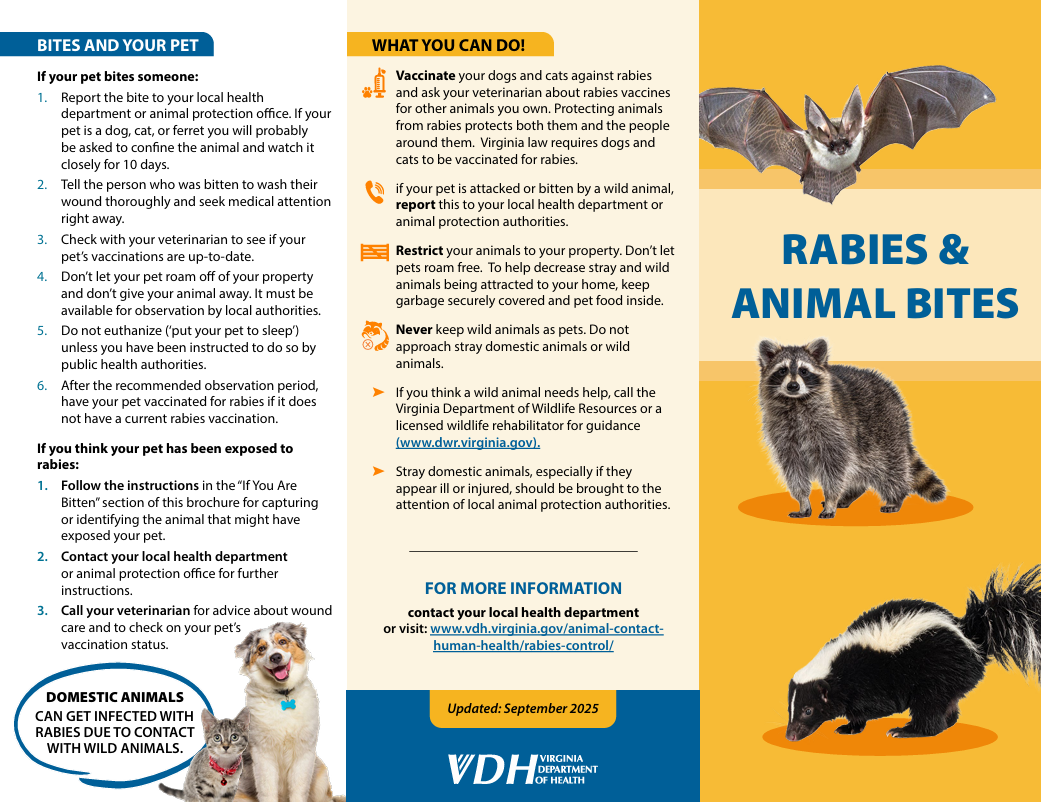
Rabies: The Cumberland Plateau and LENOWISCO Health Districts provide rabies education and control. If you come in contact with a suspected rabid animal, please contact your local animal control office and your local health department.
The environmental health staff also helps after natural disasters, ensuring the public has safe water from wells, healthy foods, and sanitary facilities.
For more information on the services, resources, and educational information available through the environmental health office contact your local health department directly: Buchanan 276-935-4591; Dickenson 276-926-4979; Lee 276-346-2011; Russell 276-889-7621; Scott 276-386-1312; Tazewell 276-988-5585; Wise/Norton 276-328-8000; or visit the Virginia Department of Health website.