Central Shenandoah Health District Welcomes New Health Director

March 10, 2026
Media Contact: Rachel Dumene, Rachel.dumene1@vdh.virginia.gov, 540-480-4998

Central Shenandoah Health District Welcomes New Health Director
Xavier Crockett Takes on District Leadership

STAUNTON, Va. – The Virginia Department of Health welcomes Xavier Crockett as their newest health director for the Central Shenandoah Health District (CSHD).

Crockett has previously served in several leadership positions focused on emergency preparedness and health promotion. He was most recently the health director for Mesa County, Colorado.

He holds a Master of Science degree in Disaster Medicine and Emergency Management, and he is currently a Doctor of Public Health (DrPH) candidate.

Crockett has built many successful partnerships throughout his career, including with hospitals, behavioral health providers, local governments, and community organizations. His structured leadership has led to improved emergency preparedness, and these efforts have helped to develop long-lasting, community-focused plans for a modernized public health system.

“I’m honored to be able to serve this community alongside our dedicated staff and community partners. It is important that CSHD remains responsive and accessible. We need to be able to meet the needs of our region now and in the future,” Crockett says. “Public health works best when it is visible, trusted, and integrated into the daily lives of the communities we serve.”

Crockett has been an active volunteer throughout his career, having served on local, state, and federal advisory boards. He has also spent more than a decade as part of the Medical Reserve Corps. The national volunteer network has enabled him to serve in a variety of leadership roles. Through these efforts he has been able to work to improve community health and safety.

In his new position, Crockett plans to strengthen regional partnerships and looks forward to supporting the public health workforce. A main goal will be to ensure services are responsive and aligned with community needs. Crockett is also focused on strengthening access to services, maternal and child health programs, and community-based prevention efforts across the district’s ten localities.

For more information about the Central Shenandoah Health District, visit vdh.virginia.gov/central-shenandoah/.
Central Shenandoah Health District Offers Safety Tips to Stay Warm During Extreme Cold

January 28, 2026
Media Contact: Rachel Dumene, Rachel.dumene1@vdh.virginia.gov, 540-480-4998

Central Shenandoah Health District Offers Safety Tips to Stay Warm During Extreme Cold

STAUNTON, Va. As the Shenandoah Valley continues to see dangerously cold temperatures, hypothermia and frostbite are real concerns. The Central Shenandoah Health District (CSHD) urges you to take steps to keep you and your family warm, dry and healthy during this storm.

“While the storm has moved through our region, prolonged cold temperatures continue to pose serious health risks,” says Xavier Crockett, health director for CSHD. “Taking simple precautions can prevent injuries and keep our communities safe.”

Hypothermia occurs most commonly at very cold environmental temperatures but can occur even at cool temperatures (above 40°F) if a person becomes chilled from rain, sweat, or submersion in cold water. Signs to look out for include shivering, exhaustion or fatigue, confusion, fumbling hands, memory loss, slurred speech and/or drowsiness. In babies look for bright red, cold skin and very low energy.

Frostbite is a type of injury caused by freezing. If you notice redness or pain in any skin area, get out of the cold. The skin will feel numb, unusually firm or waxy, and can also appear white or grayish yellow. If you have frostbite, you may not know until someone else points it out because the frozen parts of your body are numb.

The Central Shenandoah Health District encourages you to take these steps to prevent hypothermia, frostbite and other potential injuries.

Staying Warm

  • Stay indoors and limit your exposure to the cold.
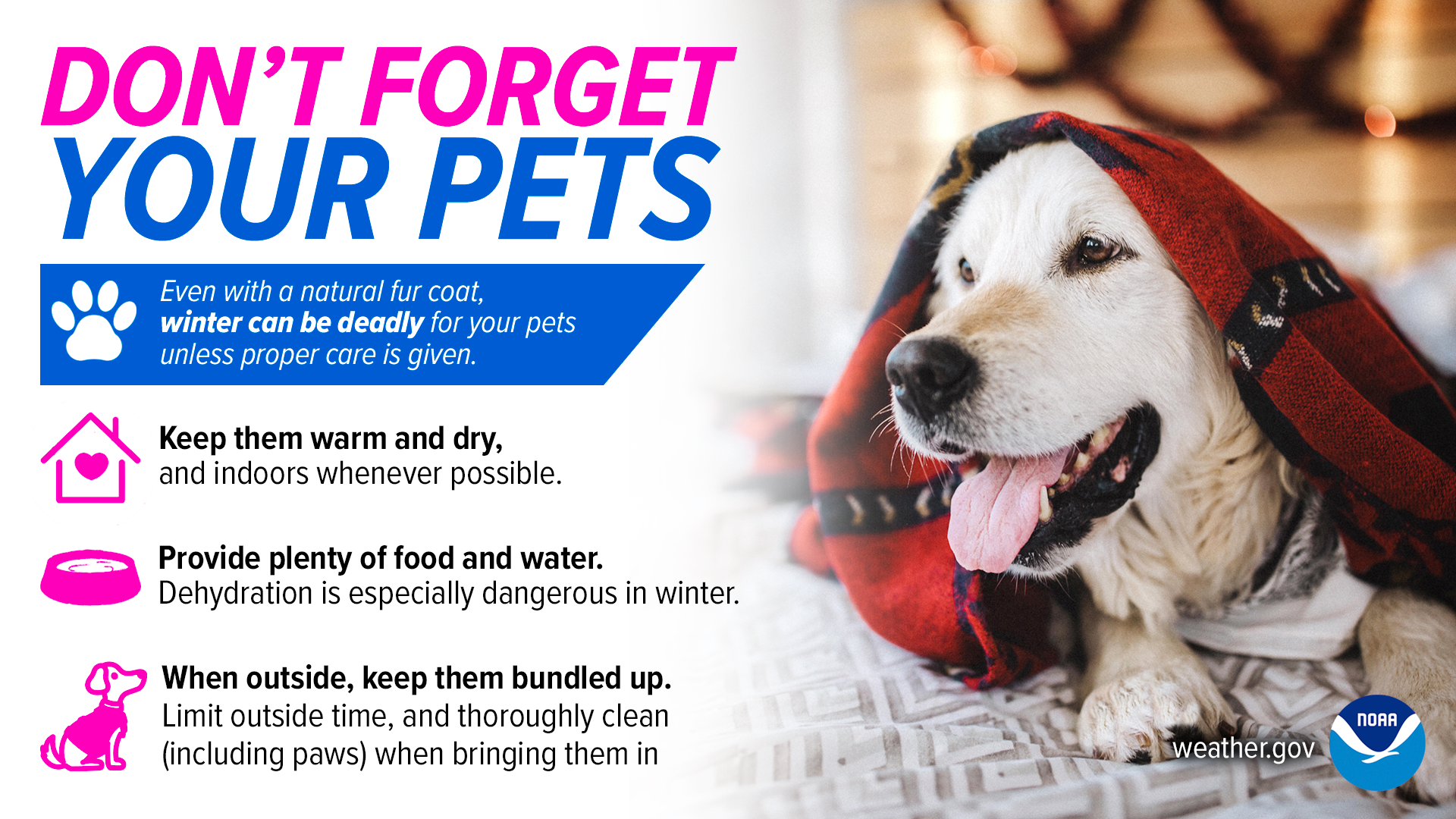
  • Bring your pets indoors and ensure they have water.
  • Eating healthy meals will help to keep your body temperature warm.
  • Stay hydrated even during the cold to prevent hypothermia. Avoid alcohol and caffeine. They cause your body to lose heat faster. Drink warm beverages or broth.
  • Keep extra blankets, sleeping bags, and warm winter coats on hand for use in cold rooms.
  • Charge all your devices (medical equipment, phone, computer, tablet, radio, etc.).
  • Check on neighbors, friends, and family.
  • For a list of warming centers in your area, call 2-1-1 or visit org/
    • Check this list for warming shelters located within CSHD:
      • Central United Methodist Church, 14 N. Lewis St., Staunton, VA, 24401
      • Waynesboro Area Refuge Ministry (WARM), check here for rotating locations.
      • Open Doors, 1111 N. Main St., Harrisonburg, VA, 28802

If You Go Outside

If you must go outside, please take these precautions:

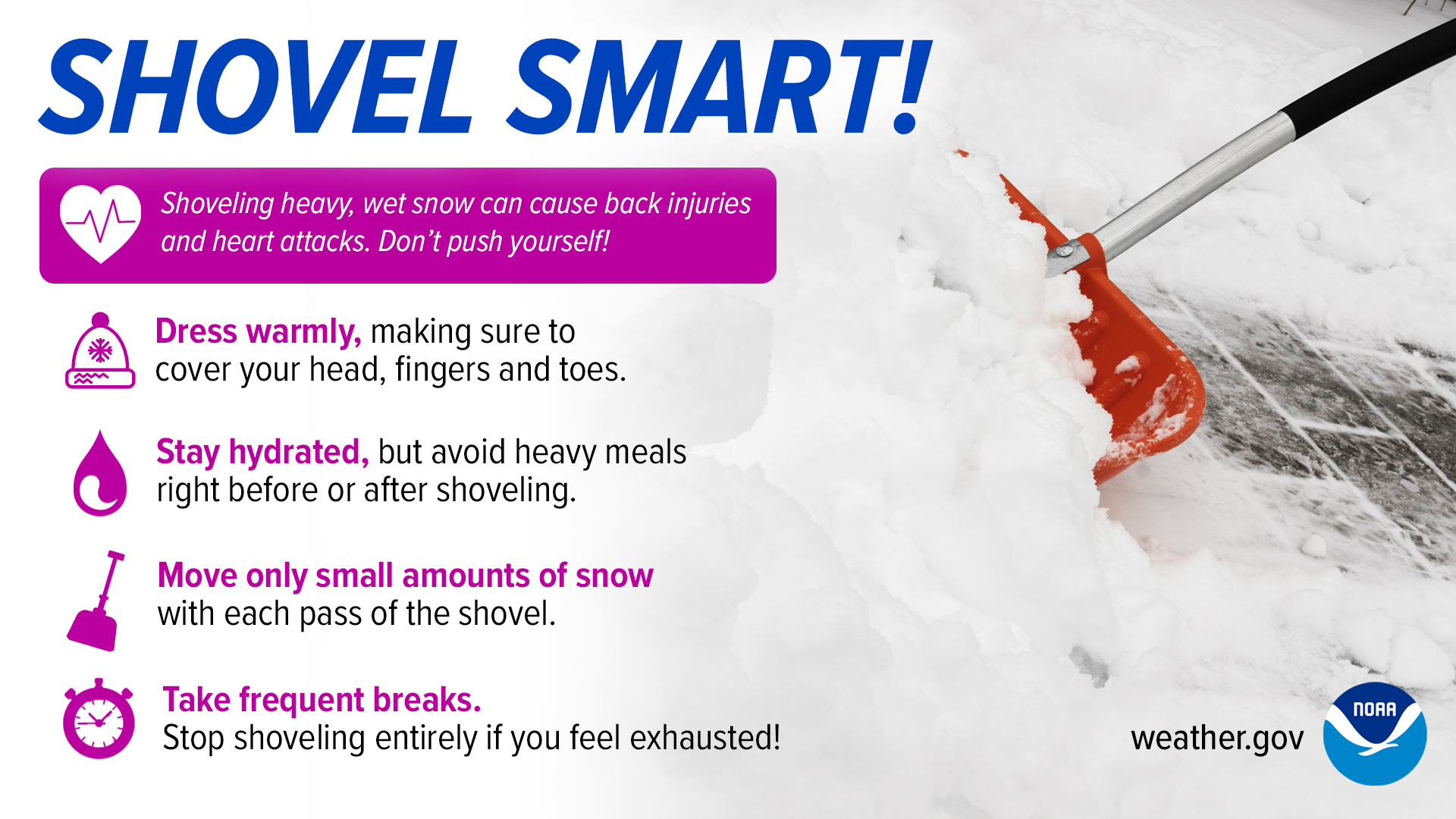
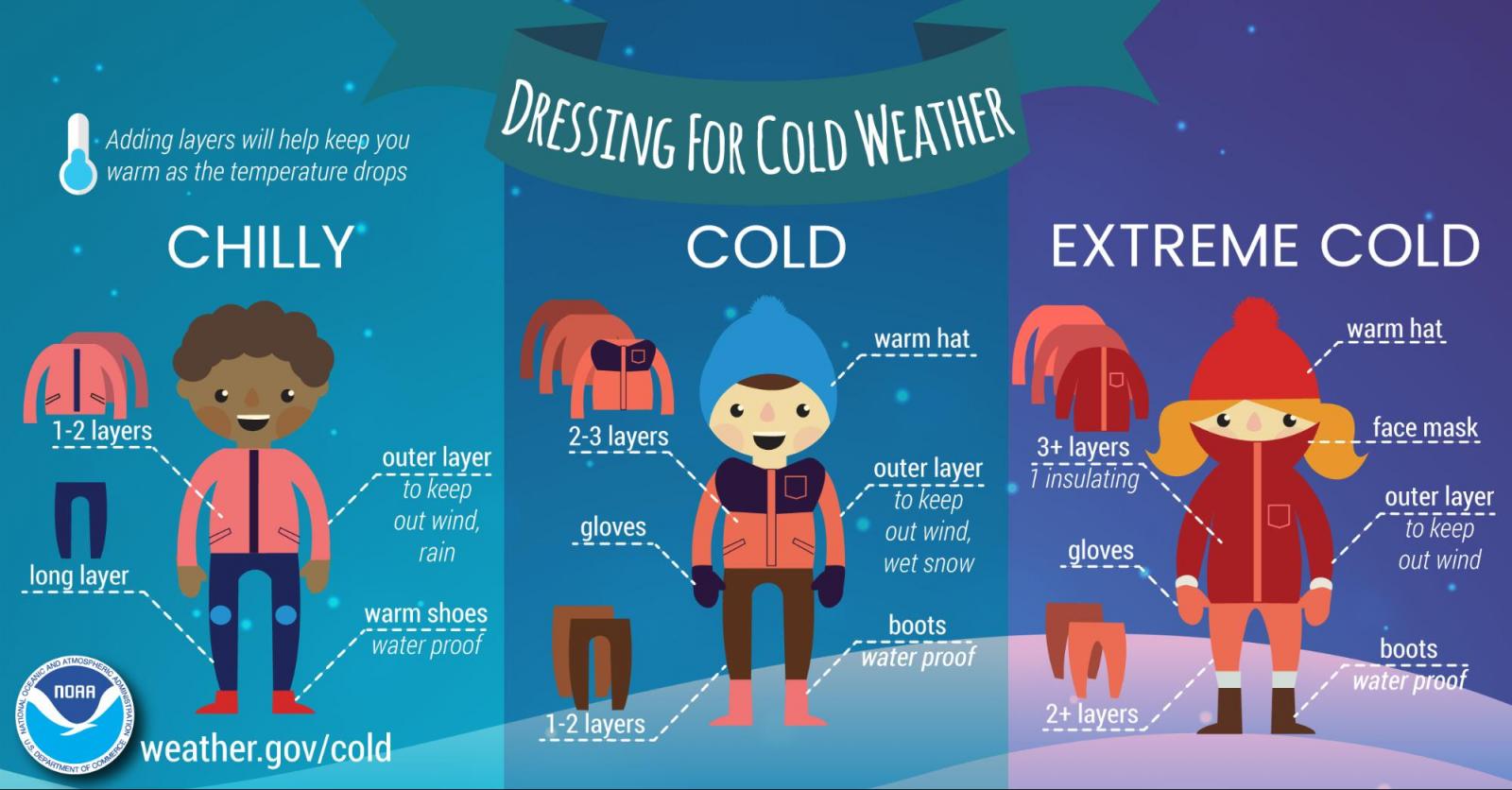
  • Dress warmly and in layers. Make sure you cover your head, fingers and toes to prevent frostbite.
  • Be aware of the wind chill factor.
  • Wear proper footwear for traction. Take slow, short steps.
  • Avoid getting wet. If you get wet, change out of wet clothes as soon as possible to prevent hypothermia.
  • Take frequent breaks if shoveling snow or working outdoors.

If You Must Drive

  • If you must travel, check the road conditions and your route first.
  • Allow extra time and follow these tips from the Virginia Department of Transportation.
  • If you must travel, let someone know your destination and when you expect to arrive. Ask them to notify authorities if you are late.
  • Always carry extra warm clothing and blankets with Don’t rely on a car to provide enough heat.

If you have chronic conditions, please reach out to your healthcare provider to make sure together you have a care plan in place. Organize and protect your prescriptions, over-the-counter drugs, home-use medical devices, and vitamins. Talk to your doctor or pharmacist about how you can create an emergency supply of medicines.

If you notice signs of frostbite and hypothermia, seek medical attention immediately.

If you have questions, please contact the Central Shenandoah Health District at cshdinfo@vdh.virginia.gov.

Central Shenandoah Health District Urges the Community to Prepare for Incoming Winter Storm

January 21, 2026
Media Contact: Rachel Dumene, Rachel.dumene1@vdh.virginia.gov, 540-480-4998

Central Shenandoah Health District Urges the Community to Prepare for Incoming Winter Storm

STAUNTON, Va. The Shenandoah Valley is expected to be impacted by severe winter weather, to include snow and ice this coming weekend. The Central Shenandoah Health District (CSHD) urges you to prepare now to keep you and your family safe, warm, and healthy during this storm.

“Being prepared for winter weather makes all the difference when a storm hits,” says Xavier Crockett, Health Director for CSHD. “We’re encouraging everyone to have emergency supplies at home, and to stay off the roads if they can, especially in our more rural counties.”

Before the Storm

Before the storm arrives, the Central Shenandoah Health District urges you to take these steps:

  • Make sure you have an emergency supply kit on hand and keep an emergency kit for your car.
  • Organize and protect your prescriptions, over-the-counter drugs, home-use medical devices, and vitamins. Talk to your doctor or pharmacist about how you can create an emergency supply of medicines.
  • Check your smoke and carbon monoxide
  • Replenish fuel for your car and heating sources.
  • Weatherproof your home by insulating exposed pipes and caulking and weather strip doors/windows.
  • Make sure you understand the warnings, watches and advisories and have multiple ways to receive alerts.

During/After the Storm

  • Bring your pets indoors and ensure they have water.
  • Stay indoors and limit your exposure to the cold.
  • Properly ventilate emergency heat sources.
  • Keep generators outside at least 20 feet from your home.
  • Check on neighbors and family.

If you must go outside, take the following precautions to stay safe and prevent frostbite and hypothermia:

  • Wear proper footwear for traction. Take slow, short steps.
  • Dress warmly and in layers. Make sure you cover your head, fingers and toes.
  • Avoid getting wet and change out of wet clothes as soon as possible.
  • Stay hydrated. Drink warm beverages.
  • Take frequent breaks if shoveling snow or working outdoors.
  • Stay off the roads. If you must travel, check the road conditions and your route first. Allow extra time and follow these tips from the Virginia Department of Transportation.

The Central Shenandoah Health District wants you to stay warm, safe, and healthy! For more information, contact the Central Shenandoah Health District at cshdinfo@vdh.virginia.gov.