
Winter Preparedness ♦ Cold Weather Safety ♦ Power Outage
Boil Water Advisory ♦ VDH Actions
On January 22, Governor Spanberger issued Executive Order 11 declaring a state of emergency in advance of the impending winter weather that impacted most of the Commonwealth beginning Saturday, January 24 and lasting through Monday, January 26. A second storm impacted areas mainly south of I-64 lasting beginning Friday, January 30 through Sunday, February 1.
Extreme cold temperatures are expected to continue through Monday, February 2. Hypothermia and frostbite are real concerns. Focus on staying warm and dry.
VDH is currently seeing increased visits to emergency departments for hypothermia/cold exposure, and slips, trips, and falls.
During the Snow: Cold Weather Safety
Cold temperatures affect everyone differently. Be sure to check on family, friends and neighbors.
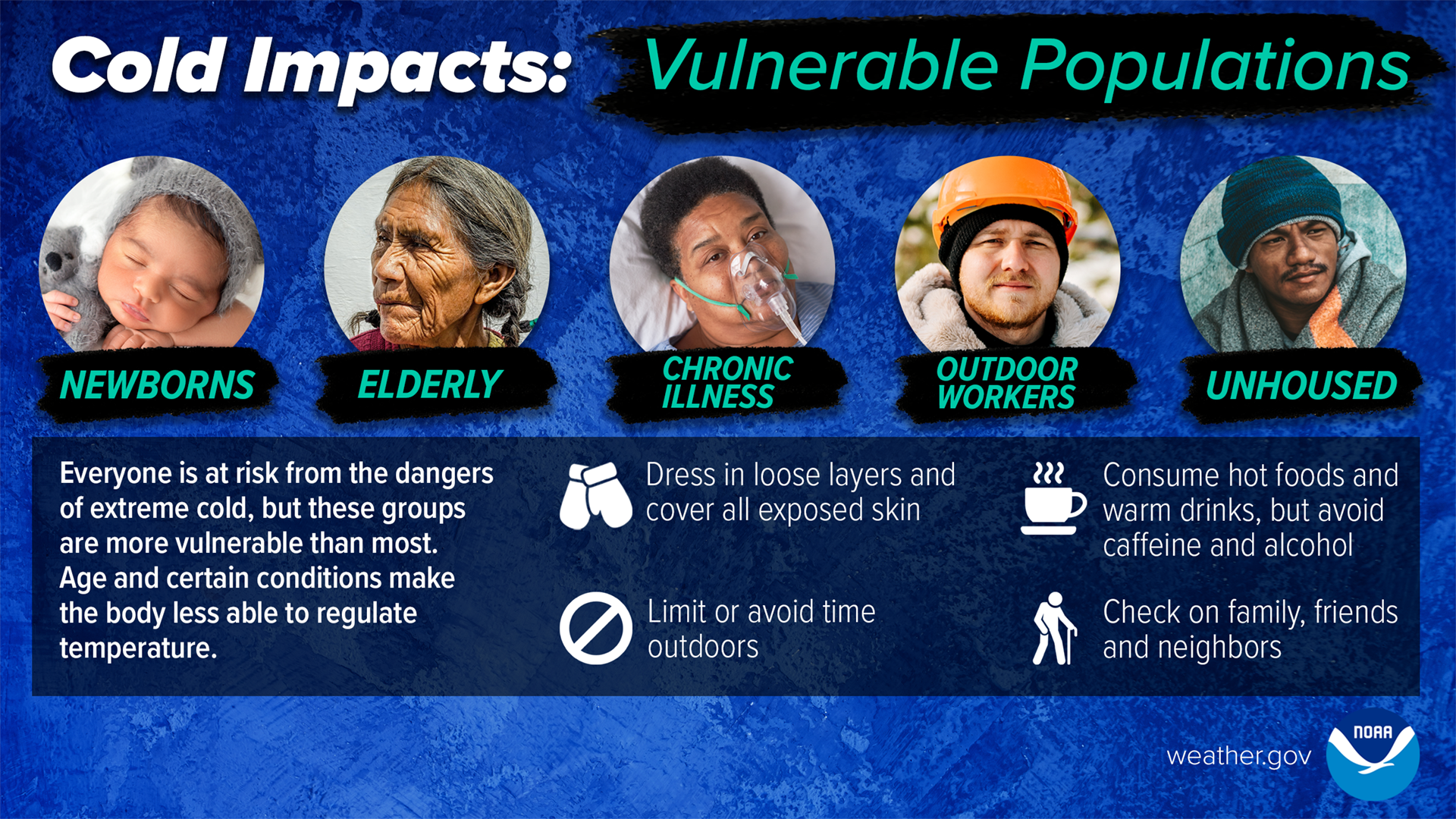
When exposed to cold temperatures, your body begins to lose heat faster than it can be produced. It is very important to remember to take caution during extremely cold temperatures and severe winter weather to prevent injuries and illness, such as hypothermia and frostbite.

Hypothermia occurs most commonly at very cold environmental temperatures, but can occur even at cool temperatures (above 40°F) if a person becomes chilled from rain, sweat, or submersion in cold water.
Redness or pain in any skin area may be due to frostbite, an injury to the body that is caused by freezing. Seek medical care if you suspect frostbite or hypothermia.

- During the severe winter weather, try to stay indoors. Limit your time outdoors.
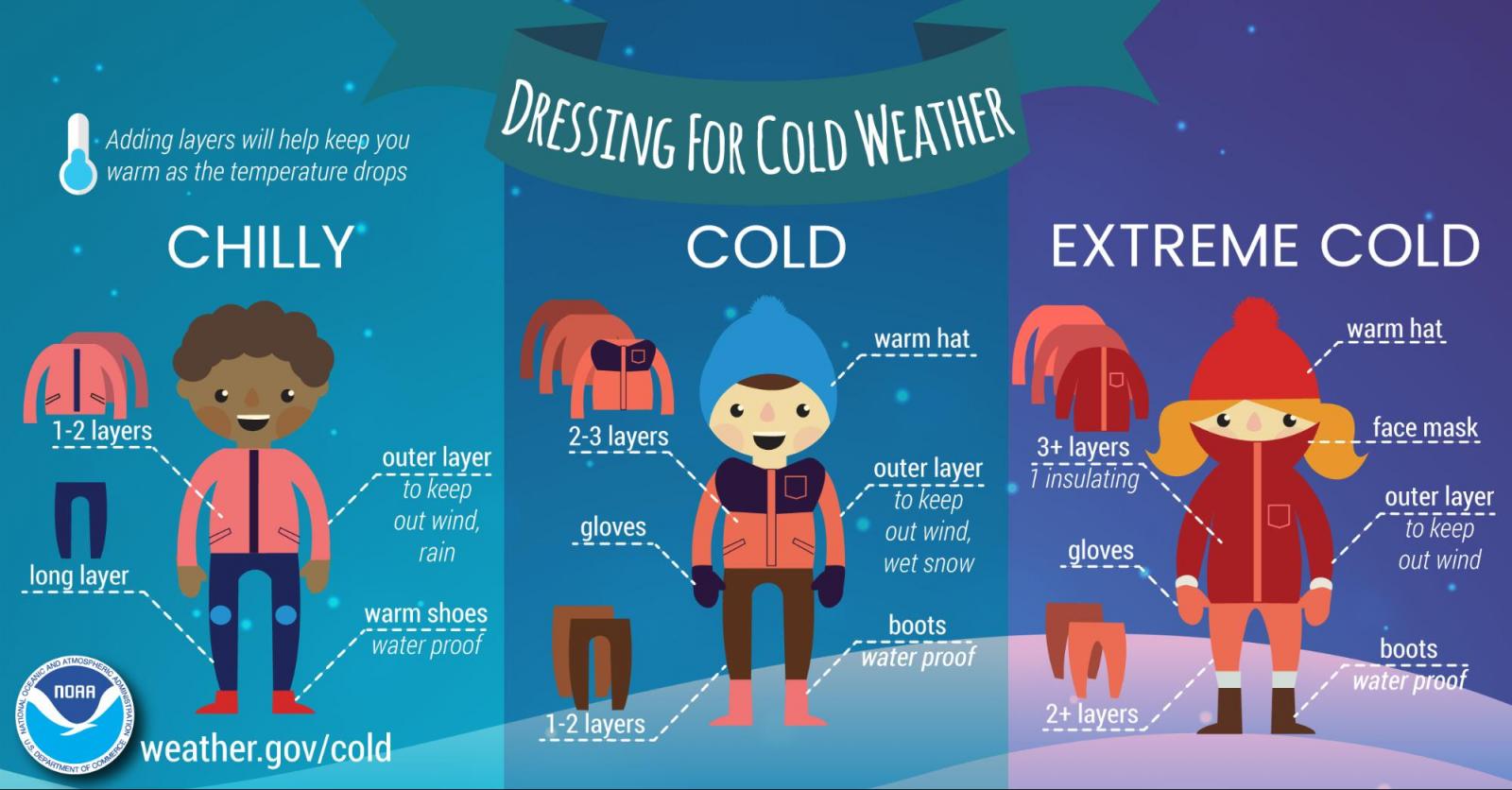
- If you must go out, make sure your family is safe by dressing warmly and limiting exposure to the cold to prevent frostbite.
- Dress warmly and in layers. Make sure you cover your head, fingers and toes to prevent frostbite.
- Wear proper footwear for traction. Take slow, short steps.
- Be aware of the wind chill factor.
- Avoid getting wet and change out of wet clothes as soon as possible to prevent hypothermia.
- Take frequent breaks if shoveling snow or working outdoors.
- If you have pets, bring them indoors. If you cannot bring them inside, provide adequate shelter to keep them warm and make sure they have access to unfrozen water.
- Eating healthy meals will help to keep your body temperature warm.
- It’s important to stay hydrated even during the cold to prevent hypothermia. Avoid alcohol and caffeine. They cause your body to lose heat faster. Drink warm beverages or broth.
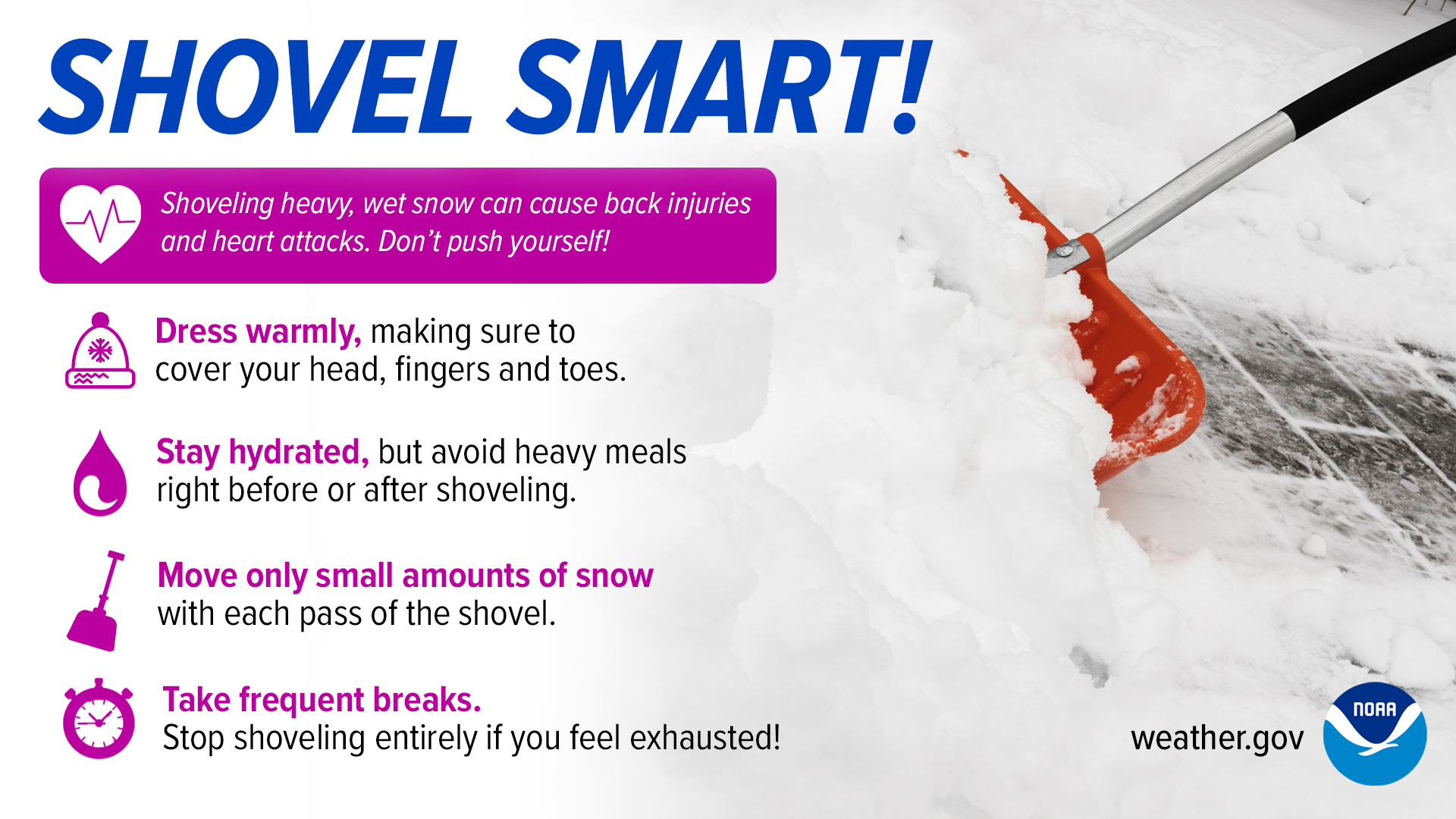
Cold weather puts an extra strain on the heart. If you have heart disease or high blood pressure, follow your doctor's advice about shoveling snow or performing other hard work in the cold.
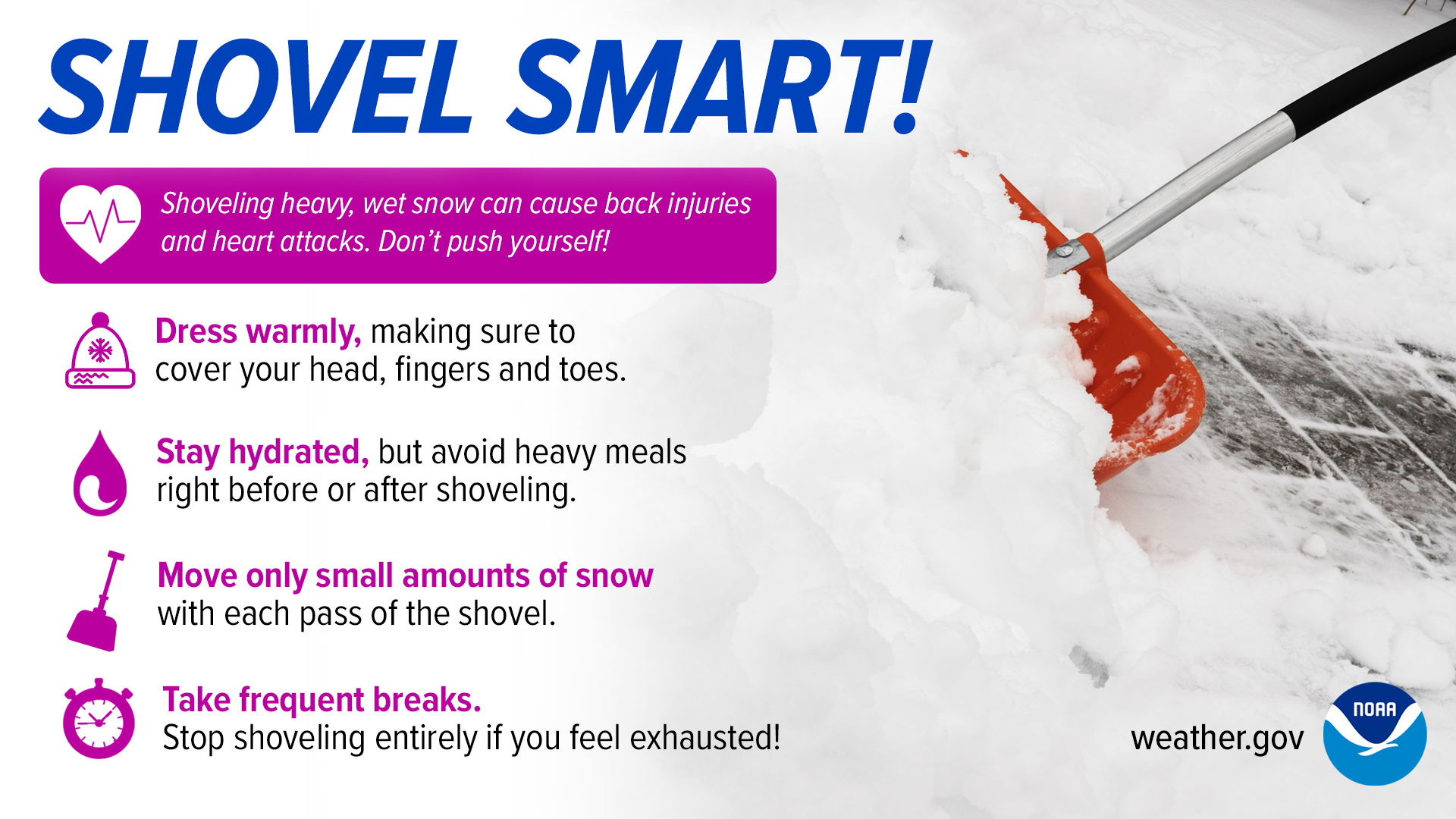
Stay safe while shoveling by following these tips:
- Check the weather, temperature, and wind chill before setting foot outside.
- Dress in layers of loose-fitting clothing.
- Use the right tool and the proper technique. Choose a shovel with a small, plastic blade as it will weigh less than a shovel with a metal blade.
- Use a proper shoveling technique to reduce strain on the body.
- Don’t overdo it. Take breaks to catch your breath and drink water.
- Try pushing the snow rather than lifting and throwing it.
- Know the signs of hypothermia and frostbite. Hypothermia, or abnormally low body temperature, is a dangerous condition that can occur when a person is exposed to extremely cold temperatures. Symptoms in adults include shivering, exhaustion, confusion, slurred speech, and drowsiness. Seek immediate medical attention if a person’s temperature is below 95° F.
Remember, your body is already working hard just to stay warm, so don't overdo it.
Walking on ice is extremely dangerous. Many injuries related to cold weather happen from falls on ice-covered sidewalks, steps, driveways, and porches. Icy sidewalks can be especially hazardous for the elderly.
Keep your steps and walkways as free of ice as possible by using rock salt or another chemical de-icing compound. Sand may also be used on walkways to reduce the risk of slipping.
Wear proper footwear for traction. Take slow, short steps.
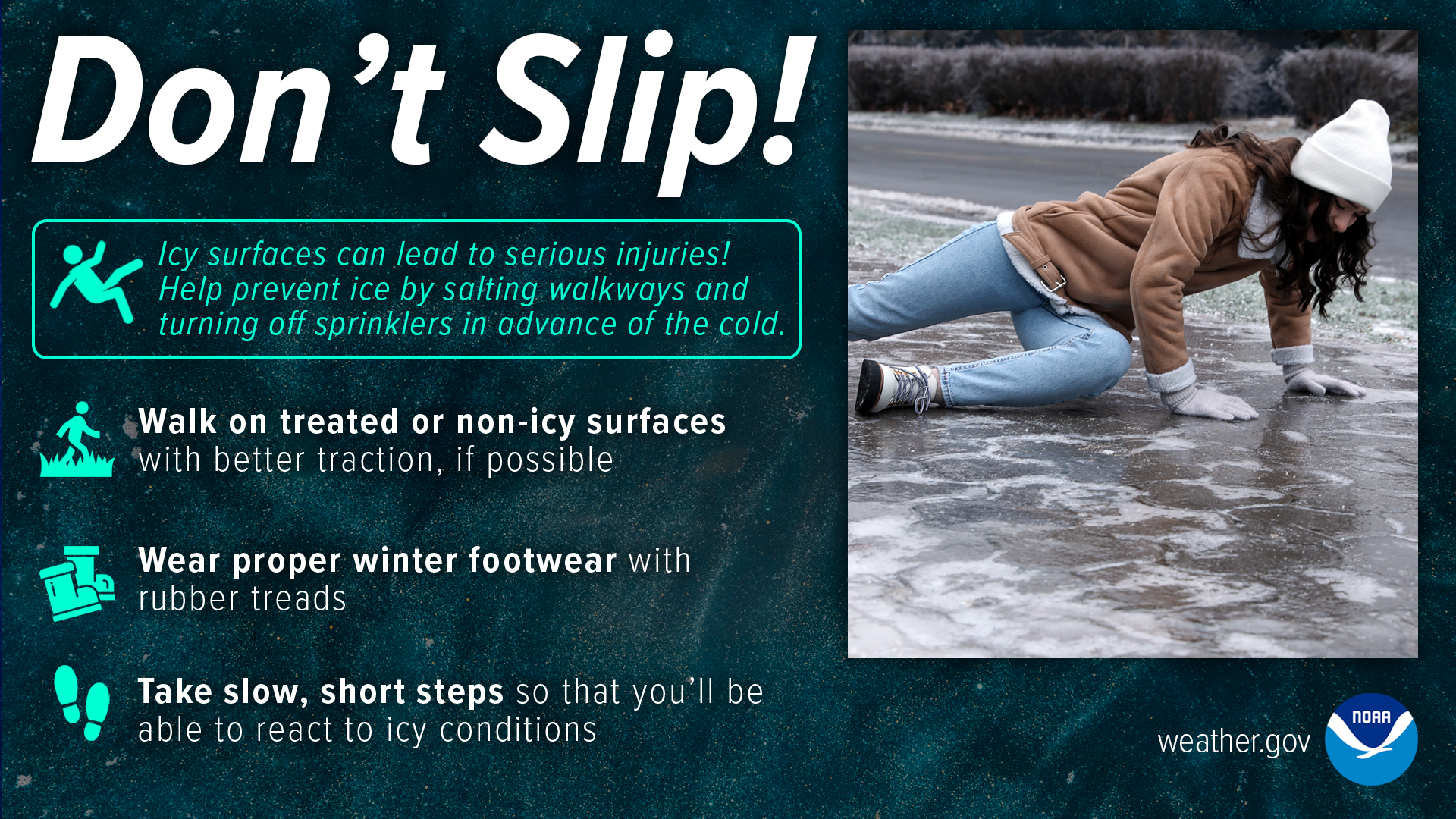
Take these precautions to prevent slips, trips and falls:
- Use caution on roads and sidewalks. They will remain slippery through the week.
- Wear proper footwear for traction. Take slow, short steps.
- Plan your path to avoid slick areas if possible.
- If the area you are walking is icy or slick, keep feet close to ground, moving them in small steps keeping good balance.
- Take your time and pay attention to where you are going.
- Know where your feet are.
- Maintain three points of contact while getting in and out of vehicles and walking on stairs.
- Do not walk on any ice-covered body of water, such as ponds, pools, creeks, rivers, even puddles. They might appear frozen, but the ice will be too this to support you and can lead to injury or worse.
Respiratory viruses such as COVID-19, flu, and respiratory syncytial virus (RSV) are common during winter as you spend more time indoors. Protect yourself and your family with these tips.
- Stay up to date on your respiratory vaccines.
- Everyone aged six months and older should get a flu shot every year, with a few exceptions. Talk to a healthcare provider about which flu vaccines are recommended for you and your family.
- People aged six months and older can receive the COVID-19 vaccine based on individual-based decision-making with a healthcare provider.
- All adults aged 75 years and older are recommended to receive a single dose of one RSV vaccine. If you are 60-74 years old with a health condition, speak with your healthcare provider to decide if the RSV vaccine is the right choice for you. Pregnant women and parents of newborns should also talk with their provider about the benefits of the RSV vaccine.
- Practice good hygiene
- Cover coughs and sneezes
- Wash or sanitize hands often
- Clean frequently touched surfaces often
- Keep reading about respiratory viruses and hygiene
- Stay home if you are sick.
Asthma
Cold, dry air can irritate the airways causing coughing, wheezing and shortness of breath. If you have asthma, breathing in cold, dry air can trigger an asthma attack.
- If you must go outside, use a scarf wrapped loosely around your nose and mouth. The scarf will warm the air before it enters your lungs. Breathe in through your nose and out through your mouth.
- Check with your healthcare provider about using your quick-relief inhaler about 15-30 minutes before going outside.
Talk to your doctor about how you can prevent asthma attacks when outside in winter weather and remember to follow your Asthma Action Plan.
VDOT provides weather advisories on current road conditions and weather forecasts. Travelers can easily access travel conditions by dialing 5-1-1, 24 hours a day, 7 days a week. This information is also available on the website at www.virginiadot.org.
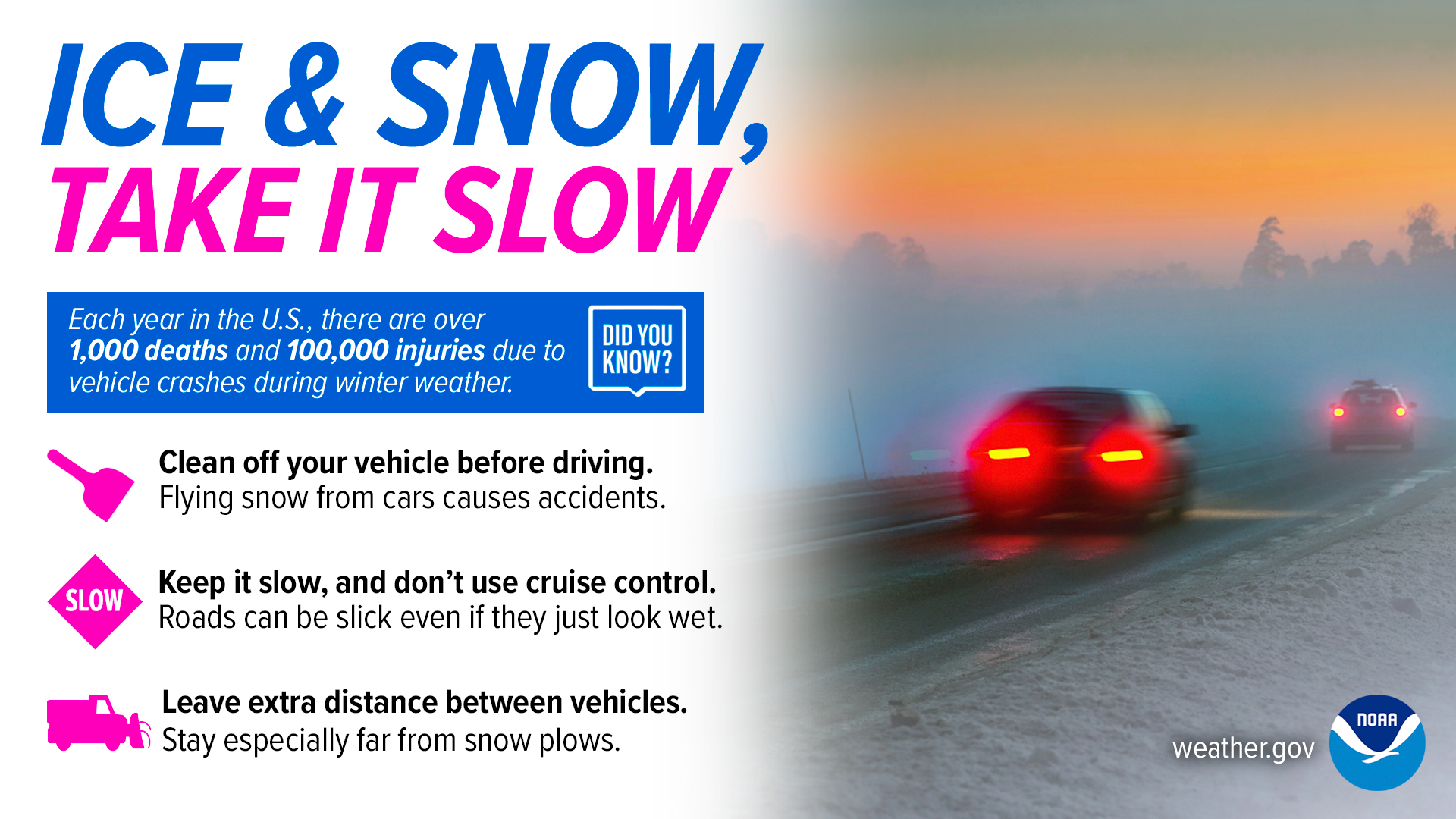
- Do not travel in low visibility conditions.
- Avoid traveling on ice-covered roads, overpasses, and bridges if at all possible.
- Never pour water on your windshield to remove ice or snow—this can cause your windshield to shatter.
- If you must travel by car, use tire chains and take a mobile phone with you.
- If you must travel, let someone know your destination and when you expect to arrive. Ask them to notify authorities if you are late.
- Check and restock the winter emergency supplies in your car before you leave.
- Always carry extra warm clothing and blankets with you. Don't rely on a car to provide enough heat. The car could break down.
- Allow extra time and follow these tips from the Virginia Department of Transportation.
Don't forget about your pets this winter! Make sure they have a warm, dry place to rest with plenty of food and water.
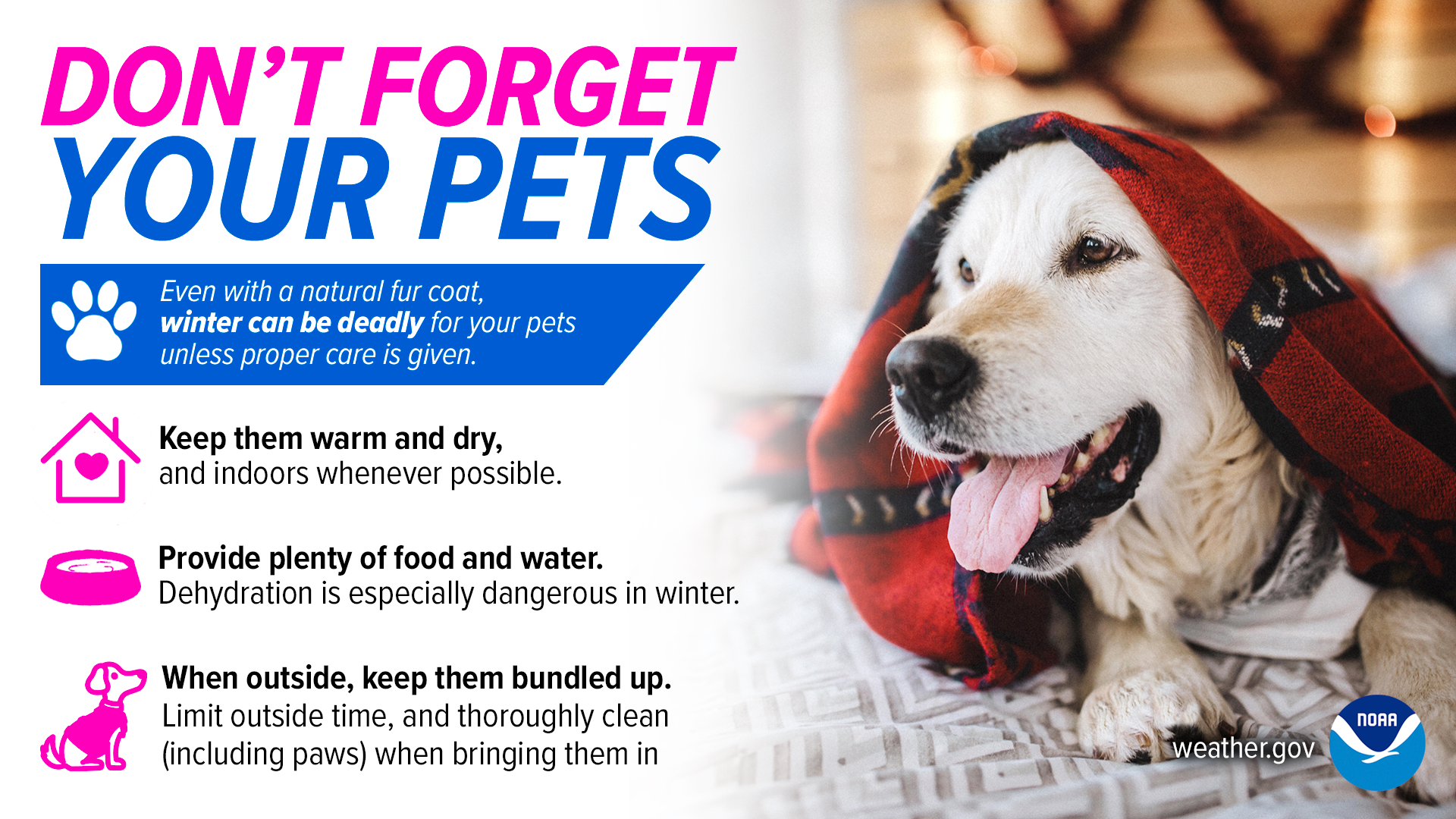
If you have pets, bring them indoors. If you cannot bring them inside, provide adequate shelter to keep them warm and make sure they have access to unfrozen water.
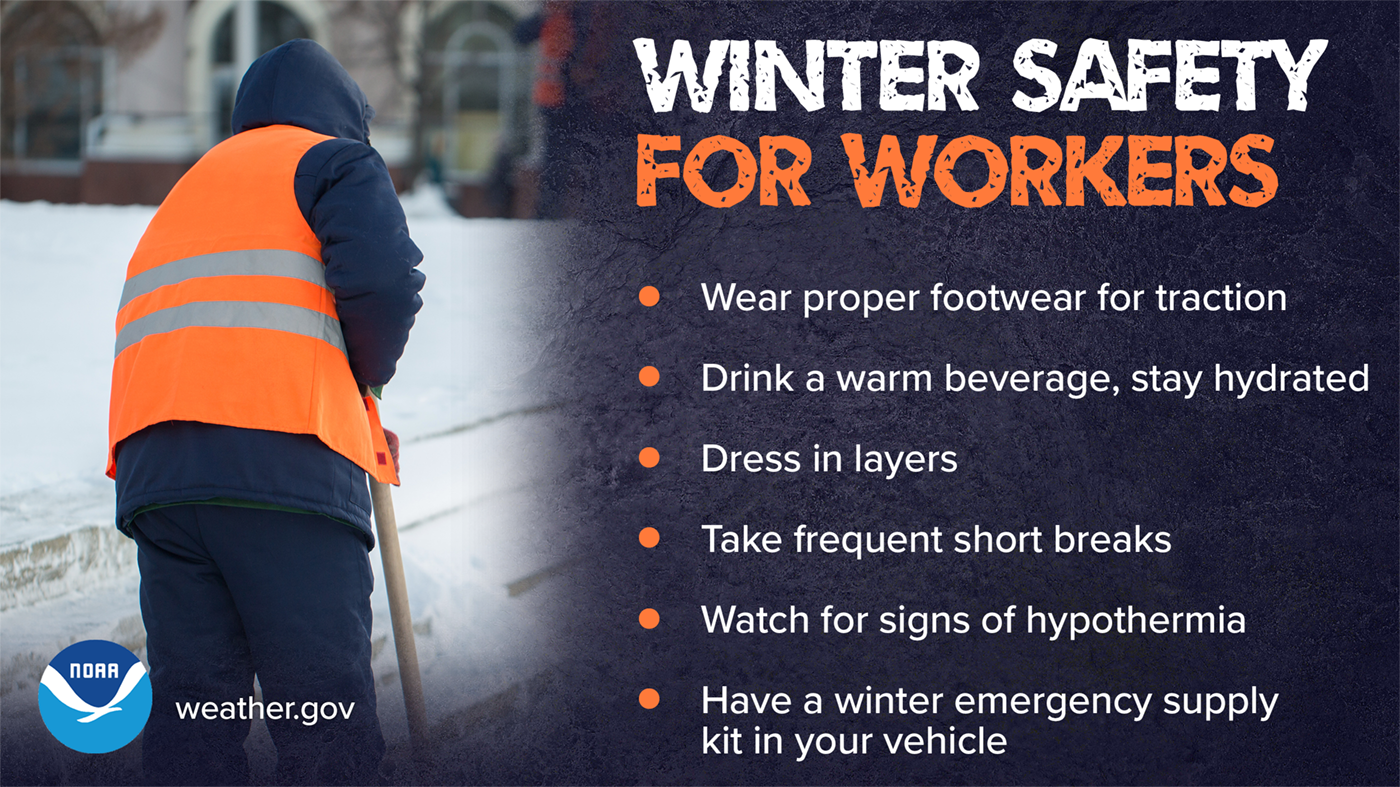
If you must work in cold environments or temperatures, take these precautions:
- Wear appropriate clothing.
- Wear several layers of loose clothing for better insulation.
- Some clothing may restrict movement, which could be dangerous.
- Make sure to protect the ears, face, hands, and feet.
- Boots should be waterproof and insulated.
- Wear a hat. Hats reduce body heat escaping from your head.
- Move into warm locations during breaks.
- Carry extra socks, gloves, hat, jacket, clothes, and blankets.
- Include a thermometer and chemical hot packs in your first aid kit.
- Avoid touching cold metal surfaces with bare skin.
Boil Water Advisories
If under a boil water advisory, residents can safely use the water supply for bathing, toilet flushing, laundry, and other uses not associated with consumption or ingestion.
Do not use the water for activities associated with consumption, including drinking, beverage and food preparation (including baby formula and juice), dishwashing, cleaning food contact surfaces, making ice or coffee, and brushing teeth. Parents are encouraged to closely monitor children who take a bath to avoid ingestion at this time.


Drinking and cooking
Use commercially bottled water or boiled water for drinking and to prepare and cook food.
Breastfeeding is the best option for feeding an infant. If you feed your child formula, provide ready-to-use formula if possible.
Handwashing
In many cases, you can use tap water and soap to wash your hands during a boil water advisory. Follow the advice from your local officials.
Bathing and showering
There is no need to boil water for bathing or showering. Adults, teens, and older children, can shower or bathe, though they should avoid getting water in the mouth or swallowing the water. Use caution when bathing infants and young children. Consider giving them a sponge bath to reduce the chance of them swallowing water.
However, care should be taken to prevent water from getting into deep open or post-surgical wounds. Consult your physician or health care provider for wound care instructions.
Brushing teeth
Brush your teeth using boiled water or commercially bottled water. Do not use tap water that you have not boiled first.
Washing dishes
If possible, use disposable plates, cups, and utensils during a boil water advisory.
Sanitize all baby bottles.
Dishwashers are generally safe to use if they have a sanitizing cycle or reach a final rinse temperature of at least 150°F (66°C). Check the manual or contact the manufacturer to find out what temperature your dishwater reaches.
To wash dishes by hand:
- Wash and rinse the dishes as you normally would using hot water.
- In a separate basin, add 1 teaspoon of unscented household liquid bleach for each gallon of warm water.
- Soak the rinsed dishes in the water for at least one minute.
- Let the dishes air dry completely before using them again.
Laundry
It is safe to wash clothes as usual.
Cleaning
Clean washable toys and surfaces with:
- Commercially bottled water,
- Boiled water, or
- Water that has been disinfected with bleach
Caring for pets
Give pets commercially bottled water or boiled water that has cooled. Pets can get sick from some of the same germs as people or spread germs to people.
Caring for your garden and houseplants
You can use tap water for houseplants and gardens, including watering plants you eat.
After an emergency, your tap water may not be available or safe to use. Use bottled, boiled, or treated water to avoid getting sick. Boiling is the best way to kill germs in water.
If your residence is under a boil water advisory, do not use that water to drink, wash dishes, brush your teeth, wash or prepare food, wash your hands, make ice, or make baby formula.
Instead, use bottled, boiled, or treated water for drinking, cooking, and personal hygiene.
Steps for boiling water
If the water is cloudy, first filter it through a clean cloth, paper towel, or coffee filter. Another option is to let it settle. Then, draw off the clear water and follow the steps below.
- Bring clear water to a rolling boil for 1 minute (at elevations above 6,500 feet, boil for 3 minutes).
- Let the boiled water cool.
- Store the boiled water in clean, sanitized containers with tight covers.
Watch a video of these instructions here.
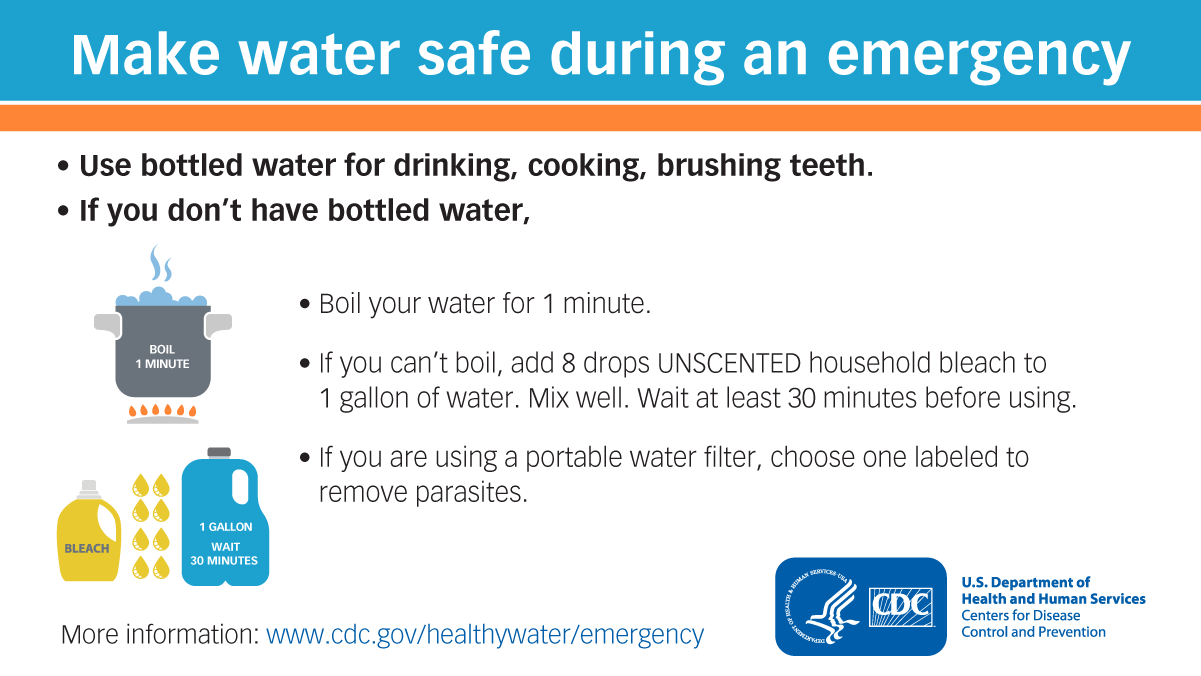
In an emergency situation where regular water service has been interrupted – like a hurricane, flood, or water pipe breakage – local authorities may recommend using only bottled water, boiled water, or disinfected water until regular water service is restored. These instructions show you how to boil and disinfect water to kill most disease-causing microorganisms that may be present in the water. However, boiling or disinfection will not destroy other contaminants, such as heavy metals, salts, and most other chemicals.
These tips provide information for feeding your young child during a boil water advisory.
Infant Feeding FAQs (en español)
Breastfeeding During Disasters
How to Make Water Safe in an Emergency (en español)
Fact Sheet: How to Make Water Safe in an Emergency (en español)
Use Safe Water During an Emergency (en español)
How to prepare and store powdered infant formula during and emergency (en español)
How to Clean Infant Feeding Items During Emergencies (en español)
Follow recommendations from your water utility provider.
Extreme cold can cause water pipes in your home to freeze and sometimes rupture or break. When you are expecting very cold or freezing temperatures:
- Leave all water taps slightly open so they drip continuously.
- Keep the temperature inside your home warm.
- Allow heated air to reach pipes. For example, open cabinet doors beneath the kitchen and bathroom sinks.
- If your pipes do freeze, do not thaw them with a torch. Thaw the pipes slowly with warm air from an electric hair dryer.
- If you cannot thaw your pipes, or the pipes have broken open, use bottled water or get water from a neighbor's home.
- As an emergency measure, if no other water is available, snow can be melted for water. Bringing water to a rolling boil for one minute will kill most germs but won't get rid of chemicals sometimes found in snow.
- Learn more on how to use safe water after a natural disaster or emergency.
Power Outage
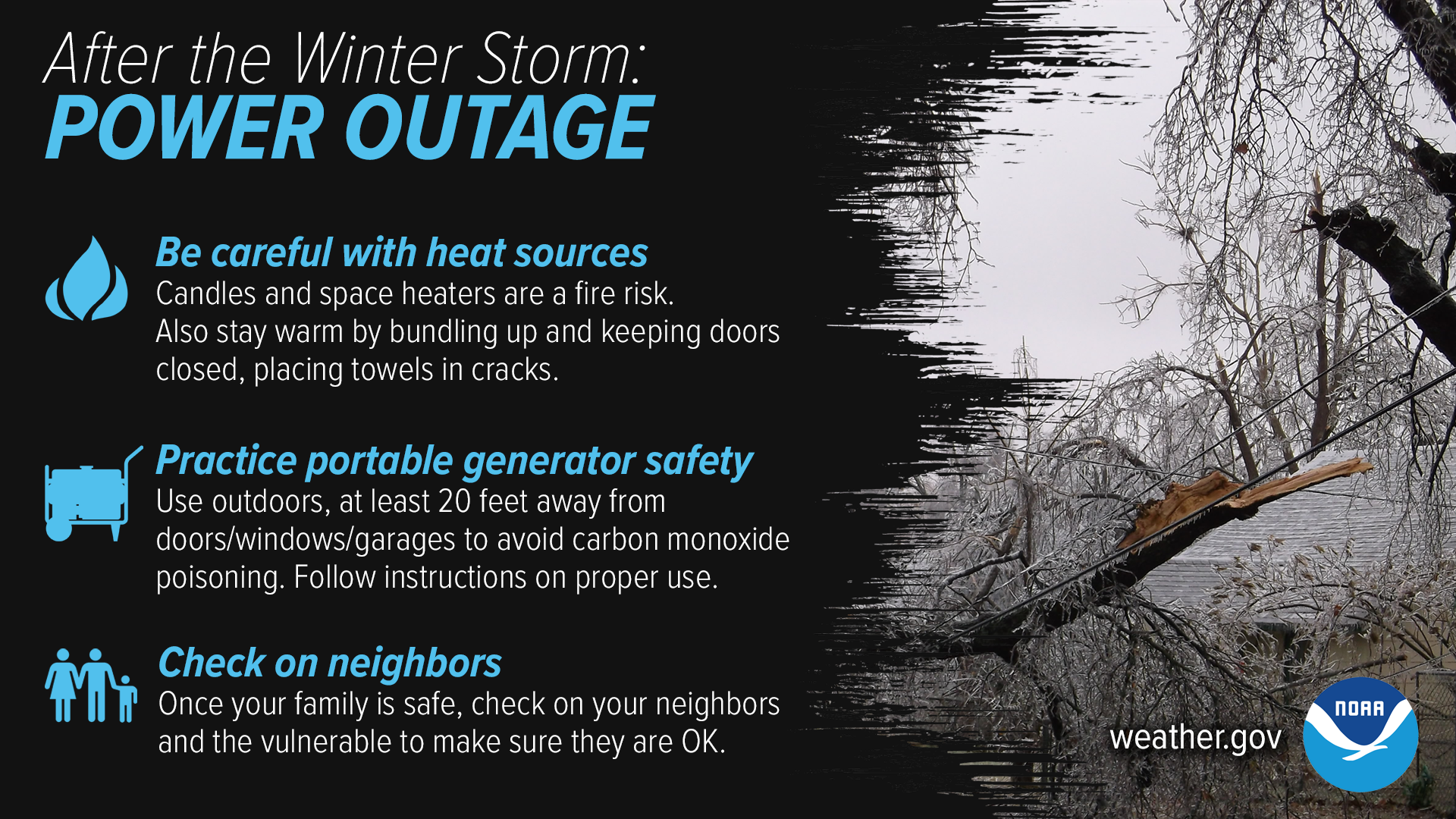
Power outages are common after a big winter storm. If you lose power, make sure to be careful when using alternative heat sources and practice portable generator safety. Once you and your family are safe, check in with others in your neighborhood to make sure they are okay.
- Four hours in a refrigerator,
- 24 hours in a half-full freezer, and
- 48 hours in a full freezer.
Have at least one of the following heat sources in case the power goes out:
- Extra blankets, sleeping bags, and warm winter coats
- Fireplace that is up to code with plenty of dry firewood or a gas log fireplace
- Portable space heaters or kerosene heaters. Check with your local fire department to make sure that kerosene heaters are legal in your area.
- Do not use a gas stove or oven to heat your home.
Use space heaters safely.
- Use electric space heaters with automatic shut-off switches and non-glowing elements.
- Keep heat sources, like space heaters, at least 3 feet away from drapes, furniture, bedding, or other flammable materials. Never cover your space heater.
- Never place a space heater on top of furniture or near water.
- Never leave children unattended near a space heater.
- Make sure that the cord of an electric space heater is not a tripping hazard, but do not run the cord under carpets or rugs.
- Avoid using extension cords to plug in your space heater.
- If your space heater has a damaged electrical cord or produces sparks, do not use it.
Know shelter locations in your community that open during inclement weather or outages. Go to a shelter if you are not able to heat your home safely.

Use generators and other appliances safely.
- Use generators outdoors. Never using generators, gas or charcoal grills, camp stoves, or similar devices inside your home, in basements, in garages, or near windows. The fumes are deadly.
- Generators should be located at least 20 feet from any window, door, or vent and in a space where rain and snow will not reach them.
- Protect yourself from carbon monoxide (CO) poisoning by installing a battery-operated CO detector.
- VDH recommends these precautions to help prevent carbon monoxide poisoning.
- Plug in appliances to the generator using individual heavy-duty, outdoor-rated extension cords.
- Do not use the generator or appliances if they are wet.
Carbon monoxide is an odorless, colorless gas that is poisonous to breathe. Deadly levels of carbon monoxide can quickly build up when the exhaust from grills or generators is not properly vented. The gas emitted by these sources can linger for hours, even after the generator or grill has shut off. Operate all gasoline-powered devices such as generators outdoors and never bring them indoors.
Depending on the level of exposure, carbon monoxide may cause:
- Fatigue
- Weakness
- Chest pains for those with heart disease
- Shortness of breath upon exertion
- Nausea
- Vomiting
- Headaches
- Confusion
- Lack of coordination
- Impaired vision
- Loss of consciousness
- In severe cases, death
VDH recommends these precautions to help prevent carbon monoxide poisoning
If there is a power failure:
- Use battery-powered flashlights or lanterns rather than candles, if possible. Candles can lead to house fires.
- If you do use candles, never leave lit candles unattended.
- Visit What to Do to Protect Yourself During a Power Outage for more information on power outage safety.
- Disconnect appliances and electronics to avoid damage from an electrical surge.
Natural disasters can make it hard for parents and caregivers to feed their infants and young children safely. These tips provide information for feeding your young child during an emergency.
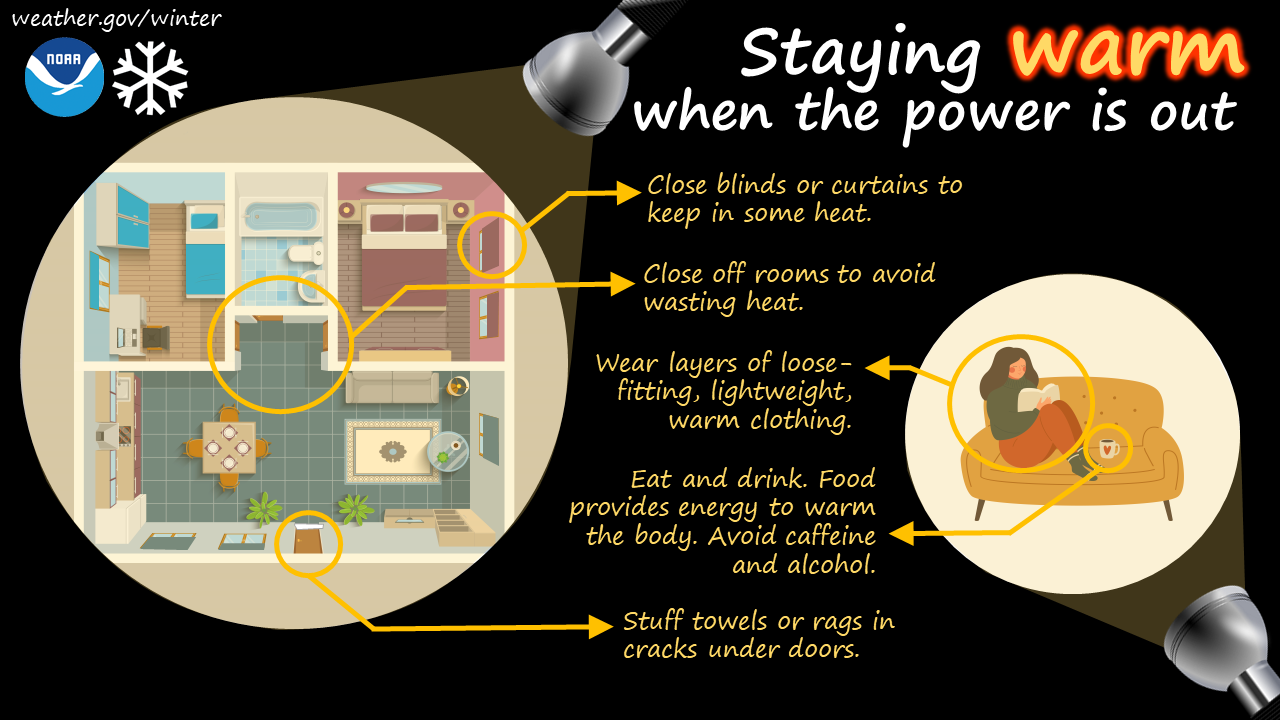
Here are additional ways you can conserve heat in your home during a power outage:
- Some gas-fueled heaters, such as vent-less gas fireplaces, require some ventilation. Otherwise, if you don't need extra ventilation, keep as much heat as possible inside your home.
- Avoid unnecessarily opening doors or windows.
- Close off unneeded rooms.
- Stuff towels or rags in cracks under doors.
- Close draperies or cover windows with blankets at night.
Babies
Infants less than one year old should never sleep in a cold room because they lose body heat more easily than adults. Follow these tips to keep your baby safe and warm during the extreme cold:
- Remove any pillows or other soft bedding. These can increase the risk of smothering and Sudden Infant Death Syndrome (SIDS).
- Dress babies in warmer clothing such as footed pajamas, one-piece wearable blankets, or sleep sacks.
- Try to maintain a warm temperature inside your home. If you're not able to keep your home warm, make temporary arrangements to stay elsewhere.
- In an emergency, you can keep your baby warm using your own body heat. If you must sleep, take precautions to prevent rolling on or smothering your baby.
Older Adults
Older adults often make less body heat because of a slower metabolism and less physical activity. Check on older friends and neighbors often to make sure their homes are heated properly.
If you are over 65 years of age, check the temperature in your home often during extremely cold weather.
Extreme cold can cause water pipes in your home to freeze and sometimes rupture or break. When you are expecting very cold or freezing temperatures:
- Leave all water taps slightly open so they drip continuously.
- Keep the temperature inside your home warm.
- Allow heated air to reach pipes. For example, open cabinet doors beneath the kitchen and bathroom sinks.
- If your pipes do freeze, do not thaw them with a torch. Thaw the pipes slowly with warm air from an electric hair dryer.
- If you cannot thaw your pipes, or the pipes have broken open, use bottled water or get water from a neighbor's home.
- As an emergency measure, if no other water is available, snow can be melted for water. Bringing water to a rolling boil for one minute will kill most germs but won't get rid of chemicals sometimes found in snow.
- Learn more on how to use safe water after a natural disaster or emergency.
Before the Storm: Winter Preparedness
The Virginia Department of Health offers these winter safety tips.
If a winter storm heads your way, make sure you understand the the warnings, watches and advisories. Winter storms, including blizzards, can bring extreme cold, freezing rain, snow, ice and high winds.
Be sure you have multiple ways to receive alerts. Before a storm, charge all phones, computers and radios.

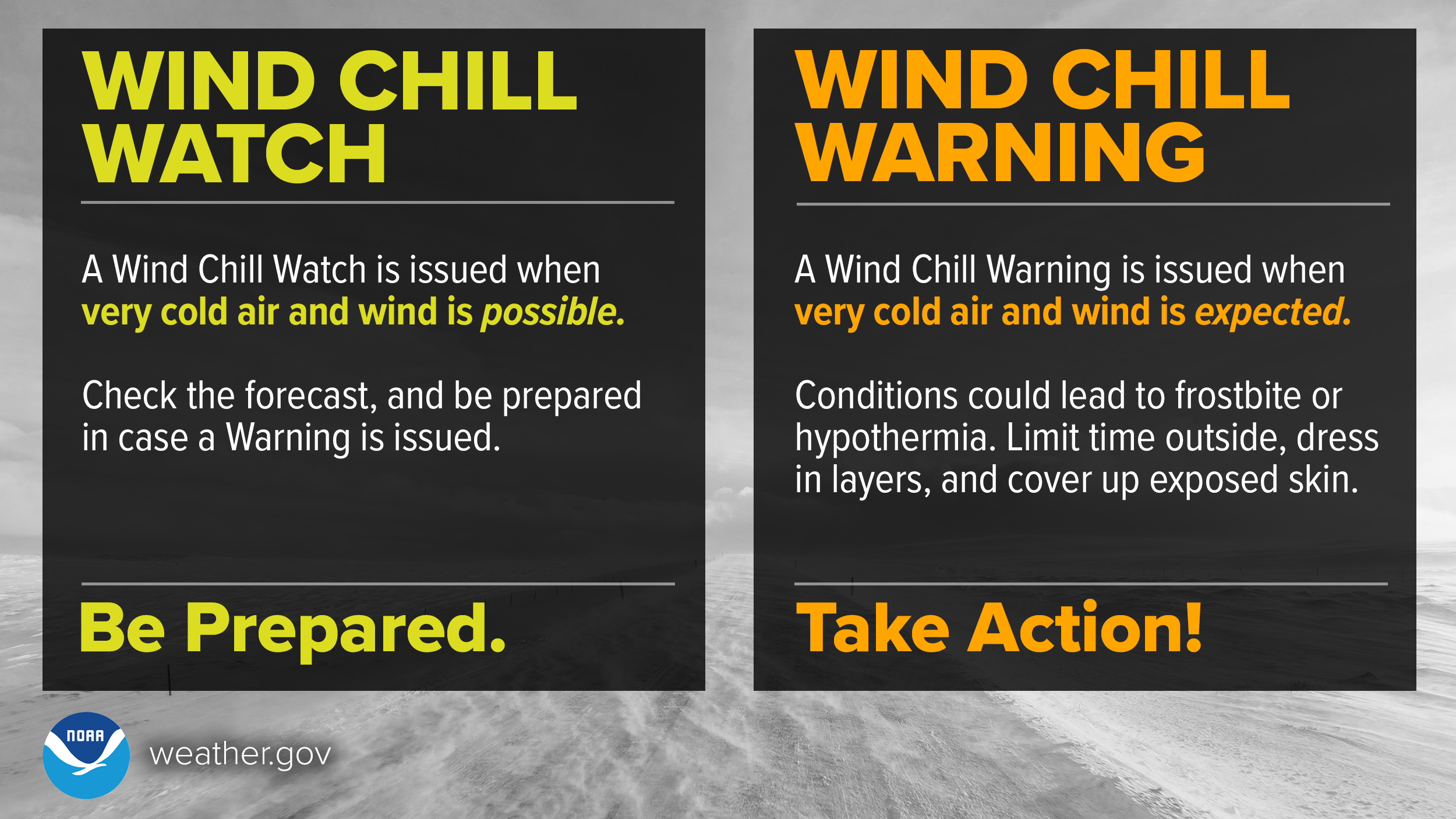
Make sure you have an emergency plan, listen to weather forecasts regularly, limit your time outside, and have an emergency supply kit on hand.

- Organize and protect your prescriptions, over-the-counter drugs, home-use medical devices, and vitamins. Talk to your doctor or pharmacist about how you can create an emergency supply of medicines.
- If power lines are down, call your local utility and emergency services. Have extra blankets and warm winter coats on hand to stay warm during power outages.
- If using a portable space heater, make sure it has an automatic shut-off switch and non-glowing elements and is placed at least three feet away from drapes, furniture, bedding, or other flammable materials.
- Never using generators, gas or charcoal grills, camp stoves, or similar devices inside your home, in basements, in garages, or near windows. The fumes are deadly.

Start your winter preparations by securing your house. Winter is when most home fires happen, and heating is the second leading cause of home fires. Check out this Home Fire Safety Guide for tips on ways to keep your home safe.

Here are other ways to keep your home warm and safe this winter:
- Install a smoke detector and carbon monoxide detector and make sure the batteries are working.
- Never leave lit candles or other flames unattended.
- Have your chimney or flue inspected every year.
- Keep blinds and curtains open during the day to absorb heat from the sun. Close them at night to keep the heat from escaping.
- To save on heating bills, close the doors and shut the vents of rooms you are not using. Keep the basement door closed.
- Caulk and weather-strip doors and windows.
- Insulate walls and attics.
- Insulate any water lines that run along exterior walls so your water supply will be less likely to freeze.
- Repair roof leaks and cut away tree branches that could fall on your home or other structure during a storm.
- Replenish fuel for your heating sources.
Make sure your car is travel ready for the winter.
- Check the forecast and road conditions before you leave.
- Check antifreeze level and have radiator system serviced.
- Replace worn tires and check tire air pressure.
- Always carry extra warm clothing and blankets with you. Don't rely on a car to provide enough heat. The car could break down.
- Keep an emergency kit for your car.
- Before the storm hits, replenish fuel for your car.

VDH Actions
- Local health districts are coordinating with local governments and supporting public health needs, including staff deployments to warming centers and emergency operations centers in some localities.
- VDH issued a news release on power outage safety to keep everyone healthy and safe during this storm.
- VDH staff has been deployed to the Virginia Emergency Operations Center to support response activities.
- Because some people in Virginia who rely on electricity-dependent durable medical equipment and devices or essential health care services to maintain their independence may be at increased risk during emergencies, VDH has partnered with the U.S. Department of Health and Human Services (HHS), to share data with our local health districts and public safety officials to help them plan for and respond to the needs of residents in their communities.
- VDH partnered with the Virginia Hospital & Healthcare Association (VHHA) and the four Regional Healthcare Coalitions to discuss considerations and recommendations related to transportation, infrastructure, supply chain, and personal safety.
- The Office of Emergency Medical Services has reached out to local EMS units to discuss preparedness for this event. EMS and fire crews are trained for this, plan for this, and take a lot of pride in getting to patients no matter what the conditions.
- The Office of Drinking Water has been in contact with all the waterworks in Virginia with preparation recommendations.
- VDH stands ready and available to assist with public health and safety needs.
For More Information:
Text SNOW to 247-211
to receive resources and tips directly to your phone.
VDH Call Center
877-829-4682
(Option 2)
Monday–Friday
(no holidays)
8 a.m. to 5 p.m.
News Releases
- Governor Abigail Spanberger Urges Virginians to Keep Safe From Carbon Monoxide Exposure as Emergency Room Visits Rise
- Virginia Department of Health Provides Tips to Stay Warm, Healthy During Power Outage
- Governor Spanberger Declares State of Emergency in Advance of Winter Weather Expected This Weekend
- Attorney General Jones Announces Price Gouging Protections In Effect Ahead of Anticipated Winter Weather