
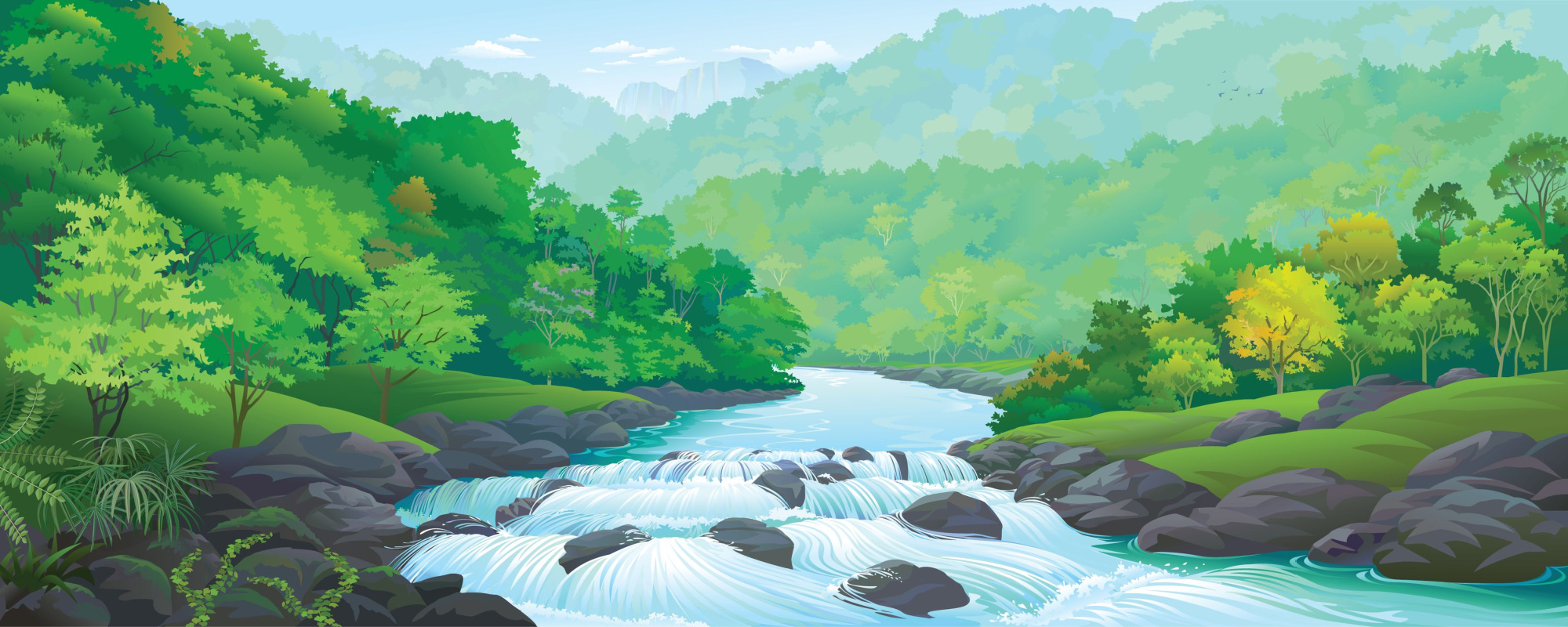
Rivers and streams can be a refreshing way to cool off in the summer. Know how to protect yourself.
Whether you’re swimming, tubing, or just getting your feet wet, it’s important to know how to protect yourself from river and stream hazards.
 Before you go:
- Check to see what water activities are allowed, what is prohibited and why. Sometimes flooding, dirty water, or other dangers can make it unsafe.
- Check water and weather conditions. Summer thunderstorms can happen quickly. Be prepared by checking the weather conditions and knowing what could happen.
- Water quality can change because of algae, chemical spills, or other pollution. Read signs and follow all warnings.
- Bring a buddy. Never swim, walk, or play in or near rivers and streams by yourself.
- Tell someone where you are going, when you will be back, and who they should call if you don’t return.
When you get there:
- Watch for dangers like flooding, muddy water, fallen trees, trash, cliffs, low dams, or bridges. Stay away from fast-moving water.
Keep a close eye on children, even if they are far from the water. Kids can get into danger quickly, even if you look away for just a moment.
Do not jump on rocks or climb near waterfalls. Wet rocks can be very slippery.
If you want to cross a stream, look carefully first. Think about where you might land if you slip. Never cross upstream of rapids, waterfalls, or dams.
Do not jump off waterfalls or dive into waterfall pools. There may be hidden logs or rocks under the water.
If you fall into fast water, do not try to stand up. The water can knock you over and trap you. Instead, lie on your back with your feet pointing downstream and your toes up. Look downstream and use your feet to push away from rocks. Many people drown when their foot or leg gets caught under water.
If you don’t know how to swim, wear a U.S. Coast Guard approved life jacket.
 If you have a water-related emergency:
- Call 9-1-1 for help. Time is of the essence. Be ready to tell the 9-1-1 operator the circumstances of your emergency (e.g. where you are located, the number of people impacted, etc.).
- DO NOT attempt a rescue by jumping into the water. Many people have drowned while trying to save someone. Only a person who is trained in water rescue should enter the water to rescue someone in trouble.1
Rivers and streams might look calm, but there can be dangers under the water:
- Strong currents that can pull down even good swimmers.
- “Strainers,” which are trees or branches under the water that can trap you.
- Rapids with tight spaces between rocks where you could get stuck.
- A slippery, uneven bottom that can make you fall.
- Weak or unstable riverbanks, especially after heavy rain or flooding.
