
Pool Operators
Cryptosporidium is a parasite that causes cryptosporidiosis ("crypto"). The most common symptom of “crypto” is watery diarrhea. However, it can also cause stomach cramps or pain, dehydration, nausea, vomiting, fever, weight loss, or no symptoms at all. If present, symptoms typically begin 2 to 10 days after infection. In people with healthy immune systems, symptoms generally last one to two weeks, but can come and go for up to 30 days.
Typically, symptoms resolve on their own. However, people with compromised immune systems may experience more severe and prolonged illness, and may require treatment by their doctor. Anyone with diarrhea, especially young children and pregnant women, should drink plenty of fluids to avoid dehydration.
Almost 750,000 people are infected with crypto every year in the United States alone. It is caused by swallowing food or water that is contaminated with cryptosporidium or by having contact with people who have crypto or their environment. This germ is the leading cause of waterborne disease outbreaks. Among Crypto outbreaks from 2009 to 2017, 35 percent were traced back to pools and water playgrounds.
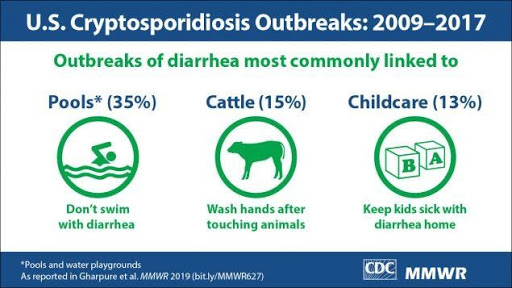
Crypto can live in chlorinated water for more than 10 days, so the best way to prevent infection is to keep it out of the water in the first place. This can be accomplished by following a few simple rules, which should be posted for patrons to see. The CDC recommends the following:
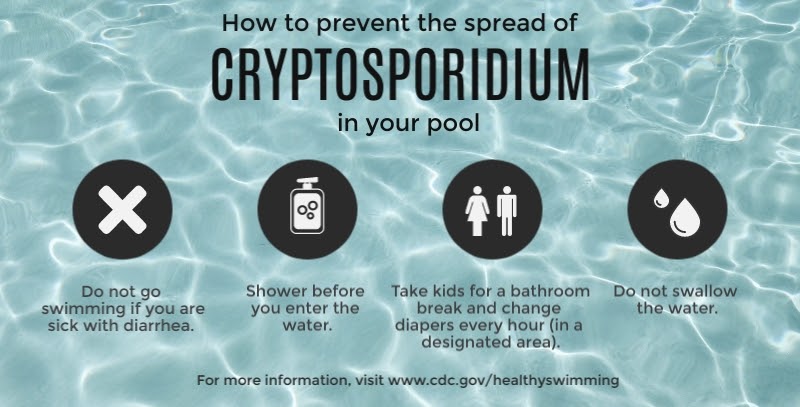
- Maintain pools, lakes, and other recreational water venues to standards set by local or state laws. Maintaining proper chlorine level (at least 1 part per million or ppm) and pH (7.2–7.8) is the first defense against the spread of most germs in pools.
- Don’t swim or let kids swim if sick with diarrhea. This includes aquatics staff.
- Keep patrons and staff diagnosed with Crypto out of the water for an additional two weeks after diarrhea stops. People infected with Crypto can typically continue to shed Crypto for up to two weeks after diarrhea completely stops.
- Don’t swallow the water.
- Take kids on bathroom breaks every 60 minutes.
- Promote handwashing.
This infographic shows the steps to take in case of a fecal event in your pool:
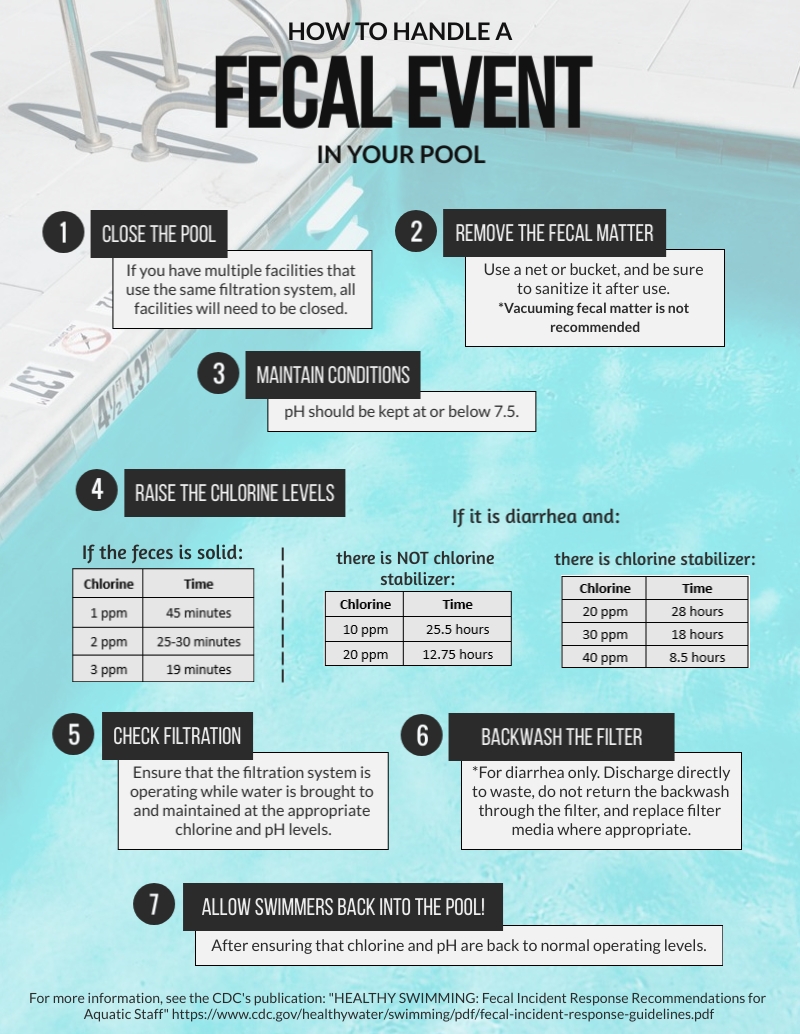
See sections 6.5.2-6.5.4 of the Model Aquatic Health Code (MAHC) for more detailed contamination event response information. The CDC also provides fecal incident response guidelines.