What is kratom? 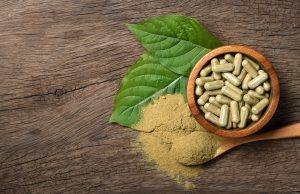
Kratom (Mitragyna speciosa) is a tropical tree native to Southeast Asia. When the leaves are consumed it produces stimulant effects in low doses, and sedative effects in high doses. Some people self-medicate with kratom to reduce opioid cravings or treat pain. Others take it recreationally, believing it helps improve their mood.
Kratom contains a variety of chemicals. The two major psychoactive ingredients are mitragynine and 7-hydroxymytragynine (7-OH). Kratom is mostly taken in the form of a tablet, capsule, or extract. Some individuals steep the leaves to make a tea or simply chew the leaf. Laboratory-synthesized 7-OH is being sold and added to kratom products, exposing users to concentrations of psychoactive ingredients much higher than found naturally in the plant.
Kratom was first introduced into the US in the late 1990s, and for years its use was very limited. In recent years kratom use has become much more common, possibly because of the opioid epidemic and people trying to use kratom to reduce their dependence on opioids. Kratom is easily available and often sold in gas stations, smoke/vape shops, corner stores, and online. According to an analysis of 2015-2025 data from the National Poison Data System (NPDS), the U.S. Centers for Disease Control and Prevention (CDC) found that kratom-related exposures reported to NPDS increased by approximately 1,200%, reaching record levels in 2025.
A 2019 study on Poison Control Center calls related to kratom found they’ve become much more common in the past few years. In 2011 Poison Control Centers received 13 calls about kratom. This rose to 682 in 2017, and two-thirds of the 1807 kratom-related calls between 2011–2017 happened in 2016 and 2017.
Is kratom safe?
The Food and Drug Administration (FDA) has warned people not to take kratom because of safety concerns and the risk of addiction. The sale of kratom is not approved by the FDA meaning the FDA has not:
- determined kratom to be safe or effective.
- inspected products to make sure they contain the ingredients they’re supposed to.
- determined the concentration of the active ingredients is correct.
- determined if the product is contaminated.
Since kratom is not approved by the FDA; different products can differ in strength and could have unknown contaminants. Companies selling kratom don’t have to follow safe manufacturing regulations, and in 2018 there was an outbreak caused by Salmonella bacteria in kratom that made people sick in 41 states.
People can overdose on kratom, and it can interact with other medications, alcohol, or recreational drugs in ways that can be dangerous. Kratom has been linked to drug-associated deaths. In most cases kratom was taken along with other drugs, but in a few cases, kratom was the only drug used. Kratom can be addictive, and babies born to mothers who use kratom sometimes have to be treated for opioid withdrawal symptoms.
Is kratom legal?
Some states or localities have laws against the sale or possession of kratom. In Virginia, it is illegal to sell kratom to people under the age of 21. As of November 2026, kratom products must include a label listing all the ingredients and a warning about potential dependency and opioid-like withdrawal. The law also bans the sale of products containing 7-OH.
Has the federal government made recommendations to protect human health?
There are currently no federal laws regulating kratom, although the FDA has used its authority to regulate unapproved drugs and unapproved dietary additives to restrict the import of kratom. In July 2026, the U.S. Drug Enforcement Administration (DEA) filed its intent to temporarily place 7-OH into Schedule 1 of the Controlled Substances Act (CSA).
What are the side effects of kratom?
Kratom is a drug and can have side effects that can be dangerous. Stimulant side-effects occur at low doses while sedative side-effects occur at higher doses. Kratom causes loss of appetite, anorexia, insomnia, tremors, hallucinations, confusion, and rapid heartbeat. People often report feeling itchy after taking it. It can cause nausea and vomiting. At high doses kratom can cause seizures. People who take kratom regularly can develop liver injury.
I have been using kratom, what should I do?
Tell your doctor. Even if you don’t plan to stop taking kratom you should talk to your doctor about potential interactions with other medications or drugs or alcohol and the possibility of becoming dependent on kratom. Women who are pregnant, planning to become pregnant, or nursing should stop taking kratom to protect their baby from exposure. Like drugs, kratom should be stored out of the reach of children.
If you or someone else, especially a child, ingests kratom accidentally, call the Poison Control Center hotline at 1-800-222-1222. If the person is having severe side effects, call 911.
What are resources to treat addiction?
- Home – FindTreatment.govto locate treatment for substance use disorders.
- Virginia Dept of Behavioral Health and Human Services:
- Virginia Dept of Health:
- S. Dept of Health and Human Services:
- S. Centers for Disease Control and Prevention:
Where can I get more information?
Updated 2026
