
Crater Health District Safety Tips to Stay Warm During Extreme Cold

January 28, 2026
Media Contact: Tara Rose. Tara.Rose@vdh.virginnia.gov

Crater Health District Safety Tips to Stay Warm During Extreme Cold

PETERSBURG, Va. – As localities across Crater Health District (CHD) continue to see dangerously cold temperatures, hypothermia and frostbite are real concerns. The Crater Health District urges you to take steps to keep you and your family warm, dry and healthy during this winter season.

“Extreme Cold is one of the leading causes of weather-related fatalities. Learning tips to stay warm and ways to mitigate extreme cold is a form of preparation that all should be practicing during the winter weather season,” said Steven Herring, Local Health Emergency Coordinator.

Hypothermia occurs most commonly at very cold environmental temperatures but can occur even at cool temperatures (above 40°F) if a person becomes chilled from rain, sweat, or submersion in cold water. Signs to look out for include shivering, exhaustion or fatigue, confusion, fumbling hands, memory loss, slurred speech and/or drowsiness. In babies look for bright red, cold skin and very low energy.

Frostbite is a type of injury caused by freezing. If you notice redness or pain in any skin area, get out of the cold. The skin will feel numb, unusually firm or waxy, and can also appear white or grayish yellow. If you have frostbite, you may not know until someone else points it out because the frozen parts of your body are numb.

“With extreme cold weather continuing for the next several days, we urge everyone to take precautions, said Crater District Health Director, Dr. Alton Hart, Jr. “Limit time outdoors, dress warmly, and check on those who may need support. Keeping our community safe is our top priority during this severe weather.”

The Crater Health District encourages you to take these steps to prevent hypothermia, frostbite and other potential injuries.

Staying Warm

  • Stay indoors and limit your exposure to the cold.
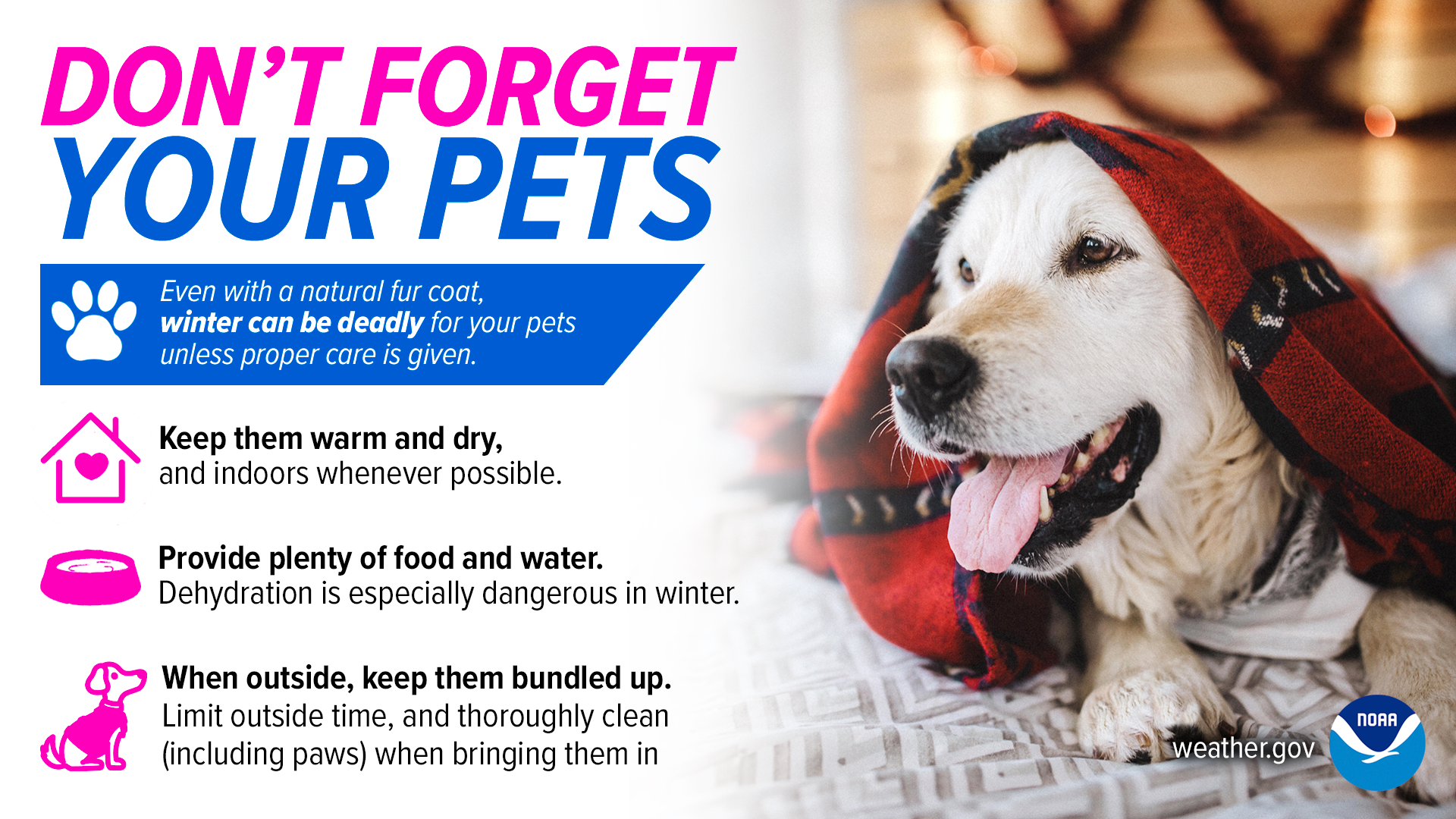
  • Bring your pets indoors and ensure they have water.
  • Eating healthy meals will help to keep your body temperature warm.
  • Stay hydrated even during the cold to prevent hypothermia. Avoid alcohol and caffeine. They cause your body to lose heat faster. Drink warm beverages or broth.
  • Keep extra blankets, sleeping bags, and warm winter coats on hand for use in cold rooms.
  • Charge all your devices (medical equipment, phone, computer, tablet, radio, etc.).
  • Check on neighbors, friends, and family.
  • For a list of warming centers in your area, call 2-1-1 or visit org/
If You Go Outside

If you must go outside, please take these precautions:

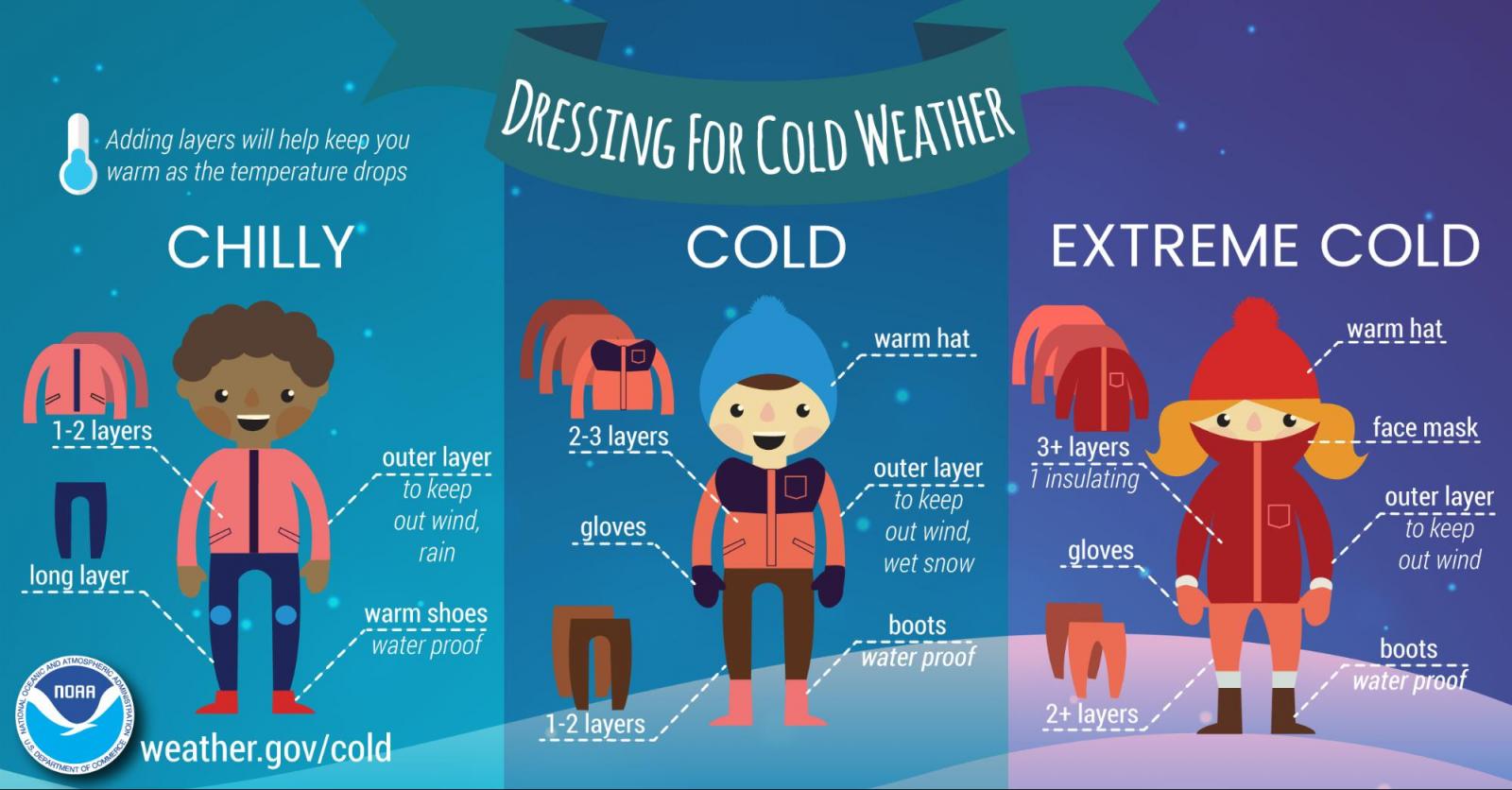
  • Dress warmly and in layers. Make sure you cover your head, fingers and toes to prevent frostbite.
  • Be aware of the wind chill factor.
  • Wear proper footwear for traction. Take slow, short steps.
  • Avoid getting wet. If you get wet, change out of wet clothes as soon as possible to prevent hypothermia.
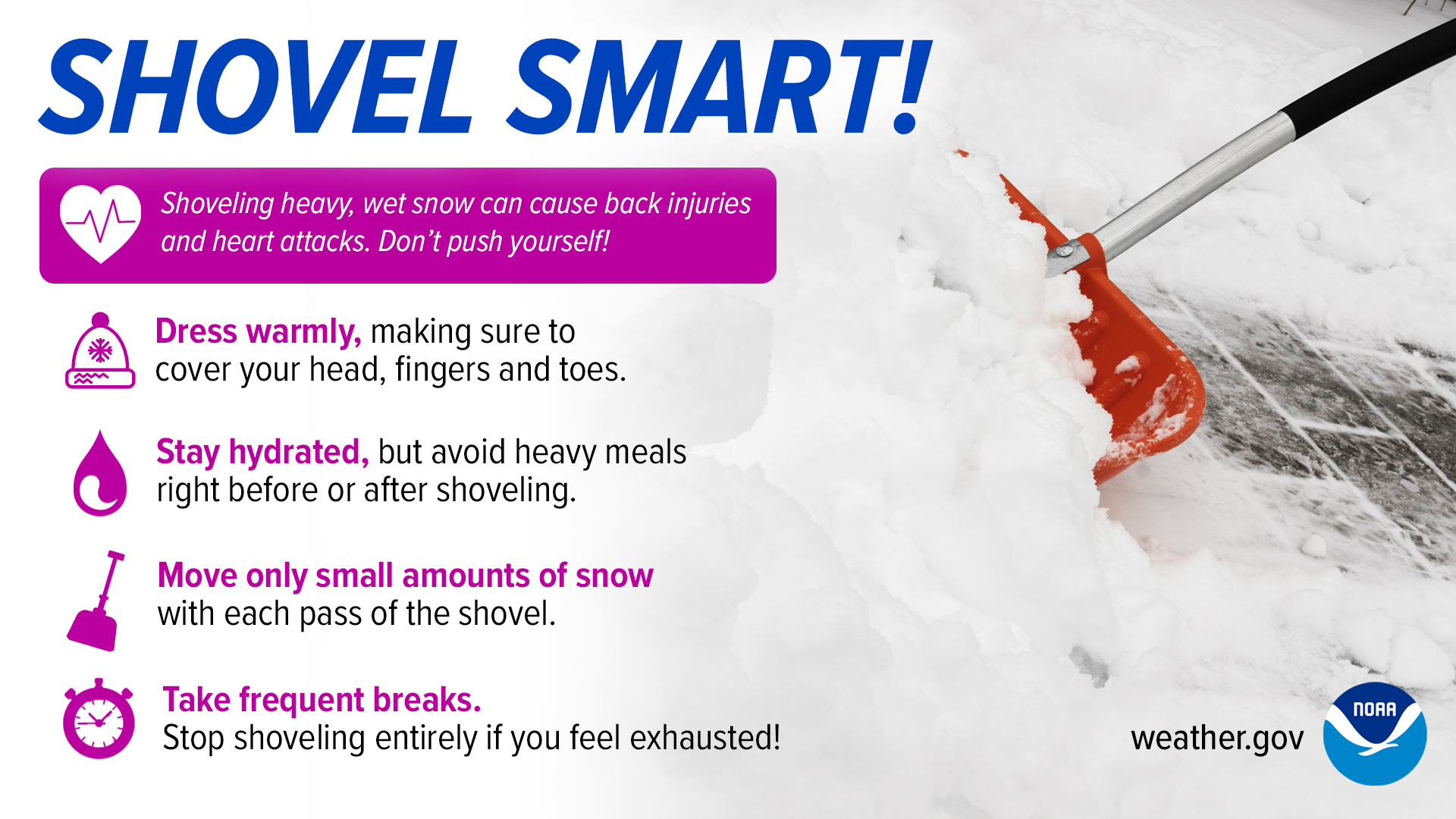
  • Take frequent breaks if shoveling snow or working outdoors.
If You Must Drive

  • Stay at home and avoid travel. If you must travel, check the road conditions and your route first.
  • Allow extra time and follow these tips from the Virginia Department of Transportation.
  • If you must travel, let someone know your destination and when you expect to arrive. Ask them to notify authorities if you are late.
  • Always carry extra warm clothing and blankets with Don’t rely on a car to provide enough heat.

If you have chronic conditions, please reach out to their healthcare provider to make sure together you have a care plan in place. Organize and protect your prescriptions, over-the-counter drugs, home-use medical devices, and vitamins. Talk to your doctor or pharmacist about how you can create an emergency supply of medicines.

If you notice signs of frostbite and hypothermia, seek medical attention immediately.


# # #

Cumberland Plateau and LENOWISCO Health Districts Offer Safety Tips to Stay Warm During Extreme Cold

January 29, 2026
Media Contact: Daniel Hunsucker, Daniel.Hunsucker@vdh.virginia.gov

Cumberland Plateau and LENOWISCO Health Districts Offer Safety Tips to Stay Warm During Extreme Cold

WISE, Va. As southwest Virginia continues to see dangerously cold temperatures, hypothermia and frostbite are real concerns. The Virginia Department of Health’s Cumberland Plateau and LENOWISCO Health Districts urge you to take steps to keep you and your family warm, dry, and healthy throughout this winter season.

“Even if you’re a cautious winter driver, it’s helpful to prepare for any scenario, from a flat tire to sliding off the road,” said Reisa Sloce, Director Cumberland Plateau and LENOWISCO Health Districts. “Emergency preparedness is even more critical during the winter, with freezing temperatures that can become dangerous if you’re stranded for too long.”

Hypothermia occurs most commonly at very cold environmental temperatures but can occur even at cool temperatures (above 40°F) if a person becomes chilled from rain, sweat, or submersion in cold water. Signs to look out for include shivering, exhaustion or fatigue, confusion, fumbling hands, memory loss, slurred speech and/or drowsiness. In babies look for bright red, cold skin and very low energy.

Frostbite is a type of injury caused by freezing. If you notice redness or pain in any skin area, get out of the cold. The skin will feel numb, unusually firm or waxy, and can also appear white or grayish yellow. If you have frostbite, you may not know until someone else points it out because the frozen parts of your body are numb.

The Cumberland Plateau and LENOWISCO Health Districts encourage you to take these steps to prevent hypothermia, frostbite and other potential injuries.

Staying Warm

  • Stay indoors and limit your exposure to the cold.
  • Bring your pets indoors and ensure they have water.
  • Eating healthy meals will help to keep your body temperature warm.
  • Stay hydrated even during the cold to prevent hypothermia. Avoid alcohol and caffeine. They cause your body to lose heat faster. Drink warm beverages or broth.
  • Keep extra blankets, sleeping bags, and warm winter coats on hand for use in cold rooms.
  • Charge all your devices (medical equipment, phone, computer, tablet, radio, etc.).
  • Check on neighbors, friends, and family.
  • For a list of warming centers in your area, call 2-1-1 or visit org/

If You Go Outside

If you must go outside, please take these precautions:

  • Dress warmly and in layers. Make sure you cover your head, fingers and toes to prevent frostbite.
  • Be aware of the wind chill factor.
  • Wear proper footwear for traction. Take slow, short steps.
  • Avoid getting wet. If you get wet, change out of wet clothes as soon as possible to prevent hypothermia.
  • Take frequent breaks if shoveling snow or working outdoors.
If You Must Drive

  • Stay at home and avoid travel. If you must travel, check the road conditions and your route first.
  • Allow extra time and follow these tips from the Virginia Department of Transportation.
  • If you must travel, let someone know your destination and when you expect to arrive. Ask them to notify authorities if you are late.
  • Always carry extra warm clothing and blankets with Don’t rely on a car to provide enough heat.
  • Have a winter emergency kit inside your car that includes:
    • Ice scraper
    • Warmth items such as blankets, extra gloves, etc.
    • Portable shovel
    • Flashlight
    • Extra batteries and a cell phone charger
    • A first aid kit
    • Jumper cables
    • A small container of sand or kitty litter for traction
    • Nonperishable food and water
    • Items for handling a flat tire

If you have chronic health conditions, please reach out to your healthcare provider to work together and ensure you have a care plan in place. Organize and protect your prescriptions, over-the-counter drugs, home-use medical devices, and vitamins. Talk to your doctor or pharmacist about how you can create an emergency supply of medicines.

If you notice signs of frostbite and hypothermia, seek medical attention immediately.

If you have questions, contact the Cumberland Plateau Health District at (276) 889-7621 or the LENOWISCO Health District at (276) 328-8000.

Central Shenandoah Health District Offers Safety Tips to Stay Warm During Extreme Cold

January 28, 2026
Media Contact: Rachel Dumene, Rachel.dumene1@vdh.virginia.gov, 540-480-4998

Central Shenandoah Health District Offers Safety Tips to Stay Warm During Extreme Cold

STAUNTON, Va. As the Shenandoah Valley continues to see dangerously cold temperatures, hypothermia and frostbite are real concerns. The Central Shenandoah Health District (CSHD) urges you to take steps to keep you and your family warm, dry and healthy during this storm.

“While the storm has moved through our region, prolonged cold temperatures continue to pose serious health risks,” says Xavier Crockett, health director for CSHD. “Taking simple precautions can prevent injuries and keep our communities safe.”

Hypothermia occurs most commonly at very cold environmental temperatures but can occur even at cool temperatures (above 40°F) if a person becomes chilled from rain, sweat, or submersion in cold water. Signs to look out for include shivering, exhaustion or fatigue, confusion, fumbling hands, memory loss, slurred speech and/or drowsiness. In babies look for bright red, cold skin and very low energy.

Frostbite is a type of injury caused by freezing. If you notice redness or pain in any skin area, get out of the cold. The skin will feel numb, unusually firm or waxy, and can also appear white or grayish yellow. If you have frostbite, you may not know until someone else points it out because the frozen parts of your body are numb.

The Central Shenandoah Health District encourages you to take these steps to prevent hypothermia, frostbite and other potential injuries.

Staying Warm

  • Stay indoors and limit your exposure to the cold.
  • Bring your pets indoors and ensure they have water.
  • Eating healthy meals will help to keep your body temperature warm.
  • Stay hydrated even during the cold to prevent hypothermia. Avoid alcohol and caffeine. They cause your body to lose heat faster. Drink warm beverages or broth.
  • Keep extra blankets, sleeping bags, and warm winter coats on hand for use in cold rooms.
  • Charge all your devices (medical equipment, phone, computer, tablet, radio, etc.).
  • Check on neighbors, friends, and family.
  • For a list of warming centers in your area, call 2-1-1 or visit org/
    • Check this list for warming shelters located within CSHD:
      • Central United Methodist Church, 14 N. Lewis St., Staunton, VA, 24401
      • Waynesboro Area Refuge Ministry (WARM), check here for rotating locations.
      • Open Doors, 1111 N. Main St., Harrisonburg, VA, 28802

If You Go Outside

If you must go outside, please take these precautions:

  • Dress warmly and in layers. Make sure you cover your head, fingers and toes to prevent frostbite.
  • Be aware of the wind chill factor.
  • Wear proper footwear for traction. Take slow, short steps.
  • Avoid getting wet. If you get wet, change out of wet clothes as soon as possible to prevent hypothermia.
  • Take frequent breaks if shoveling snow or working outdoors.

If You Must Drive

  • If you must travel, check the road conditions and your route first.
  • Allow extra time and follow these tips from the Virginia Department of Transportation.
  • If you must travel, let someone know your destination and when you expect to arrive. Ask them to notify authorities if you are late.
  • Always carry extra warm clothing and blankets with Don’t rely on a car to provide enough heat.

If you have chronic conditions, please reach out to your healthcare provider to make sure together you have a care plan in place. Organize and protect your prescriptions, over-the-counter drugs, home-use medical devices, and vitamins. Talk to your doctor or pharmacist about how you can create an emergency supply of medicines.

If you notice signs of frostbite and hypothermia, seek medical attention immediately.

If you have questions, please contact the Central Shenandoah Health District at cshdinfo@vdh.virginia.gov.

The Rappahannock-Rapidan Health District Offers Safety Tips to Stay Warm During Extreme Cold

January 28, 2026
Media Contact: Dr. Zelalem Attlee, Zelalem.Attlee@vdh.virginia.gov.

The Rappahannock-Rapidan Health District Offers Safety Tips to Stay Warm During Extreme Cold

WARRENTON, Va. – As the Rappahannock-Rapidan Health District continues to see dangerously cold temperatures, hypothermia and frostbite are real concerns. The Rappahannock-Rapidan Health District urges you to take steps to keep you and your family warm, dry and healthy during this storm.

“Extreme cold conditions present real risks to people of all ages, especially our most vulnerable residents,” said Rappahannock-Rapidan Health District Director J. Carr, M.D. “We encourage everyone to plan ahead, stay informed, dress in layers, and check on neighbors and relatives. Your health and safety are our top priorities. Please take the necessary precautions to stay warm and safe during severe winter weather.”

Hypothermia occurs most commonly at very cold environmental temperatures but can occur even at cool temperatures (above 40°F) if a person becomes chilled from rain, sweat, or submersion in cold water. Signs to look out for include shivering, exhaustion or fatigue, confusion, fumbling hands, memory loss, slurred speech and/or drowsiness. In babies look for bright red, cold skin and very low energy.

Frostbite is a type of injury caused by freezing. If you notice redness or pain in any skin area, get out of the cold. The skin will feel numb, unusually firm or waxy, and can also appear white or grayish yellow. If you have frostbite, you may not know until someone else points it out because the frozen parts of your body are numb.

The Rappahannock-Rapidan Health District encourages you to take these steps to prevent hypothermia, frostbite and other potential injuries.

Staying Warm

  • Stay indoors and limit your exposure to the cold.
  • Bring your pets indoors and ensure they have water.
  • Eating healthy meals will help to keep your body temperature warm.
  • Stay hydrated even during the cold to prevent hypothermia. Avoid alcohol and caffeine. They cause your body to lose heat faster. Drink warm beverages or broth.
  • Keep extra blankets, sleeping bags, and warm winter coats on hand for use in cold rooms.
  • Charge all your devices (medical equipment, phone, computer, tablet, radio, etc.).
  • Check on neighbors, friends, and family.
  • For a list of warming centers in your area, call 2-1-1 or visit org/

If You Go Outside

If you must go outside, please take these precautions:

  • Dress warmly and in layers. Make sure you cover your head, fingers and toes to prevent frostbite.
  • Be aware of the wind chill factor.
  • Wear proper footwear for traction. Take slow, short steps.
  • Avoid getting wet. If you get wet, change out of wet clothes as soon as possible to prevent hypothermia.
  • Take frequent breaks if shoveling snow or working outdoors.

If You Must Drive

  • Stay at home and avoid travel. If you must travel, check the road conditions and your route first.
  • Allow extra time and follow these tips from the Virginia Department of Transportation.
  • If you must travel, let someone know your destination and when you expect to arrive. Ask them to notify authorities if you are late.
  • Always carry extra warm clothing and blankets with you. Don’t rely on a car to provide enough heat.

If you have chronic conditions, please reach out to their healthcare provider to make sure together you have a care plan in place. Organize and protect your prescriptions, over-the-counter drugs, home-use medical devices, and vitamins. Talk to your doctor or pharmacist about how you can create an emergency supply of medicines.

If you notice signs of frostbite and hypothermia, seek medical attention immediately.

If you have questions, please contact the Rappahannock-Rapidan Health District at www.rrhd.org.

# # #


Stay Healthy During Extremely Cold Weather

Jan. 28, 2026
Media Contact: Caitlin Hodge, Caitlin.Hodge@vdh.virginia.gov


Stay Healthy During Extremely Cold Weather

Ashland, Va. – As the counties of Charles City, Goochland, Hanover, and New Kent continue to experience extremely cold weather, the Chickahominy Health District encourages everyone to protect themselves against serious health problems that can result from prolonged exposure to the cold.

“With the bitter cold weather predicted to continue for the next several days, we all need to take special precautions to protect ourselves,” said Dr. Tom Franck, Director of the Chickahominy Health District. “When exposed to cold temperatures for too long, we can suffer cold-weather related health problems such as frostbite and hypothermia,” added Dr. Franck.

Frostbite is an injury to the body that is caused by freezing. Frostbite causes a loss of feeling and color in affected areas. It most often affects the nose, ears, cheeks, chin, fingers, or toes. Frostbite can permanently damage the body. At the first signs of redness or pain in any skin area, get out of the cold or protect any exposed skin. Any of the following signs may indicate frostbite: a white or grayish-yellow skin area, skin that feels unusually firm or waxy, and numbness. The person is often unaware of frostbite until someone else points it out because the frozen tissues are numb. If you suspect symptoms of frostbite, seek medical care.

Hypothermia is an abnormally low body temperature resulting when your body loses heat faster than it can be produced. Warning signs may include shivering, exhaustion, confusion, fumbling hands, memory loss, slurred speech, or drowsiness. In infants, warning signs may include red, cold skin and very low energy. If you notice signs of hypothermia, take a body temperature. A temperature below 95 degrees is a medical emergency, and you should seek medical attention immediately.

Take these steps to help prevent frostbite, hypothermia, and other potential injuries:

Keep warm:

  • Limit your exposure to the cold outdoors and stay indoors when possible.
  • Bring your pets indoors and ensure they have water.
  • Eating healthy meals will help to keep your body temperature warm.
  • Stay hydrated even during the cold to prevent hypothermia. Avoid alcohol and caffeine. They cause your body to lose heat faster. Drink warm beverages or broth.
  • Keep extra blankets, sleeping bags, and warm winter coats on hand for use in cold rooms.
  • Check on neighbors, friends, and family.
  • For a list of warming centers in your area, call 2-1-1 or visit org/.

If you must go outside:

  • Dress warmly with cold weather appropriate clothing like gloves/mittens, hats, scarves and snow boots. Dress in several layers of loose-fitting clothing.
  • Wear proper footwear for traction. Take slow, short steps.
  • Be aware of the wind chill factor. Wind can cause accelerated loss of body-heat.
  • Avoid getting wet. If you get wet, change out of wet clothes as soon as possible to prevent hypothermia.
  • Take frequent breaks if shoveling snow or working outdoors.
  • Stay home and avoid travel if the roads are dangerous.

If You Must Drive:

  • First, check the road conditions and plan your route accordingly.
  • Let someone know your destination and when you expect to arrive and ask them to notify authorities if you are late.
  • Always carry extra warm clothing and blankets with Don’t rely on a car to provide enough heat.
  • Allow extra travel time and follow these tips from the Virginia Department of Transportation.

If you have chronic medical conditions, you may need to take additional precautions. You should reach out to your healthcare provider to ensure you have an adequate care plan in place. Organize your prescriptions, over-the-counter drugs, and home-use medical devices. Talk to your doctor or pharmacist about how you can create an emergency supply of medicines.

# # #

Virginia Department of Health Provides Tips to Stay Warm, Healthy During Power Outage

FOR IMMEDIATE RELEASE – January 24, 2026
Media Contact: Brookie Crawford, brookie.crawford@vdh.virginia.gov

Virginia Department of Health Provides Tips to Stay Warm, Healthy During Power Outage

RICHMOND, Va. – With this weekend’s winter storm bringing snow and ice throughout the Commonwealth, widespread power outages can also be anticipated. The Virginia Department of Health shares tips for staying safe, warm and healthy when the power is out.

“With the forecast for extremely cold temperatures and wind chill, frostbite and hypothermia are real concerns especially if you lose power in your home,” said Virginia Health Commissioner B. Cameron Webb, MD, JD. “Now is the time to prepare! Plan ahead to ensure that you and your loved ones have safe ways to stay warm, keep food and medicines at proper temperatures, and stay hydrated. The Virginia Department of Health is here to help you with tips to keep your family safe and happy.”

Staying warm

If you lose power, the priority is to stay dry and warm to prevent frostbite and hypothermia.

  • Use extra blankets, sleeping bags and warm winter coats to stay warm. Make sure you cover your head, fingers and toes.
  • Use alternative heating sources:
    • Fireplace that is up to code with plenty of dry wood or a gas log fireplace.
    • Portable space heaters or kerosene heaters.
  • Keep heat sources at least three feet away from drapes, furniture, bedding, or other flammable materials. Never cover your space heater.
  • Ensure that you properly ventilate emergency heat sources to prevent carbon monoxide
  • Do not use generators indoors.
  • For a list warming shelters in your area, contact your locality or call 2-1-1 or visit org.

Food Safety

In the case of an power outage, it’s important to take careful precautions to ensure food safety.

  • Keep refrigerator and freezer doors closed.
  • If the doors stay closed, food will stay safe up to:
    • Four hours in a refrigerator,
    • 24 hours in a half-full freezer, and
    • 48 hours in a full freezer.
  • If you must remove food, put it in a cooler with frozen gel packs or dry ice to keep it cold. Refrigerated food must stay at a temperature of 40°F or lower and frozen food must stay at a temperature of 0°F or lower.
  • When power returns:
    • Thawed food can usually be eaten if it is still “refrigerator cold” (40°F or below).
    • Discard any perishable food (such as meat, poultry, fish, eggs or leftovers) that has been above 40°F for two hours or more.
    • Never taste food to know if it is safe to eat. When in doubt, throw it out.
  • Do not operate charcoal grills, propane camping stoves indoors.
  • Eating healthy meals will help keep your body temperature warm. Here are tips on breastfeeding, feeding infants, and preparing and storing powered formula during a power outage.

Stay Hydrated

It’s important to stay hydrated even during the cold to prevent hypothermia. The extreme cold can affect your water pipes.

  • Leave all water taps slightly open so they drip continuously. Open cabinet doors under the kitchen and bathroom sinks so warm air can reach the pipes.
  • If tap water isn’t available, use bottled water.
  • Avoid alcoholic or caffeinated beverages.  They cause your body to lose heat faster.
  • Drink warm beverages or broth to stay warm.

Medication

Consult your healthcare provider for your specific needs. In general, throw out refrigerated medicine when the power is out for a day or more, unless your healthcare provider or the drug’s label says otherwise.

Remember to stay warm during these extremely cold temperatures. If you notice signs of frostbite and hypothermia , seek medical attention immediately. If you have any immediate needs, contact call 2-1-1 or visit 211virginia.org

For more information, visit the VDH Winter Storm Response webpage or contact your local health department.

# # #

Central Shenandoah Health District Urges the Community to Prepare for Incoming Winter Storm

January 21, 2026
Media Contact: Rachel Dumene, Rachel.dumene1@vdh.virginia.gov, 540-480-4998

Central Shenandoah Health District Urges the Community to Prepare for Incoming Winter Storm

STAUNTON, Va. The Shenandoah Valley is expected to be impacted by severe winter weather, to include snow and ice this coming weekend. The Central Shenandoah Health District (CSHD) urges you to prepare now to keep you and your family safe, warm, and healthy during this storm.

“Being prepared for winter weather makes all the difference when a storm hits,” says Xavier Crockett, Health Director for CSHD. “We’re encouraging everyone to have emergency supplies at home, and to stay off the roads if they can, especially in our more rural counties.”

Before the Storm

Before the storm arrives, the Central Shenandoah Health District urges you to take these steps:

  • Make sure you have an emergency supply kit on hand and keep an emergency kit for your car.
  • Organize and protect your prescriptions, over-the-counter drugs, home-use medical devices, and vitamins. Talk to your doctor or pharmacist about how you can create an emergency supply of medicines.
  • Check your smoke and carbon monoxide
  • Replenish fuel for your car and heating sources.
  • Weatherproof your home by insulating exposed pipes and caulking and weather strip doors/windows.
  • Make sure you understand the warnings, watches and advisories and have multiple ways to receive alerts.

During/After the Storm

  • Bring your pets indoors and ensure they have water.
  • Stay indoors and limit your exposure to the cold.
  • Properly ventilate emergency heat sources.
  • Keep generators outside at least 20 feet from your home.
  • Check on neighbors and family.

If you must go outside, take the following precautions to stay safe and prevent frostbite and hypothermia:

  • Wear proper footwear for traction. Take slow, short steps.
  • Dress warmly and in layers. Make sure you cover your head, fingers and toes.
  • Avoid getting wet and change out of wet clothes as soon as possible.
  • Stay hydrated. Drink warm beverages.
  • Take frequent breaks if shoveling snow or working outdoors.
  • Stay off the roads. If you must travel, check the road conditions and your route first. Allow extra time and follow these tips from the Virginia Department of Transportation.

The Central Shenandoah Health District wants you to stay warm, safe, and healthy! For more information, contact the Central Shenandoah Health District at cshdinfo@vdh.virginia.gov.

The Rappahannock-Rapidan Health District Urges the Community to Prepare for Incoming Winter Storm

January 20, 2026
Media Contact: Dr. Zelalem Attlee, Zelalem.Attlee@vdh.virginia.gov.

The Rappahannock-Rapidan Health District Urges the Community to Prepare for Incoming Winter Storm

WARRENTON, Va. – The Rappahannock-Rapidan Health district is expected to be impacted by severe winter weather, to include in addition to the very cold temperatures this week, there is a high probability (60-80%) for moderate winter storm impacts over much of our area on Sunday January 25, 2026. The Rappahannock-Rapidan Health District urges you to prepare now to keep you and your family safe, warm and healthy during this storm.

“As winter approaches, our top priority is keeping our community safe and informed,” said Rappahannock-Rapidan Health District Director J. Carr, M.D. “We urge residents to prepare early, check on neighbors, and follow weather updates closely. Our teams are ready to respond quickly to any emergencies that arise.”

Before the Storm

Before the storm arrives, the Rappahannock-Rapidan Health District urges you to take these steps:

  • Make sure you have an emergency supply kit on hand and keep an emergency kit for your car.
  • Organize and protect your prescriptions, over-the-counter drugs, home-use medical devices, and vitamins. Talk to your doctor or pharmacist about how you can create an emergency supply of medicines.
  • Check your smoke and carbon monoxide
  • Replenish fuel for your car and heating sources.
  • Weatherproof your home by insulating exposed pipes and caulking and weather strip doors/windows.
  • Make sure you understand the warnings, watches and advisories and have multiple ways to receive alerts.

During/After the Storm

  • Bring your pets indoors and ensure they have water.
  • Stay indoors and limit your exposure to the cold.
  • Properly ventilate emergency heat sources.
  • Keep generators outside at least 20 feet from your home.
  • Check on neighbors and family.

If you must go outside, take the following precautions to stay safe and prevent frostbite and hypothermia:

  • Wear proper footwear for traction. Take slow, short steps.
  • Dress warmly and in layers. Make sure you cover your head, fingers and toes.
  • Avoid getting wet and change out of wet clothes as soon as possible.
  • Stay hydrated. Drink warm beverages.
  • Take frequent breaks if shoveling snow or working outdoors.
  • Stay off the roads. If you must travel, check the road conditions and your route first. Allow extra time and follow these tips from the Virginia Department of Transportation.

The Rappahannock-Rapidan Health Department wants you to stay warm, safe and healthy! For more information, contact Rappahannock-Rapidan Health District at www.rrhd.org.

# # #

The Rappahannock-Rapidan Health District Urges Residents to Be Prepared for the Unpredictable Impacts of Winter Weather

December 15, 2025
Media Contact: Dr. Zelalem Attlee, Zelalem.Attlee@vdh.virginia.gov.

The Rappahannock-Rapidan Health District Urges Residents to Be Prepared for the Unpredictable Impacts of Winter Weather
Stay Safe This Winter with These Tips

WARRENTON, Va. – The Rappahannock-Rapidan Health District reminds residents that winter weather can be dangerous and unpredictable. Snow, ice and freezing conditions can lead to unexpected injuries and accidents. These conditions can increase the risk of hazardous travel, power outages, and health impacts, especially for older adults, children, and people with chronic health problems.

“Winter weather in our region can change quickly and without warning,” said Rappahannock-Rapidan Health District Director J. Carr, M.D. “Taking simple steps now, such as preparing emergency supplies, checking heating systems, and staying informed, can help keep you and your family safe when severe conditions occur.”

By preparing ahead of time you can avoid emergencies, protect your health and keep your loved ones safe. Follow these tips to be better prepared for the cold weather season.

  • Have an emergency kit with supplies such flashlights, batteries, blankets, food, and water.
  • Winterize your home by insulating walls and attics, caulking and weather-stripping doors and windows.
  • Check batteries in smoke detectors and carbon monoxide monitors.
  • Prepare your vehicle with emergency supplies.
  • Use space heaters safely. Keep heat sources at least three feet away from drapes, furniture, bedding, or other flammable materials. Never cover your space heater.

Preparation before dangerous winter weather arrives is critical. The best time to prepare for severe winter weather is now, before temperatures drop significantly and staying safe and warm becomes a challenge. Take these precautions to lower your risk of illness.

  • Wear cold appropriate clothing like gloves, hats, scarves and snow boots.
  • Be aware of the wind chill factor.
  • Remove any wet clothing immediately.
  • Limit your time outdoors.

If you plan to travel, the Virginia Department of Transportation (VDOT) provides travel advisories on current road conditions and weather forecasts. Travelers can easily access weather information by dialing 511, 24 hours a day, seven days a week or via the website at 511.vdot.virginia.gov.

Learn more about staying safe this winter by contacting The Rappahannock-Rapidan Health District at www.rrhd.org.

# # #