
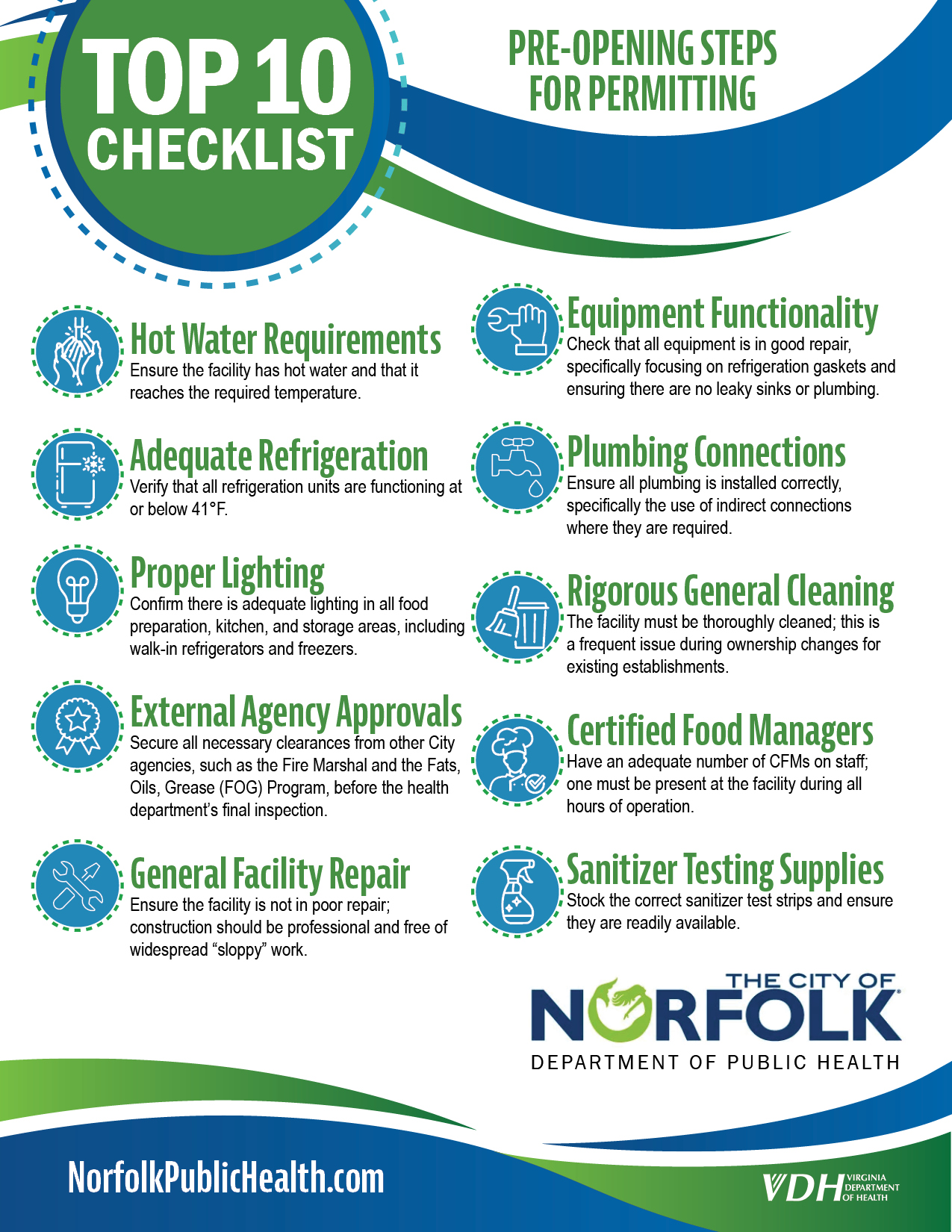
Top 10 Checklist

Dear friends, neighbors, and partners:
As we start 2026, the Norfolk Department of Public Health is here for you. Our goal remains the same: to be a source of health information you can trust.
There are many reasons to feel good about the future of Norfolk and the Hampton Roads area. Our community is strong because of our hard-working doctors and nurses, our local church groups, and neighbors who look out for one another. Together, we are building a kinder system of care. We want to make sure that no one in our city has to face health problems alone.
This teamwork is more important now than ever. Across the country, the healthcare system is changing, which can make it harder for people to get the medical help they need. We know these changes often hurt people with less money the most. Sometimes, a simple health problem can become a big one if it isn’t treated early.
Our mission is to take on these challenges. By working directly with you, we will help close these gaps. We want to make sure every person in Norfolk has the chance to live a healthy, safe life.
Together in Service,
Dr. “G”
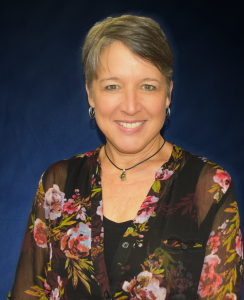
Susan Girois, MD, MPH, FACP
District Health Director
Norfolk Health District
Office: (757) 683-2798
Norfolk Department of Public Health
830 Southampton Avenue
Norfolk VA 23510

Get your FREE Tickets to the Public Launch event HERE.
Ignite Change: Join the Movement to Stop Syphilis!
Be part of the launch of a vital Public Awareness Campaign by the Eastern Regional Stop Syphilis Taskforce on Tuesday, April 29th, from 3:00 – 5:00 PM at ODU in Norfolk.
Hear from leading physicians, experts, and public health leaders in an open discussion about syphilis. Learn the powerful impact of this disease through true stories and testimonials affecting both newborns and adults. Discover how YOU can contribute to the growing movement to eradicate syphilis.
This FREE, in-person event requires advance ticket registration.
Stand with us to END BABIES BEING BORN WITH SYPHILIS.
The Norfolk Department of Public Health has issued Swimming Advisories for two Ocean View Beaches: Captain’s Quarters and 5th Bay Beach. Water testing conducted yesterday revealed enterococci bacteria levels at these sites exceeding State Water Quality Standards. Signs have been posted to alert the public of these advisories. Health officials will continue testing beach water and will remove posted signs and notify the public when the bacteria levels decrease to meet state standards.
The Environmental Health Division of the Norfolk Department of Public Health samples Ocean View beach water on a weekly basis, during the swimming season, from late-May through mid-September. Enterococci bacteria are a group of indicator organisms used to determine the extent of fecal contamination in recreational waters.
While enterococci bacteria do not generally cause illness, scientific studies indicate that their presence is closely correlated to the presence of other disease-causing organisms. People swimming or playing in waters with bacteria levels higher than the state standards have an increased risk of developing gastrointestinal illness.
For further information, call the Environmental Health Division, Norfolk Department of Public Health, at 757-683-2712. For information about the Virginia Department of Health’s Beach Monitoring Program, current swimming advisory maps, and helpful tips about recreational water safety, please visit: https://www.vdh.virginia.gov/waterborne-hazards-control/beach-monitoring/

What is mpox?
Mpox is a contagious rash illness caused by the mpox virus. Mpox can cause a range of symptoms. Some people have mild symptoms, while others can develop serious symptoms and need care in a healthcare facility. Those at higher risk for severe disease or complications include people who are pregnant, children, and people with weakened immune systems.
In the 2022 outbreak, cases have occurred in many countries or areas where this infection was not usually found, including in the U.S. and Virginia. The number of cases has declined since August 2022, but cases continue to occur in the U.S. The mpox outbreak is not over yet. Most, but not all, cases have been in gay, bisexual, or other men who have sex with men. This group, particularly those with multiple sex partners, is currently at greatest risk.
How is mpox spread?
In this outbreak, most people have become infected with mpox when they come into close contact with an infected person. Spread can occur from touching skin lesions, bodily fluids, or clothing or linens that have been in contact with an infected person. Spread can also occur during prolonged, face-to-face contact. Some people can spread mpox to others from one to four days before their symptoms start.
Mpox can spread from person to person through: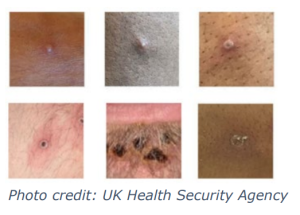
• Sexual or intimate contact (including oral, anal, and vaginal sex)
• Hugging, kissing, cuddling, and massage
• Sharing a bed, towel, or clothes that have not been washed
Mpox does not spread from person to person through:
• Casual conversation with someone who is infected
• Walking by someone who is infected
What are symptoms of mpox?
Skin rash on any part of your body (even if it is only 1 or 2 spots); for some people, this rash may be
their only symptom
| • Fever • Chills • Headache • Muscle aches and back aches |
• Swollen lymph nodes • Feeling tired • Respiratory symptoms (nasal congestion, cough, or sore throat) |
You may experience all or only a few symptoms.
Symptoms usually appear within 3 weeks after exposure.
Two doses of the #mpox vaccine are the best protection.
Even if you got your first dose a long time ago, you can still get the second dose. Mpox vaccines are available now for free at your local health department. Find a local health department near you: https://www.vdh.virginia.gov/health-department-locator/
What do I do if I have symptoms?
If you have symptoms, you should separate yourself from other people and pets, cover your rash, and contact your healthcare provider. It is important to call ahead before going to a healthcare facility and let them know that you are concerned about mpox. You should avoid close physical contact with others until you have talked with your provider.
How can mpox be prevented?
Get Vaccinated. The two-dose mpox vaccine is recommended for people with known exposure to someone with mpox or those at high risk of exposure. For the most protection, it is important to get both doses of the vaccine. To see if you are eligible for vaccination, visit CDC’s mpox webpage. If you are eligible visit the CDC vaccine finder.
Avoid close, skin-to-skin contact with another person’s rash or scabs. Avoid kissing, hugging, cuddling or having sex with someone who is infected. Do not share eating utensils and cups. Do not share bedding, towels, or personal grooming devices.
Wash your hands with soap and water or use an alcohol-based hand sanitizer after contact with infected individuals.
Wear a mask if you think you have mpox and need to have close face-to-face contact with other people or need to have close contact with someone who may be infected.
Consider the events you attend and your behavior at those events. If there is close, prolonged skin-to-skin contact, the risk of spreading mpox is higher.
Treatment for mpox
Antivirals, such as tecovirimat (TPOXX), may be recommended for people who are more likely to get severely ill, like those with weakened immune systems. Talk to your healthcare provider about treatment or look into the Study of Tecovirimat (TPOXX) for Human Monkeypox Virus (STOMP) trial which offers free treatment and people can participate in the trial remotely. Those diagnosed with mpox may also need treatment for symptoms such as pain, itching, nausea and vomiting.
Where can I get more information about mpox?
VDH website www.vdh.virginia.gov/mpox

Public health is more than just health care. It’s the steps we take to make sure our neighborhoods and environment are free from pollution. It’s making sure our food and water are safe to eat and drink. It’s also the relationships we foster in our communities. We’re all interconnected. When we all come together to support public health, all of us — individuals, families, communities and the public health field — can achieve the goals of public health.
APHA is hosting almost a dozen NPHW events this year. They’re all free, but registration is required. RSVP today.
During each day of National Public Health Week, we focus on a particular public health topic. Then, we identify ways each of us can make a difference on that topic. These areas are critical to our future success in creating the healthiest nation, and everyone can do their part to help.
Civic Engagement (Monday)
Healthy Neighborhoods (Tuesday)
Climate Change (Wednesday)
New Tools and Innovations (Thursday)
Reproductive and Sexual Health (Friday)
Emergency Preparedness (Saturday)
Future of Public Health (Sunday)
Community | Violence Prevention | Reproductive and Sexual Health | Mental Health
Rural Health | Accessibility | Food and Nutrition
Racism: A Public Health Crisis | Public Health Workforce: Essential to our Future
Community: Collaboration and Resilience | World Health Day: Health is a Human Right
Accessibility: Closing the Health Equity Gap | Climate Change: Taking Action for Equity
Mental Wellness: Redefining the Meaning of Health
Rebuilding | Advancing Racial Equity | Strengthening Community
Galvanizing Climate Justice | Building COVID-19 Resilience | Uplifting Mental Health and Wellness
Elevating the Essential and Health Workforce
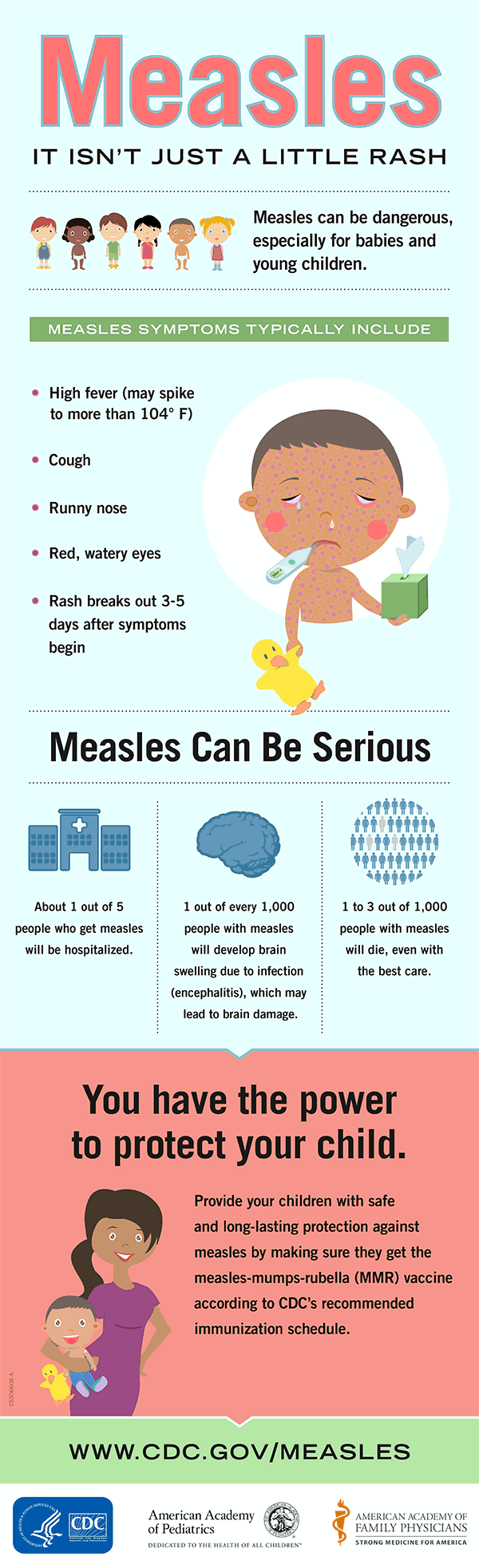
You have the power to protect your child.
Provide your children with safe and long-lasting protection against measles by making sure they get the measles-mumps-rubella (MMR) vaccine according to CDC’s recommended immunization schedule.

The USDA’s Child and Adult Food Care Program, (CACFP), provides nutritious meals and snacks to children and adults living in a variety of settings. Children who live at home, who are in preschool, who attend childcare centers, who participate in after-school programs and who live in shelters, benefit from the program. CACFP also provides healthy food to homebound adults and those living in adult care facilities.
Founded in 1968, as a special pilot program known as the Special Food Service Program for Children, CACFP now serves nearly 5 million adults and children across the nation every day. Centers and sponsoring organizations receive cash reimbursement for serving meals and snacks to participants whose incomes are below 185% of the poverty level.
CACFP Week is observed in March, which is a National Nutrition Month®, an annual observance to promote nutritious food choices and encourage people to develop healthful eating and physical activity habits. This year, CACFP Week will be observed March 10-16, 2024. This year’s theme is “Eating the Rainbow.”
In 1968, Congress amended the National School Lunch Act to reach children in childcare programs. Throughout the CACFP’s more than 50-year history, the program has continued to update its nutrition standards in conjunction with the USDA meal patterns and dietary guidelines.
In celebration of the impact CACFP operators make in their communities, the nutrition programs at the Virginia Department of Health (VDH) and Virginia Department of Education (VDOE), with the support of community partners, are hosting a week full of virtual events specifically for program operators. These events, along with a social media campaign are intended to promote and recognize the integral role the CACFP plays in supporting the health and wellbeing of all Virginians.
VDH and VDOE, along with their community partners will be posting to social media using #VACACFP, @CACFPVirginia and @VDOESNP. Follow VACACFP on Facebook, Instagram and Twitter.
To find more information about CACFP Week activities, visit https://www.vdh.virginia.gov/child-and-adult-care-food-program/cacfp-week-coming-soon/.
For a list of participating CACFP organizations committed to providing nutritious meals or for more information, please visit Child and Adult Care Food Program.