

EMS Infection Prevention Training: Expanding Education Across Virginia
Infection prevention is an important part of Emergency Medical Services (EMS) practice. However, many agencies have relaxed some infection control practices since the COVID-19 pandemic. To help address this need, David Keeler of the Tidewater EMS Council has added infection prevention training to their annual and quarterly EMS education programs.
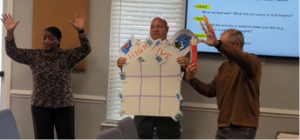
David partnered with Ginger Vanhoozer from the Virginia Department of Health to provide training for EMS professionals. Topics included everyday infection prevention practices, new infectious diseases, antibiotic resistance, MRSA, and other drug-resistant organisms. The sessions brought the topic to life with hands-on activities, including glow-in-the-dark demonstrations that showed how contamination can spread. These activities helped make the information easy to understand and remember.
The response from participants has been extremely positive. Attendees reported a 100% satisfaction rating and asked for more training opportunities, including additional foundational infection prevention education opportunities. By strengthening their infection prevention knowledge, EMS professionals can better protect themselves, their patients, and their communities.
Regional EMS councils throughout Virginia offer a great way to bring infection prevention information to providers.
How can I get involved with EMS education in my area?
To bring similar trainings to your area, contact your local EMS council to learn more. These councils can help organize educational events, connect EMS and healthcare partners, and support infection prevention efforts in their communities.
By working together, infection preventionists and EMS professionals can strengthen infection prevention practices across Virginia.
Find your EMS region and connect with your local EMS council.
Celebrating Virginia’s AL-CIP Leaders
The Advanced Leadership Certification in Infection Prevention (AL-CIP) launched in 2025. Since then, 11 Virginia infection preventionists (IPs) have earned this advanced credential. We spoke with Jessica Fielek and Tracey Odachowski from Sentara, and Becky Lapian from Inova, about their experience and advice for future applicants.
Why earn the AL-CIP?
Jessica Fielek said, “I chose to pursue the AL-CIP certification because I believe it represents the culmination of the leadership and infection prevention work that many IPs perform every day, often without a great deal of recognition. The certification provides a unique opportunity to showcase the impact of our work, not only to the selection committee but also to our peers and organizations.”
Tracey Odachowski shared, “Being a new certification and an early recipient, I feel it demonstrates my commitment to infection prevention advancements, leadership, and professional influence.”
Lessons Learned
Becky Lapian said, “The most challenging part was figuring out how to fit my experience and evidence into the different domains and subdomains. Connecting each piece of evidence to the specific domains and then writing the rationale to clearly explain the connection took some thought. It really made me reflect on the breadth of my experience and the impact of the work I’ve done.”
Her advice: “Go for it! Don’t underestimate the work you’ve already done or the experience you’ve gained as an IP. Take the time to really highlight your accomplishments and think about the impact of your work. It’s a great opportunity to reflect on your growth and showcase what you bring to the profession.”
Jessica added, “My biggest piece of advice is to carefully review the AL-CIP handbook several times before you begin and take advantage of any informational webinars or educational sessions offered about the certification. Understanding the requirements and domains upfront can save a great deal of time as you begin selecting and organizing your portfolio evidence. I would also encourage applicants to focus on collecting strong evidence and clearly articulating their specific leadership role within each project. Many infection preventionists contribute to numerous successful initiatives, but it is important to demonstrate how you personally influenced the work, led change, or contributed to achieving the outcomes.”
Interested in earning your AL-CIP?
Review the AL-CIP Handbook and access webinars to better understand requirements, organize your portfolio, and prepare a strong application.
Get personalized support at any stage. Book a coaching session with a current AL-CIP through the VDH HAI/AR Program’s Infection Prevention Educator Boost Sessions.
From Outbreak Response to Lasting Success at Bland Nursing and Rehab
Building a Strong Foundation
Bland Nursing and Rehab, a ventilator-capable skilled nursing facility in Southwest Virginia, recently achieved a major milestone: its carbapenem-resistant Acinetobacter baumanii (CRAB) outbreak has officially closed, with no new cases identified. This success came from a team effort focused on strengthening infection prevention practices across the facility.
Leadership secured a full-time infection preventionist and built strong support from key leaders, including the administrator, director of nursing, assistant director of nursing, wound care nurse, and respiratory therapy manager. Together, they created a culture focused on safety, accountability, and continuous improvement.
Turning Plans into Action
The facility redesigned its environmental services program by updating cleaning policies, introducing an automated disinfectant dispensing system, and switching to single-use microfiber mops for each resident room. Staff received retraining and competency validation to ensure consistent practices.
The team also strengthened personal protective equipment (PPE), hand hygiene, and isolation precaution monitoring through regular audits, observations, and staff education. Respiratory therapy practices were enhanced through direct observation, competency validation, simulation-based training, and routine audits of ventilator and tracheostomy care.
Keep the Momentum Going
Bland Nursing and Rehab’s success shows that lasting infection prevention is possible when leadership, education, monitoring, and teamwork come together. Facilities looking to strengthen their own programs can take advantage of these free resources:
- CDC Project Firstline: Practical training materials and educational resources to support staff education and reinforce infection prevention best practices.
- VDH Infection Prevention and Control Assessments: No-cost, consultative, non-regulatory onsite help to identify strengths and address potential gaps in your facility’s infection prevention and control program.
These resources can help facilities proactively strengthen infection prevention practices to protect residents, staff, and the entire care community.
Virginia APIC Members Share Their Work at the APIC National Conference!
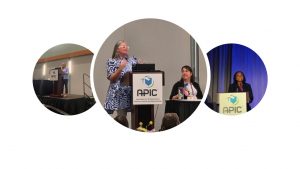
The 2026 Association for Professionals in Infection Control and Epidemiology (APIC) National Conference was held June 15–17 in Nashville, TN, offering infection preventionists a valuable opportunity to learn, collaborate, and showcase their work. With about 400 submissions received, selection to present is a notable achievement. This year, several APIC Virginia Chapter members were featured.
Congratulations to the following presenters!
⭐Dana Chapman (Sentara Leigh Hospital) and Ginger Vanhoozer (VDH) presented “Reciprocal Mentorship That Fits: Education-Rich, Time-Smart, and Built for Collaboration”, discussing APIC Virginia & VDH’s novel mentorship program.
⭐Mai Jatta (Carilion Clinic) discussed Carilion’s systemwide approach to implementing a water and steam testing program in alignment with ANSI/AAMI ST108 in “Systemwide Implementation of Water and Steam Quality for Medical Device Reprocessing”.
⭐Carolyn Kiefer and Andrea Chapman (VDH) presented “From Airways to Outbreaks: A State’s Journey Strengthening Respiratory Care Assessments”. They discussed the importance of incorporating respiratory care assessments into outbreak investigations with pathogens such as Candida auris, Group A Streptococcus, and other multidrug-resistant organisms, and how to implement them in the field.
⭐Krysta Luzynski (VCU Health Community Memorial Hospital) discussed “Public Health in Practice: Leveraging Public Health 3.0 to Strengthen Infection Prevention in a Small, Rural Hospital”. This presentation focused on using the Public Health 3.0 framework to strengthen infection prevention programs, and how a “chief health strategist” role can facilitate collaboration and empower teams.
⭐Samuel Ntow (Carilion Clinic) presented “Hospital-Onset Sepsis: Characterizing a Hitherto Underrecognized HAI Burden Using Five Years of Surveillance Data at an Academic Medical Center” which discussed the underreporting of hospital onset sepsis in an academic medical center. He found that the rates exceeded several currently tracked HAI categories in his facility.
Tools & Tips to Share Your Work
- Local conferences are a great place to begin. Consider submitting a poster at the APIC Virginia Fall Conference (October 15–16):
↪️APIC Virginia provides guidance on what to include plus a free poster template! - Join the APIC Research Network (free for APIC members) to connect with peers and access helpful resources.
- Need help shaping your idea or outlining your poster or presentation? Schedule a free Infection Prevention Boost Session for one-on-one support.
Carilion Clinic’s Internship Program Prepares the Next Generation of Infection Preventionists
|
Carilion Clinic’s Infection Prevention and Control team is celebrating an innovative workforce development initiative: the Accelerated Internship Program for Infection Prevention and Control (IPC). Created to address the growing need for trained IPC professionals, the program offers aspiring infection preventionists and graduate students a structured, hands-on introduction to the field. The 10-week program includes 20 hours per week of core IPC learning. Interns build a strong foundation while applying concepts in real clinical settings. Topics include hand hygiene, standard and transmission-based precautions, healthcare-associated infection prevention, surveillance and reporting, regulatory readiness, environment of care, disinfection and sterilization, surgical services, microbiology, outbreak response, exposure management, and specialty care settings. |

The program’s practical design is one of its greatest strengths. Rather than learning only from reading, interns round with teams, observe surveillance processes, review dashboards, participate in environment of care activities, shadow sterile processing and laboratory workflows, explore outbreak response tools, and prepare department presentations. They also gain access to facility tools, policies, checklists, and national resources that support continued development. The internship is led by IP Savannah Butcher, MPH, who thoughtfully curates a meaningful learning experience. As she shares, “the most rewarding part of coordinating the internship program is mentoring students and helping them discover how impactful infection prevention is to patient safety and healthcare quality.” Cheers to Carilion Clinic’s IPC team for investing in future Infection Preventionists through a thoughtful model that combines mentorship, evidence-based practice, and real-world experience. Getting Started Tips
|
Celebrating Patty Bracy’s Creative Leadership in Infection Prevention Education
Patty Bracy, Infection Prevention and Control Nurse Manager at Eastern State Hospital, continues to raise the bar for engaging education in behavioral health settings. At the hospital’s Quality Expo, she showcased not only her expertise, but also her creativity and commitment to making infection prevention meaningful for every staff member.
Using the Expo’s Pi Day theme, Patty transformed infection prevention core concepts and data into an interactive learning experience. Staff from nursing, administration, central office, IT, environmental services, and physicians visited Expo stations, collecting stickers that earned them pie and coffee.
Patty’s display blended clear, relevant data with hands-on activities covering hand hygiene, N95 fit testing, isolation precautions, mask types, regulated medical waste disposal, and distinguishing urinary tract infections from asymptomatic bacteriuria. She incorporated puzzles, question cards, and other bite-sized learning tools that made complex topics approachable. The board was so effective that it’s now being used for roving education throughout the hospital.
Attendees stayed engaged and asked thoughtful questions, proof that her approach resonated. Patty shared how much she enjoys her role and collaborating across departments, and with the support of her leadership, continues to grow professionally, recently earning her LTC-CIP certification!
Tools and Tips to Get Started
Patty’s Go-To Resources
- CDC Project Firstline for foundational infection prevention materials
- VDH Infection Prevention Roadshow for creative engagement ideas (2026 registration now live!)
- APIC for printable puzzles and educational tools
Patty’s Tips to Get Started
- Choose a theme that’s fun, timely, or relevant to your audience.
- Pair data with interaction – puzzles, quizzes, stickers, or small challenges keep people moving and learning.
- Use bite-sized education so staff can engage quickly without feeling overwhelmed.
- Invite multiple departments to create a sense of community and shared purpose.
- Repurpose your materials for ongoing education after the event.