Central Virginia Health District Confirms Three Rabid Animals

March 11, 2026
Media Contact: Kim Foster, kimberlee.foster@vdh.virginia.gov

Central Virginia Health District Confirms Three Rabid Animals

Lynchburg, Va. – The Central Virginia Health District has received confirmation of three rabid animals located in the district between March 6 and March 9, including a rabid raccoon on Crestview Drive in the Forest area of Bedford County. Also, two rabid skunks have been reported in Campbell County, one on Suburban Road and another on Bethany Road. All the rabid animals had known or suspected contact with dogs. There is no known human exposure among the three incidents.

Rabies is caused by a virus that attacks the nervous system and is lethal if proper medical care is not given following an exposure to the virus. The most common source of exposure to rabies is a bite by a rabid animal. Rabies may also be transmitted by saliva from a rabid animal contacting open wounds, the mouth, eyes or nose. All animal bites should be reported to the local animal control officers or to the local health department to ensure proper follow-up for rabies prevention.

Everyone should take commonsense measures to protect themselves and their domestic animals from rabies. Pet owners should keep their pets up to date on their rabies vaccinations. Virginia law requires that all dogs and cats four months of age and older be vaccinated for rabies by a licensed veterinarian, and that vaccinations be kept current. It is important to avoid contact with wild or stray animals, and parents should be sure that their children are taught not to touch, pet, or otherwise handle unknown animals.

Steps that can be taken to prevent rabies in people and pets include:
• Be sure that your pets are up to date on their rabies vaccinations.
• Avoid contact with wild animals or stray animals.
• Do not feed stray animals. Avoid wild animals, especially raccoons, bats, foxes and skunks. Feed your pets indoors and do not let them wander.
• Teach children to avoid contact with wild animals and pets they are not familiar with.
• Do not handle sick, injured or dead animals. Contact a licensed wildlife rehabber if you have concerns
about sick or injured wildlife.
• Keep wild animals out of homes by capping chimneys with screens and blocking openings in attics, cellars and porches. Ensure trash cans have tight fitting lids.
• Do not try to trap or handle stray and wild animals. If a bat is found indoors and may have had contact with someone, do not release it. Call your local animal control officer or health department to determine if the animal should be picked up and tested for rabies.
• Report all bites to people to the local health department for investigation.

If you are bitten by a wild or stray animal do not panic. Wash the wound(s) thoroughly with warm
soapy water and contact animal control, your doctor or the health department for further
recommendations. https://www.vdh.virginia.gov/central-virginia/health-department-locations/

For more information about rabies, https://www.vdh.virginia.gov/animal-contact-human-health/rabiescontrol/.
Cumberland Plateau and LENOWISCO Health Districts Offer Safety Tips to Stay Warm During Extreme Cold

January 29, 2026
Media Contact: Daniel Hunsucker, Daniel.Hunsucker@vdh.virginia.gov

Cumberland Plateau and LENOWISCO Health Districts Offer Safety Tips to Stay Warm During Extreme Cold

WISE, Va. As southwest Virginia continues to see dangerously cold temperatures, hypothermia and frostbite are real concerns. The Virginia Department of Health’s Cumberland Plateau and LENOWISCO Health Districts urge you to take steps to keep you and your family warm, dry, and healthy throughout this winter season.

“Even if you’re a cautious winter driver, it’s helpful to prepare for any scenario, from a flat tire to sliding off the road,” said Reisa Sloce, Director Cumberland Plateau and LENOWISCO Health Districts. “Emergency preparedness is even more critical during the winter, with freezing temperatures that can become dangerous if you’re stranded for too long.”

Hypothermia occurs most commonly at very cold environmental temperatures but can occur even at cool temperatures (above 40°F) if a person becomes chilled from rain, sweat, or submersion in cold water. Signs to look out for include shivering, exhaustion or fatigue, confusion, fumbling hands, memory loss, slurred speech and/or drowsiness. In babies look for bright red, cold skin and very low energy.

Frostbite is a type of injury caused by freezing. If you notice redness or pain in any skin area, get out of the cold. The skin will feel numb, unusually firm or waxy, and can also appear white or grayish yellow. If you have frostbite, you may not know until someone else points it out because the frozen parts of your body are numb.

The Cumberland Plateau and LENOWISCO Health Districts encourage you to take these steps to prevent hypothermia, frostbite and other potential injuries.

Staying Warm

  • Stay indoors and limit your exposure to the cold.
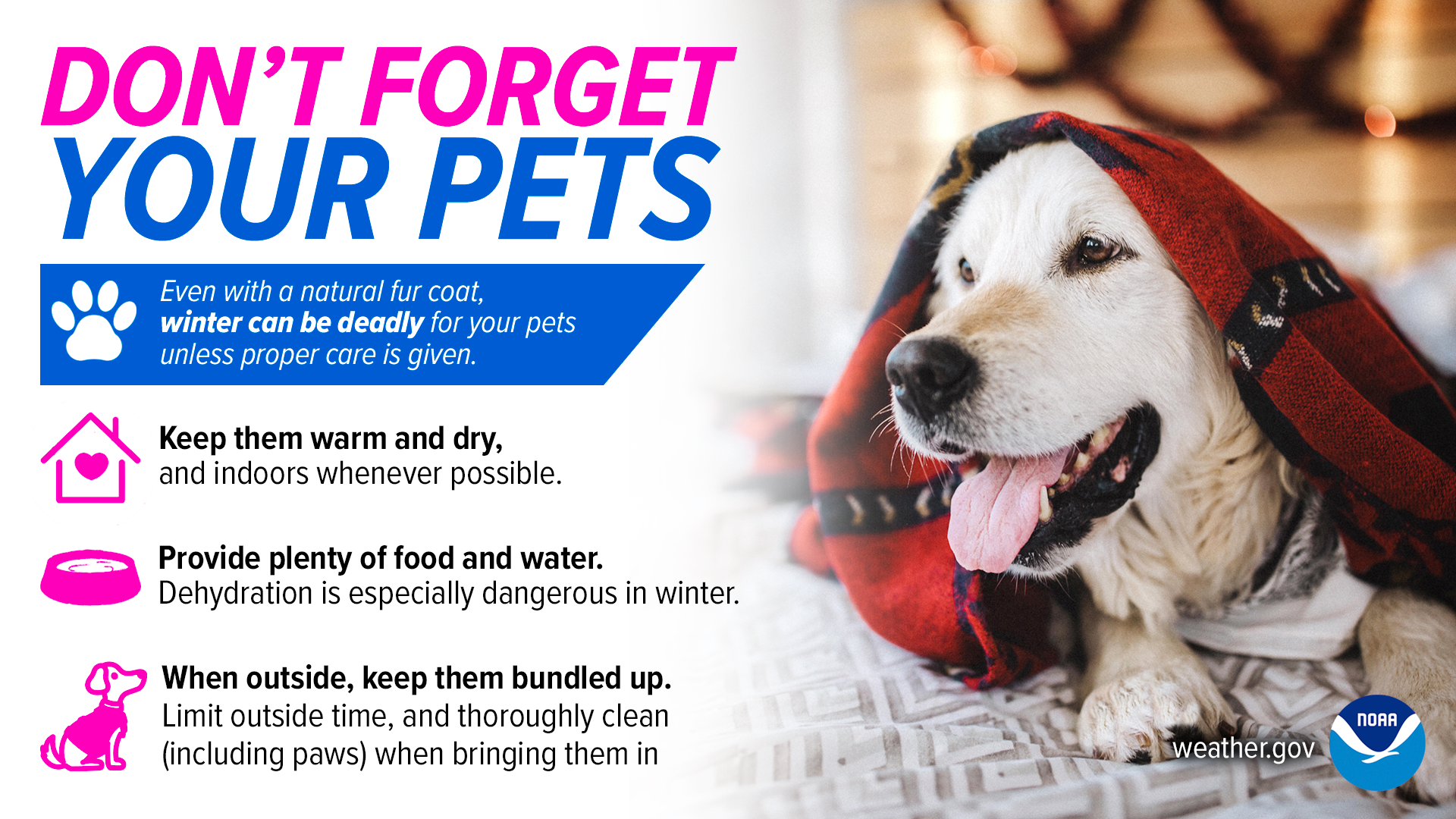
  • Bring your pets indoors and ensure they have water.
  • Eating healthy meals will help to keep your body temperature warm.
  • Stay hydrated even during the cold to prevent hypothermia. Avoid alcohol and caffeine. They cause your body to lose heat faster. Drink warm beverages or broth.
  • Keep extra blankets, sleeping bags, and warm winter coats on hand for use in cold rooms.
  • Charge all your devices (medical equipment, phone, computer, tablet, radio, etc.).
  • Check on neighbors, friends, and family.
  • For a list of warming centers in your area, call 2-1-1 or visit org/

If You Go Outside

If you must go outside, please take these precautions:

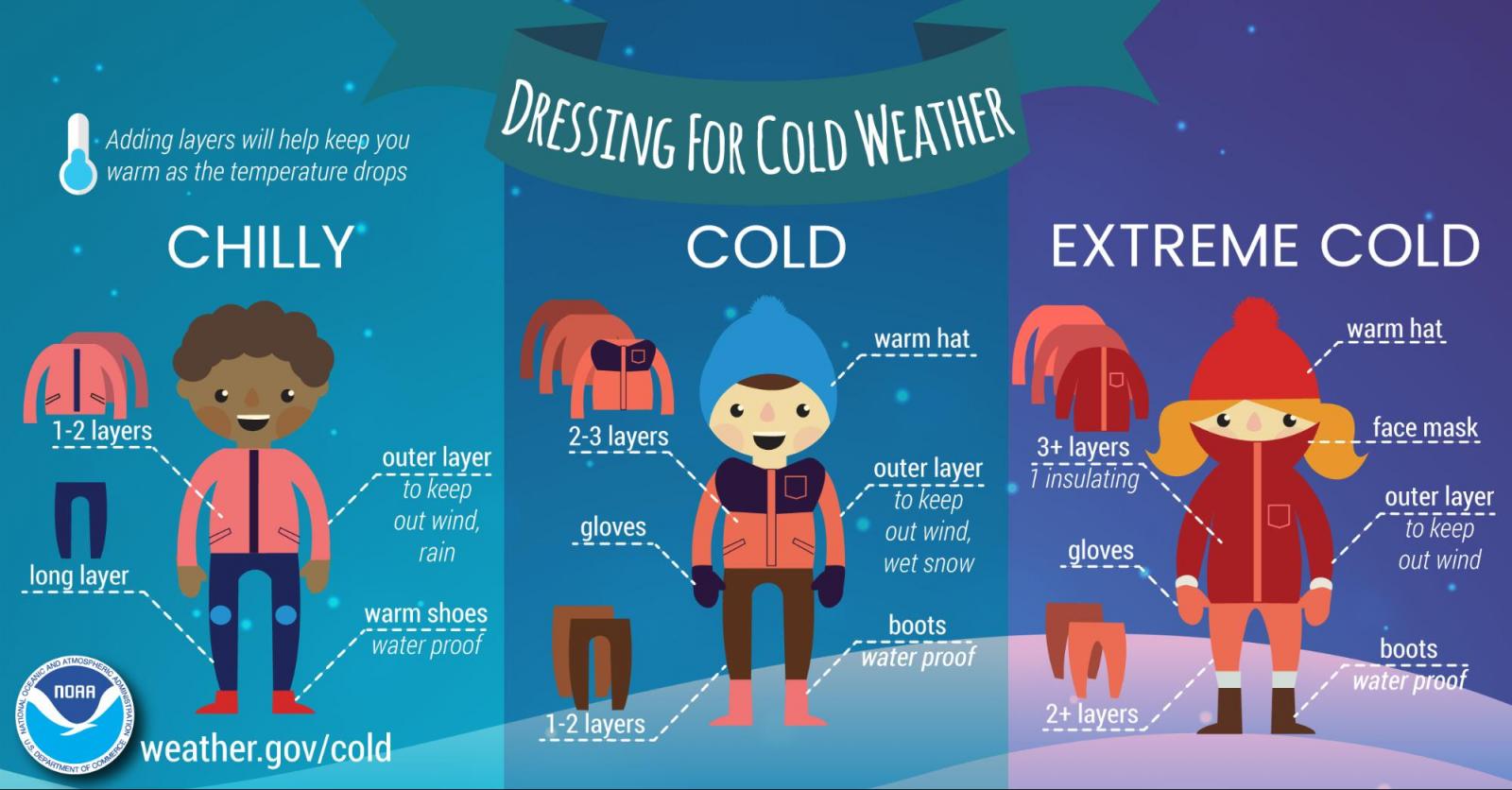
  • Dress warmly and in layers. Make sure you cover your head, fingers and toes to prevent frostbite.
  • Be aware of the wind chill factor.
  • Wear proper footwear for traction. Take slow, short steps.
  • Avoid getting wet. If you get wet, change out of wet clothes as soon as possible to prevent hypothermia.
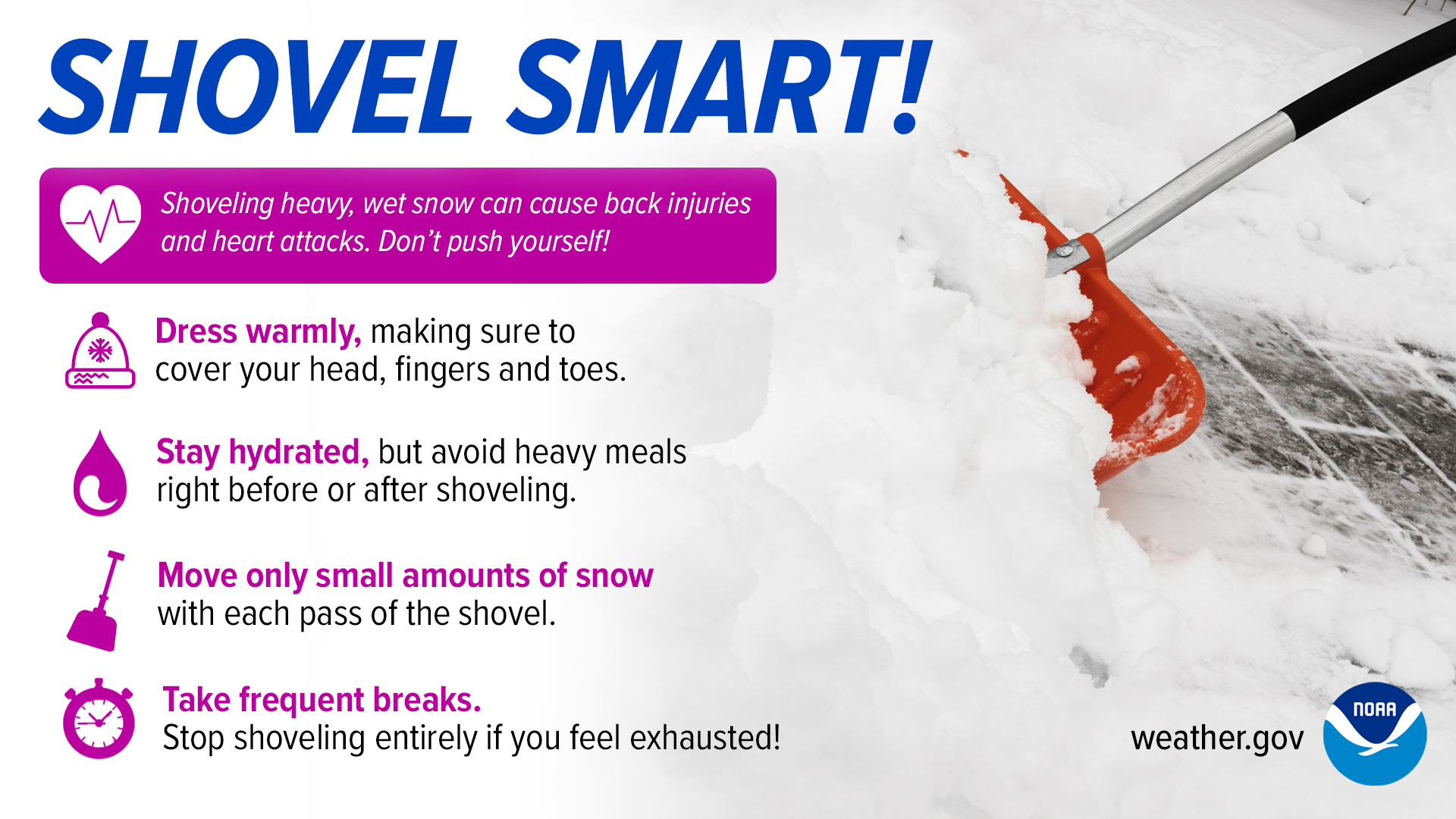
  • Take frequent breaks if shoveling snow or working outdoors.

If You Must Drive

  • Stay at home and avoid travel. If you must travel, check the road conditions and your route first.
  • Allow extra time and follow these tips from the Virginia Department of Transportation.
  • If you must travel, let someone know your destination and when you expect to arrive. Ask them to notify authorities if you are late.
  • Always carry extra warm clothing and blankets with Don’t rely on a car to provide enough heat.
  • Have a winter emergency kit inside your car that includes:
    • Ice scraper
    • Warmth items such as blankets, extra gloves, etc.
    • Portable shovel
    • Flashlight
    • Extra batteries and a cell phone charger
    • A first aid kit
    • Jumper cables
    • A small container of sand or kitty litter for traction
    • Nonperishable food and water
    • Items for handling a flat tire

If you have chronic health conditions, please reach out to your healthcare provider to work together and ensure you have a care plan in place. Organize and protect your prescriptions, over-the-counter drugs, home-use medical devices, and vitamins. Talk to your doctor or pharmacist about how you can create an emergency supply of medicines.

If you notice signs of frostbite and hypothermia, seek medical attention immediately.

If you have questions, contact the Cumberland Plateau Health District at (276) 889-7621 or the LENOWISCO Health District at (276) 328-8000.

Central Shenandoah Health District Offers Safety Tips to Stay Warm During Extreme Cold

January 28, 2026
Media Contact: Rachel Dumene, Rachel.dumene1@vdh.virginia.gov, 540-480-4998

Central Shenandoah Health District Offers Safety Tips to Stay Warm During Extreme Cold

STAUNTON, Va. As the Shenandoah Valley continues to see dangerously cold temperatures, hypothermia and frostbite are real concerns. The Central Shenandoah Health District (CSHD) urges you to take steps to keep you and your family warm, dry and healthy during this storm.

“While the storm has moved through our region, prolonged cold temperatures continue to pose serious health risks,” says Xavier Crockett, health director for CSHD. “Taking simple precautions can prevent injuries and keep our communities safe.”

Hypothermia occurs most commonly at very cold environmental temperatures but can occur even at cool temperatures (above 40°F) if a person becomes chilled from rain, sweat, or submersion in cold water. Signs to look out for include shivering, exhaustion or fatigue, confusion, fumbling hands, memory loss, slurred speech and/or drowsiness. In babies look for bright red, cold skin and very low energy.

Frostbite is a type of injury caused by freezing. If you notice redness or pain in any skin area, get out of the cold. The skin will feel numb, unusually firm or waxy, and can also appear white or grayish yellow. If you have frostbite, you may not know until someone else points it out because the frozen parts of your body are numb.

The Central Shenandoah Health District encourages you to take these steps to prevent hypothermia, frostbite and other potential injuries.

Staying Warm

  • Stay indoors and limit your exposure to the cold.
  • Bring your pets indoors and ensure they have water.
  • Eating healthy meals will help to keep your body temperature warm.
  • Stay hydrated even during the cold to prevent hypothermia. Avoid alcohol and caffeine. They cause your body to lose heat faster. Drink warm beverages or broth.
  • Keep extra blankets, sleeping bags, and warm winter coats on hand for use in cold rooms.
  • Charge all your devices (medical equipment, phone, computer, tablet, radio, etc.).
  • Check on neighbors, friends, and family.
  • For a list of warming centers in your area, call 2-1-1 or visit org/
    • Check this list for warming shelters located within CSHD:
      • Central United Methodist Church, 14 N. Lewis St., Staunton, VA, 24401
      • Waynesboro Area Refuge Ministry (WARM), check here for rotating locations.
      • Open Doors, 1111 N. Main St., Harrisonburg, VA, 28802

If You Go Outside

If you must go outside, please take these precautions:

  • Dress warmly and in layers. Make sure you cover your head, fingers and toes to prevent frostbite.
  • Be aware of the wind chill factor.
  • Wear proper footwear for traction. Take slow, short steps.
  • Avoid getting wet. If you get wet, change out of wet clothes as soon as possible to prevent hypothermia.
  • Take frequent breaks if shoveling snow or working outdoors.

If You Must Drive

  • If you must travel, check the road conditions and your route first.
  • Allow extra time and follow these tips from the Virginia Department of Transportation.
  • If you must travel, let someone know your destination and when you expect to arrive. Ask them to notify authorities if you are late.
  • Always carry extra warm clothing and blankets with Don’t rely on a car to provide enough heat.

If you have chronic conditions, please reach out to your healthcare provider to make sure together you have a care plan in place. Organize and protect your prescriptions, over-the-counter drugs, home-use medical devices, and vitamins. Talk to your doctor or pharmacist about how you can create an emergency supply of medicines.

If you notice signs of frostbite and hypothermia, seek medical attention immediately.

If you have questions, please contact the Central Shenandoah Health District at cshdinfo@vdh.virginia.gov.

Central Virginia Health District Shares Rabies Safety Tips

September 22, 2025
Media Contact: Kim Foster, kimberlee.foster@vdh.virginia.gov

Central Virginia Health District Shares Rabies Safety Tips
World Rabies Day is September 28

LYNCHBURG, Va. – World Rabies Day is September 28. Central Virginia Health District reminds you to avoid contact with strays and wild animals. Even though rabies is nearly 100% fatal, it is highly preventable.

Rabies is commonly found in Virginia in wild animals, such as raccoons, skunks, and foxes. Since January 1 of this year, 23 animals have tested positive for rabies in the Central Virginia Health District.

Vaccinating domestic animals, especially cats and dogs, is an important and effective barrier to prevent the transmission of rabies from wild animals to humans. Cats and dogs are more likely than people to have contact with wild animals and, if infected with rabies, could pass the disease along to humans. Virginia law requires all dogs and cats four months of age and older be vaccinated for rabies by a licensed veterinarian. Vaccinations must be kept current.

To protect yourself and your animals from rabies:

• Do not feed stray animals. Report them to local animal control authorities.
• Avoid wild animals, especially raccoons, bats, foxes and skunks. Wild animals are not pets.
• Do not handle sick, injured or dead animals. Instead, report these animals to the Department of Wildlife Resources. Permitted wildlife rehabilitators are another option.
• Teach children to avoid contact with wild animals and unfamiliar pets.
• Feed your pets indoors and do not let them wander.
• Keep wild animals out of your home by capping chimneys with screens. Block openings in attics, cellars and porches. Ensure trash cans have tight fitting lids.
• Make sure your pets are vaccinated against rabies and their shots are up to date. By law, all dogs and cats must be vaccinated against rabies.
• Talk with your healthcare provider before traveling overseas to see if rabies vaccinations are recommended.

Anyone potentially exposed to a rabid animal should notify their healthcare provider immediately.
Exposure includes any bites, scratches or contact with saliva.

If you are bitten by a wild or stray animal, do not panic. Wash animal bite wounds thoroughly with soap and water to decrease the chance of infection. Contact your healthcare provider or local health department for further recommendations.

If your pet is attacked or bitten by an animal, contact your local animal control of health department office.

For more information about rabies, visit the Virginia Department of Health Rabies Control webpage.

Rabid Feral Cat Confirmed on North Main Street in Hillsville

August 22, 2025
Media Contact: Brianne Kilbourne, brianne.kilbourne@vdh.virginia.gov

Rabid Feral Cat Confirmed on North Main Street in Hillsville

HILLSVILLE, Va. – The Carroll County Health Department is alerting the public to a confirmed case of rabies in a feral cat found acting aggressively on August 21, 2025, in the 1200 block of North Main Street in Hillsville. The cat, described as a short-haired gray feral feline, displayed classic signs of rabies, including unprovoked aggression and lack of fear of humans. It was reported lunging at pedestrians and possibly engaging with other animals in the area. The animal has since been captured and tested positive for rabies.

The area is expected to see a dramatic increase in foot traffic during the upcoming Labor Day Flea Market (August 29 – September 1), which draws thousands of visitors each year. Given the proximity to Carroll County Middle School, the public library, and influx of visitors next weekend, this incident raises public health concerns.

This is the fifth animal to test positive for rabies in Carroll County in the past month, underscoring the importance of community awareness and preventive action.

“Understanding how rabies spreads and how to prevent it is key to protecting our community,” said Dr. Meagan Helmick, Health Director for the Mount Rogers Health District. “Rabies is nearly always fatal once symptoms appear, but it’s entirely preventable through vaccination and avoiding contact with unfamiliar animals.”

To support community prevention efforts, the Carroll Veterinary Clinic, located on Healthy Trail Lane in Hillsville, is offering $10 rabies vaccinations for dogs and cats now through August 29. Walk-in availability is open before 12:00 p.m. or after 3:00 p.m. on weekdays. Pet owners are strongly encouraged to take advantage of this low-cost opportunity to protect their animals and help reduce the spread of rabies in the community.

If you have information regarding any potential exposure to this animal through a bite, scratch, or contact with saliva in an open wound or through the eyes, nose, or mouth please contact the Carroll County Health Department at 276-730-3180. For after-hour exposure concerns, please contact the Carroll County Sheriff’s Department at 276-728-4146.

Rabies is usually spread through the bite of an infected animal, but it can also be transmitted if the animal’s saliva or brain tissue gets into your eyes, mouth, nose, or an open cut. Exposure can also happen if your pet has direct contact with or is seen within close proximity to a rabid animal. All mammals, including humans, can get rabies. Symptoms may appear as early as a few days or as late as several months after exposure. Signs of rabies in animals can include:

  • Aggression or lack of fear of humans
  • Excessive drooling or foaming of the mouth
  • Difficulty swallowing
  • Staggering or paralysis
  • Seizures
  • Fear of water

Carroll County Health Department reminds all residents to follow these important rabies prevention guidelines:

  • Do not feed or pet stray animals.
  • Avoid wild animals, especially raccoons, bats, foxes and skunks.
  • Feed your pets indoors and do not let them wander.
  • Make sure your pets are vaccinated against rabies and their shots are up to date. By law, dogs and cats must be vaccinated against rabies.
  • Teach children to avoid contact with wild animals and pets they are not familiar with.
  • Do not handle sick, injured or dead animals. If you see a wild animal that appears to be ill, injured or orphaned, contact the Virginia Department of Wildlife Resources at https://dwr.virginia.gov/ or a licensed wildlife rehabilitator for guidance.

For more information about rabies, visit the VDH Rabies webpage at https://www.vdh.virginia.gov/animal-contact-human-health/rabies-control/

New River Health District Offers Tips to Keep Healthy and Cool as Temperatures Climb 

June 20, 2025
Media Contact: Beverly Hill, Beverly.hill@vdh.virginia.gov

New River Health District Offers Tips to Keep Healthy and Cool as Temperatures Climb
Extreme Heat Expected to Impact the New River Valley 06/23/2025 – 06/29/2025

CHRISTIANSBURG, Va. – As extreme heat moves into the New River Valley, heat-related illnesses are a real concern. The New River Health District offers guidance to stay healthy and cool this summer.

As temperatures outside rise, it’s important to stay hydrated and stay cool.  Last summer, Virginia had more than 3,200 heat-related illness visits to emergency departments (EDs) and urgent cares statewide and this year, there were 5 visits for Montgomery County and Radford City, from May 1 – June 15, 2025.  Additionally, Virginia EMS clinicians responded to more than 3,600 heat-related illness 911 calls during the heat season (May to September). According to the National Weather Service, extreme heat was the leading cause of weather-related deaths in 2024. 

The health director for the New River Health District, Noelle Bissell, M.D. noted, “It’s important to stay informed about forecast temperatures and conditions, and to plan accordingly.”

Heat stroke and heat exhaustion occur when your body is unable to cool itself. Humidity plays a big factor in your body’s ability to release heat. The higher the humidity, the slower your sweat evaporates. Additionally, age, weight, heart disease, poor circulation, alcohol, sunburn, and prescription drugs play a factor in how quickly your body can cool itself.  

You can beat the heat with these tips: 

  • Stay HydratedDrink water and lots of it. Don’t wait until you’re thirsty to drink.
  • Stay Cool – The easiest way to keep cool is to stay inside in the air conditioning.
    Visit local libraries, recreation centers, governmental centers and look to local fire/rescue squads for places to cool down for those who don’t have air conditioning.
  •  Limit Physical Activity – Schedule your outdoor activities for the coolest times of the day – early morning or evening. Take frequent breaks in the shade.
  • Dress Appropriately – Loose, lightweight clothing is the best way to dress for the heat. Wear sunscreen (SPF 15 or higher), glasses, and a sun hat for protection. Reapply sunscreen often.
  • Stay Informed – Before heading outside check out the Heat Risk Forecast or the CDC Heat and Health Tracker. Know the difference between a heat watch and a heat warning.
  • Do not leave children or pets in cars. Temperatures inside the car can rise almost 20 degrees within the first 10 minutes, even with the windows cracked. Make sure pets have plenty of water and shade.
  • Check on Others – Recognizing the signs of heat-related illnesses and knowing what to do, might save the life of a loved one.  If an individual loses consciousness, has a fast, strong pulse, hot, red skin and/or temperatures of 103° F, call 911 immediately. Heat stroke is an emergency. 

Keep these tips in mind for a safe, cool summer. Remember that New River Health District can be a resource for summer safety. 

Local Health Officials Offer Tips to Keep Healthy and Cool as Temperatures Climb

June 20, 2025
Media Contact: Rachel Dumene, Rachel.dumene1@vdh.virginia.gov, 540-480-4998

Local Health Officials Offer Tips
to Keep Healthy and Cool as Temperatures Climb

Extreme Heat Expected to Impact Shenandoah Valley this Coming Week

STAUNTON, Va. – As extreme heat moves into the Shenandoah Valley, heat-related illnesses are a real concern. Central Shenandoah Health District (CSHD) locations offer guidance to stay healthy and cool this summer.

As temperatures outside rise, it’s important to stay hydrated and stay cool.  Last summer, Virginia had more than 3,200 heat-related illness visits to emergency departments (EDs) and urgent cares statewide and 526 visits for the northwest region. Additionally, Virginia EMS clinicians responded to more than 3,600 heat-related illness 911 calls during the heat season (May to September). According to the National Weather Service, extreme heat was the leading cause of weather-related deaths in 2024.

“The Shenandoah Valley has been experiencing longer, hotter summers and more severe heat over the years,” says Dr. Allison Baroco, interim health director of CSHD. “Whether you work outdoors, enjoy exercising at your local park, or don’t have air conditioning, it is important to know how to protect your health from extreme heat.”

Heat stroke and heat exhaustion occur when your body is unable to cool itself. Humidity plays a big factor in your body’s ability to release heat. The higher the humidity, the slower your sweat evaporates. Additionally, age, weight, heart disease, poor circulation, alcohol, sunburn, and prescription drugs play a factor in how quickly your body can cool itself.

You can beat the heat with these tips:

  • Stay HydratedDrink water and lots of it. Don’t wait until you’re thirsty to drink.
  • Stay Cool – The easiest way to keep cool is to stay inside in the air conditioning. Don’t have AC? Visit 211 to find a cooling center near you.
  •  Limit Physical Activity – Schedule your outdoor activities for the coolest times of the day – early morning or evening. Take frequent breaks in the shade.
  • Dress Appropriately – Loose, lightweight clothing is the best way to dress for the heat. Wear sunscreen (SPF 15 or higher), glasses, and a sun hat for protection. Reapply sunscreen often.
  • Stay Informed – Before heading outside check out the Heat Risk Forecast or the CDC Heat and Health Tracker. Know the difference between a heat watch and a heat warning.
  • Do not leave children or pets in cars. Temperatures inside the car can rise almost 20 degrees within the first 10 minutes, even with the windows cracked. Make sure pets have plenty of water and shade.
  • Check on Others – Recognizing the signs of heat-related illnesses and knowing what to do, might save the life of a loved one. If an individual loses consciousness, has a fast, strong pulse, hot, red skin and/or temperatures of 103° F, call 911 immediately. Heat stroke is an emergency.

Keep these tips in mind for a safe, cool summer. Remember that your local health department can be a resource for summer safety.

Central Virginia Health District Confirms Rabies in a Skunk

May 2, 2025
Media Contact: Madison Shepard, madison.horacek@vdh.virginia.gov

Central Virginia Health District Confirms Rabies in a Skunk

LYNCHBURG, Va. – The Appomattox County Health Department has received confirmation that a skunk submitted for testing on April 30, 2025, was positive for rabies. The skunk was found in the Gladstone area of Appomattox County. Due to the rural location where the skunk was found, the public was not at risk of contracting the disease from the rabid animal. However, the Central Virginia Health District wants to remind the public to remain vigilant since rabies is present in the area. Including the skunk, additional rabid animals have been identified in the City of Lynchburg, as well as in Amherst, Appomattox, Bedford and Campbell counties. Last year, the district had a total of 31 cases of rabies in animals, with at least one rabid animal in each of the five localities.

Rabies can infect all mammals and is caused by a virus that attacks the nervous system and is lethal if proper medical care is not given following an exposure to the virus. The most common source of exposure to rabies is a bite by a rabid animal.  Rabies may also be transmitted by saliva from a rabid animal contacting an open wound, the mouth, eyes or nose. It is important to avoid contact with wild or stray animals, and parents should be sure that their children are taught not to touch, pet, or otherwise handle unknown animals.

The most important step the public can take to prevent rabies in people and pets is to keep their pets up to date on their rabies vaccinations. Virginia law requires that all dogs and cats four months of age and older be vaccinated for rabies by a licensed veterinarian, and that vaccinations be kept current.

Additional steps that can be taken to prevent rabies in people and pets include:

  • Do not feed stray animals. Avoid wild animals, especially raccoons, bats, foxes and skunks. Feed your pets indoors and do not let them wander.
  • Teach children to avoid contact with wild animals and pets they are not familiar with.
  • Do not handle sick, injured or dead animals. Contact a licensed wildlife rehabber if you have concerns about sick or injured wildlife. A list of permitted wildlife rehabilitators can be found at the Department of Wildlife Resources website (https://dwr.virginia.gov) or by calling the nearest Wildlife Resources office.
  • Keep wild animals out of homes by capping chimneys with screens and blocking openings in attics, cellars and porches. Ensure trash cans have tight fitting lids.
  • Do not try to trap or handle stray and wild animals. If a bat is found indoors and may have had contact with someone, do not release it. Call your local animal control officer or health department to determine if the animal should be picked up and tested for rabies.
  • Report all bites to people to the local health department for investigation.

If you are bitten by a wild or stray animal do not panic. Wash the wound(s) thoroughly with warm soapy water and contact animal control, your healthcare provider or the health department for further recommendations.

For more information about rabies, visit: https://www.vdh.virginia.gov/animal-contact-human-health/rabies-control/

Rabid Raccoon Reported in Norfolk

January 3, 2025 
Media Contact: 
Norman Grefe, Norfolk Health Department, Environmental Health Manager, Norman.Grefe@vdh.virginia.gov, 757-683-2824

Rabid Raccoon Reported in Norfolk

NORFOLK, Va. –  A raccoon in Norfolk has tested positive for rabies. The juvenile raccoon was found in a marsh area along the river bordering the 3500 block of Granby Street on December 29, 2024.  The raccoon was reported ill and was euthanized and sent to the Virginia Department of Consolidated Laboratory Services in Richmond for testing. It was reported positive for rabies on January 2, 2025. There are no known exposures associated with this raccoon; however, if you have been bitten or scratched by a raccoon in this area, please contact the Norfolk Department of Public Health at 757-683-2712.

It is important to note that all animal bites and scratches should be reported to the local health department.  Rabies is a fatal disease but is preventable if treatment is begun early and completed as recommended by a medical provider.  Exposure incidents occurring in the city of Norfolk should be reported to the Environmental Health Division of the Norfolk Department of Public Health at 757-683-2712 or Norfolk Animal Control at 757-664-7387.  The following precautions are recommended to reduce the risk of rabies exposure:

  • Be sure dogs and cats are up to date on vaccinations.
  • Keep pets confined to home and yard.
  • Keep yards free of food that could attract wild animals.
  • Do not handle, touch or take in stray or wild animals.
  • Warn adults and children to report any animal bites or scratches.
  • Report strays or unvaccinated animals to Animal Control at 757-664-7387.
  • Report all animal or human exposures to the Norfolk Department of Public Health at 757-683-2712.

For further information, please contact the Environmental Health Division of the Norfolk Department of Public Health at 757-683-2712.

October 4, 2024
Media Contact: Kim Foster, Population Health Manger/PIO, kimberlee.foster@vdh.virginia.gov

Central Virginia Health District Reports Rabies Confirmation in Campbell County

LYNCHBURG, Va. – The Campbell County Health Department has received confirmation that a dog, a coon hound about 10 years of age, has tested positive for rabies. The dog was in the vicinity of Booker Road and Lynchburg Avenue in Brookneal. Anyone who may have been exposed to a dog or other animal, by a bite, scratch or contact with saliva, in that area should consult with their physician and contact the Campbell County Health Department at (434) 332-9550.  You may also contact the health department by email at AskCVHD@vdh.virginia.gov.

This incident is a reminder that rabies is present in Virginia and sometimes infects domestic animals like dogs and cats.  Rabies is caused by a virus that attacks the nervous system and is lethal if proper medical care is not given following an exposure to the virus. The most common source of exposure to rabies is a bite by a rabid animal.  Rabies may also be transmitted by saliva from a rabid animal coming into contact with open wounds, the mouth, eyes or nose.

Everyone should take commonsense measures to protect themselves and their domestic animals from rabies.  Pet owners should keep their pets up to date on their rabies vaccinations. Virginia law requires that all dogs and cats four months of age and older be vaccinated for rabies by a licensed veterinarian, and that vaccinations be kept current.  It is important to avoid contact with wild or stray animals, and parents should be sure that their children are taught to not touch, pet or otherwise handle unknown animals.

Additional steps that can be taken to prevent rabies in people and pets include:

  • Do not feed stray animals. Avoid wild animals, especially raccoons, bats, foxes and skunks. Feed your pets indoors and do not let them wander.
  • Teach children to avoid contact with wild animals and pets they are not familiar with.
  • Do not handle sick, injured or dead animals. Contact a licensed wildlife rehabber if you have concerns about sick or injured wildlife.
  • Keep wild animals out of homes by capping chimneys with screens and blocking openings in attics, cellars and porches. Ensure trash cans have tight fitting lids.
  • Do not try to trap or handle stray and wild animals. If a bat is found indoors and may have had contact with someone, do not release it. Call your local animal control officer or health department to determine if the animal should be picked up and tested for rabies.
  • Report all bites to people to the local health department for investigation.

If you are bitten by a wild or stray animal do not panic. Wash the wound(s) thoroughly with warm soapy water and contact animal control, your doctor or the health department for further recommendations. For more information, visit www.vdh.virginia.gov/animal-contact-human-health/rabies-control/.