
This week, from October 19-25, the VDH is raising awareness about childhood exposure to lead and ways to prevent it.
About Lead Poisoning
Lead poisoning occurs when lead enters the bloodstream and builds up to toxic levels. In 2024, there were 1,437 cases of childhood lead exposure reported in Virginia.
When absorbed into the body, it can result in:
- Damage to the brain and nervous system
- Learning and behavior problems
- Slowed growth and development
- Hearing and speech problems
Any level of lead exposure is dangerous to children. It’s most dangerous in children less than six years of age. Most children with elevated blood lead levels will not show any physical symptoms.
Common Exposures to Lead in Children
Lead can hide in plain sight, especially if you don’t know where to look. Common sources of exposure include:
- Flaking and peeling paint in homes built before 1978
- Soil near older buildings, airports, or busy roads
- Drinking water delivered through lead pipes, faucets, and plumbing fixtures
- Products such as toys, jewelry, antiques, and collectible items
- Certain foods, cosmetics, and traditional medicines imported from other countries
- Lead brought into the home by someone who works with lead-based products.
The good news is lead poisoning is the most preventable environmental disease among young children. Preventing children’s contact with these things can greatly reduce their risk of exposure.
VDH has a new friend who can help get the word out.
Meet Chip
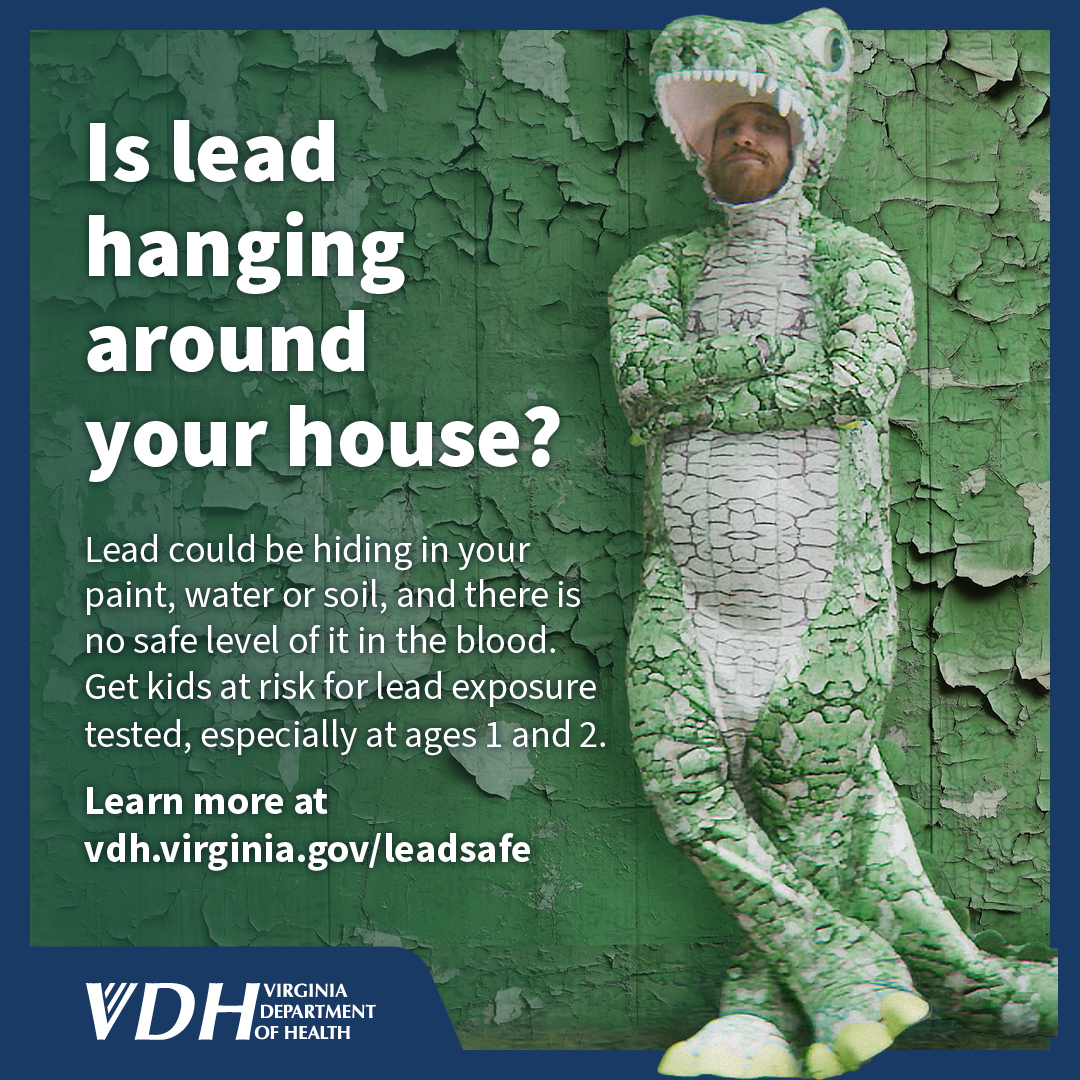
The VDH Childhood Lead Poisoning Prevention program developed a statewide lead awareness campaign.
The campaign features Chip the alligator. He helps us spot the signs of lead-based paint: cracked, scaly surfaces that look like alligator skin.
If you spot this around your home, take action. Talk to a healthcare provider about having your child tested for lead exposure.
For more information about lead poisoning and our new campaign, visit VDH’s Lead Safe webpage.