
Thomas’ Personal Story

My name is Thomas, and I was cured of hepatitis C. Here’s my story:

It’s been almost 30 years since I was diagnosed with both HIV and hepatitis C. At that time, I was using substances and participating in intravenous (IV) drugs. That didn’t last long, so I didn’t think much about it, but when I was diagnosed it was such a shock. I spiraled out of control and started using again. I eventually got control and saw a specialist for treatment. The Interferon and other meds I started were overwhelming. I was working full-time and I remember one time I went to work, and it was so cold and I was so exhausted. I just hid away and curled up because I just couldn’t deal with everything I was feeling. I went back to my doctor and said, “I can’t do this anymore.” My doctor told me I should go out on disability. I did go out on disability and moved in with my mom in Virginia.

That is when my life started to change for the better, when I started to become an advocate. Once I settled in Virginia, I became an HIV advocate and talked about the importance of HIV care. I wasn’t ready to advocate around hepatitis C because of the stigma associated with my drug use – I wasn’t there yet. In 2008, I got sick again and had to be admitted to the hospital. I never finished the Interferon because of the negative side effects. I had assumed that I still had hepatitis C, and it was getting worse. I started using drugs again and fell back into a dark place. This lasted for about a year. Eventually, my doctor told me that they were doing a clinical trial of new hepatitis C drugs. I flat out refused, afraid that I would have side effects like the last time. She assured me I would not get sick from this new medicine and that there would be little to no side effects. I started the trial, and after the lab tests came back, I found out that my initial treatment for hepatitis C had cured me. I had re-infected myself with hepatitis C. That felt like a slap in the face, but it was also a wake-up call for me. I realized that I needed to take better care of myself. I didn’t want things like this to continue to happen to me. I wanted to be a “normal” person. I wanted to be able to go out and work every day and not be ashamed and have all this stuff in my life causing so much chaos. At that point in my life, I decided, “No more! I’m stopping with the drug use.”

That is when I also started advocating for hepatitis C, too. I didn’t realize before how easy it was to get re-infected. I had never thought about it before it happened to me. All of this happening to me in a rural area, I also experienced stigma just attempting to talk to doctors. It was sort of like they thought if you used drugs, you were a dirty drug addict, and you were a bad person. If you even talked about hepatitis C, that was the response. It was really hard to get over that and go in with questions and talk about what was going on with me. But now, because of what happened to me, I’m not only helping myself but others who are walking in similar shoes that I walked in with addiction and hepatitis C. I started volunteering and doing work with the Ryan White Program. Everything really just came together for me. I’m now doing HIV, hepatitis C, and syphilis testing in the community. I’m navigating people through the process that I went through to get the treatment that they need.

Depression really played a big part in my story. It was one of the hardest things I had to deal with and having support can make such a difference. Because in the past someone showed me support, I started taking better care of myself. I started dreaming again and thinking about the future and what that might look like. Now I’m in the position to be that helping hand for others. It’s amazing, it’s empowering, and sometimes I can’t believe I’m where I am now.
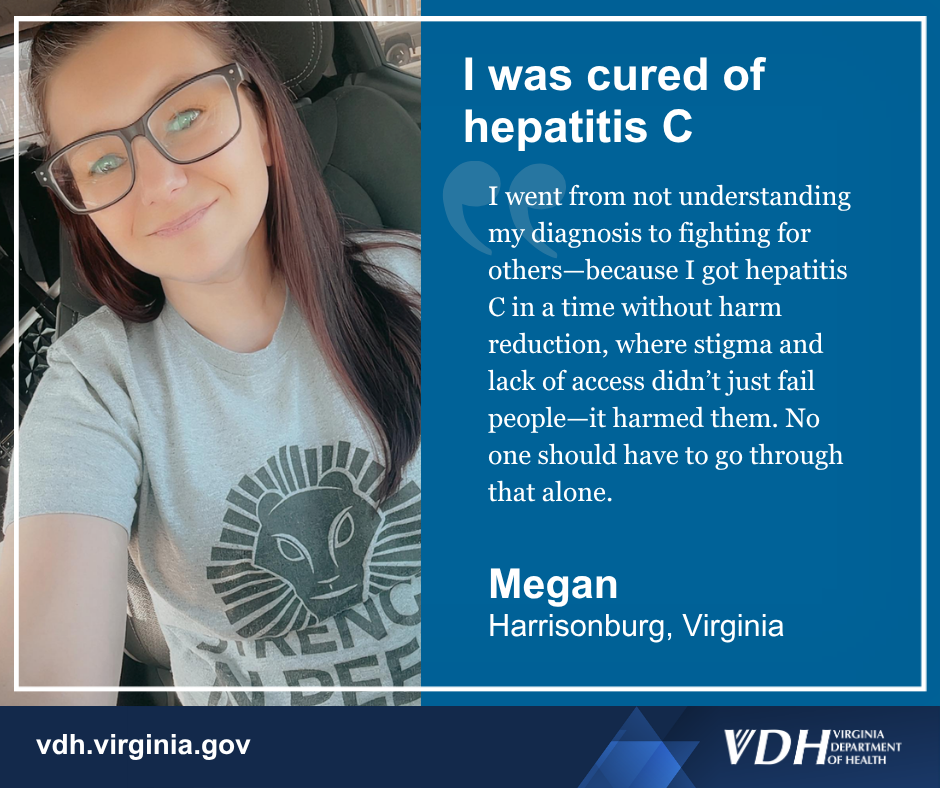
Megan’s Personal Story

My name is Megan, and I was cured of hepatitis C.  Here is my story:
I am a person in long-term recovery, a Program Manager at Strength In Peers, and a passionate advocate for harm reduction and equitable healthcare. My work is deeply rooted in lived experience, shaped not only by substance use, but by surviving a system that too often withholds care from those who need it most.

As a teenager, I began using substances and was introduced to intravenous drug use at a time when harm reduction resources were not available in my community. Without access to syringe exchange programs or education on bloodborne illnesses, sharing syringes became normalized, paired with the false hope that cleaning them with bleach would be enough to keep me safe.

In 2017, while pregnant with my youngest son, I was diagnosed with hepatitis C. At the time, I was still actively using substances and had little understanding of what the diagnosis meant. What followed was not just a medical condition, but an emotional weight—fear, shame, and silence fueled by stigma and lack of education.

Even after entering recovery, my path to treatment was not immediate. I faced systemic barriers, including lack of Medicaid coverage for hepatitis C treatment at the time. Although I was ready for care, care was not ready for me. It took years before treatment became accessible. When I was finally able to receive it, the process was straightforward, the side effects were minimal, and I was cured within months—highlighting a painful truth: the greatest barrier was never the treatment itself, but access to it.

Throughout my journey, I encountered stigma within healthcare settings. I often felt judged, dismissed, and defined by my past rather than supported in my healing. Those experiences now fuel my advocacy.

Today, I use my voice to challenge the systems that once failed me. I advocate for expanded syringe exchange programs, increased education around hepatitis C, and the removal of unnecessary barriers to treatment. I work to ensure that people who use substances—whether in active use or recovery—are met with dignity, compassion, and respect.

My message is clear: people should not have to wait for worthiness to access healthcare. Everyone deserves the chance to be healthy. Everyone deserves to be treated without judgment. And everyone deserves the opportunity to heal—on their own timeline, and with the support they need.

Jillian’s Personal Story

My name is Jillian, and I was cured of hepatitis C. Here is my story:

I started using intravenous (IV) drugs, heroin, in the early 2000s. I was in and out of rehab and jail after being arrested multiple times for possession. I would go in and out of rehab and into methadone clinics. Eventually I was successful in my rehab efforts, and I moved back home with my parents. I tested positive for hepatitis C in 2004. Most of my friends from that time also tested positive. I don’t know if they if they got treated – I don’t talk to any of them anymore.

I went through treatment for hepatitis C with interferon combination therapy around 2004. I had to go out on disability from work and was put on Paxil because of the severity of the side effects and depression from treatment. I was lucky enough to have health insurance to cover the costs. I thought about the irony of being an IV drug user and having to give myself injections every week.

I cleared the hepatitis C virus after 8 months of treatment. Treatment was rough, but now there are so little side effects with current hepatitis C treatment. I feel like if more people knew how easy it is now; they’d seek out treatment. Now it’s taking pills for 8-12 weeks with mild side effects and no shots. While people may still have barriers to wanting to get treated, new treatments are a game changer!

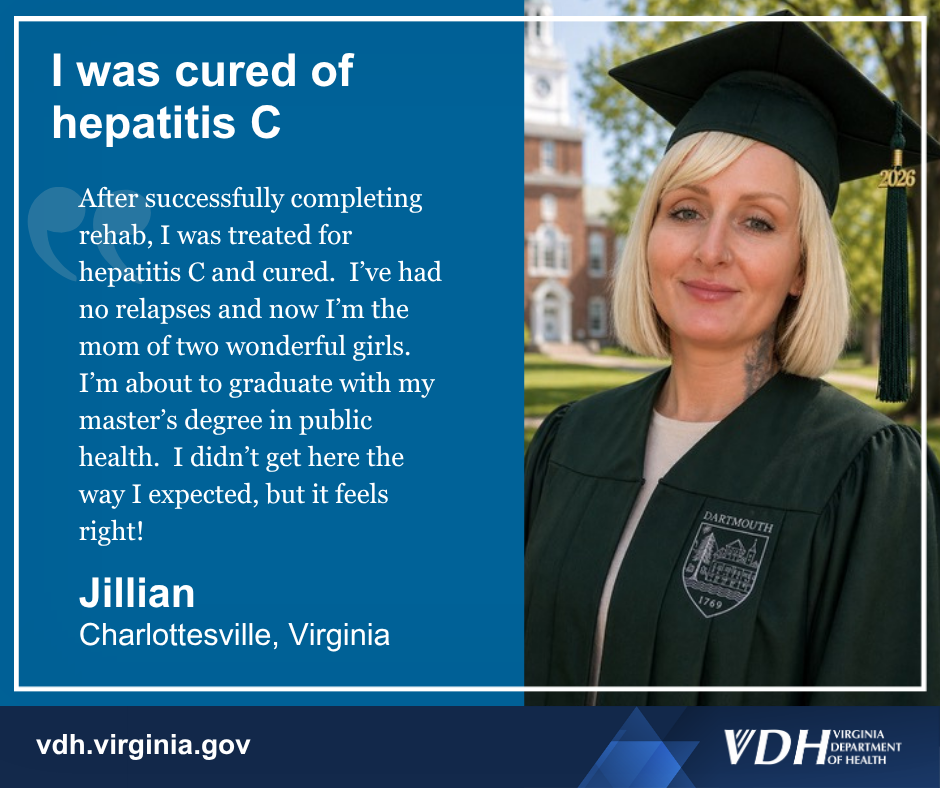
Since then, I’ve remained drugfree with no relapses. I’m now the mom of two amazing girls. I’m attending Dartmouth and about to graduate with a master’s degree in public health. I didn’t get here the way I expected, but it feels right!

Virginia’s Hepatitis Elimination Plan

Hep Free VA

Cover of Hep Free VA, the Virginia Hepatitis Elimination Plan

Learn about Hep Free VA and help us end viral hepatitis in Virginia

Viral hepatitis is an ongoing and nationwide public health concern.  Last year in Virginia, reportable viral hepatitis cases were the third highest reportable condition1.  Only cases of chlamydia and gonorrhea were reported in greater number.  Untreated viral hepatitis can cause serious negative health outcomes.  This can include liver disease, liver cancer, and death.  However, vaccines and antiviral treatments can help to stop viral hepatitis.  Vaccinations are available to prevent hepatitis A and B.  Hepatitis C is now curable through a short course of direct acting antiviral treatments.

DDP has collaborated with a range of statewide stakeholders to create Hep Free VA.  This is Virginia’s Viral Hepatitis Elimination Plan.  The plan aims to eliminate viral hepatitis in Virginia by 2030 by achieving six main goals.

    • Goal 1: Prevent New Viral Hepatitis Infections
    • Goal 2: Improve Viral Hepatitis-Related Health Outcomes of People with Viral Hepatitis
    • Goal 3: Reduce Viral Hepatitis-Related Disparities
    • Goal 4: Improve Viral Hepatitis Surveillance and Data Usage
    • Goal 5: Achieve Integrated, Coordinated Efforts that Address the Viral Hepatitis Epidemics among All Partners and Stakeholders
    • Goal 6: Secure Sustainable Funding to Address Viral Hepatitis Epidemics

Read our full plan!

DDP is grateful to all the stakeholders and partners who joined us in this effort.  We look forward to continuing our viral hepatitis elimination work with you.

If you would like to get involved to end viral hepatitis in Virginia, please contact Colin Dwyer at colin.dwyer@vdh.virginia.gov or (804) 613-8228.


1 Virginia Department of Health. (n.d.).  Virginia Monthly Morbidity Surveillance Report.  https://www.vdh.virginia.gov/surveillance-and-investigation/virginia-communicable-disease-data/virginia-monthly-morbidity-surveillance-report-2018/