Open Enrollment Informational Sessions
VDH Open Enrollment Session for Subrecipients & Other Providers
The Virginia Medication Assistance Program (VA MAP) is holding two general 2027 Open Enrollment information sessions for subrecipients and other providers.
Visit the VA MAP page for more information and to register.
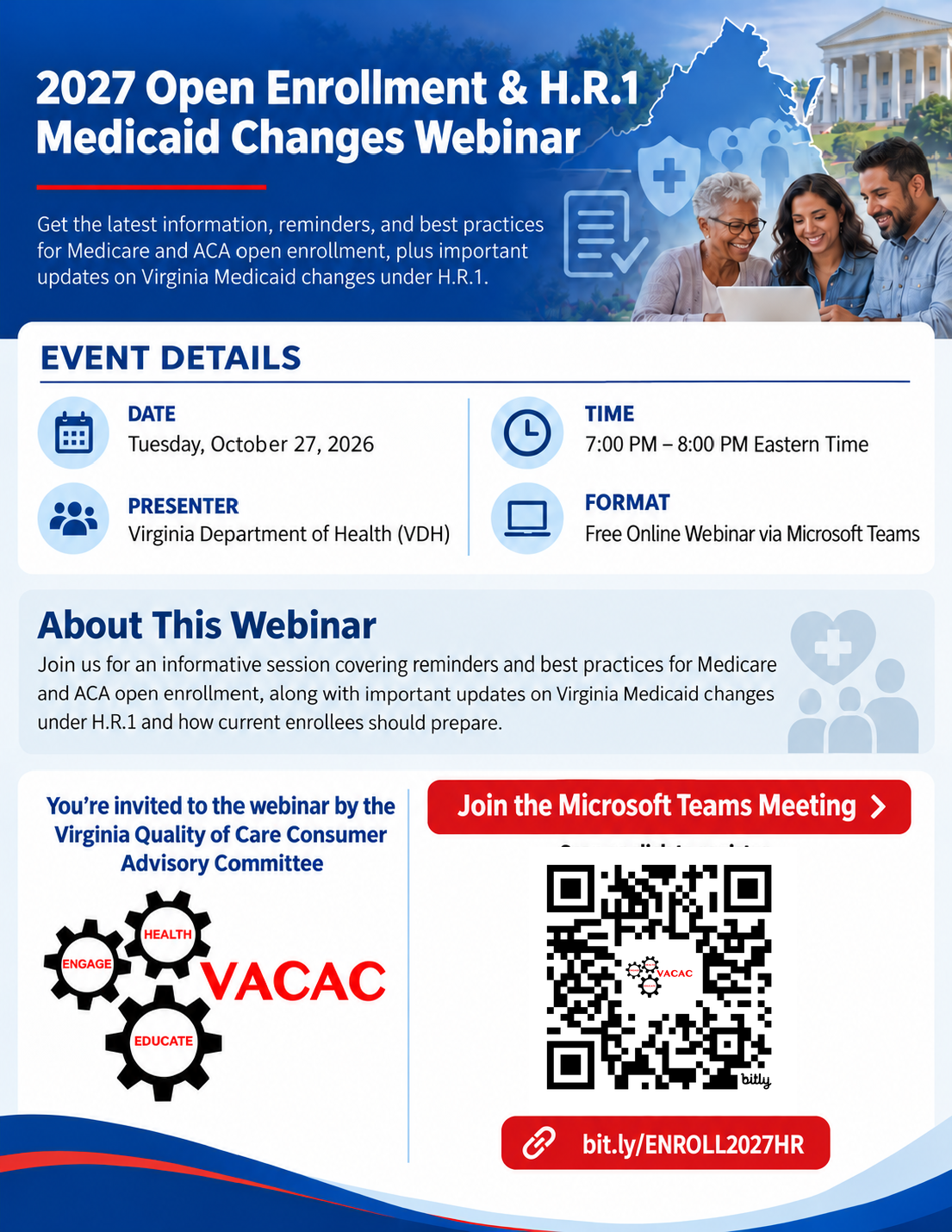
VACAC & VDH Informational Webinar for Consumers | 2027 Open Enrollment & H.R.1 Medicaid Changes | October 27th 7PM-8PM
The Virginia Department of Health would like to share reminders and best practices for clients eligible to participate in Medicare and the Affordable Care Act (ACA) open enrollments.
Additionally, information will be shared on changes occurring with Virginia Medicaid and what enrollees should be doing to prepare for those changes.
Don't miss this important webinar. Translation services will be available for this event
Consumers can enroll for this webinar at https://bit.ly/ENROLL2027HR.

DDP Publishes the 2025 HIV Annual Report
Virginia’s 2025 HIV Annual Report is now available on the DDP Data and Reports page. This report provides a comprehensive data overview of people newly diagnosed with HIV and people living with HIV in Virginia in 2025.
An updated interactive dashboard version of the 2025 HIV Annual Report is coming soon!
Upcoming Medicaid Changes: What You Need to Know Virtual Townhall Series
As a result of a new federal law, changes are coming to Virginia Medicaid. Virginia is committed to helping eligible Virginians stay covered so they can get the health care that they need.
There is a series of virtual townhalls being held for you to learn more and ask questions. Visit the Department of Medical Assistance Services website for townhall information, dates, and times.
Case Management Community of Practice: Navigating Changes to Medicaid Work Requirements for Clients Enrolled in Ryan White HIV/AIDS Programs
The MidAtlantic AIDS Education and Training Center (MAAETC) provided a Virginia Case Management Community of Practice Call. This call was recorded, and the recording is now available for those who missed the original call.
The recording will help case managers with best practices and strategies for keeping clients engaged in care and virally suppressed. It features Melissa Terrell Program Consultant Sr. with Virginia Department of Social Services. Melissa provides case managers with information on Medicaid updates that will impact navigation of services in the upcoming year.
Please note that the information provided in the recording is specific to Virginia only. The information in the recording is intended for Ryan White Case Managers.
Virginia HIV/AIDS Resource and Consultation Center (VHARCC) Updates
Follow-up from HIV Prevention & Care Contractor’s Meeting: Training Program Agendas
In response to agency requests for training program agendas to meet Health Resources and Services Administration (HRSA) travel approval requirements, the VHARCC has uploaded program agendas from the last 5 years. This is for both HIV Prevention Series & Ryan White Case Management trainings. You can find these agendas on the VHARCC program agenda page.
For any additional needs, please reach out to your local VHARCC site through their contact page.
OraQuick Advance HIV 1|2 Statewide Training
To support the transition to OraQuick Advance, the VHARCC has scheduled several OraQuick Advance HIV 1|2 trainings across the state.
Trainings dates and locations can be found on their services page. Check back regularly as additional dates and locations will be added soon.
Missed a recent VHARCC Training/Webinar?
The following programs have been recorded and are now available for viewing:
-
- Navigating Changes to Medicaid Work Requirements for Clients Enrolled in Ryan White HIV/AIDS Programs
- HIV and Aging: Basics
- HIV and Aging: Cognitive Health
- Benefits 201: Deep Dive for HIV Case Managers
- Clinical Recommendations for HIV and Breastfeeding
- 2026 Virginia Ryan White Case Management Virtual Summit
- HIV Prescribing Guidelines and Management Considerations for Primary Care and non-ID Providers
- HIV and Mental Health
- HIV and Cardiovascular Disease
- HIV and Skin Findings
- Bloodborne Pathogens
Kratom Updates
The CHR program has provided information on kratom in a previous e-bulletin. However, kratom is still making headlines as there have been a surge in kratom-related toxicities, addiction cases, and hospitalizations.
Learn more about kratom and find resources for your agency or clients.

Personnel Announcements
Welcome
DDP is happy to welcome Lyndia Branch to new data analyst joining the HIV Care Services team. Lyndia is a Chesterfield native and proud alumna of Old Dominion University, Virginia State University, and Liberty University; where she is also completing the final stages of her Doctorate in Health Sciences. She has served eight years in the United States Army. In addition to being a scholar, Lyndia is a wife, dog mom, and bonus mom to two young men who are constantly on-the-go with their sports, track and basketball. While she may be cheering from the sidelines most weekends, Lyndia enjoys biking, reading, running, and trying out new food and culture experiences. Lyndia can be reached at lyndia.branch1@vdh.virginia.gov.
Farewell
DDP bids a fond farewell to Olivia Allison. Olivia’s last day with the Division is today, October 23. She will be joining the Office of Family Health Services as the Sickle Cell Registry Coordinator.
We are grateful for Olivia’s many contributions to DDP, including her dedicated work with the Community HIV Planning Group (CHPG), the Integrated HIV and Care Services Plan, contract oversight for status‑neutral programs, and much more. Olivia is a valued team player—dependable, attentive to detail, and always willing to take on new responsibilities. While we are sad to see her go, we are excited for her next chapter and wish her every success in her new role at VDH.
In the interim, Ted Heck will be covering contract administration needs and can be reached at ted.heck@vdh.virginia.gov. For CHPG or Integrated Plan needs, please contact Ashley Yocum at ashley.yocum@vdh.virginia.gov.

Subscription Preferences
Join the DDP E-bulletin Mailing List
Manage Preferences | Subscriber Help

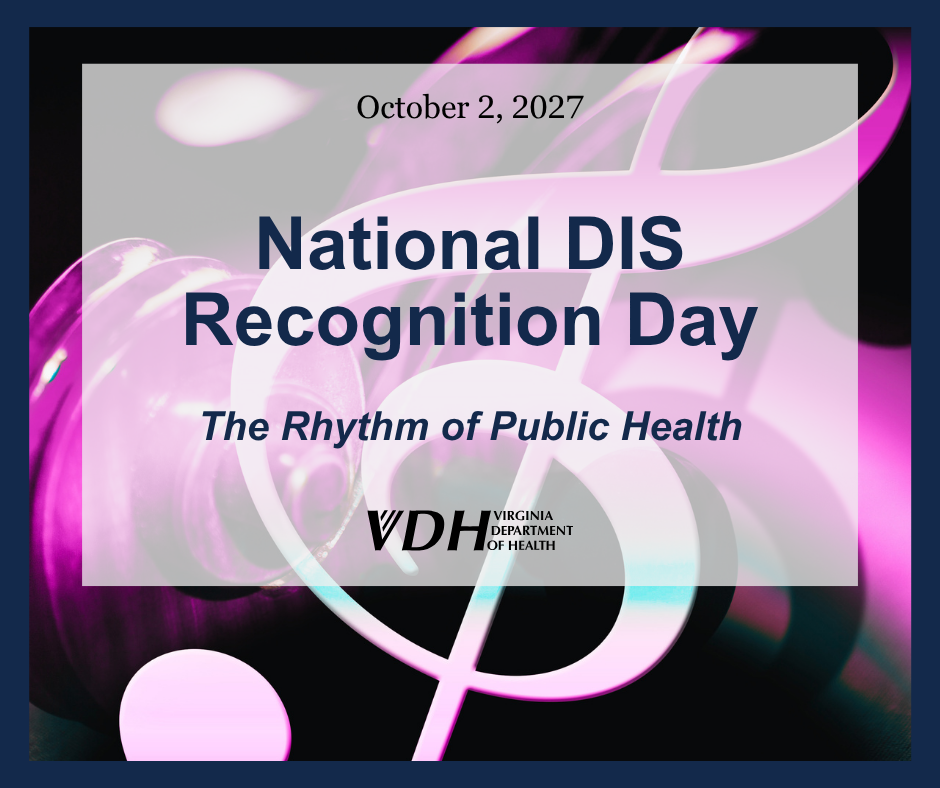 DIS Recognition Day

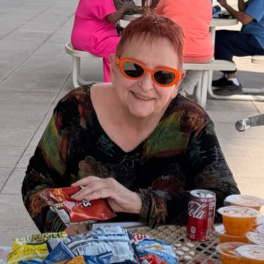

 The Virginia Community HIV Planning Group (CHPG) needs new members. The CHPG works with the Virginia Department of Health to develop and monitor Virginia’s Integrated HIV Services Plan to help end the HIV epidemic and improve the health of people with HIV. The Plan will guide our work over the next five years.

 Why is HIV testing important?
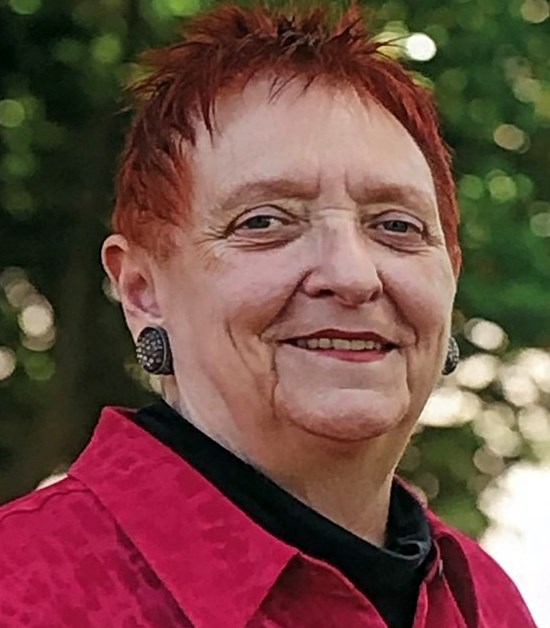
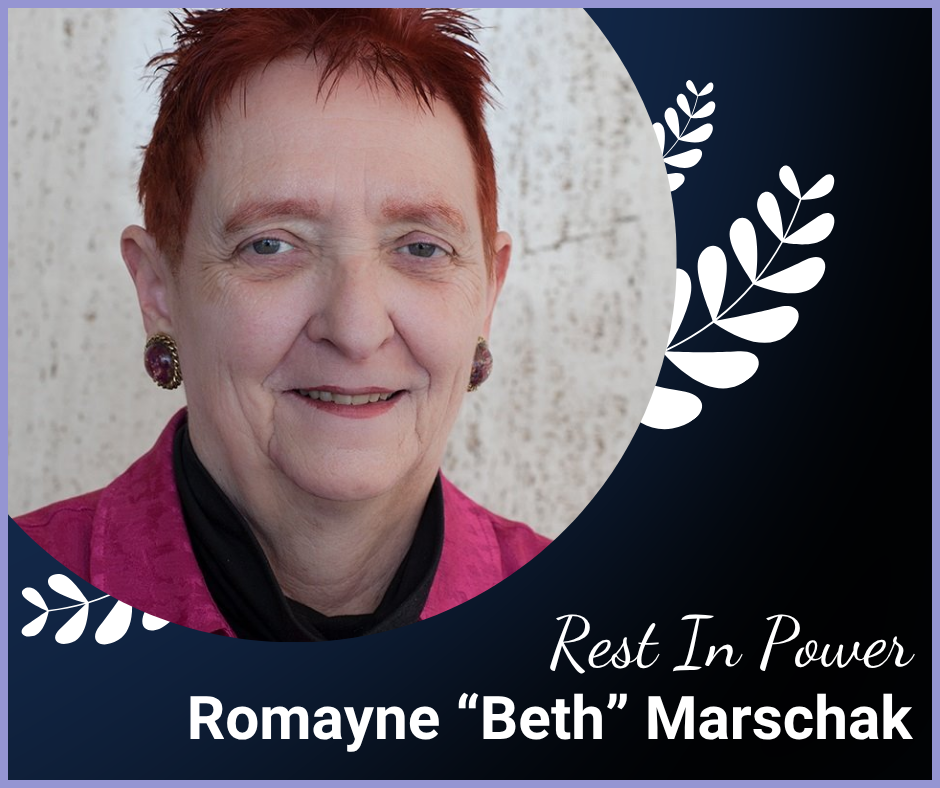 Romayne “Beth” Marschak passed away suddenly on June 3, 2026. Beth worked with VDH and the Division of Disease Prevention (DDP) for over two decades. She joined VDH as a Hotline Counselor and then transitioned to a Contract Administrator several years later. Not only was Beth devoted to civil service through her work, but she had also been extremely involved in community, civil rights, and human rights activism in Richmond throughout much of her life. She was a pillar in the LGBTQ+ community, making connections through her activism work.