National HIV Testing Day 2026

National HIV Testing Day is June 27th each year. On this day we highlight the importance of routine HIV testing. Everyone between the ages of 13 and 64 should get tested at least once. Some people should get tested on a routine basis – this can be dependent on factors such as:

    • If you are having sex without using condoms
    • If you are having sex with multiple partners
    • If you are sharing needles or syringes with others
    • If you are part of a group of people that is more impacted by HIV than other groups, including:
      • Men who have sex with men
      • Black/African Americans
      • Hispanic/Latinos
      • Transgender individuals
    • If you have had a sexually transmitted infection (STI), as STIs can increase your risk for HIV. Some common STIs include chlamydia, gonorrhea, and syphilis.
    • If you use drugs or alcohol

Why is HIV testing important?

Regardless of what your status is, knowing your status allows you to make important decisions about your health so you can remain healthy. If you test negative, there are steps you can take to ensure you remain HIV-negative such as PrEP. If you test HIV-positive, there are safe and effective treatments that allow you to live a long and healthy life. However, it is important that you start and remain on this treatment, per your doctor’s instructions. Not taking HIV treatment if you are HIV-positive can negatively impact your immune system and open you up to other serious and life-threatening infections.

Testing availability

HIV testing is available in many locations throughout Virginia at low or no cost.

Local Health Departments

Local health departments offer HIV testing in their sexual health clinics on a sliding fee scale basis. For more information, find your local health department and call for more information.

Community Based Organizations/Health Clinics

VDH and other federal programs fund many community organizations and health clinics throughout Virginia to provide HIV testing. Most of these clinics provide testing free of charge. The type of testing available at community organizations and clinics can vary – sometimes they offer rapid testing with results available the same day.

Find an organization or clinic near you to learn about the testing they offer, see if walk-in testing is available, or if you need to make an appointment.

HIV Self-Test Kits

You can even test yourself in your own private space! VDH offers FREE HIV self-test kits. Just complete a survey, and a kit will be mailed to you in discreet packaging. The testing is simple to perform, and the manufacturer has a 24/7 hotline you can call if you have questions or concerns before, during, and after the testing process.

Interested in having a free HIV self-test kit mailed to you? Check out the survey.

Need more help?

To learn more about HIV testing, or other STI testing, visit the VDH testing webpage.

If you have questions or need help finding a location that offers testing, call our hotline. The hotline is open from 8 a.m. to 5 p.m. eastern time, Monday through Friday. The hotline is closed on Virginia state holidays. Call toll-free, 1-800-533-4148.

Learn or "re-up" your HIV status this National HIV Testing Day. Take the steps you need to care for your health!
Tribute: Romayne “Beth” Marschak

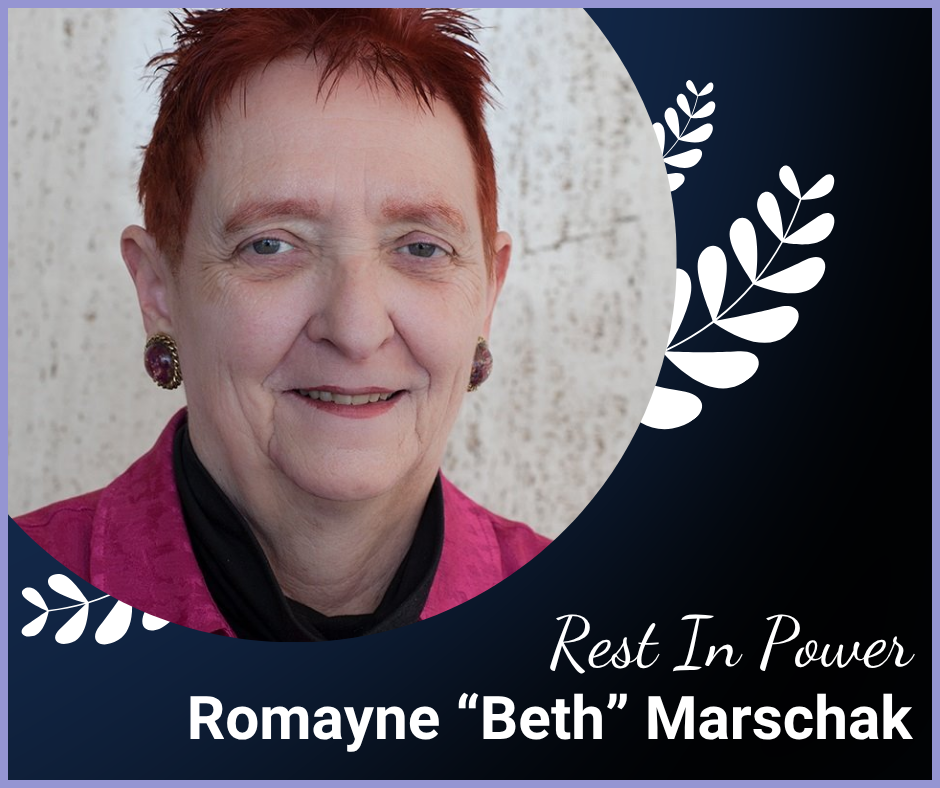
Romayne “Beth” Marschak passed away suddenly on June 3, 2026.  Beth worked with VDH and the Division of Disease Prevention (DDP) for over two decades.  She joined VDH as a Hotline Counselor and then transitioned to a Contract Administrator several years later.  Not only was Beth devoted to civil service through her work, but she had also been extremely involved in community, civil rights, and human rights activism in Richmond throughout much of her life.  She was a pillar in the LGBTQ+ community, making connections through her activism work.   

The connections that Beth made through her personal means made her incredibly adept at her work at VDH.  She understood the vulnerable communities that partner agencies worked with and, when needed, offered advice to those agencies when they ran into difficulty implementing their programs.  After all, Beth had been a part of these communities and working with them through her advocacy since the 1970s.  Beth would run the quarterly contractor meetings and interact with all DDP partner agencies, even those that she was not working with as their assigned contract monitor.  Beth oversaw the free condom program for most of her career at VDH and helped brainstorm and exchange ideas between agencies.  This helped turn the program from a small idea into one that currently distributes over half a million free condoms each year to the community through local health departments and partner agencies.  She was a historian full of knowledge of both the struggles of the communities we serve and the AIDS epidemic in Richmond.  She was often called upon to share her experiences with the agency for special events such as World AIDS Day. 

Beth was a steady and compassionate presence in our office, consistently offering support, thoughtful guidance, and a listening ear to her colleagues. She demonstrated deep commitment to her coworkers, the agencies she partnered with, and the communities we serve. Her absence is felt profoundly. We are grateful for her many contributions to public health and for the advocacy she carried throughout her career. Her impact endures, and she will be greatly missed. Thank you, Beth, for all you’ve given to the community through your work and advocacy. Rest in power. 

We extend our condolences to Beth’s family, friends, and loved ones.  

Thomas’ Personal Story

My name is Thomas, and I was cured of hepatitis C. Here’s my story:
It’s been almost 30 years since I was diagnosed with both HIV and hepatitis C. At that time, I was using substances and participating in intravenous (IV) drugs. That didn’t last long, so I didn’t think much about it, but when I was diagnosed it was such a shock. I spiraled out of control and started using again. I eventually got control and saw a specialist for treatment. The Interferon and other meds I started were overwhelming. I was working full-time and I remember one time I went to work, and it was so cold and I was so exhausted. I just hid away and curled up because I just couldn’t deal with everything I was feeling. I went back to my doctor and said, “I can’t do this anymore.” My doctor told me I should go out on disability. I did go out on disability and moved in with my mom in Virginia.

That is when my life started to change for the better, when I started to become an advocate. Once I settled in Virginia, I became an HIV advocate and talked about the importance of HIV care. I wasn’t ready to advocate around hepatitis C because of the stigma associated with my drug use – I wasn’t there yet. In 2008, I got sick again and had to be admitted to the hospital. I never finished the Interferon because of the negative side effects. I had assumed that I still had hepatitis C, and it was getting worse. I started using drugs again and fell back into a dark place. This lasted for about a year. Eventually, my doctor told me that they were doing a clinical trial of new hepatitis C drugs. I flat out refused, afraid that I would have side effects like the last time. She assured me I would not get sick from this new medicine and that there would be little to no side effects. I started the trial, and after the lab tests came back, I found out that my initial treatment for hepatitis C had cured me. I had re-infected myself with hepatitis C. That felt like a slap in the face, but it was also a wake-up call for me. I realized that I needed to take better care of myself. I didn’t want things like this to continue to happen to me. I wanted to be a “normal” person. I wanted to be able to go out and work every day and not be ashamed and have all this stuff in my life causing so much chaos. At that point in my life, I decided, “No more! I’m stopping with the drug use.”

That is when I also started advocating for hepatitis C, too. I didn’t realize before how easy it was to get re-infected. I had never thought about it before it happened to me. All of this happening to me in a rural area, I also experienced stigma just attempting to talk to doctors. It was sort of like they thought if you used drugs, you were a dirty drug addict, and you were a bad person. If you even talked about hepatitis C, that was the response. It was really hard to get over that and go in with questions and talk about what was going on with me. But now, because of what happened to me, I’m not only helping myself but others who are walking in similar shoes that I walked in with addiction and hepatitis C. I started volunteering and doing work with the Ryan White Program. Everything really just came together for me. I’m now doing HIV, hepatitis C, and syphilis testing in the community. I’m navigating people through the process that I went through to get the treatment that they need.

Depression really played a big part in my story. It was one of the hardest things I had to deal with and having support can make such a difference. Because in the past someone showed me support, I started taking better care of myself. I started dreaming again and thinking about the future and what that might look like. Now I’m in the position to be that helping hand for others. It’s amazing, it’s empowering, and sometimes I can’t believe I’m where I am now.

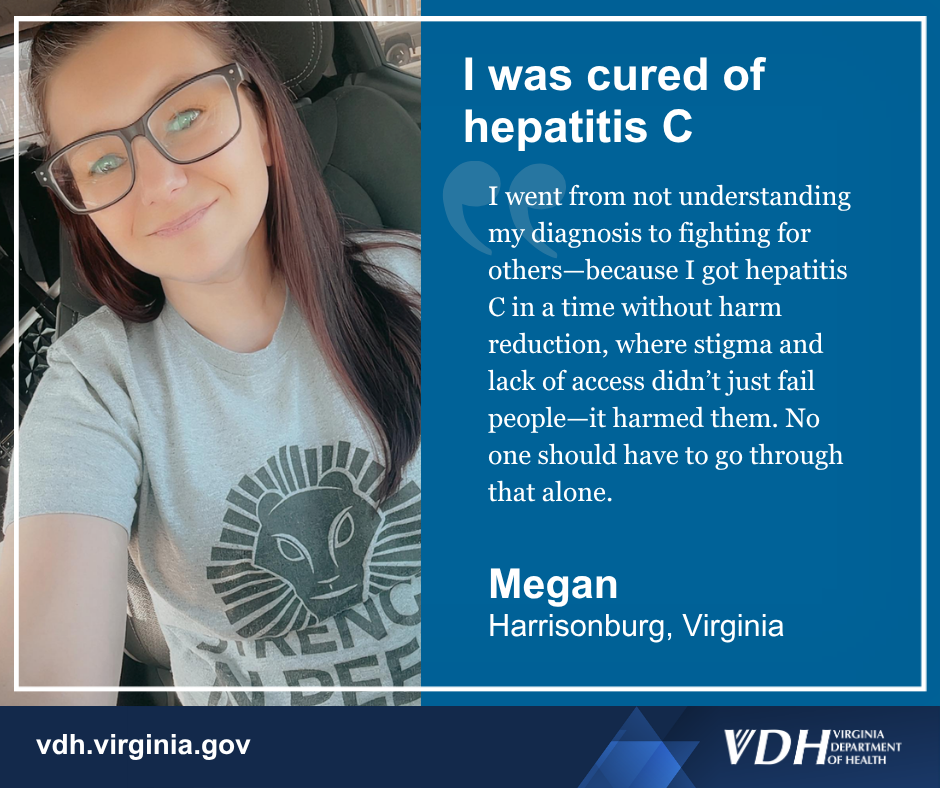
Megan’s Personal Story

My name is Megan, and I was cured of hepatitis C.  Here is my story:
I am a person in long-term recovery, a Program Manager at Strength In Peers, and a passionate advocate for harm reduction and equitable healthcare. My work is deeply rooted in lived experience, shaped not only by substance use, but by surviving a system that too often withholds care from those who need it most.

As a teenager, I began using substances and was introduced to intravenous drug use at a time when harm reduction resources were not available in my community. Without access to syringe exchange programs or education on bloodborne illnesses, sharing syringes became normalized, paired with the false hope that cleaning them with bleach would be enough to keep me safe.

In 2017, while pregnant with my youngest son, I was diagnosed with hepatitis C. At the time, I was still actively using substances and had little understanding of what the diagnosis meant. What followed was not just a medical condition, but an emotional weight—fear, shame, and silence fueled by stigma and lack of education.

Even after entering recovery, my path to treatment was not immediate. I faced systemic barriers, including lack of Medicaid coverage for hepatitis C treatment at the time. Although I was ready for care, care was not ready for me. It took years before treatment became accessible. When I was finally able to receive it, the process was straightforward, the side effects were minimal, and I was cured within months—highlighting a painful truth: the greatest barrier was never the treatment itself, but access to it.

Throughout my journey, I encountered stigma within healthcare settings. I often felt judged, dismissed, and defined by my past rather than supported in my healing. Those experiences now fuel my advocacy.

Today, I use my voice to challenge the systems that once failed me. I advocate for expanded syringe exchange programs, increased education around hepatitis C, and the removal of unnecessary barriers to treatment. I work to ensure that people who use substances—whether in active use or recovery—are met with dignity, compassion, and respect.

My message is clear: people should not have to wait for worthiness to access healthcare. Everyone deserves the chance to be healthy. Everyone deserves to be treated without judgment. And everyone deserves the opportunity to heal—on their own timeline, and with the support they need.

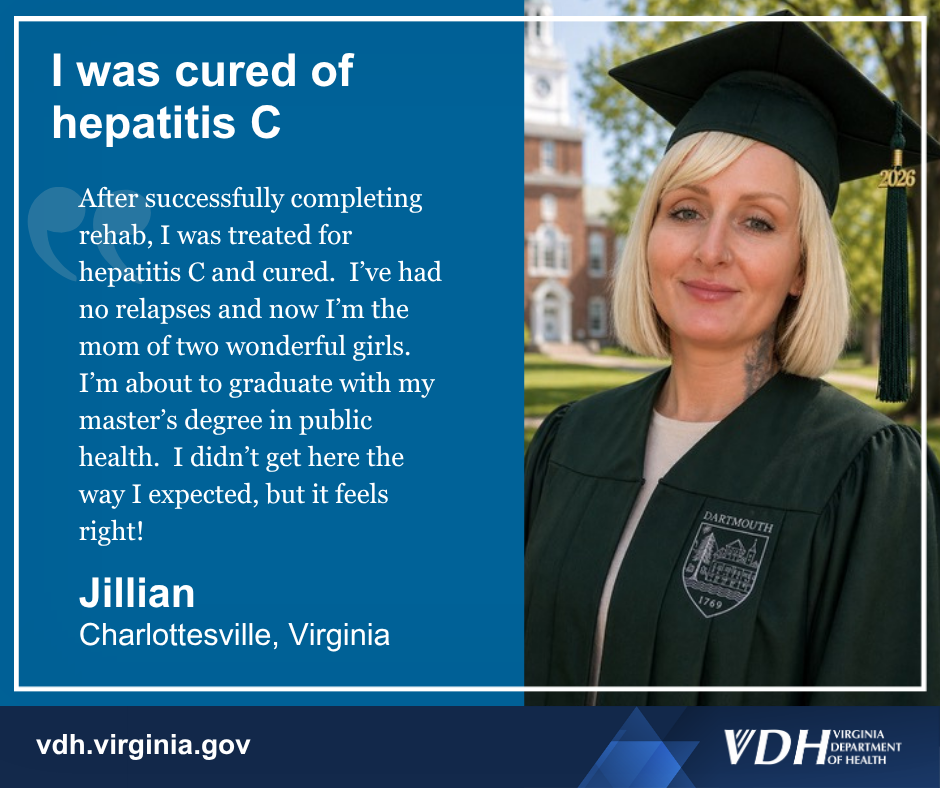
Jillian’s Personal Story

My name is Jillian, and I was cured of hepatitis C. Here is my story:
I started using intravenous (IV) drugs, heroin, in the early 2000s. I was in and out of rehab and jail after being arrested multiple times for possession. I would go in and out of rehab and into methadone clinics. Eventually I was successful in my rehab efforts, and I moved back home with my parents. I tested positive for hepatitis C in 2004. Most of my friends from that time also tested positive. I don’t know if they if they got treated – I don’t talk to any of them anymore.

I went through treatment for hepatitis C with interferon combination therapy around 2004. I had to go out on disability from work and was put on Paxil because of the severity of the side effects and depression from treatment. I was lucky enough to have health insurance to cover the costs. I thought about the irony of being an IV drug user and having to give myself injections every week.

I cleared the hepatitis C virus after 8 months of treatment. Treatment was rough, but now there are so little side effects with current hepatitis C treatment. I feel like if more people knew how easy it is now; they’d seek out treatment. Now it’s taking pills for 8-12 weeks with mild side effects and no shots. While people may still have barriers to wanting to get treated, new treatments are a game changer!

Since then, I’ve remained drugfree with no relapses. I’m now the mom of two amazing girls. I’m attending Dartmouth and about to graduate with a master’s degree in public health. I didn’t get here the way I expected, but it feels right!

Hepatitis Awareness Month 2026

Hepatitis Awareness Month is observed each May in the United States.  Hepatitis Testing Day is on May 19.  During the month of May, we work to show the impact the hidden viral hepatitis epidemics have on our communities.  We do this by raising awareness and encouraging testing and vaccination.

Viral Hepatitis Key Facts

    • There are several different viruses that can cause hepatitis.  The most common types are hepatitis A, hepatitis B, and hepatitis C.
    • Some hepatitis infections are short-term and clear on their own.  Others can become long-term (chronic) and need ongoing medical care.
    • Chronic hepatitis B and C are leading causes of liver cancer in the U.S.
    • Both hepatitis A and B are preventable through safe and effective vaccines.
    • Hepatitis C can be cured in 8-12 weeks with a safe and effective prescribed treatment.
    • CDC recommends all adults up to age 60 get vaccinated against hepatitis A and hepatitis B.  Those aged 60+ should get vaccinated if they have certain risk factors.  If you are 60+ and do not have risk factors, you may choose to be vaccinated, or not.
    • VDH follows the American Academy of Pediatrics recommendations for hepatitis B for youth/adolescents. Find out more about hepatitis B recommendations on their website.
    • More than 65% of people who have hepatitis B are unaware of their infection.
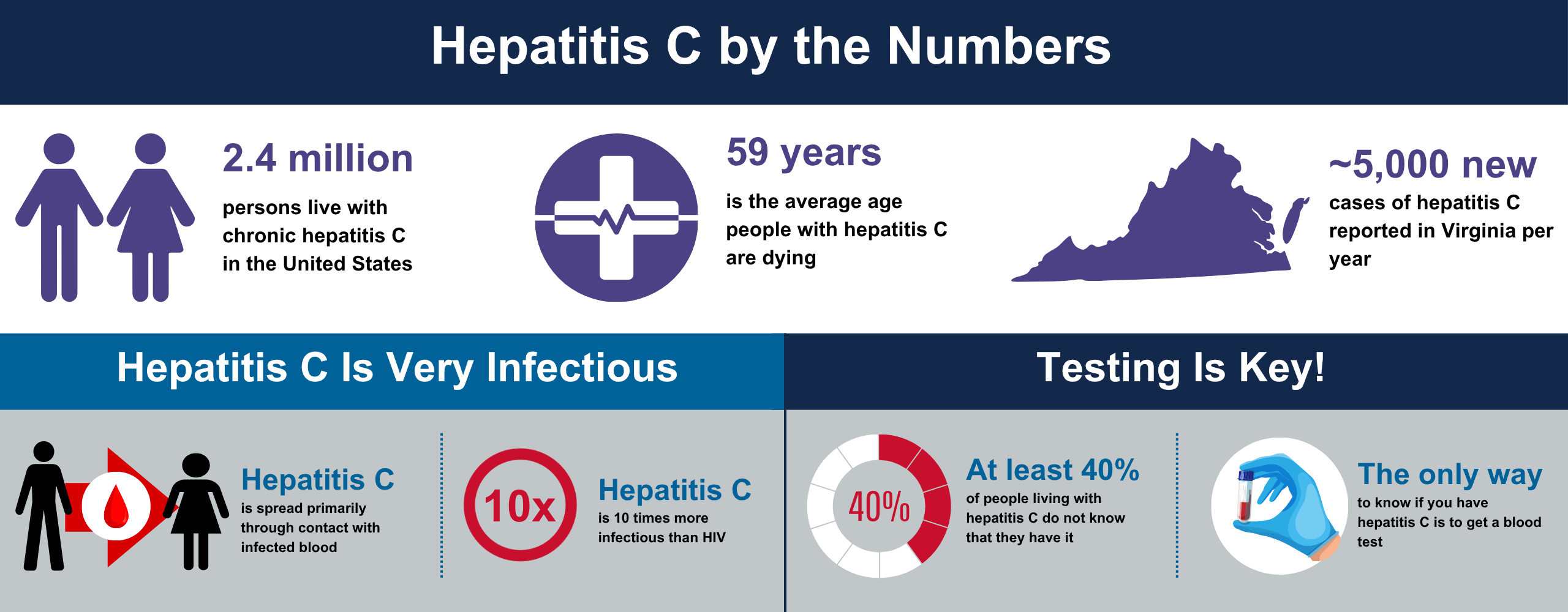
    • Around 5,000 new cases of hepatitis C are reported in Virginia each year.
    • At least 40% of people living with hepatitis C don't know they have it.
    • CDC recommends all adults get tested for hepatitis B and hepatitis C at least once in their lifetime.  CDC also recommends testing for hepatitis B and C during each pregnancy.  Getting tested is the only way to know if you have hepatitis B or C.

Help Us End Viral Hepatitis

VDH released Hep Free Virginia, Virginia’s Viral Hepatitis Elimination Plan, in 2025. This plan is a coordinated effort with the Virginia Hepatitis Coalition and other statewide stakeholders. It outlines goals and objectives to eliminate viral hepatitis by 2030.

In order to realize these goals and objectives, VDH and the Virginia Hepatitis Coalition need your help! You can learn more about the plan and get involved. Explore how you can get involved by contacting Colin Dwyer, Viral Hepatitis Program Coordinator, at colin.dwyer@vdh.virginia.gov, or by joining the Virginia Hepatitis Coalition.

Infographic banner giving statistics and information for hepatitis C.

Got Questions?

Learn more about viral hepatitis by visiting our website.  You can also find locations near you that provide free or low-cost vaccination or testing services by using our directory, Resource Connections.

VDH offers free Hepatitis B testing and vaccines to pregnant women and infants born to women who test positive for Hepatitis B.

If you or a loved one has more questions about viral hepatitis, call our hotline.  Hotline operators are available to help you Monday through Friday.  Call toll-free at (800) 533-4148.

Reflecting on a Busy 2026

Rachel Stallings, MPH, Director, Division of Disease Prevention

We’ve been busy in the Division of Disease Prevention (DDP). I want to take time to acknowledge some of the important work we’ve been doing recently in collaboration with the community and our partners.

Earlier in 2026 we started with two public meetings, one specific to Ryan White Part B services and one specific to our Virginia Integrated HIV Services Plan. Open meetings such as these allow us the opportunity to hear the voices of those whom we serve. We are incredibly grateful to those who spoke up and voiced their opinions, concerns, and feedback.

DDP has had the opportunity to come together with partners and community members through several conferences and meetings this year, including:

These meetings allow us the occasion to gather with our partners, learn from them, and share updates on our efforts. These meetings also allow for the opportunity of training and technical assistance from other experts in the field. Meetings with community members allow the chance for community networking, learning, and sharing.

Much time and effort have gone into our efforts in 2026 thus far, and it has been very rewarding. We are thankful for all the partners, community members, and division staff who have helped our efforts be a success. We will continue our day-to-day work with the vision of VDH protecting and promoting the health of all Virginians.

- Rachel Stallings, MPH, Director, Division of Disease Prevention

STI Awareness Week 2026

Background

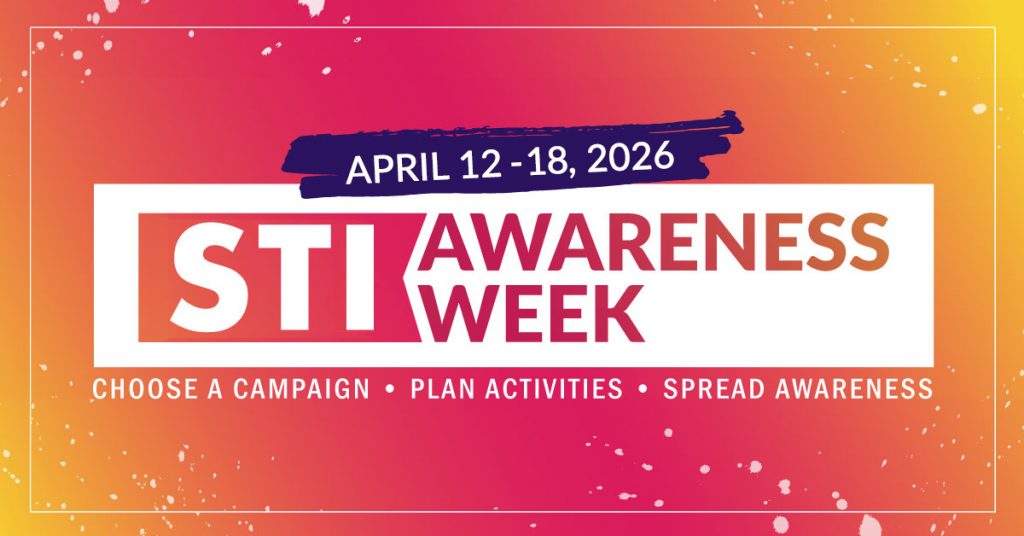
STI Awareness Week, April 12-18, 2026STI Awareness Week (SAW) is the second full week in April each year. This year, it is April 12-18. SAW helps raise awareness about sexually transmitted infections (STIs). It also shows how STIs impact our lives and helps to decrease stigma, fear, and discrimination. We often use SAW to distribute tools and knowledge about STI prevention, testing, and treatment.
STI vs. STD

What’s the difference between “STI” and “STD”? To define the terms, STI is sexually transmitted infection, and STD is sexually transmitted disease. The World Health Organization began to replace the term STD with the term STI in 1999. The reason for this was to reduce stigma, and because not all infections turn into diseases with symptoms. For instance, some infections like chlamydia and HPV are often asymptomatic, making the term “infection,” more accurate. In fact, it is more common for STIs to not show symptoms, which is why regular screening is important.

While health care providers have made the transition to the term STI, the general public still uses STD as an umbrella term. Up to this point, the Virginia Department of Health (VDH) has still used the term STD in public communications. VDH will be fully transitioning to the term STI over the next few months.

STIs in Virginia

STIs are common in Virginia, with more than 55,000 reported new infections in 2024. On average, about 4,500 STIs were diagnosed each month in Virginia during 2024. Consistent with previous years, certain communities and conditions continued to be vulnerable or problematic. The rate of any STI per 100,000 people was about three times higher among Black or African American Virginians, compared to the statewide rate. The rate of syphilis also increased 145% among women from 2020 to 2024, while the rate among men increased 58%.

All data and reports for STIs, HIV, and viral hepatitis are available on the VDH website.

STI Prevention, Testing, and Treatment

Free or low-cost STI testing is available throughout Virginia. Testing is available at local health departments and community-based organizations. Testing is important since many STIs have no symptoms. Untreated STIs can cause lifelong health problems.

Find STI testing near you by using our locator service, Resource Connections, or the RC.

Learn about common STIs, prevention methods, and treatment options on our STI webpage.

Disease Prevention Hotline

If you or a loved one has questions about HIV, viral hepatitis, or STIs, call our confidential Hotline toll-free. The Virginia Disease Prevention Hotline number is 1-800-533-4148. The Hotline operates from 8 a.m. until 5 p.m. ET, Monday through Friday. It is closed for Virginia State Holidays.

National Black HIV/AIDS Awareness Day

National Black HIV/AIDS Awareness Day: February 7

National Black HIV/AIDS Awareness Day (NBHAAD) is observed on February 7 each year. It exists to raise awareness about the impact of HIV on Black and African American communities. It was first observed in 1999 and highlights the importance of decreasing stigma and increasing community involvement. Improving access to HIV education, prevention, testing, and HIV care are focuses of NBHAAD, as well.

Virginia data

As is the case across the U.S., Black and African American communities are more impacted by HIV in Virginia. In 2024, while Black/African American communities made up 19.12% of Virginia’s population, they accounted for 50.2% of new HIV diagnoses and 56% of people with HIV in Virginia that year. The figure below shows the rate of new HIV diagnoses by race and ethnicity per 100,000 persons. Using rates allows for the comparison across different population sizes.

Bar graph from the 2024 HIV Annual Report showing new diagnoses by race and ethnicity

You can find additional HIV, STD, and viral hepatitis data on our website.

Causes

According to KFF, several challenges may contribute to the epidemic among Black people. These include experiences with:

    • Higher rates of poverty
    • Lack of access to health care
    • Higher rates of some sexually transmitted infections
    • Lower awareness of HIV status
    • Stigma and discrimination
    • Combating Stigma

How can you help combat stigma? Talk openly about HIV to help normalize the subject. This helps others learn about HIV and correct myths and misinformation. The Centers for Disease Control and Prevention (CDC) has a stigma language guide that can help with these talks.

We can all help end HIV stigma through our words and actions in everyday life. Be a role model for positive and supportive behavior. Check out some scenarios from CDC to see how you can model positive behavior when you witness HIV stigma.

Access testing and prevention services near you

Free or low-cost HIV, STD, and viral hepatitis testing is available throughout Virginia. VDH funds local health departments, clinics, and community organizations to offer testing services if you do not have a primary care provider. To learn more about testing in Virginia or to find testing near you, visit our testing webpage.

PrEP (pre-exposure prophylaxis) for HIV is available as a pill taken daily, or a shot taken every other month or every six months. PrEP prevents getting HIV through sexual contact about 99% of the time when taken as prescribed. VDH provides funds to locations throughout the Commonwealth to offer HIV PrEP.

Additionally, there are also post-exposure prophylaxis (PEP) options to prevent HIV and STDs. PEP for HIV involves taking a course of medications to prevent HIV infection. It is critical that these medications are started within 72 hours of a potential exposure. DoxyPEP involves taking the antibiotic doxycycline after unprotected sex to prevent getting a bacterial STD. DoxyPEP is available at most local health departments.

If you’re interested in PrEP or PEP, visit our PrEP and PEP webpage to learn more or find a PrEP clinic near you. As noted above, nPEP is extremely time-sensitive, so please call your provider or our hotline if you believe you have been exposed to HIV and need PEP. To learn more about DoxyPEP, read our DoxyPEP fact sheet.

VDH’s response

VDH’s Division of Disease Prevention has multiple programs that address HIV prevention and treatment. This includes:

    • Funding, oversight, resources, or support to local health departments, community, and/or clinical organizations for:
    • HIV, STD, and viral hepatitis testing programs
    • Patient linkages and referrals
    • Education and outreach programs
    • Comprehensive harm reduction programs
    • Condom distribution
    • PrEP, PEP, and DoxyPEP distribution
    • Disease intervention services
    • Data collection and follow-up
    • Community planning groups
    • HIV care services
    • And more!

Learn more about the services that VDH provides on our website. If you want to become involved in any of our community groups, visit our Get Involved page.

Reach out for support

If you have any questions or need additional support, contact the Virginia Disease Prevention Hotline. Hotline counselors are available weekdays from 8 a.m. to 5 p.m. It is closed on Virginia state holidays.

The hotline number is (800) 533-4148 and is toll free.

Hotline staff can help connect you to programs and needed resources throughout Virginia.

World AIDS Day: December 1

Worlds AIDS Day has been observed on December 1 each year since 1988. Every year, communities stand together, united with the red ribbon. We remember those who have been lost, unite in the fight against HIV and AIDS, and raise awareness to prevent new cases of HIV.

World AIDS Day 2025, Red Ribbon ImageWhat’s happening in Virginia?

During the COVID-19 pandemic and social distancing measures, patients were less likely to seek routine screening and testing, and as a result Virginia reported fewer new cases during that time. The total number of HIV cases annually in Virginia have returned to pre-pandemic levels. Certain communities continue to be impacted by HIV more than others. Youth, ages 15-19, saw a 41% increase in new HIV cases from 2023 to 2024. Black and Hispanic/Latino persons have seen a 27% increase in new cases each year since 2022.

There are over 28,000 people living with HIV in the Commonwealth of Virginia. More than 75% of people with HIV in Virginia are men, and over half are 50 or older. While Black, non-Hispanic people make up 19% of the population in the Commonwealth, 56% of people with HIV identify as Black, non-Hispanic in Virginia.

Find more detailed HIV statistics on the data and reports page and the HIV data dashboard.

Scientific Progress

Major advances in science have been made since HIV/AIDS was first discovered. HIV testing is fast, reliable, and available at any local health department or healthcare provider. Testing is the only way to know if you have HIV. Not everyone has symptoms during the onset of the infection. Having a sexually transmitted disease (STD) can make it easier to get or transmit HIV.

Find HIV and STD testing near you on the VDH testing page. Learn more about HIV prevention on the HIV prevention page.

HIV Treatment

Advances in HIV treatment help people with HIV live long and healthy lives.

It is proven that when a person with HIV has reached and sustains an undetectable viral load, they will not transmit HIV to their partner sexually. An undetectable viral load means that the number of copies of the virus in the body cannot be detected by certain tests. This is often referred to as Undetectable=Untransmittable, or “U=U.”

Getting into medical care and starting treatment immediately is important. The sooner a person with HIV starts HIV treatment, the better their health outcomes will be.

Have Questions or Need Help?

If you or anyone you know has been diagnosed with HIV, help is available. Financial assistance with the cost of medications or copays is available through local, state, or federal programs. These programs can also help you find support groups or other social services in your area. Learn more on our website or call the Disease Prevention Hotline at (800) 533-4148.