
A stroke, sometimes called a “brain attack”, occurs when something blocks the blood supply to part of the brain, known as ischemic stroke, or when a blood vessel in the brain bursts, known as hemorrhagic stroke. You can greatly reduce your risk for stroke through lifestyle changes and, in some cases, medication.
To understand stroke, it helps to understand the brain. The brain controls our movements, stores our memories, and is the source of our thoughts, emotions, and language. The brain also controls many functions of the body, like breathing and digestion. To work properly, your brain needs oxygen. When something happens that blocks the flow of oxygen to the brain, the brain cells are damaged. This causes a stroke.
Treatment
Type of stroke, ischemic or hemorrhagic, will determine which treatment options are available. Ischemic stroke occurs when a clot or embolism blocks a blood vessel going to the brain and is the most common type of stroke. The goal of treatment is to bust or remove the clot, the available options of treatment are time sensitive so call 911 at first suspicion of stroke. Depending on the stroke location, time from onset of symptoms, and hospital specialization will determine if treatment with a clot-busting drug or physical removal of the clot is an option. Hemorrhagic stroke occurs when a weakened vessel in the brain bursts spilling blood into surrounding brain tissue. The goal of treatment is to stop the bleeding either by a catheter guided coil or by surgical means.
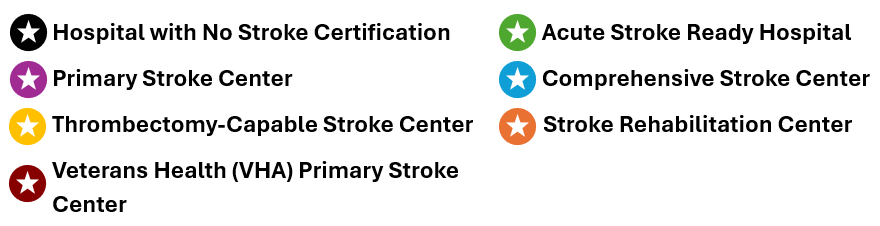
Click here for a PDF directory of the hospitals shown in the above map: Hospital Directory