Virginia Infection Prevention & Control Training Alliance (VIPTA)

Upcoming Events


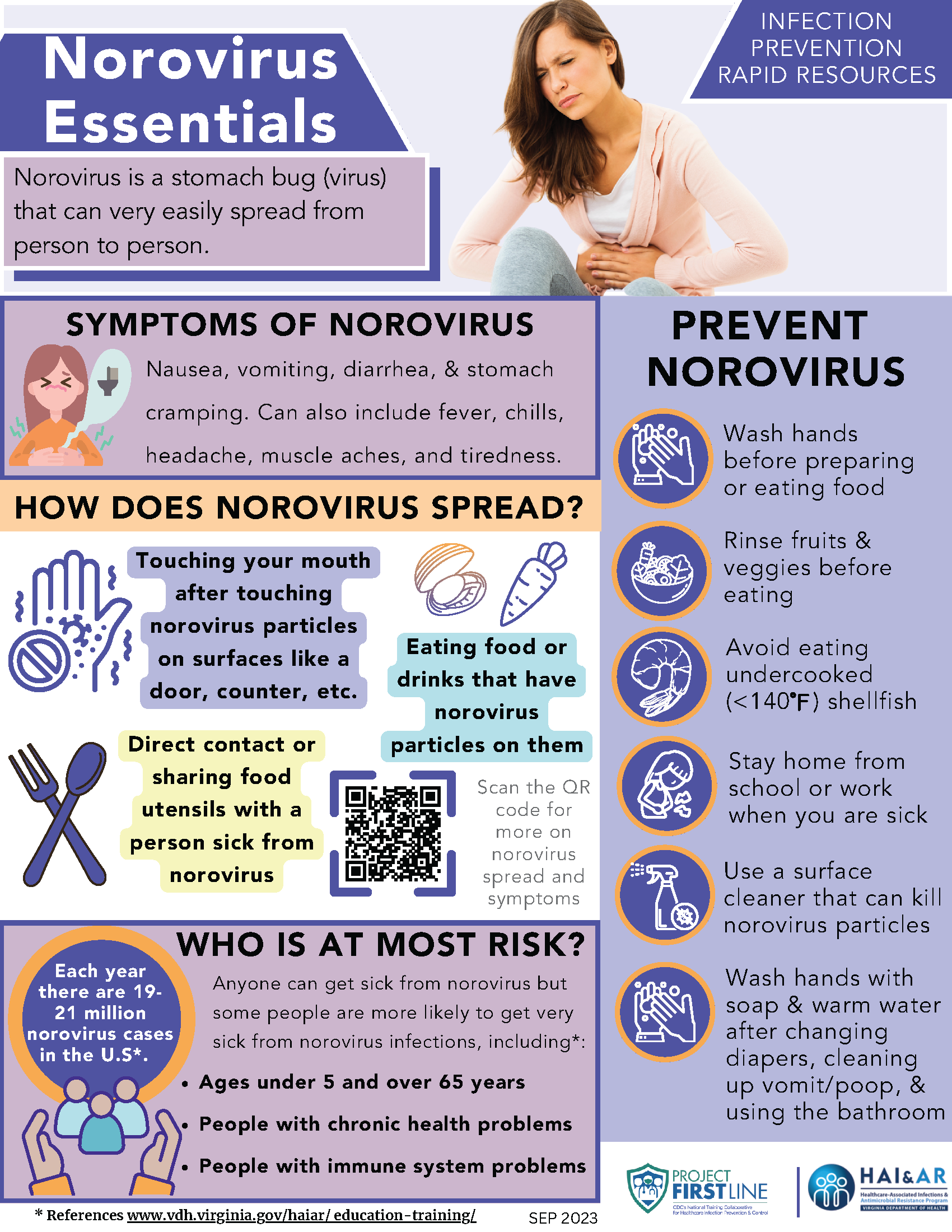
Image of the Norovirus Essentials Informational Graphic

Infection Prevention Rapid Resources

The Virginia Department of Health HAI/AR Program partnered with CDC’s Project Firstline to create a series of Infection Prevention Rapid Resources to get you the most critical information fast. 

  • Infographics that have the most critical information to get started 
  • Links to additional expert resources to expand your knowledge 

Ways to Share This Resource  

  • Easily match the correct resource level to your target audience 
  • Available topics include Candida auris, norovirus, and flu     

Target Audience: Essentials to Foundational IPC education levels 


Guidance, Recommendations, & Regulatory Updates

VIPTA members track guidance and regulation resources to share source documents that guide infection prevention and control practices for public health staff and clinical and non-clinical healthcare personnel.

The date of the regulation or guidance update is included in each post.  Please check linked content to be sure it is the most up to date and recommended practice.

CDC: Conjunctivitis (09/11/2026)
CDC
Any Practice Setting
The CDC recommends excluding healthcare personnel with suspected or confirmed infectious conjunctivitis, including epidemic keratoconjunctivitis (EKC), from work for the duration of their symptoms. These recommendations emphasize strict hand hygiene, appropriate cleaning and disinfection of surfaces and shared medical equipment, and prompt identification and management of cases to prevent transmission and healthcare-associated outbreaks.
CDC: Viral Respiratory Infections (09/11/2026)
CDC
Any Practice Setting
The CDC provides updated recommendations for managing healthcare personnel exposed to or infected with viral respiratory infections, including work restrictions, symptom monitoring, and source control. Asymptomatic exposed personnel may continue working with source control through at least five days after their last exposure, while infected personnel should be excluded from work for at least three days and meet additional symptom-based return-to-work criteria, followed by source control through at least day seven.
CDC: Preventing Respiratory Infections in the Workplace (08/28/2026)
CDC
Any Practice Setting
The CDC provides recommendations to help employers prevent and respond to respiratory infections in the workplace through improved ventilation, engineering controls, environmental cleaning and disinfection, and policies that encourage sick employees to stay home.  These recommendations also emphasize using respiratory illness surveillance data to inform workplace prevention strategies, including masking and remote work, to reduce transmission and protect employee health.

Society for Healthcare Epidemiology of America (SHEA)

Infection Prevention and Control of Candida auris in Pediatric Settings (6/23/2026) The guidance recommends identifying at-risk pediatric patients through targeted screening, using appropriate isolation and room-placement precautions, and coordinating closely with infection prevention and public health partners when Candida auris is suspected or confirmed. It also emphasizes prevention through meticulous hand hygiene, effective environmental cleaning and disinfection, and careful...


Pictured (left to right): Southwest Regional IPs (and mentors) Sheri Ives, Cindy Chaos, and Jack Jones

VDH Southwest Regional Team Infection Prevention Mentorship Program

This month, Paige Bordwine, Southwest Regional Epidemiologist with the Virginia Department of Health (VDH) is highlighting the successes of an infection prevention mentorship program among health department staff in her region.

The Southwest Virginia Regional Infection Prevention team consists of three infection preventionists (IPs), supported by regional containment team members who assist with COVID-19 investigation and prevention. To strengthen IPC expertise and expand regional support, the IPs began mentoring containment team members. Through shadowing during on-site IPC assessments, mentees gained hands-on experience in conducting observations, providing education, and offering resources to address facility needs.

After facilities receive their recommendations report, an IP mentee follows up to address questions and needs, as well as provide education, observations, and interventions based on the IPC assessment. Notably, many skilled nursing and congregate care facilities lacked trained N95 fit testers. In response, the regional team assigned a specialist to conduct train-the-trainer sessions and assist with initial fit testing.

The Southwest Region has received excellent feedback on the value of the IP mentee program. Facilities benefit from mentee support, while mentees gain infection prevention experience, often using the program as a pathway to becoming infection preventionists and pursuing certification in infection control. Mentees describe the experience as rewarding, impactful, and an invaluable learning opportunity.



IPC Education & Training Library

Search the VIPTA library of curated infection prevention and control (IPC) education and training resources. The IPC Education & Training Resource Library includes state and national resources related to healthcare-associated infections, antimicrobial resistance and/or IPC. Visit the VIPTA FAQ page to learn more about VIPTA library content.


Connect With VIPTA