

VIPTA is a statewide infection prevention and control education collaborative, led by the Virginia Healthcare-Associated Infections Advisory Group. Through partnership, VIPTA curates IPC resources for Virginia’s healthcare, congregate care, and public health settings.


It’s Not Just a Room Turnover: It’s Infection Prevention
Did you know that patients admitted to rooms where the previous occupant had a multidrug-resistant organism (MDRO) face a higher risk of acquiring that same organism? Every day, environmental services (EVS) professionals work alongside frontline healthcare staff to reduce this risk and protect patients and residents. When we support EVS teams, we strengthen the entire infection prevention system.
What to Expect and How to Use It: With some EVS staff receiving as little as three days of training, and 83% learning on the job, education needs to be quick, practical, and built into their daily workflow.
- Onboarding: Project Firstline Training Toolkit for Environmental Services (EVS) Staff – A comprehensive training plan that builds both the why and the how, helping EVS staff confidently step into their role as essential infection prevention team members.
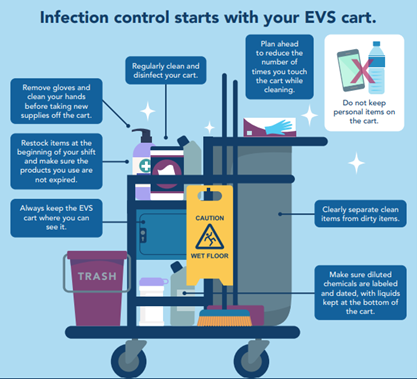
- New Refreshers: CDC EVS Microlearns – Quick, practical micro-learns covering key topics like contact time, when to change gloves, and maintaining clean and safe EVS carts, perfect for reinforcing skills in just a few minutes.
- New Observation & Support: VDH Daily Room Cleaning Checklist – A simple, structured checklist to guide room cleaning from start to finish, helping standardize workflows and ensure no critical steps are missed.
Target Audience: Essential IPC Education Level



VDH Southwest Regional Team Infection Prevention Mentorship Program
This month, Paige Bordwine, Southwest Regional Epidemiologist with the Virginia Department of Health (VDH) is highlighting the successes of an infection prevention mentorship program among health department staff in her region.
The Southwest Virginia Regional Infection Prevention team consists of three infection preventionists (IPs), supported by regional containment team members who assist with COVID-19 investigation and prevention. To strengthen IPC expertise and expand regional support, the IPs began mentoring containment team members. Through shadowing during on-site IPC assessments, mentees gained hands-on experience in conducting observations, providing education, and offering resources to address facility needs.
After facilities receive their recommendations report, an IP mentee follows up to address questions and needs, as well as provide education, observations, and interventions based on the IPC assessment. Notably, many skilled nursing and congregate care facilities lacked trained N95 fit testers. In response, the regional team assigned a specialist to conduct train-the-trainer sessions and assist with initial fit testing.
The Southwest Region has received excellent feedback on the value of the IP mentee program. Facilities benefit from mentee support, while mentees gain infection prevention experience, often using the program as a pathway to becoming infection preventionists and pursuing certification in infection control. Mentees describe the experience as rewarding, impactful, and an invaluable learning opportunity.



