
It’s Not Just a Room Turnover: It’s Infection Prevention
Did you know that patients admitted to rooms where the previous occupant had a multidrug-resistant organism (MDRO) face a higher risk of acquiring that same organism? Every day, environmental services (EVS) professionals work alongside frontline healthcare staff to reduce this risk and protect patients and residents. When we support EVS teams, we strengthen the entire infection prevention system.
What to Expect and How to Use It: With some EVS staff receiving as little as three days of training, and 83% learning on the job, education needs to be quick, practical, and built into their daily workflow.
- Onboarding: Project Firstline Training Toolkit for Environmental Services (EVS) Staff – A comprehensive training plan that builds both the why and the how, helping EVS staff confidently step into their role as essential infection prevention team members.
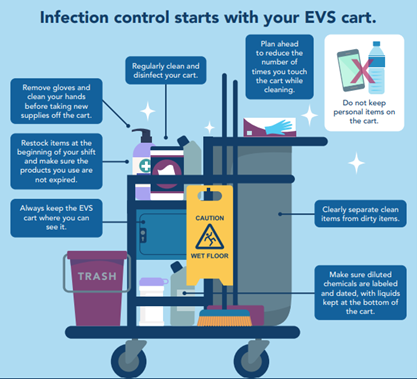
- New Refreshers: CDC EVS Microlearns – Quick, practical micro-learns covering key topics like contact time, when to change gloves, and maintaining clean and safe EVS carts, perfect for reinforcing skills in just a few minutes.
- New Observation & Support: VDH Daily Room Cleaning Checklist – A simple, structured checklist to guide room cleaning from start to finish, helping standardize workflows and ensure no critical steps are missed.
Target Audience: Essential IPC Education Level

Healthcare Ventilation Can Really Blow
When it comes to infection prevention, what’s in the air matters. This month’s featured resources focus on healthcare airflow and ventilation, breaking down complex concepts into practical tools that are easy to use. Be sure to check the Regulation & Guidance Updates section for new information from the American Society of Heating, Refrigerating, and Air-Conditioning Engineers (ASHRAE) to stay current on the latest recommendations.
What to Expect
- ASHE Project Firstline Explainer Videos: Short, easy-to-share resource from American Society for Health Care Engineering (ASHE) that help facility managers and frontline staff understand the critical role ventilation plays in keeping healthcare environments safe. (English & Spanish)
- CDC Project Firstline Ventilation Factsheet: A clear, shareable overview of how ventilation supports infection control and helps reduce the spread of germs in healthcare settings. (English & Spanish)
- ASHE Ventilation Quick Guide FAQs: A plain-language reference with concise answers to common questions about ventilation and prevention in the healthcare environment. (English & Spanish)
How to use it:
- Walk-Through with Unit IP Champion: Have a charge nurse or IP do a 5-minute walk of the area looking for best practices and asking staff:
- “What should never be in front of an airflow vent?”
- “What rooms require doors closed?”
- Breakroom Air Facts Board: Post the CDC factsheet with a simple header like: “This room protects patients/residents too. Here’s how the air helps.”
- Play Rank That Risk!: Use airflow issues you found on rounds or create hypothetical risks you want staff to be aware of like a vent blocked by a trashcan, propped open door of an airborne isolation room, or a missing or open ceiling tile. Ask: “What’s the risk here?”
Target Audience: Intermediate IPC Education Level
Time to Fall in Love with Measles Prevention
This Valentine’s season is a good time to revisit one of infection prevention’s most reliable love stories: the partnership between measles vaccination and early public health response.
In 2025, the United States saw the highest number of measles cases in more than 30 years, with more than 2,200 people sickened and three deaths reported. After decades of progress, measles is once again reminding us why consistent prevention efforts still matter.
What to Expect:
- CDC Measles Cases and Outbreaks: Up-to-date national data on measles cases, outbreaks, and trends.
- MMR Vaccination Coverage Gaps Map: New mapping tools that show where vaccination coverage is lower and where outbreaks are more likely.
- JAMA Patient Page: What Is Measles? A clear, visual overview of measles symptoms and transmission, including images that show how measles rash can appear on different skin tones, supporting inclusive education.
- Measles Myths and Facts Factsheet: A simple, evidence-based handout that helps staff and patients separate common measles myths from facts.
How to use it:
- Build a microlearning moment.
Choose one resource per week to review briefly during staff meetings, huddles, or shift change to reinforce key prevention concepts without adding time burden. - Strengthen onboarding and refreshers.
Incorporate these resources into onboarding or annual education to reinforce measles prevention, vaccination importance, and early response expectations. - Practice vaccine conversations.
Pair the Measles Myths and Facts factsheet with role-play or discussion to help staff practice responding to common questions or misconceptions with clear, evidence-based messages.
This Valentine’s Day, fall back in love with measles prevention and the tools that help keep everyone safer.
Target Audience: Essential IPC Education Level
Winter Reminder: Ice Safety Goes Beyond the Sidewalk
Winter means watching your step outside, scanning sidewalks and parking lots for patches of ice. But in healthcare settings, ice deserves just as much caution indoors as it does outdoors. From ice machines to scoops and storage bins, ice can become a hidden source of germs if it’s not handled carefully.
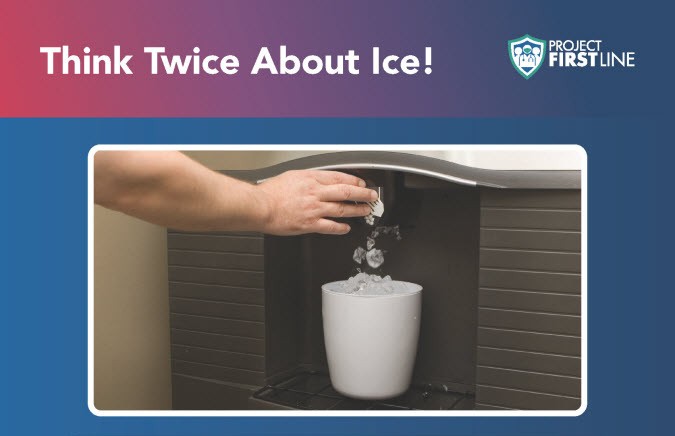
The CDC Project Firstline “Think Twice About Ice” micro-learn offers an easy-to-use training resource with a facilitator discussion guide and an educational handout.
How to use it
- Tie-in to Facility Protocols: Connect the micro-learn’s points to your facility’s infection control policies. For example, clarify who is responsible for cleaning and maintaining ice machines and how often equipment should be disinfected.
- Post the Job Aid: Print the one-page job aid and place it on breakroom boards, near staff lounges, or by ice machines. Visual reminders reinforce key actions like washing hands before handling ice and using clean scoops and containers.
Target Audience: Essential IPC Education Level
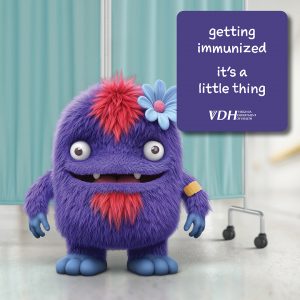
❄️’Tis the Season…for Flu Prevention
Viral respiratory season is here, settling in right alongside the colder weather. National Influenza Vaccination Week (December 1–5) reminds us that there’s still time to get vaccinated and stay ahead of the flu. Especially with the holidays approaching fast, an annual flu vaccine for everyone six months and older is still the best way to keep flu from putting a damper on your winter season.
What to Expect
- National Foundation for Infectious Diseases (NFID) Flu Resources – ‘Wild to Mild’ flu campaign, posters, graphics, and videos
- VDH Respiratory Illnesses Resources – “Little Things” campaign, flyers, and social media graphics
How to Use It
- Make it visible. Print NFID “Wild to Mild” posters or VDH “Little Things” graphics for breakrooms, waiting rooms, or bulletin boards.
- Share it forward. Include links or images in your facility newsletter, onboarding packets, or weekly staff updates.
- Use data to drive action. Review local flu activity together and discuss how your facility can stay prepared as the season evolves.
Target Audience: Essential IPC Education Level

?Purple Power: Fighting Antimicrobial Resistance Together
Get ready to go purple! Antimicrobial Awareness Week is November 18–24, 2025, and this year’s theme is “Fighting Antimicrobial Resistance Takes All of Us.” Antimicrobial resistance (AMR) isn’t just a healthcare issue; it’s a One Health challenge that affects people, pets, and our planet. Every reminder, game, or hallway conversation helps keep antibiotics and antifungals working for everyone.
What to Expect:
- Centers for Disease Control and Prevention – U.S. Antibiotic Awareness Week (USAAW) Find ready-to-use social media posts, fact sheets, and talking points to kickstart awareness activities across your organization.
- World Health Organization – World AMR Awareness Week (WAAW) Grab shareable graphics, infographics, and messages to spotlight the global effort against antimicrobial resistance.
- CDC – What Is One Health? See how the health of people, animals, and the environment are all linked and why your daily actions matter beyond the bedside.
How to Use It:
- Go purple! Ask teams to wear purple or decorate breakrooms to spark conversation.
- Host a mini-moment. Share a quick AMR fact in your next huddle or meeting.
- Make it a game. Use ideas from this month’s Cheers for Peers feature, where Whitney Rice created a microbe-matching challenge about bacterial vs. viral infections.
- Spread the message. Share graphics or stories from the WHO or CDC campaigns on your intranet or social media.
- Recognize Purple Champions. Celebrate strong antimicrobial stewardship by giving a Cheers for Peers certificate.
Target Audience: Foundational IPC Education Level