World AIDS Day: December 1

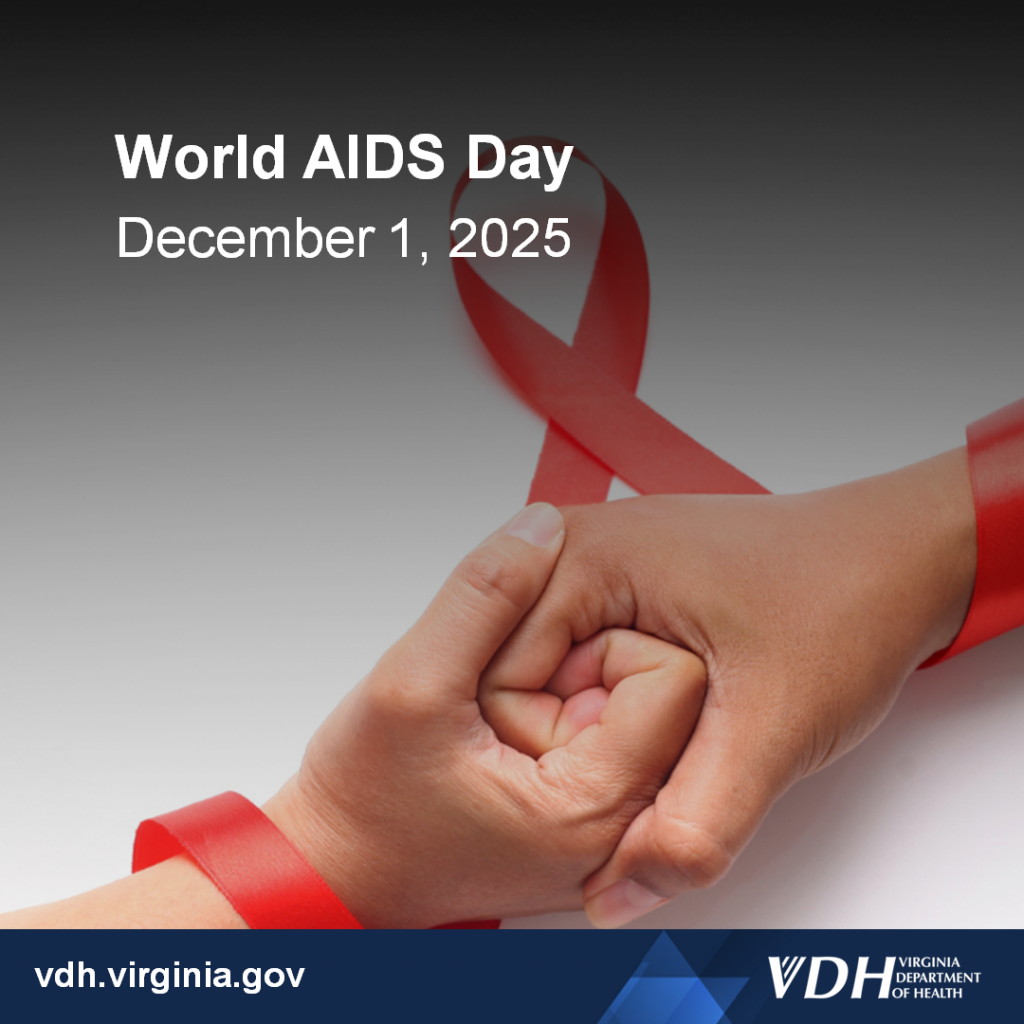
Worlds AIDS Day has been observed on December 1 each year since 1988. Every year, communities stand together, united with the red ribbon. We remember those who have been lost, unite in the fight against HIV and AIDS, and raise awareness to prevent new cases of HIV.

World AIDS Day 2025, Red Ribbon ImageWhat’s happening in Virginia?

During the COVID-19 pandemic and social distancing measures, patients were less likely to seek routine screening and testing, and as a result Virginia reported fewer new cases during that time. The total number of HIV cases annually in Virginia have returned to pre-pandemic levels. Certain communities continue to be impacted by HIV more than others. Youth, ages 15-19, saw a 41% increase in new HIV cases from 2023 to 2024. Black and Hispanic/Latino persons have seen a 27% increase in new cases each year since 2022.

There are over 28,000 people living with HIV in the Commonwealth of Virginia. More than 75% of people with HIV in Virginia are men, and over half are 50 or older. While Black, non-Hispanic people make up 19% of the population in the Commonwealth, 56% of people with HIV identify as Black, non-Hispanic in Virginia.

Find more detailed HIV statistics on the data and reports page and the HIV data dashboard.

Scientific Progress

Major advances in science have been made since HIV/AIDS was first discovered. HIV testing is fast, reliable, and available at any local health department or healthcare provider. Testing is the only way to know if you have HIV. Not everyone has symptoms during the onset of the infection. Having a sexually transmitted disease (STD) can make it easier to get or transmit HIV.

Find HIV and STD testing near you on the VDH testing page. Learn more about HIV prevention on the HIV prevention page.

HIV Treatment

Advances in HIV treatment help people with HIV live long and healthy lives.

It is proven that when a person with HIV has reached and sustains an undetectable viral load, they will not transmit HIV to their partner sexually. An undetectable viral load means that the number of copies of the virus in the body cannot be detected by certain tests. This is often referred to as Undetectable=Untransmittable, or “U=U.”

Getting into medical care and starting treatment immediately is important. The sooner a person with HIV starts HIV treatment, the better their health outcomes will be.

Have Questions or Need Help?

If you or anyone you know has been diagnosed with HIV, help is available. Financial assistance with the cost of medications or copays is available through local, state, or federal programs. These programs can also help you find support groups or other social services in your area. Learn more on our website or call the Disease Prevention Hotline at (800) 533-4148.

Celebrate DIS Recognition Day with Us!

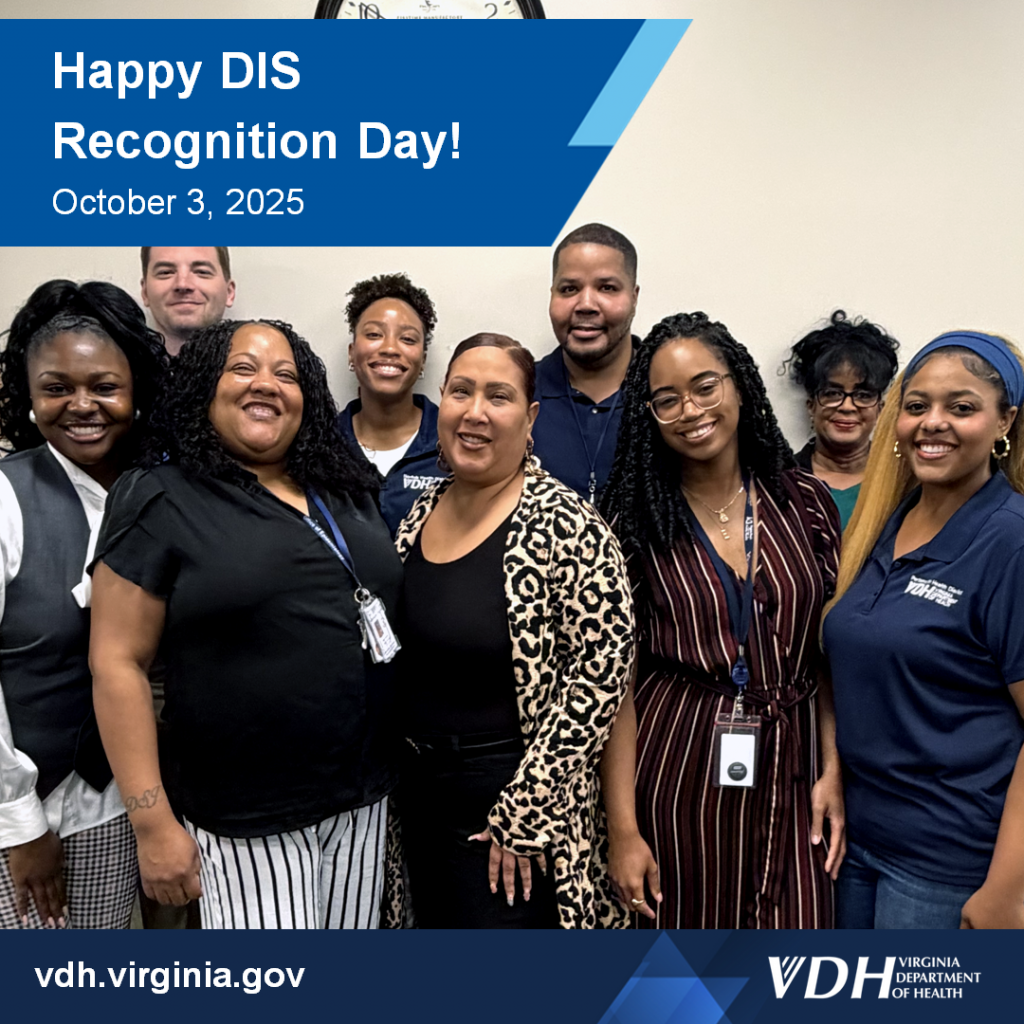
National DIS Recognition Day is observed annually on the first Friday in October. This is the 14th year it has been celebrated! We honor the dedicated Disease Intervention Specialists (DIS) as a vital part of the public health workforce. From locating people in need of treatment and testing, contact tracing to outbreak response, their work is critical.

Who are DIS?

DIS Recognition Day PhotoDIS are trained public health professionals with varied backgrounds and skill sets. They’re a group of public health specialists who identify, locate, and prevent the transmission of infections. They often have experience in community health, social work, health education, outreach, public health, and lived experiences.

DIS provide critical services in our communities that improve sexual health, increase knowledge and education, and improve health outcomes. This can include new and reemerging infections, as well. Here are some ways that DIS work hard every day to help improve sexual health:

    • Provide non-judgmental answers to difficult questions and easy to understand sexual health education
    • Swiftly connect individuals to sexual health screening and treatment services
    • Confidentially support partner notification (also called partner services) of individuals potentially exposed to STDs
    • Make referrals to wrap-around services including housing, substance use, mental health, harm reduction services and more
    • Lead frontline tracing efforts for emerging and remerging infections including tuberculosis, COVID-19, mpox, and others whenever needed
    • Locate and share available resources based on the needs of their local communities

The DIS job is not easy. It requires compassion, persistence, and a unique ability to build trust with people during some of the most vulnerable moments of their lives.

DIS in Virginia

In Virginia, our DIS are truly vital to protecting and promoting the health of Virginians. Here are some examples of the work that they’ve done recently to make our communities healthier and safer:

    • From January 2024 to date, DIS outreach prevented 148 congenital syphilis cases by reaching out to pregnant women diagnosed with syphilis and ensuring they received appropriate treatment.
    • From January 2024 to date, DIS interviewed 5,934 people and elicited 4,578 partners, associates at risk, and social contacts at risk.
    • These efforts interrupt disease transmission in our communities and improve the health of Virginians daily.

How can you help celebrate DIS Recognition Day?

Visit our Facebook and share the post about DIS. Thank them for their hard work!

Remember, if you or someone you know are ever contacted by a DIS, they are working hard to protect your health and work as a public servant. You can always call your local health department with questions if you are contacted by a VDH staff member. Cooperating with DIS efforts will benefit your health and others.

Thank you to all Virginia DIS for their tireless efforts in improving the health of Virginia communities!

Is Mpox Still Around?

Yes.  While the numbers are not as high as in 2022, mpox cases are still being diagnosed in the U.S. and in Virginia.

About Mpox

Mpox spreads through close or personal contact.

People with mpox often get a rash.  The rash can occur on hands, feet, chest, face, mouth or near the genitals.  They may have other symptoms like fever, chills, and swollen lymph nodes.

People at higher risk are more likely to develop severe illness or need hospitalization.  Those include:

    • People with weakened immune systems
    • Children under the age of one year
    • People with a history of eczema
    • Women who are pregnant or breastfeeding

If you have mpox and have severe mpox symptoms, talk to your healthcare provider.  They may recommend medications to help reduce your symptoms.

The Mpox Vaccine

Check to see if you should consider getting the mpox vaccine.  The mpox vaccine is safe and effective at preventing mpox.  Be sure to get both doses of the vaccine for the best protection.  It’s not too late for your second dose – even if your first was in 2022.

To get vaccinated, contact your local health department.  Local pharmacies or your healthcare provider may also have the vaccine.  Before booking an appointment, contact them to make sure they carry the mpox vaccine.

Virginia Ryan White Part B Resources

The Virginia Department of Health’s Division of Disease Prevention (DDP) has updated its website with a list of community-based care and treatment resources as well as provider and client FAQs (frequently asked questions).

This information may be helpful to clients, providers, and other stakeholders affected by recent changes in the program or for those who want more information.

Clients with questions can contact:

    • Any Ryan White Part B provider,
    • their case managers, or
    • the VDH Medication Eligibility Hotline: (855) 362-0658.

Direct press inquiries regarding Ryan White Services to the VDH Newsroom.

There’s a New PrEP Option!

Lenacapavir was approved by the Food and Drug Administration (FDA) on June 18 for use as HIV Pre-Exposure Prophylaxis (PrEP).  It is an injection given twice a year.  It will be sold under the brand name Yeztugo (yez-TOO-go).  Clinical trials proved the drug blocked HIV in 100% of >2,000 cisgender women who’d received it in the PURPOSE 1 trial.  The drug blocked HIV in nearly 100% of>2,000 cisgender men and gender-diverse persons who’d received it in the PURPOSE 2 trial.

Lenacapavir (Sunlenca) was approved for HIV treatment in 2022 for people with HIV.  This was specific to those with limited treatment options due to drug resistance, intolerance, or safety considerations.  Because it is a capsid inhibitor, the chance of developing drug resistance when taking it for PrEP is low.  Capsid inhibitors are a new class of medication not used in any other drugs currently.  Yeztugo’s price will be comparable to Apretude, the long-acting injectable which was approved for PrEP in 2021.

Providers: For more information, refer to the Gilead website or prescribing information. There is an upcoming training opportunity for clinicians to learn more on July 11.

Consumers: If you are interested in this new PrEP option, talk to your healthcare provider.

If you have any questions, please contact Eric Mayes, PrEP Services Coordinator, or Jenny Calhoun, HIV/STI Nurse Consultant.  Eric can be reached at eric.mayes@vdh.virginia.gov.  Jenny can be reached at jenny.calhoun@vdh.virginia.gov.

Virginia’s Hepatitis Elimination Plan

Hep Free VA

Cover of Hep Free VA, the Virginia Hepatitis Elimination Plan

Learn about Hep Free VA and help us end viral hepatitis in Virginia

Viral hepatitis is an ongoing and nationwide public health concern.  Last year in Virginia, reportable viral hepatitis cases were the third highest reportable condition1.  Only cases of chlamydia and gonorrhea were reported in greater number.  Untreated viral hepatitis can cause serious negative health outcomes.  This can include liver disease, liver cancer, and death.  However, vaccines and antiviral treatments can help to stop viral hepatitis.  Vaccinations are available to prevent hepatitis A and B.  Hepatitis C is now curable through a short course of direct acting antiviral treatments.

DDP has collaborated with a range of statewide stakeholders to create Hep Free VA.  This is Virginia’s Viral Hepatitis Elimination Plan.  The plan aims to eliminate viral hepatitis in Virginia by 2030 by achieving six main goals.

    • Goal 1: Prevent New Viral Hepatitis Infections
    • Goal 2: Improve Viral Hepatitis-Related Health Outcomes of People with Viral Hepatitis
    • Goal 3: Reduce Viral Hepatitis-Related Disparities
    • Goal 4: Improve Viral Hepatitis Surveillance and Data Usage
    • Goal 5: Achieve Integrated, Coordinated Efforts that Address the Viral Hepatitis Epidemics among All Partners and Stakeholders
    • Goal 6: Secure Sustainable Funding to Address Viral Hepatitis Epidemics

Read our full plan!

DDP is grateful to all the stakeholders and partners who joined us in this effort.  We look forward to continuing our viral hepatitis elimination work with you.

If you would like to get involved to end viral hepatitis in Virginia, please contact Colin Dwyer at colin.dwyer@vdh.virginia.gov or (804) 613-8228.


1 Virginia Department of Health. (n.d.).  Virginia Monthly Morbidity Surveillance Report.  https://www.vdh.virginia.gov/surveillance-and-investigation/virginia-communicable-disease-data/virginia-monthly-morbidity-surveillance-report-2018/