
Every Family Deserves a Healthy Start

April 15, 2026

Media Contact: Jerlissa McElroy, Jerlissa.McElroy@vdh.virginia.gov

Media Contact: RaShel.Charles, RaShel.Charles@vdh.virginia.gov

Every Family Deserves a Healthy Start
Crater Health District Supports Healthy Pregnancies During Black Maternal Health Week

PETERSBURG, Va. – Pregnancy is often a time of joy and uncertainty. During Black Maternal Health Week, April 11-17, the Crater Health District (CHD) is working to help more families experience safe, supported, and healthy pregnancies.

Black women are twice as likely to die from a pregnancy-associated cause as White women and more likely to die from cardiac related causes. The Maternal & Child Health and the Women Infants and Children (WIC) programs provide support and connect families to healthcare, nutritious food, and items needed to support healthy pregnancies and healthy babies.

“Supporting Black maternal health is essential to building a healthier community for everyone. The continuing disparities facing Black mothers demand focused attention and strong partnerships,” said Crater District Health Director, Dr. Alton Hart, Jr. “We are committed to ensuring that every family receives respectful quality care and the resources necessary for a healthy start.”

The Crater Health District offers several services that can help families thrive. CHD offers maternity services at all health department locations. CHD has three certified doulas/ community health workers (CHWs) who are trained to support pregnant and parenting people in the community. These trusted individuals teach pregnant individuals about childbirth. They understand different cultures and beliefs so they can help to eliminate disparities in care. They are trained to coach families through the emotional and physical process of pregnancy, childbirth, and early parenthood. They can also help connect people to resources such as healthy food and help navigate the healthcare system.

“Every Black mother deserves respectful, safe, and culturally centered care throughout pregnancy, birth, and postpartum. Our team is committed to listening to families, elevating their voices, and expanding access to the resources that support healthy beginnings throughout pregnancy and into parenthood,” said Jerlissa McElroy, Maternal & Child Health Program Specialist.

The Crater Health District Safe Sleep Program is designed for pregnant individuals and families of children to improve infant care and address health. For those who qualify, the program provides Free Pack & Play portable cribs, safe sleep kits, educational resources, and a team that can help work through questions or issues for families. CHWs can assist with connecting families to WIC, breastfeeding support, finding baby care supplies, and more resources. For more information about the Maternal & Child Health and Safe Sleep Program, please contact Jerlissa.McElroy@vdh.virginia.gov.

The WIC Program is designed to give children the very best beginning through healthy foods, nutrition education and access to health care. Pregnant women and children (up to age five) who qualify receive monthly food benefits. Benefits include breastfeeding support and eWIC cards for healthy foods such as milk, eggs, fruits, and vegetables. The Crater Health District served approximately 2800 WIC clients last year. Those who participate in the WIC program have improved birth outcomes and increased breastfeeding rates. To be eligible for the program, applicants must have a nutritional and financial need.

These programs help every family get a healthy start. Families can sign up for these services by calling 804-863-1562 or visit Crater Health District.

# # #
Crater Health Department Encourages Community Members to Get Tested and Stay Informed During STI Awareness Week

April 14, 2026

Media Contact: Karen Stalzer, Karen.Stalzer@vdh.virginia.gov

Media Contact: RaShel Charles, Rashel.Charles@vdh.virginia.gov

Crater Health Department Encourages Community Members to Get Tested and Stay Informed During STI Awareness Week
The second full week of April is STI Awareness Week

PETERSBURG, Va — As communities across the country recognize STI Awareness Week, the Crater Health District (CHD) encourages residents to take simple, proactive steps to protect their sexual health. Rates of sexually transmitted infections have risen in Virginia and nationwide in recent years. CHD emphasizes that early testing and treatment are key to keeping individuals and communities healthy.

“Sexually transmitted infections often go unnoticed because many people never experience symptoms, which is why regular screening and open conversations about sexual health are essential,” said Crater District Health Director, Dr. Alton Hart, Jr. ”Everyone deserves respectful, stigma‑free access to sexual healthcare, and CHD is committed to providing the tools, education, and support for our community stay healthy.”

STI testing is one of the most important things you can do to protect your health. People who have an STI may still feel healthy and be unaware that they have an infection. However, these infections can cause serious health problems and spread to others if left untreated. When you know your status, you have powerful information to keep you and your partners healthy. Most infections can be cured and are treatable.

Why STI Awareness Matters

  • Many STIs have no symptoms, making regular screening essential.
  • Early detection allows for effective treatment and reduces long‑term health complications.
  • Open communication with partners helps reduce transmission and supports healthier relationships.
  • Reducing stigma encourages more people to seek care without fear or shame.

Local Services Available

CHD offers:

  • Confidential STI testing and treatment-appointments are available at all health department locations
  • Petersburg Health Department offers a weekly walk-in STI clinic every Friday from 8:30 AM – 10:30 AM (first come, first served)
  • Men’s Sexual Health Clinic is available at the Petersburg location on the 2nd and 4th Mondays of each month, by appointment 804-863-1652
  • Free Syphilis Self-Test kits available
  • Free condoms and safer‑sex supplies
  • Education and counseling on prevention and treatment
  • HIV testing, reproductive health services, and referrals for PrEP

How Residents Can Participate

  • Schedule an STI screening at CHD or Use the CDC testing site locator to find a testing site near you
  • Talk with partners about sexual health
  • Encourage friends and family to get tested

CHD encourages individuals to take proactive steps toward their sexual health during this week and beyond. All clinical and educational services at CHD are accessible, confidential, and supportive.

For more information about STI’s, contact the Crater Health Department at 804-863-1652 or visit Crater Health District.

# # #
Crater Health District Public Health Week 2026: Ready, Set, Action!

April 2, 2026
Media Contact: RaShel Charles rashel.charles@vdh.virginia.gov

Crater Health District Public Health Week 2026: Ready, Set, Action!

PETERSBURG, Va. –  The Crater Health District will observe National Public Health Week from April 6–11, 2026.  This year’s theme is “Ready. Set. Action!”. At the heart of this year’s message is one simple truth: good health doesn’t just happen. It’s created when people, organizations, and leaders commit to taking action that strengthens the foundations of health for everyone.  The Crater Health District, in collaboration with the City of Petersburg and Petersburg Public Schools, will host the Ready, Set, Action: Petersburg Wellness & Community Resource Fair on April 11, 2026, from 11:00 AM to 3:00 PM at Petersburg High School, located at 3101 Johnson Road, Petersburg, VA 23805.

Public health is not something done to you — it is something created with you. Every individual plays a role in shaping community well-being through daily choices, shared responsibility, and collective advocacy. Through the dedication of community health workers, medical professionals, scientists, and advocates who promote policies grounded in evidence and centered on equity, individuals experience improved health outcomes and communities become stronger and more resilient. Good health doesn’t just happen — you help create it.

The Crater Health District remains committed to working alongside residents and community partners to create safe, healthy environments that reduce the burden of disease and expand opportunities for people to live longer, healthier lives. “Public health is most effective when it is collaborative, visible, and responsive to community voice.” “This event supports our shared commitment to strengthening the well-being of the Petersburg community.” said Crater Health District Director Alton Hart, Jr., MD, MPH, MDiv.

“At Petersburg City Public Schools, we value the importance of healthy living and aim to provide our community with the necessary knowledge and resources to improve their wellbeing and strengthen their health foundation. Prioritizing public health is essential, and PCPS is proud to partner with the Virginia Department of Health on this meaningful initiative,” said Dr. Torrey Manson, Assistant Superintendent of Student Services.

This community-focused event aims to empower Petersburg residents to “Be the Director of Your Health” by providing free access to essential wellness resources, services, and family-friendly activities.

Event highlights include:

  • Free community resources
  • Free grocery giveaway
  • Health screenings and immunizations
  • Food trucks
  • Fun family activities

Event registration is recommended but not required. Residents may register at: https://tinyurl.com/4uxn8eb8

Residents of all ages are encouraged to participate and take advantage of the wide range of services offered at no cost.  Don’t miss it!”

For residents that need more information, please call 804-382-2667.

# # #


Crater Health Districts Says Healthy Choices Can Build a Healthier Community

March 26, 2026
Media Contact: Kayla Barber, Kayla.Barber@vdh.virginia.gov

Media Contact: Rashel Charles, Rashel.Charles@vdh.virginia.gov

Crater Health Districts Says Healthy Choices Can Build a Healthier Community
March is National Nutrition Month in Virginia

PETERSBURG, Va. – One in four people are living with obesity in the United States. In Virginia, it’s closer to one in three (32%). 2024, approximately 32% of Virginia adults were classified as obese. March is National Nutrition Month, and the Crater Health District (CHD) wants to remind you that nutrition plays a crucial role in your overall health and well-being. According to the Centers for Disease Control (CDC), only about 12% of adults reported eating the recommended 5 or more servings of fruits and vegetables per day.

“National Nutrition Month is a great reminder that healthy eating starts right here in our community. When families have access to fresh foods, local resources, and practical guidance, everyone has a better chance to thrive,” said Crater District Health Director, Dr. Alton Hart, Jr. “Our health department is proud to offer nutrition resources and provide food boxes to help the community.”

Eating healthier can change your health outcomes. Crater Health District has implemented a variety of programs to address nutrition and food security across the state. CHD offers programs, such as the Women, Infants, and Children (WIC) program, nutrition education and counseling, supplemental nutritious foods, breastfeeding support, health screenings and referrals, immunization referrals and monitoring, farmers market nutrition program (FMNP), and FEEDMORE resources to provide access to nutritious foods, nutrition education, and health services to thousands of Virginians each year.

“Celebrate National Nutrition Month with the Crater Health District WIC Program and discover how powerful good nutrition can be, said Kayla Barber, WIC Coordinator, Crater Health District. If you’re pregnant, postpartum, or have a child under five, your local WIC office can connect you with nutritious foods. Rather than scroll through diet trends on social media, apply for WIC and gain access to nutrition experts. Let us help your family stay nourished, healthy, and confident on any budget.”

Crater Health District wants you to consider these five tips for proper daily nutrition:

  • Eat a Variety of Foods: Include a mix of fruits, vegetables, whole grains, lean proteins, and healthy fats in your daily meals to ensure a broad spectrum of nutrients.
  • Choose Whole Grains Over Refined Grains: Whole grains (like brown rice, quinoa, and whole wheat bread) provide more fiber, vitamins, and minerals than refined grains.
  • Limit Added Sugars and Salt: Reduce intake of sugar-sweetened beverages, desserts, and salty snacks, and check nutrition labels for hidden sugars and sodium.
  • Stay Hydrated: Drink plenty of water throughout the day, aiming for at least 6–8 cups unless your healthcare provider directs otherwise.
  • Practice Portion Control and Mindful Eating: Be aware of portion sizes, eat slowly, and listen to your body’s hunger and fullness cues to avoid overeating.

Throughout March, CHD encourages you to take this opportunity to learn more about nutrition, explore local resources, and adopt healthier eating habits.

  • Find an accountability partner to keep you on track.
  • Start with small practices and build your plan of healthier habits.
  • Try new, healthier practices at your favorite restaurant and be mindful of the decisions you make to stay on track.

Visit https://www.vdh.virginia.gov/healthy-communities/healthy-food-environments/ for nutrition resources or contact the Crater Health District at 804-863-1652 or visit Crater Health District for more information.

# # #

Crater Health Department Urges Virginians to Get Informed and Vaccinated

March 25, 2026

Media Contact: RaShel Charles, Rashel.Charles@vdh.virginia.gov

Crater Health Department Urges Virginians to Get Informed and Vaccinated
March is National HPV Awareness Month

PETERSBURG, Va — This month, the Crater Health Department (CHD) highlights the importance of preventing Human Papillomavirus (HPV)-related cancers and diseases through screening, vaccination, and education.

HPV is spread through close and intimate skin-to-skin contact.  Roughly 85% of people will get an HPV infection in their lifetime, affecting millions of Americans each year. The HPV virus can cause cervical, throat, anal, and other cancers, but the HPV vaccine is a safe and effective tool to prevent these health issues.

“Human papillomavirus is one of the most common infections, yet it is also one of the most preventable. The HPV vaccination is one of the most powerful tools we have to prevent certain HPV-related cancers,” said Crater District Health Director, Dr. Alton Hart, Jr. “During HPV Awareness Month, we encourage families to talk to their healthcare providers and take action to protect themselves and their children.”

The American Academy of Pediatrics (AAP) recommends HPV vaccination for boys and girls starting at ages 11 to 12. Vaccination can be administered as early as age nine and through age 26 for those who did not get vaccinated earlier. Some adults age 27 and older may choose to get vaccinated, in consultation with a healthcare provider.

Screening for HPV is another safe and effective tool for preventing HPV-related cancer; however, it is not available for all cancers caused by HPV.

  • Women should start getting screened for cervical cancer at age 21. Screening can include HPV and/or Pap
  • A healthcare provider can help determine which screening test is best and how often a woman should get screened.
  • Eligible women can get free screenings through the Every Woman’s Life Program.

CHD asks all Virginians to:

  • Talk to your healthcare provider about the HPV vaccine for yourself or your children.
  • Schedule an appointment for HPV vaccination if you or your child is eligible and have not yet received it. The HPV vaccine is available for free through the Virginia Vaccines for Children (VVFC) program for eligible children ages nine to 18 years old.
  • Share information about HPV prevention with family, friends, and your community.

Together, we can make HPV-related cancers a thing of the past. Vaccination is a step toward cancer prevention.

For more information about HPV, the vaccine, contact your Crater Health Department at 804-863-1652 or visit Crater Health District.

# # #
Stray Black Cat Tests Positive for Rabies in Hopewell City

February 24, 2026

For More Information Contact

Media Contact: Toinette Waldon, Toinette.Waldon@vdh.virginia.gov

Media Contact: RaShel Charles, Rashel.Charles@vdh.virginia.gov

Stray Black Cat Tests Positive for Rabies in Hopewell City

HOPEWELL, Va – The Crater Health District has received confirmation that a stray black cat has tested positive for the rabies virus. The cat was involved in multiple incidents of bites and scratches near the 2400 block of Oaklawn Blvd and Crestline Blvd during February 21 – 22, 2026. The cat is described as a female black cat with missing fur on the top of its head, weighing 6-8lbs. The Hopewell Health Department/Crater Health District and the Hopewell Animal Service Unit encourage animal owners to confirm that all pet vaccinations are current and report any stray animals.

Anyone with information regarding this animal’s exposure (bite, scratch, or contact with saliva by open wound or eyes, nose, or mouth) should contact the Crater Health District Environmental Health Office, at 804-863-1652. Exposures include direct contact between a child or pet and the rabid animal.

“Please notify public health officials or animal control immediately if you live near either the 2400 block of Oaklawn Blvd or Crestline Blvd and think you, your child, or pet(s) had contact with the infected cat. The community’s safety is our priority. Make sure your pets are vaccinated, especially against rabies, “said Crater Health District Director Alton Hart, Jr., MD, MPH, MDiv.

“Rabies is a preventable disease. Vaccinate your pets, avoid contact with wild animals, and seek immediate care if bitten, “said Toinette Waldon, Environmental Health Manager, Crater Health District.

The Health Department strongly advises that people take the following steps to prevent families and pets from being exposed to rabies:

  • Vaccinate all cats, dogs, and ferrets against rabies and keep them up to
  • Avoid contact with wild animals or stray cats and
  • Report stray animals to your local animal control
  • Enjoy wildlife from a distance – don’t feed or encourage wild animals or stray cats and dogs to visit your premises.

Rabies is linked to a virus that attacks the nervous system and can be deadly if not properly treated. If you are bitten by a wild or stray animal, wash the wound(s) thoroughly with warm soapy water and contact animal control, your healthcare provider or the Crater Health District.

To report a stray and/or suspicious animal, please contact Hopewell Animal Services Unit at (804) 541-2204. If you have concerns about exposure to rabies, contact your healthcare provider immediately. For more information on protecting your family from rabies, call 804-863-1652 or visit the VDH Rabies webpage.

# # #

Crater Health District Encourages Healthy Dental Habits Among Children

February 25, 2026

Media Contact: RaShel Charles, PIO, RaShel.Charles@vdh.virginia.gov

Media Contact: Tara Rose, Alternate PIO, Tara.Rose@vdh.virginia.gov


Crater Health District Encourages Healthy Dental Habits Among Children
February is National Children’s Dental Health Month

PETERSBURG, Va. – The Crater Health District reminds parents, guardians and caregivers to begin teaching young children about the importance of good dental health habits.

Children can get a jump start on a lifetime of good oral health by focusing on maintaining healthy teeth and gums. Positive strategies include incorporating oral health hygiene routines at home along with scheduling regular dental visits. Good oral health should begin as early as infancy and young children should ideally see a dentist by their first birthday.

Cavities are the most common chronic childhood disease in the United States. More than half of children aged six to eight years have had a cavity in at least one of their baby teeth.

“National Children’s Dental Health Month is a perfect reminder that good oral health starts early,” said Dr. Alton Hart, Jr., Health Director for the Crater Health District. “Daily brushing, regular dental visits, and healthy eating habits set the foundation for a lifetime of strong teeth and overall health and well‑being.”

National Children’s Dental Health Month is observed during February each year. The American Dental Association designated the national health observance to promote the benefits of good oral health.

Adults can assist children with developing healthy habits in the following ways.

  • Brush their teeth twice a day with fluoride
  • Help your child brush their teeth until they have good brushing skills use a pea-sized amount of toothpaste and always spit it out rather than swallow.
  • Ask your child’s dentist to apply dental sealants when appropriate. Applying dental sealants to the back teeth prevents 80% of cavities.
  • Drinking fluoridated tap water when possible.

Through strong community partnerships, such as the collaboration with the Petersburg Wellness Consortium (PWC), The Crater Health District is committed to expanding oral health awareness in the community. The PWC serves as a vital community connector, linking physicians, service providers, and researchers with residents to increase access to oral health information and services.

The case for prioritizing oral hygiene continues to grow. Research shows clear connections between oral health and chronic conditions such as diabetes, hypertension, and cancer, as well as pregnancy outcomes in


adults. Coordinated care that integrates both oral and general health services is a critical step toward improving overall health

Learn more about oral health for children at www.vdh.virginia.gov/oral-health/ for more information about Crater Health District visit Services & Programs – Crater Health District.

# # #

Crater Health District Gives Tips to Combat Substance Use Disorder This Winter

February 20, 2026

Media Contact: RaShel Charles, District PIO, RaShel.Charles@vdh.virignia.gov

Tara Rose. Alternate PIO Tara.Rose@vdh.virginia.gov

Crater Health District Gives Tips to Combat Substance Use Disorder This Winter

PETERSBURG, Va. – Winter is often a time of reflection and resolution, but for some, it’s a time when substance use increases. Crater Health District (CHD) reminds the community that substance use disorder (SUD) is a critical issue highlighted during this time of year, particularly as individuals and communities set intentions for improvement and recovery.

“Substance Use Disorder affects every part of our community, and no one should face it alone.” said Crater District Health Director, Dr. Alton Hart, Jr. “This month, we renew our commitment to reducing stigma, expanding access to care, and supporting every person on their path to recovery.”

Winter months often bring unique challenges that can increase the risk of drug use. Shorter daylight hours, colder temperatures, and reduced opportunities for outdoor activities can lead to feelings of isolation and seasonal depression. Social gatherings and celebrations where substances may be present can create an environment where individuals are more vulnerable to relapses or misuse. Understanding these risks is essential for developing strategies to maintain sobriety and support overall well-being during this season.

“Substance use disorder is not a moral failing, it is a treatable, chronic brain disorder,” said Elle Merkle, Overdose Prevention Coordinator. “Our CHD Overdose Prevention Team works to expand health education, increase access to naloxone, and connect people with evidence-based treatment and resources to strengthen recovery and help build more resilient communities.”

The CHD Overdose Prevention Team provides:

  • REVIVE! Overdose prevention training with free naloxone.
  • Opioid prevention education and distributes fentanyl and xylazine test strips.
  • Community linkages to care.
  • Peer Recovery Specialist Alliance Network.
  • Resource connections and collaborative partnerships.
  • Support for long-term recovery.

Crater Health District share tips to stay resilient:

  • Stay connected with friends, family, and recovery groups.
  • Anticipate high-risk situations and rehearse responses.
  • Set boundaries for social events.
  • Remain aware of personal triggers that are brought on by large social gatherings, especially when alcohol is served.
  • Substance use struggles often happen together with mood disorders like depression or anxiety increasing vulnerability during stressful times in winter.
  • Maximize daylight exposure, ensure proper sleep, exercise regularly, and eat balanced meals.
  • Replace substance-related habits with comforting alternatives like tea, journaling, or meditation. Use journaling to identify patterns and act early on warning signs.
  • Join support groups or volunteer to boost mood and structure.
  • Connect with professional help if needed.

If you have drug or alcohol concerns, mental health struggles, emotional distress, or just need someone to talk to, call, text, or chat the 988 Suicide & Crisis Lifeline. A trained crisis worker can provide immediate help 24 hours a day, seven days a week.

If you have questions about SUD or looking for direct linkage to recovery resources and treatment call 804-863-1652 or visit Crater Health District. If you need more information about our CHD Overdose Prevention Team, contact Elle Merkle at Elle.Merkle@vdh.virginia.gov 804-481-2042 or JaDa Woodley at Jada.Woodley@vdh.virginia.gov 804-704-7554.

# # #

Love Safely This Valentine’s Day – Get Free Condoms from the Crater Health District

February 13, 2026
Media Contact: Tara Rose, Tara.Rose@vdh.virginia.gov

Love Safely This Valentine’s Day
Get Free Condoms from the Crater Health District


PETERSBURG, Va.– It’s no coincidence that Valentine’s Day is also National Condom Day! One of the simplest ways to show you care is to protect the health of those you love. The Crater Health District (CHD) provides free condoms to support safer and healthier sexual relationships.

Valentine’s Day is often associated with flowers, chocolates, and dinner dates. CHD reminds you that protection should also be part of the plan.

“National Condom Week is an important reminder that protecting our community starts with simple, informed choices, and condoms remain one of the most effective tools we have to help us stay healthy, support our partners, and prevent infections,” said Crater District Health Director, Dr. Alton Hart, Jr.

Sexually Transmitted Infections (STIs) remain a serious public health concern in Virginia.  More than 54,000 STIs were reported in Virginia in 2024.  The increase in syphilis diagnoses among women is of particular concern.  The rate of newly diagnosed syphilis cases among women increased 144% from 2020 to 2024.

Cases of congenital syphilis, when a pregnant person passes syphilis to a baby during pregnancy or childbirth, increased for the fifth straight year in Virginia. In 2024, 35 cases of congenital syphilis were reported among newly born infants, the highest case count observed in more than 30 years in Virginia.

Because many STIs, including syphilis, often show no symptoms, you can spread them without knowing it. Using condoms consistently and correctly is an effective way to reduce the risk of STIs and unintended pregnancy.

The Virginia Department of Health distributes condoms statewide through its Condom Distribution Program, which is designed to reduce HIV and other STIs through free access to protection.

Free condoms are available at the Crater Health District and through community partner organizations.

You can contact call 804-863-1652 or visit Crater Health District.to locate free condoms nearby.

Organizations interested in becoming distribution sites should contact the HIV-STD Hotline Supervisor at HIV-stdhotline@vdh.virginia.gov. Participating organizations may order up to 100,000 condoms per year.

CHD offers a Men’s Sexual Health Clinic in Petersburg on the 2nd & 4th Mondays from 5 p.m.-7 p.m.  For more information about or Services & Programs – Crater Health District.

Make this Valentine’s Day a night to remember, not a diagnosis you want to forget.

# # #

Crater Health District Safety Tips to Stay Warm During Extreme Cold

January 28, 2026
Media Contact: Tara Rose. Tara.Rose@vdh.virginnia.gov

Crater Health District Safety Tips to Stay Warm During Extreme Cold

PETERSBURG, Va. – As localities across Crater Health District (CHD) continue to see dangerously cold temperatures, hypothermia and frostbite are real concerns. The Crater Health District urges you to take steps to keep you and your family warm, dry and healthy during this winter season.

“Extreme Cold is one of the leading causes of weather-related fatalities. Learning tips to stay warm and ways to mitigate extreme cold is a form of preparation that all should be practicing during the winter weather season,” said Steven Herring, Local Health Emergency Coordinator.

Hypothermia occurs most commonly at very cold environmental temperatures but can occur even at cool temperatures (above 40°F) if a person becomes chilled from rain, sweat, or submersion in cold water. Signs to look out for include shivering, exhaustion or fatigue, confusion, fumbling hands, memory loss, slurred speech and/or drowsiness. In babies look for bright red, cold skin and very low energy.

Frostbite is a type of injury caused by freezing. If you notice redness or pain in any skin area, get out of the cold. The skin will feel numb, unusually firm or waxy, and can also appear white or grayish yellow. If you have frostbite, you may not know until someone else points it out because the frozen parts of your body are numb.

“With extreme cold weather continuing for the next several days, we urge everyone to take precautions, said Crater District Health Director, Dr. Alton Hart, Jr. “Limit time outdoors, dress warmly, and check on those who may need support. Keeping our community safe is our top priority during this severe weather.”

The Crater Health District encourages you to take these steps to prevent hypothermia, frostbite and other potential injuries.

Staying Warm

  • Stay indoors and limit your exposure to the cold.
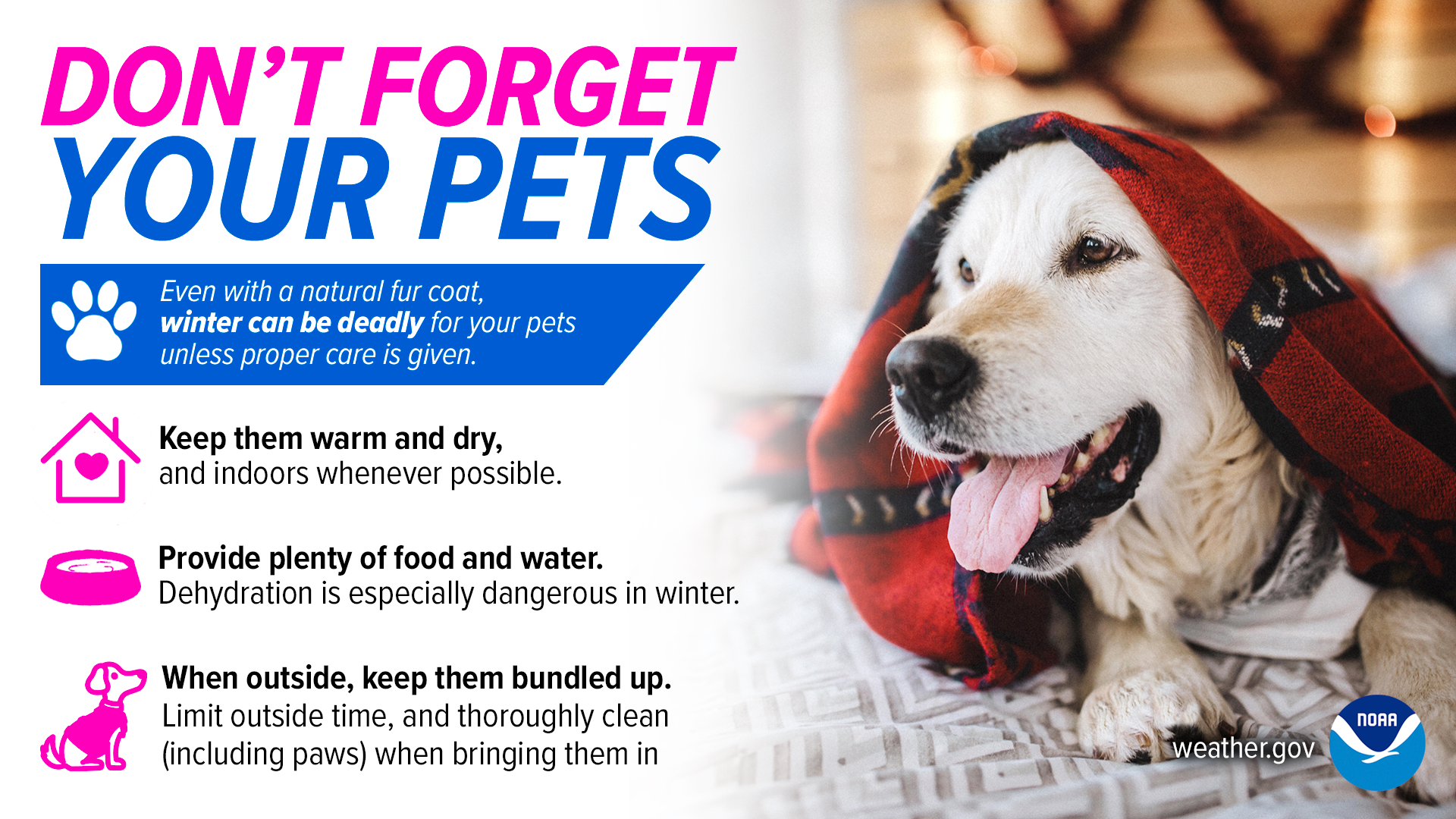
  • Bring your pets indoors and ensure they have water.
  • Eating healthy meals will help to keep your body temperature warm.
  • Stay hydrated even during the cold to prevent hypothermia. Avoid alcohol and caffeine. They cause your body to lose heat faster. Drink warm beverages or broth.
  • Keep extra blankets, sleeping bags, and warm winter coats on hand for use in cold rooms.
  • Charge all your devices (medical equipment, phone, computer, tablet, radio, etc.).
  • Check on neighbors, friends, and family.
  • For a list of warming centers in your area, call 2-1-1 or visit org/

If You Go Outside

If you must go outside, please take these precautions:

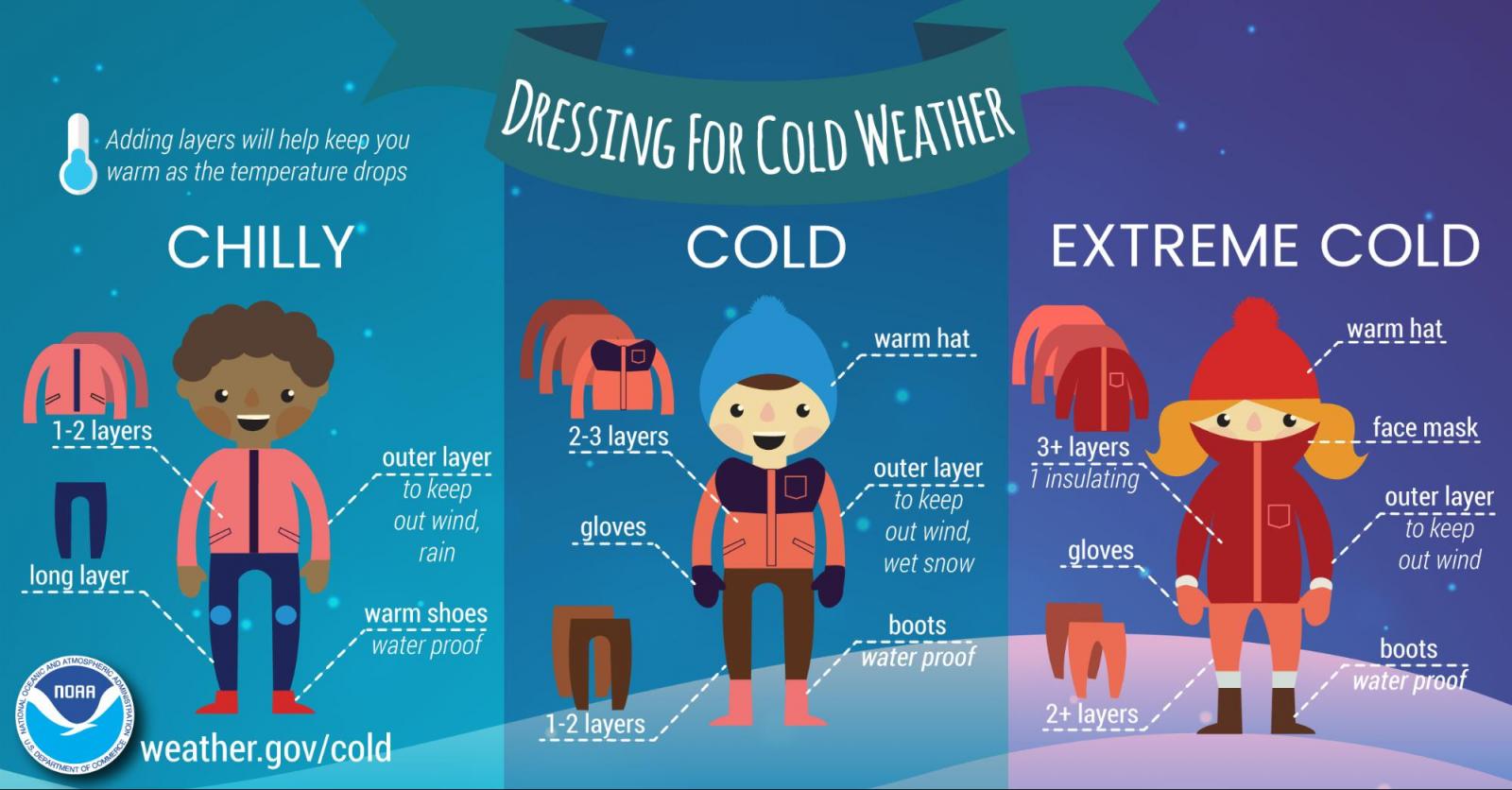
  • Dress warmly and in layers. Make sure you cover your head, fingers and toes to prevent frostbite.
  • Be aware of the wind chill factor.
  • Wear proper footwear for traction. Take slow, short steps.
  • Avoid getting wet. If you get wet, change out of wet clothes as soon as possible to prevent hypothermia.
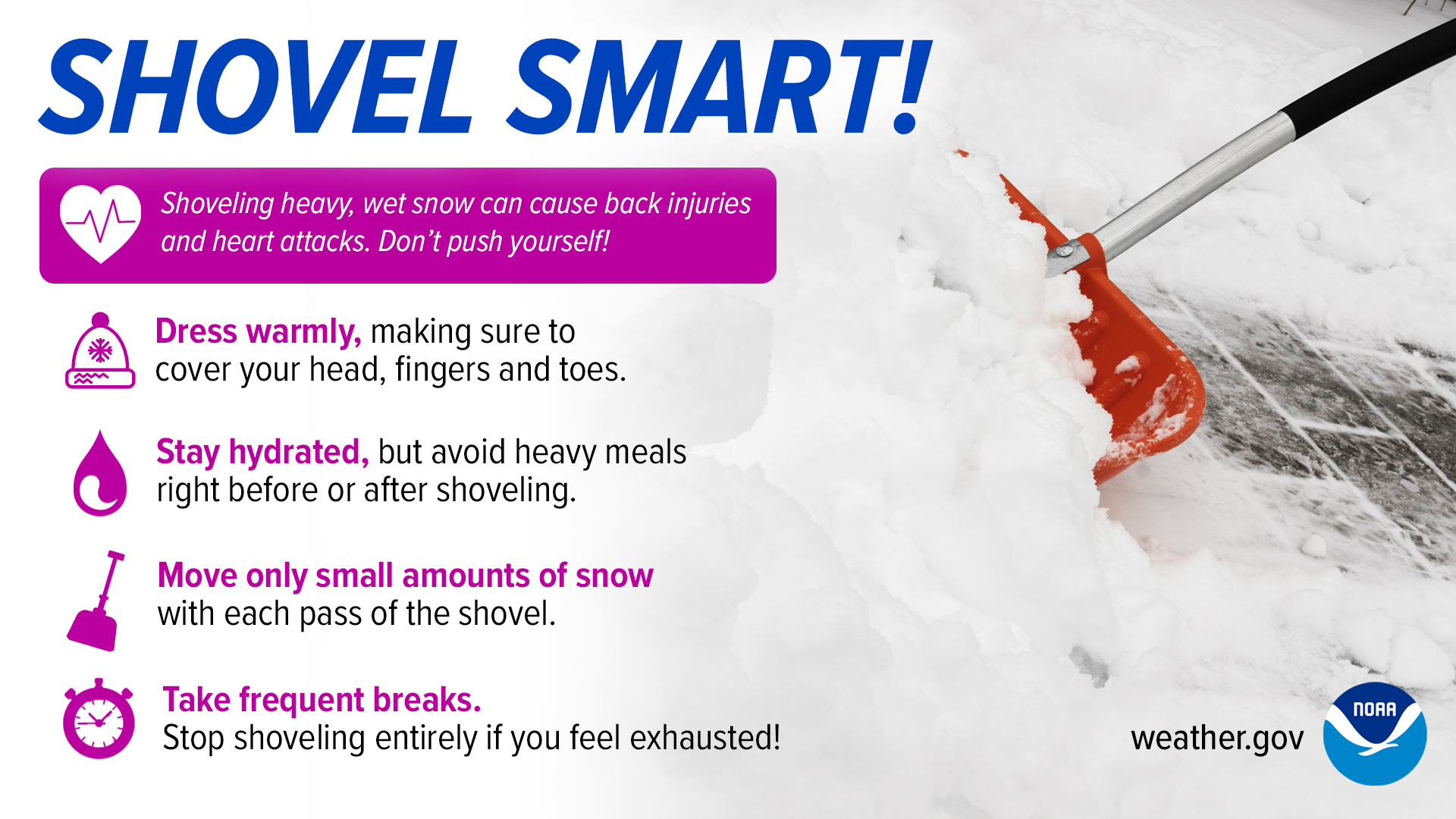
  • Take frequent breaks if shoveling snow or working outdoors.

If You Must Drive

  • Stay at home and avoid travel. If you must travel, check the road conditions and your route first.
  • Allow extra time and follow these tips from the Virginia Department of Transportation.
  • If you must travel, let someone know your destination and when you expect to arrive. Ask them to notify authorities if you are late.
  • Always carry extra warm clothing and blankets with Don’t rely on a car to provide enough heat.

If you have chronic conditions, please reach out to their healthcare provider to make sure together you have a care plan in place. Organize and protect your prescriptions, over-the-counter drugs, home-use medical devices, and vitamins. Talk to your doctor or pharmacist about how you can create an emergency supply of medicines.

If you notice signs of frostbite and hypothermia, seek medical attention immediately.


# # #