VIPTA is a statewide infection prevention and control education collaborative, led by the Virginia Healthcare-Associated Infections Advisory Group. Through partnership, VIPTA curates IPC resources for Virginia’s healthcare, congregate care, and public health settings.


“Wait – Do I Need PPE for This?” Making Sense of Enhanced Barrier Precautions
Infection prevention in long-term care takes teamwork—and sometimes a little extra reinforcement. It’s been a year since CMS formally added Enhanced Barrier Precautions (EBP) to infection control guidance, and that big question— “Do I need PPE for this?”—still comes up.
EBP expands personal protective equipment (PPE) use beyond isolation, applying to high-contact care like wound care, changing linens, and bathing. EBP is key to stopping the spread of multidrug-resistant organisms (MDROs) in long-term care facilities, but it takes clear systems and consistent staff education to make it stick.
What to Expect: This month’s resources are designed to meet your team where they are—whether you’re providing direct care, coordinating therapy, or supporting infection prevention efforts facility-wide.
- 8 Moments of Enhanced Barrier Precautions: Simple visual education tool. If you’ve ever heard “Do I need PPE for this?”—this tool is your new best friend. Also available in 8 other languages!
- VDH’s Enhanced Barrier Precautions in Nursing Homes Algorithm: This decision-making tool breaks down when and why to use EBP in plain language.
- CDC’s EBP Implementation—Observations Tool: Built for infection preventionists and facility leads, this resource helps track EBP use and identify areas for coaching
How to Use These Resources:
- Share the 8 Moments visual in breakrooms, care stations, huddles, or staff emails.
- Use the algorithm and observation tool to support your facility’s infection control plan or prep for survey readiness.
Enhanced Barrier Precautions are a big shift, but they’re not a solo effort. Whether you’re providing direct care or leading infection prevention and control (IPC) efforts, these tools are here to help you do the work and explain the why. Infection prevention is always evolving, but so are we.


FCHD’s Antibiotic Awareness Week: A Celebration of Health & Education
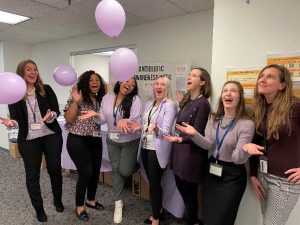
The Fairfax County Health Department’s Strengthening Antimicrobial Stewardship in Skilled Nursing Facilities (SASS) team put together an amazing educational program for U.S. Antibiotic Awareness Week (USAAW) in November 2023! Their team is using CDC funding to focus on improving antimicrobial stewardship in skilled nursing facilities. During USAAW, they rolled out a toolkit for skilled nursing facilities to use for their own facility education.
We spoke to Samantha Christensen, Fairfax County Health Department (FCHD) HAI Epidemiologist to learn more about their Antibiotic Awareness Week toolkit. The FCHD started the week off with a big celebration, beginning with a kickoff breakfast, an antimicrobial stewardship podcast playlist with QR codes for easy access, and a microbe “joke of the day”. They also put up a tri-fold education poster with purple themed balloons and decorations, wore purple for Antimicrobial Awareness Week, had antimicrobial stewardship themed trivia with Starbucks gift cards for prizes, and held a watch party (with snacks, of course) for everyone to view educational infection prevention and control videos!
And because we know you want to hear the jokes…. “What’s the most popular antibiotic in Italy? Amoxsicilian!” Here’s another good one… “What’s the opposite of an antibiotic? An uncle-biotic!”
Congratulations to Samantha and the entire FCHD team for developing this fun and unique education program to ensure smart antibiotic use in skilled nursing facilities!