VIPTA is a statewide infection prevention and control education collaborative, led by the Virginia Healthcare-Associated Infections Advisory Group. Through partnership, VIPTA curates IPC resources for Virginia’s healthcare, congregate care, and public health settings.


Ready Before the Rush: Respiratory Disease Season Resources
Respiratory disease season is on the way. October is a great time to get prevention messages in front of staff, patients, and residents before respiratory illness activity picks up.
Check out the Guidance, Recommendations, & Regulatory Updates section for new respiratory disease season updates. Learn what’s new for sick or exposed healthcare workers and how to prevent the spread of respiratory diseases at your workplace.
Then, grab a few ready-to-use training tools to help your team put prevention into action.
What to Expect:
- VDH Respiratory Disease Resources: Find flyers, social media graphics, and healthy habits tools. You’ll also find vaccine information, flu materials, and more.
- CDC Respiratory Illness Season Toolkit: Find posters, handouts, social media graphics, and videos. Use them to help your team prepare for respiratory disease season.
- National Foundation for Infectious Diseases (NFID) Respiratory Disease Resources: Mix up your flu education with 30-second videos and graphics. You’ll also find the “Wild to Mild” campaign and an antiviral infographic.
Put it into Action:
- Start early. Add a reminder to your next staff huddle. Post one in a waiting area.
- Keep it quick. Show a short video at a meeting.
- Mix it up. Share a new message each week. Cover vaccines, healthy habits, symptoms, or treatment.
- Know what’s going around. Check Virginia respiratory disease data. Share key updates with your team.
Start now and keep it simple. You’ll have tools ready when you need them.
Target Audience: Foundational & Intermediate IPC Education Level

FCHD’s Antibiotic Awareness Week: A Celebration of Health & Education
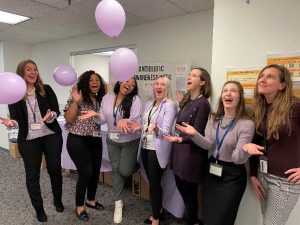
The Fairfax County Health Department’s Strengthening Antimicrobial Stewardship in Skilled Nursing Facilities (SASS) team put together an amazing educational program for U.S. Antibiotic Awareness Week (USAAW) in November 2023! Their team is using CDC funding to focus on improving antimicrobial stewardship in skilled nursing facilities. During USAAW, they rolled out a toolkit for skilled nursing facilities to use for their own facility education.
We spoke to Samantha Christensen, Fairfax County Health Department (FCHD) HAI Epidemiologist to learn more about their Antibiotic Awareness Week toolkit. The FCHD started the week off with a big celebration, beginning with a kickoff breakfast, an antimicrobial stewardship podcast playlist with QR codes for easy access, and a microbe “joke of the day”. They also put up a tri-fold education poster with purple themed balloons and decorations, wore purple for Antimicrobial Awareness Week, had antimicrobial stewardship themed trivia with Starbucks gift cards for prizes, and held a watch party (with snacks, of course) for everyone to view educational infection prevention and control videos!
And because we know you want to hear the jokes…. “What’s the most popular antibiotic in Italy? Amoxsicilian!” Here’s another good one… “What’s the opposite of an antibiotic? An uncle-biotic!”
Congratulations to Samantha and the entire FCHD team for developing this fun and unique education program to ensure smart antibiotic use in skilled nursing facilities!