VIPTA is a statewide infection prevention and control education collaborative, led by the Virginia Healthcare-Associated Infections Advisory Group. Through partnership, VIPTA curates IPC resources for Virginia’s healthcare, congregate care, and public health settings.


Spread Knowledge, Not Germs: Cough Etiquette Tips
Respiratory season is still in full swing, with rising cases of seasonal influenza locally and H5 bird flu infections and human metapneumovirus globally. It’s the perfect time to revisit the basics of cough etiquette, a critical component of Standard Precautions to reduce the spread of infections. This month, we’re featuring the Pause for Prevention: Cough Etiquette resource developed by Health Quality Innovation Network, a VIPTA partner, to enhance infection prevention and control (IPC) practices across healthcare settings.
What to Expect
- A three-page education package with an educational flyer and a facilitator guide designed to train on cough etiquette using workplace learning principles.
- You can use everyday items like a spray bottle and personal protective equipment to create quick, interactive demonstrations that leave a lasting impression on participants.
Ways to Share this Resource
- Use in team huddles, small group orientation, or one-on-one training sessions.
- Adapt the scenarios to role-play situations involving your healthcare roles and facility.
Target Audience: Essential IPC Education Level


FCHD’s Antibiotic Awareness Week: A Celebration of Health & Education
The Fairfax County Health Department’s Strengthening Antimicrobial Stewardship in Skilled Nursing Facilities (SASS) team put together an amazing educational program for U.S. Antibiotic Awareness Week (USAAW) in November 2023! Their team is using CDC funding to focus on improving antimicrobial stewardship in skilled nursing facilities. During USAAW, they rolled out a toolkit for skilled nursing facilities to use for their own facility education.
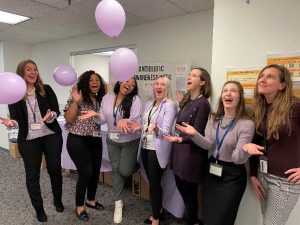
We spoke to Samantha Christensen, Fairfax County Health Department (FCHD) HAI Epidemiologist to learn more about their Antibiotic Awareness Week toolkit. The FCHD started the week off with a big celebration, beginning with a kickoff breakfast, an antimicrobial stewardship podcast playlist with QR codes for easy access, and a microbe “joke of the day”. They also put up a tri-fold education poster with purple themed balloons and decorations, wore purple for Antimicrobial Awareness Week, had antimicrobial stewardship themed trivia with Starbucks gift cards for prizes, and held a watch party (with snacks, of course) for everyone to view educational infection prevention and control videos!
And because we know you want to hear the jokes…. “What’s the most popular antibiotic in Italy? Amoxsicilian!” Here’s another good one… “What’s the opposite of an antibiotic? An uncle-biotic!”
Congratulations to Samantha and the entire FCHD team for developing this fun and unique education program to ensure smart antibiotic use in skilled nursing facilities!