VIPTA is a statewide infection prevention and control education collaborative, led by the Virginia Healthcare-Associated Infections Advisory Group. Through partnership, VIPTA curates IPC resources for Virginia’s healthcare, congregate care, and public health settings.


Is it Really a Penicillin Allergy?
Did you know that 10% of U.S. patients report a penicillin allergy, but fewer than 1% are actually allergic? Taking the time to clarify whether a penicillin allergy is real or not can make a big difference in patient care. As we approach U.S. Antibiotic Awareness Week (USAAW), November 18-24, it’s the perfect opportunity to confirm if that reported allergy is accurate.
By doing so, healthcare providers can help reduce the unnecessary use of broad-spectrum antibiotics—lowering healthcare costs and decreasing the risk of antimicrobial resistance. A simple conversation or assessment can go a long way!
Ready to take action? Here are some helpful resources to get started:
- Penicillin Allergy Education: The CDC’s flyer “Is it Really a Penicillin Allergy?” provides key insights for healthcare professionals on the importance of evaluating reported penicillin allergies.
- Allergy Assessment Tool: The AHRQ tool helps clinicians safely evaluate reported penicillin allergies, supporting accurate diagnosis and improved patient care.
- CDC Toolkit for USAAW: Use the toolkit and daily themes to inspire your activities throughout Antibiotic Awareness Week.
Target Audience: Intermediate IPC education level

FCHD’s Antibiotic Awareness Week: A Celebration of Health & Education
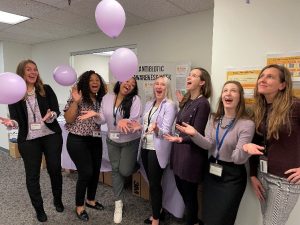
The Fairfax County Health Department’s Strengthening Antimicrobial Stewardship in Skilled Nursing Facilities (SASS) team put together an amazing educational program for U.S. Antibiotic Awareness Week (USAAW) in November 2023! Their team is using CDC funding to focus on improving antimicrobial stewardship in skilled nursing facilities. During USAAW, they rolled out a toolkit for skilled nursing facilities to use for their own facility education.
We spoke to Samantha Christensen, Fairfax County Health Department (FCHD) HAI Epidemiologist to learn more about their Antibiotic Awareness Week toolkit. The FCHD started the week off with a big celebration, beginning with a kickoff breakfast, an antimicrobial stewardship podcast playlist with QR codes for easy access, and a microbe “joke of the day”. They also put up a tri-fold education poster with purple themed balloons and decorations, wore purple for Antimicrobial Awareness Week, had antimicrobial stewardship themed trivia with Starbucks gift cards for prizes, and held a watch party (with snacks, of course) for everyone to view educational infection prevention and control videos!
And because we know you want to hear the jokes…. “What’s the most popular antibiotic in Italy? Amoxsicilian!” Here’s another good one… “What’s the opposite of an antibiotic? An uncle-biotic!”
Congratulations to Samantha and the entire FCHD team for developing this fun and unique education program to ensure smart antibiotic use in skilled nursing facilities!