Virginia Infection Prevention & Control Training Alliance (VIPTA)

Upcoming Events


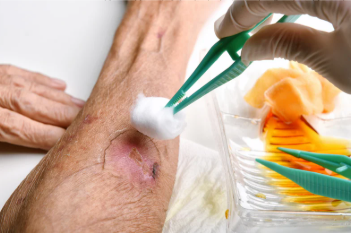
Wound care image sourced from Canva

Wrap It Up: Infection Prevention Wound Care Resources

We’ve done the wrapping and you get to open the educational package! Whether you’re refreshing staff education, strengthening your wound care program, or looking for practical teaching tools, these free resources are ready to help you put infection prevention into practice.

What to Expect:

Wound Care Educational Handout: A colorful, easy-to-follow visual resource that highlights key infection prevention practices before, during, and after wound care.

TRAIN Virginia Wound Care Series: Start with “VDH: Wound Care Infection Risks and Your Infection Prevention Program” (Course ID 1127475) and continue through the full series exploring infection prevention principles, common infection transmission risks, and evidence-based practices through interactive scenarios and knowledge checks.

VDH Wound Care Infection Prevention and Control Guidance & Observation Tool: A ready-to-use observation checklist that you can use for audits, competency validation, and helps standardize wound care practices across your facility.

How to use it:

  • Observe before you educate. Use the observation tool to identify your team’s strengths and opportunities, then tailor education to the practices you actually see instead of guessing where knowledge gaps exist.
  • Make observations less intimidating. Use the checklist as a coaching tool rather than an audit, creating opportunities for real-time feedback and discussion.
  • Who else should be trained? Anyone who assists during wound care, including nursing assistants and other healthcare personnel who provide an extra set of hands, should understand infection prevention practices that help protect the patient.

Target Audience: Foundational & Intermediate IPC Education Level


Guidance, Recommendations, & Regulatory Updates

VIPTA members track guidance and regulation resources to share source documents that guide infection prevention and control practices for public health staff and clinical and non-clinical healthcare personnel.

The date of the regulation or guidance update is included in each post.  Please check linked content to be sure it is the most up to date and recommended practice.

CDC: Conjunctivitis (09/11/2026)
CDC
Any Practice Setting
The CDC recommends excluding healthcare personnel with suspected or confirmed infectious conjunctivitis, including epidemic keratoconjunctivitis (EKC), from work for the duration of their symptoms. These recommendations emphasize strict hand hygiene, appropriate cleaning and disinfection of surfaces and shared medical equipment, and prompt identification and management of cases to prevent transmission and healthcare-associated outbreaks.
CDC: Viral Respiratory Infections (09/11/2026)
CDC
Any Practice Setting
The CDC provides updated recommendations for managing healthcare personnel exposed to or infected with viral respiratory infections, including work restrictions, symptom monitoring, and source control. Asymptomatic exposed personnel may continue working with source control through at least five days after their last exposure, while infected personnel should be excluded from work for at least three days and meet additional symptom-based return-to-work criteria, followed by source control through at least day seven.
CDC: Preventing Respiratory Infections in the Workplace (08/28/2026)
CDC
Any Practice Setting
The CDC provides recommendations to help employers prevent and respond to respiratory infections in the workplace through improved ventilation, engineering controls, environmental cleaning and disinfection, and policies that encourage sick employees to stay home.  These recommendations also emphasize using respiratory illness surveillance data to inform workplace prevention strategies, including masking and remote work, to reduce transmission and protect employee health.

Society for Healthcare Epidemiology of America (SHEA)

Infection Prevention and Control of Candida auris in Pediatric Settings (6/23/2026) The guidance recommends identifying at-risk pediatric patients through targeted screening, using appropriate isolation and room-placement precautions, and coordinating closely with infection prevention and public health partners when Candida auris is suspected or confirmed. It also emphasizes prevention through meticulous hand hygiene, effective environmental cleaning and disinfection, and careful...


From Outbreak Response to Lasting Success at Bland Nursing and Rehab

Building a Strong Foundation

Bland Nursing and Rehab, a ventilator-capable skilled nursing facility in Southwest Virginia, recently achieved a major milestone: its carbapenem-resistant Acinetobacter baumanii (CRAB) outbreak has officially closed, with no new cases identified. This success came from a team effort focused on strengthening infection prevention practices across the facility.

Leadership secured a full-time infection preventionist and built strong support from key leaders, including the administrator, director of nursing, assistant director of nursing, wound care nurse, and respiratory therapy manager. Together, they created a culture focused on safety, accountability, and continuous improvement.

Turning Plans into Action

The facility redesigned its environmental services program by updating cleaning policies, introducing an automated disinfectant dispensing system, and switching to single-use microfiber mops for each resident room. Staff received retraining and competency validation to ensure consistent practices.

The team also strengthened personal protective equipment (PPE), hand hygiene, and isolation precaution monitoring through regular audits, observations, and staff education. Respiratory therapy practices were enhanced through direct observation, competency validation, simulation-based training, and routine audits of ventilator and tracheostomy care.

Keep the Momentum Going

Bland Nursing and Rehab’s success shows that lasting infection prevention is possible when leadership, education, monitoring, and teamwork come together. Facilities looking to strengthen their own programs can take advantage of these free resources:

  • CDC Project Firstline: Practical training materials and educational resources to support staff education and reinforce infection prevention best practices.
  • VDH Infection Prevention and Control Assessments: No-cost, consultative, non-regulatory onsite help to identify strengths and address potential gaps in your facility’s infection prevention and control program.
    These resources can help facilities proactively strengthen infection prevention practices to protect residents, staff, and the entire care community.

IPC Education & Training Library

Search the VIPTA library of curated infection prevention and control (IPC) education and training resources. The IPC Education & Training Resource Library includes state and national resources related to healthcare-associated infections, antimicrobial resistance and/or IPC. Visit the VIPTA FAQ page to learn more about VIPTA library content.


Connect With VIPTA