VIPTA is a statewide infection prevention and control education collaborative, led by the Virginia Healthcare-Associated Infections Advisory Group. Through partnership, VIPTA curates IPC resources for Virginia’s healthcare, congregate care, and public health settings.

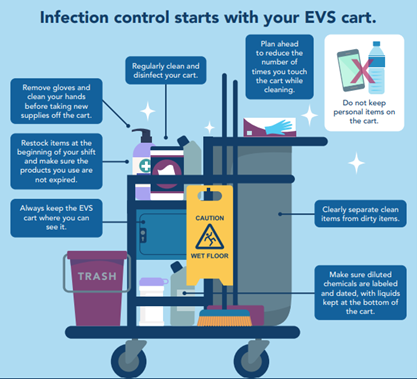
It’s Not Just a Room Turnover: It’s Infection Prevention
Did you know that patients admitted to rooms where the previous occupant had a multidrug-resistant organism (MDRO) face a higher risk of acquiring that same organism? Every day, environmental services (EVS) professionals work alongside frontline healthcare staff to reduce this risk and protect patients and residents. When we support EVS teams, we strengthen the entire infection prevention system.
What to Expect and How to Use It: With some EVS staff receiving as little as three days of training, and 83% learning on the job, education needs to be quick, practical, and built into their daily workflow.
- Onboarding: Project Firstline Training Toolkit for Environmental Services (EVS) Staff – A comprehensive training plan that builds both the why and the how, helping EVS staff confidently step into their role as essential infection prevention team members.
- New Refreshers: CDC EVS Microlearns – Quick, practical micro-learns covering key topics like contact time, when to change gloves, and maintaining clean and safe EVS carts, perfect for reinforcing skills in just a few minutes.
- New Observation & Support: VDH Daily Room Cleaning Checklist – A simple, structured checklist to guide room cleaning from start to finish, helping standardize workflows and ensure no critical steps are missed.
Target Audience: Essential IPC Education Level


Celebrating Virginia’s AL-CIP Leaders
The Advanced Leadership Certification in Infection Prevention (AL-CIP) launched in 2025. Since then, 11 Virginia infection preventionists (IPs) have earned this advanced credential. We spoke with Jessica Fielek and Tracey Odachowski from Sentara, and Becky Lapian from Inova, about their experience and advice for future applicants.
Why earn the AL-CIP?
Jessica Fielek said, “I chose to pursue the AL-CIP certification because I believe it represents the culmination of the leadership and infection prevention work that many IPs perform every day, often without a great deal of recognition. The certification provides a unique opportunity to showcase the impact of our work, not only to the selection committee but also to our peers and organizations.”
Tracey Odachowski shared, “Being a new certification and an early recipient, I feel it demonstrates my commitment to infection prevention advancements, leadership, and professional influence.”
Lessons Learned
Becky Lapian said, “The most challenging part was figuring out how to fit my experience and evidence into the different domains and subdomains. Connecting each piece of evidence to the specific domains and then writing the rationale to clearly explain the connection took some thought. It really made me reflect on the breadth of my experience and the impact of the work I’ve done.”
Her advice: “Go for it! Don’t underestimate the work you’ve already done or the experience you’ve gained as an IP. Take the time to really highlight your accomplishments and think about the impact of your work. It’s a great opportunity to reflect on your growth and showcase what you bring to the profession.”
Jessica added, “My biggest piece of advice is to carefully review the AL-CIP handbook several times before you begin and take advantage of any informational webinars or educational sessions offered about the certification. Understanding the requirements and domains upfront can save a great deal of time as you begin selecting and organizing your portfolio evidence. I would also encourage applicants to focus on collecting strong evidence and clearly articulating their specific leadership role within each project. Many infection preventionists contribute to numerous successful initiatives, but it is important to demonstrate how you personally influenced the work, led change, or contributed to achieving the outcomes.”
Interested in earning your AL-CIP?
Review the AL-CIP Handbook and access webinars to better understand requirements, organize your portfolio, and prepare a strong application.
Get personalized support at any stage. Book a coaching session with a current AL-CIP through the VDH HAI/AR Program’s Infection Prevention Educator Boost Sessions.