

VIPTA is a statewide infection prevention and control education collaborative, led by the Virginia Healthcare-Associated Infections Advisory Group. Through partnership, VIPTA curates IPC resources for Virginia’s healthcare, congregate care, and public health settings.


Time to Fall in Love with Measles Prevention
This Valentine’s season is a good time to revisit one of infection prevention’s most reliable love stories: the partnership between measles vaccination and early public health response.
In 2025, the United States saw the highest number of measles cases in more than 30 years, with more than 2,200 people sickened and three deaths reported. After decades of progress, measles is once again reminding us why consistent prevention efforts still matter.
What to Expect:
- CDC Measles Cases and Outbreaks: Up-to-date national data on measles cases, outbreaks, and trends.
- MMR Vaccination Coverage Gaps Map: New mapping tools that show where vaccination coverage is lower and where outbreaks are more likely.
- JAMA Patient Page: What Is Measles? A clear, visual overview of measles symptoms and transmission, including images that show how measles rash can appear on different skin tones, supporting inclusive education.
- Measles Myths and Facts Factsheet: A simple, evidence-based handout that helps staff and patients separate common measles myths from facts.
How to use it:
- Build a microlearning moment.
Choose one resource per week to review briefly during staff meetings, huddles, or shift change to reinforce key prevention concepts without adding time burden. - Strengthen onboarding and refreshers.
Incorporate these resources into onboarding or annual education to reinforce measles prevention, vaccination importance, and early response expectations. - Practice vaccine conversations.
Pair the Measles Myths and Facts factsheet with role-play or discussion to help staff practice responding to common questions or misconceptions with clear, evidence-based messages.
This Valentine’s Day, fall back in love with measles prevention and the tools that help keep everyone safer.
Target Audience: Essential IPC Education Level



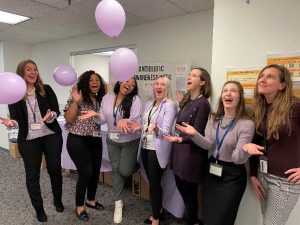
FCHD’s Antibiotic Awareness Week: A Celebration of Health & Education
The Fairfax County Health Department’s Strengthening Antimicrobial Stewardship in Skilled Nursing Facilities (SASS) team put together an amazing educational program for U.S. Antibiotic Awareness Week (USAAW) in November 2023! Their team is using CDC funding to focus on improving antimicrobial stewardship in skilled nursing facilities. During USAAW, they rolled out a toolkit for skilled nursing facilities to use for their own facility education.
We spoke to Samantha Christensen, Fairfax County Health Department (FCHD) HAI Epidemiologist to learn more about their Antibiotic Awareness Week toolkit. The FCHD started the week off with a big celebration, beginning with a kickoff breakfast, an antimicrobial stewardship podcast playlist with QR codes for easy access, and a microbe “joke of the day”. They also put up a tri-fold education poster with purple themed balloons and decorations, wore purple for Antimicrobial Awareness Week, had antimicrobial stewardship themed trivia with Starbucks gift cards for prizes, and held a watch party (with snacks, of course) for everyone to view educational infection prevention and control videos!
And because we know you want to hear the jokes…. “What’s the most popular antibiotic in Italy? Amoxsicilian!” Here’s another good one… “What’s the opposite of an antibiotic? An uncle-biotic!”
Congratulations to Samantha and the entire FCHD team for developing this fun and unique education program to ensure smart antibiotic use in skilled nursing facilities!



