VIPTA is a statewide infection prevention and control education collaborative, led by the Virginia Healthcare-Associated Infections Advisory Group. Through partnership, VIPTA curates IPC resources for Virginia’s healthcare, congregate care, and public health settings.

Ready Before the Rush: Respiratory Disease Season Resources
Respiratory disease season is on the way. October is a great time to get prevention messages in front of staff, patients, and residents before respiratory illness activity picks up.
Check out the Guidance, Recommendations, & Regulatory Updates section for new respiratory disease season updates. Learn what’s new for sick or exposed healthcare workers and how to prevent the spread of respiratory diseases at your workplace.
Then, grab a few ready-to-use training tools to help your team put prevention into action.
What to Expect:
- VDH Respiratory Disease Resources: Find flyers, social media graphics, and healthy habits tools. You’ll also find vaccine information, flu materials, and more.
- CDC Respiratory Illness Season Toolkit: Find posters, handouts, social media graphics, and videos. Use them to help your team prepare for respiratory disease season.
- National Foundation for Infectious Diseases (NFID) Respiratory Disease Resources: Mix up your flu education with 30-second videos and graphics. You’ll also find the “Wild to Mild” campaign and an antiviral infographic.
Put it into Action:
- Start early. Add a reminder to your next staff huddle. Post one in a waiting area.
- Keep it quick. Show a short video at a meeting.
- Mix it up. Share a new message each week. Cover vaccines, healthy habits, symptoms, or treatment.
- Know what’s going around. Check Virginia respiratory disease data. Share key updates with your team.
Start now and keep it simple. You’ll have tools ready when you need them.
Target Audience: Foundational & Intermediate IPC Education Level

Carilion Clinic
The Carilion Clinic Infection Prevention and Control (IPC) team is engaging patients in the outpatient hand hygiene program. Infection prevention is a team effort, and everyone, including patients, has a role to play. Hand hygiene is the most crucial strategy for preventing infections, and through this program, Carilion is committed to providing the best patient care.
The Patient Feedback Monitoring Program invites patients at ambulatory sites to provide feedback on their providers’ hand hygiene. During their visits, patients receive feedback cards where they can indicate “yes,” “no,” or “unsure” if their provider performed hand hygiene before initiating physical contact. These data are compiled into a Tableau dashboard and shared with sites in real-time to evaluate compliance. The goal of this program is to highlight the importance of hand hygiene in the clinical setting and empower patients to be allies and advocates for infection prevention.
Since the program’s creation, the Carilion Clinic IPC team has been actively engaging ambulatory clinics and promoting the initiative, setting a goal for each clinic to submit 40 observations per month. Collaborating with the marketing and technology departments, the team ensured that the observation tools are accessible. The total number of outpatient hand hygiene observations increased from 12,311 in 2022 to 17,033 in 2023. As of July 2024, outpatient clinics have already collected 11,259 observations, and the year is only half over!
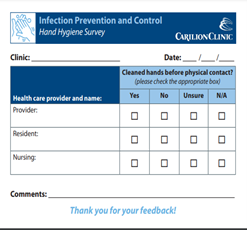
Carilion Clinic IPC Hand Hygiene Survey