VIPTA is a statewide infection prevention and control education collaborative, led by the Virginia Healthcare-Associated Infections Advisory Group. Through partnership, VIPTA curates IPC resources for Virginia’s healthcare, congregate care, and public health settings.

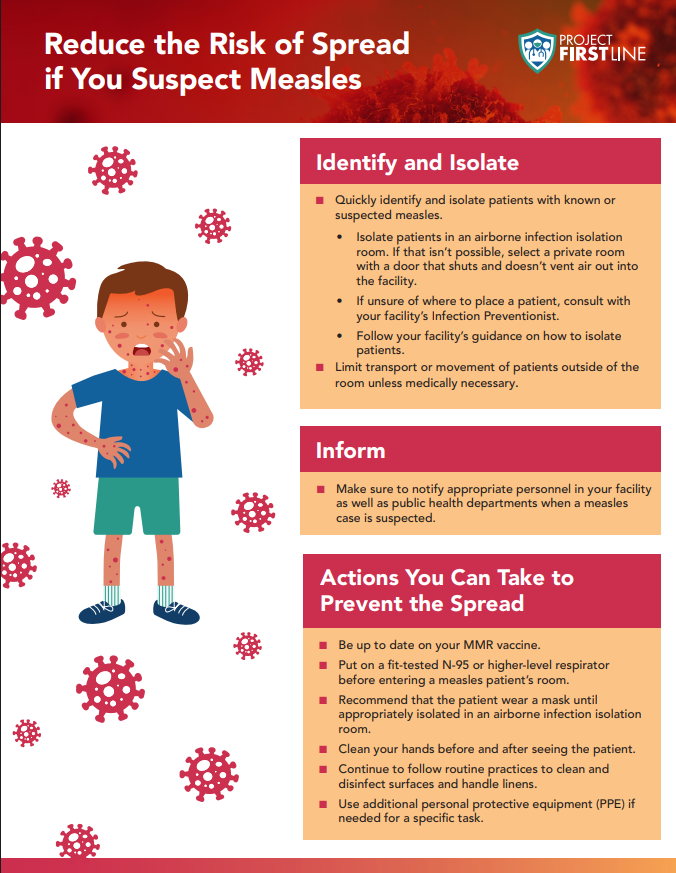
Measles Cases Hit 25-Year High: Is Your Team Prepared?
Measles is highly contagious and can spread before symptoms even appear. That’s why early recognition and rapid action are critical. As of July 22, 2025, 1,319 confirmed measles cases have been reported by 40 jurisdictions, including Virginia. This is the highest number since the disease was declared eliminated in 2000.
The Measles Micro-Learning from CDC’s Project Firstline is a quick, targeted training designed to help healthcare workers understand how measles spreads and how to stop it.
What to Expect: The short module reviews measles transmission, why it spreads so easily, and key steps to protect patients and coworkers. Clear visuals and real-world examples help staff connect the dots quickly.
How to Use It: Share it in a huddle, add it to an in-service, or assign it individually. It’s short, easy to fit into busy schedules, and makes an excellent refresher.
Why It Works: It’s direct, visual, and action-focused, with a facilitator guide to ensure consistent messaging.
Target Audience: Foundational IPC Education Level



EMS Infection Prevention Training: Expanding Education Across Virginia
Infection prevention is an important part of Emergency Medical Services (EMS) practice. However, many agencies have relaxed some infection control practices since the COVID-19 pandemic. To help address this need, David Keeler of the Tidewater EMS Council has added infection prevention training to their annual and quarterly EMS education programs.
David partnered with Ginger Vanhoozer from the Virginia Department of Health to provide training for EMS professionals. Topics included everyday infection prevention practices, new infectious diseases, antibiotic resistance, MRSA, and other drug-resistant organisms. The sessions brought the topic to life with hands-on activities, including glow-in-the-dark demonstrations that showed how contamination can spread. These activities helped make the information easy to understand and remember.
The response from participants has been extremely positive. Attendees reported a 100% satisfaction rating and asked for more training opportunities, including additional foundational infection prevention education opportunities. By strengthening their infection prevention knowledge, EMS professionals can better protect themselves, their patients, and their communities.
Regional EMS councils throughout Virginia offer a great way to bring infection prevention information to providers.
How can I get involved with EMS education in my area?
To bring similar trainings to your area, contact your local EMS council to learn more. These councils can help organize educational events, connect EMS and healthcare partners, and support infection prevention efforts in their communities.
By working together, infection preventionists and EMS professionals can strengthen infection prevention practices across Virginia.
Find your EMS region and connect with your local EMS council.