Virginia Infection Prevention & Control Training Alliance (VIPTA)

Upcoming Events


Wound care image sourced from Canva

Wrap It Up: Infection Prevention Wound Care Resources

We’ve done the wrapping and you get to open the educational package! Whether you’re refreshing staff education, strengthening your wound care program, or looking for practical teaching tools, these free resources are ready to help you put infection prevention into practice.

What to Expect:

Wound Care Educational Handout: A colorful, easy-to-follow visual resource that highlights key infection prevention practices before, during, and after wound care.

TRAIN Virginia Wound Care Series: Start with “VDH: Wound Care Infection Risks and Your Infection Prevention Program” (Course ID 1127475) and continue through the full series exploring infection prevention principles, common infection transmission risks, and evidence-based practices through interactive scenarios and knowledge checks.

VDH Wound Care Infection Prevention and Control Guidance & Observation Tool: A ready-to-use observation checklist that you can use for audits, competency validation, and helps standardize wound care practices across your facility.

How to use it:

  • Observe before you educate. Use the observation tool to identify your team’s strengths and opportunities, then tailor education to the practices you actually see instead of guessing where knowledge gaps exist.
  • Make observations less intimidating. Use the checklist as a coaching tool rather than an audit, creating opportunities for real-time feedback and discussion.
  • Who else should be trained? Anyone who assists during wound care, including nursing assistants and other healthcare personnel who provide an extra set of hands, should understand infection prevention practices that help protect the patient.

Target Audience: Foundational & Intermediate IPC Education Level


Guidance & Regulation Updates

VIPTA members track guidance and regulation resources to share source documents that guide infection prevention and control practices for public health staff and clinical and non-clinical healthcare personnel.

The date of the regulation or guidance update is included in each post.  Please check linked content to be sure it is the most up to date and recommended practice.

Society for Healthcare Epidemiology of America (SHEA)
SHEA
Acute Care Hospital
Nursing Home / Skilled Nursing Facility (SNF)
Pediatric / NICU
Infection Prevention and Control of Candida auris in Pediatric Settings (6/23/2026) The guidance recommends identifying at-risk pediatric patients through targeted screening, using appropriate isolation and room-placement precautions, and coordinating closely with infection prevention and public health partners when Candida auris is suspected or confirmed. It also emphasizes prevention through meticulous hand hygiene, effective environmental cleaning and disinfection, and careful management of shared medical equipment, toys, common spaces, visitors, breastfeeding, skin-to-skin contact, and caregiver-child interactions.
Centers for Medicare and Medicaid Services (CMS) 
CMS
Nursing Home / Skilled Nursing Facility (SNF)
Regulatory Compliance
CMS QSO-26-14-NH Memo: Nursing Home Risk-Based Survey National Implementation (7/16/2026) CMS will implement a nationwide risk-based survey process beginning September 8, 2026. Qualifying high-performing nursing homes may receive streamlined recertification surveys, allowing survey resources to be focused on facilities and complaints that present greater risks to resident health and safety.
VDH: Clinician Letter – Measles Outbreak Expansion and Back-to-School Immunizations (6/26/2026)
VDH
Acute Care Hospital
Ambulatory (Outpatient) Care
Department of Health
Emergency Medical Services (EMS)
Pediatric / NICU
Emergency Preparedness & Operations
Vaccination
Clinician Letter: Measles Outbreak Expansion and Back-to-School Immunizations (6/26/2026) The Virginia Department of Health announced that the Buckingham County measles outbreak has expanded to Cumberland County. Review the expanded outbreak vaccination recommendations, encourage patients to stay up to date on immunizations before the school year, and immediately report suspected or confirmed measles cases to your local health department.

Society for Healthcare Epidemiology of America (SHEA)

Infection Prevention and Control of Candida auris in Pediatric Settings (6/23/2026) The guidance recommends identifying at-risk pediatric patients through targeted screening, using appropriate isolation and room-placement precautions, and coordinating closely with infection prevention and public health partners when Candida auris is suspected or confirmed. It also emphasizes prevention through meticulous hand hygiene, effective environmental cleaning and disinfection, and careful...


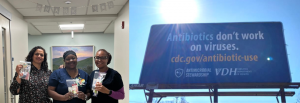
✨Innovative Antimicrobial Stewardship Education in Long-Term Care: A Virginia Beach Success Story

Whitney Rice, MPH, CIC, Healthcare-Associated Infections Epidemiologist at the Virginia Beach Department of Public Health, has taken a proactive and creative approach to antimicrobial stewardship in long-term care settings. Inspired by a successful initiative from another Virginia health district, Rice launched an educational campaign across three types of long-term care facilities: skilled nursing facilities, assisted living facilities (ALFs), and multicare centers.

The program was designed to reach all key stakeholders (e.g., providers, residents, and families) with tailored educational materials and interactive sessions. These included PowerPoint presentations, printed handouts, activity books, and engaging games such as a microbe matching challenge (to distinguish between bacterial and viral infections) and a Jeopardy-style quiz game for staff. A post-education survey revealed overwhelmingly positive feedback: residents enjoyed the sessions, and staff expressed interest in more in-depth technical content.

Key Educational Messages:

  • For Residents and Families: Emphasis was placed on the importance of taking antibiotics exactly as prescribed, on time and without skipping doses, and understanding that antibiotics are ineffective against viral infections.
  • For Providers: The training focused on resisting pressure to prescribe unnecessary antibiotics and included guidance on managing multidrug-resistant organisms (MDROs), with a focus on cleaning, disinfection, and Enhanced Barrier Precautions to prevent their spread.

Lessons Learned:

  • Skilled Nursing Facilities: These settings yielded the most effective provider education, likely due to the more consistent presence of medical staff and pharmacists.
  • Assisted Living Facilities: Provider education was more challenging here due to fewer on-site clinicians, but resident engagement was highest, as ALF residents were more able to actively participate in the sessions.
  • Future Plans: These insights will be used to refine and tailor future rounds of education, ensuring that content delivery is optimized for each facility type and audience.

Whitney Rice’s initiative demonstrates how thoughtful, audience-specific education can enhance antimicrobial stewardship and promote responsible antibiotic use in long-term care environments. Her work serves as a model for those seeking to make a meaningful impact in their communities.


IPC Education & Training Library

Search the VIPTA library of curated infection prevention and control (IPC) education and training resources. The IPC Education & Training Resource Library includes state and national resources related to healthcare-associated infections, antimicrobial resistance and/or IPC. Visit the VIPTA FAQ page to learn more about VIPTA library content.


Connect With VIPTA