VIPTA is a statewide infection prevention and control education collaborative, led by the Virginia Healthcare-Associated Infections Advisory Group. Through partnership, VIPTA curates IPC resources for Virginia’s healthcare, congregate care, and public health settings.


One for All! Mastering Safe Injection Practices with the Injectioneers
Say ‘bonjour’ to better vial safety! A VIPTA partner, the Virginia Infection Prevention Training Center (VIPTC), brings you the Injectioneers— a fun and animated team delivering practical tips through an engaging story to keep your injection practices sharp.
Single and Multidose Vials with the Injectioneers
What to Expect
- Follow the “Injectioneers” as they demonstrate the essential steps for safely handling single-use and multi-dose vials.
- Learn the “only one” rule and gain practical tips on preparation, handling, and disposal.
Ways to Share this Resource
- Use in team huddles, training sessions, or email updates.
- Perfect for introducing or reinforcing foundational infection prevention concepts.
Target Audience: Foundational IPC Education Level


Making Infection Prevention Fun: A Creative Skills Fair
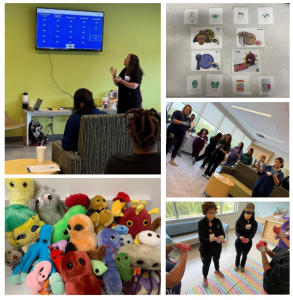
Infection prevention is a critical topic in healthcare, but engaging staff in learning can often be challenging. Jennifer Kemp, RN, CRRN, CBIS, CIC, Infection Preventionist at Sheltering Arms Institute, a nationally ranked physical rehabilitation provider located in Richmond, Virginia, decided to break away from the traditional lecture style and bring a new level of energy and interaction to infection prevention education. Her solution? A Jeopardy-style game combined with hands-on demonstrations, and the feedback was overwhelmingly positive.
Turning Learning into a Game: With only a short time to capture attention and convey essential information, Jennifer opted for a format that encouraged participation and fun. The Jeopardy game included categories such as:
- Isolation Signage and Precautions
- Cleaning and Disinfection
- Odds and Ends
- Germ Matching
This interactive approach kept participants engaged while reinforcing key infection prevention concepts.
Hands-On Demonstrations: To further enhance learning, Jennifer introduced practical demonstrations that allowed participants to apply their knowledge. Some highlights included:
- Hand Hygiene with a Twist: Participants put on gloves, applied paint, closed their eyes, and sang “Happy Birthday” while performing their usual hand hygiene. The paint revealed commonly missed areas like between the fingers, around nails, and at the wrist driving home the importance of thorough technique.
- Personal Protective Equipment (PPE) Donning and Doffing Challenge: Teams competed to correctly put on and remove PPE. This exercise exposed common errors such as incorrect sequencing and failure to tie gowns, emphasizing why attention to detail matters for safety.
- Cleaning and Disinfection Drill: Participants cleaned shared medical equipment like vital signs monitors, learning why one wipe is not enough. This activity underscored the importance of using multiple wipes for different parts of the equipment to ensure complete disinfection.
- Germ-to-Isolation Matching: Teams matched pathogens (e.g., MRSA, C. difficile, COVID-19) with the appropriate PPE and cleaning products. This reinforced understanding of isolation precautions and environmental cleaning requirements.
Why It Worked: The interactive format fostered teamwork, critical thinking, and practical application. Even seasoned nurses benefited by revisiting proper protocols and correcting habits that had drifted from best practice. Jennifer’s creative approach was so effective that participants called her booth the best skills fair of the year.
Jennifer’s innovative approach demonstrates that infection prevention education can be both fun and effective.