VIPTA is a statewide infection prevention and control education collaborative, led by the Virginia Healthcare-Associated Infections Advisory Group. Through partnership, VIPTA curates IPC resources for Virginia’s healthcare, congregate care, and public health settings.

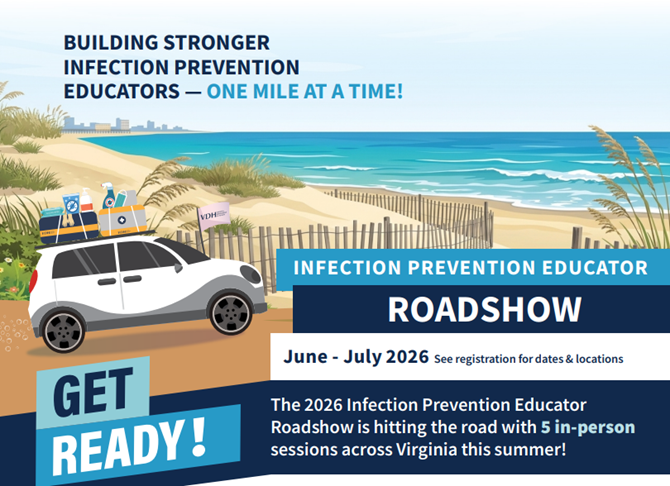
Ready, Set, Educate! Infection Prevention Educator Roadshow 2026
Infection prevention education keeps healthcare staff on their toes. From emerging diseases to new multidrug-resistant organism (MDRO) challenges and changing guidance, training needs can shift fast. The 2026 Infection Prevention Educator Roadshow is here to help you stay ready with hands-on tools, fresh ideas, and practical strategies built for today’s ever-changing healthcare environment.
More About the Roadshow
- Leave with practical educator supplies, resources, and fresh ideas to strengthen your training toolkit
- Connect with fellow infection preventionists, designated infection control officers, and health educators from across Virginia
- Explore real-world strategies that make infection prevention education more interactive, memorable, and effective
- Gain confidence teaching in fast-changing healthcare environments where flexibility matters more than ever
For questions about this training resource, contact hai@vdh.virginia.gov.
Target Audience: Foundational & Intermediate IPC Education Level



EMS Infection Prevention Training: Expanding Education Across Virginia
Infection prevention is an important part of Emergency Medical Services (EMS) practice. However, many agencies have relaxed some infection control practices since the COVID-19 pandemic. To help address this need, David Keeler of the Tidewater EMS Council has added infection prevention training to their annual and quarterly EMS education programs.
David partnered with Ginger Vanhoozer from the Virginia Department of Health to provide training for EMS professionals. Topics included everyday infection prevention practices, new infectious diseases, antibiotic resistance, MRSA, and other drug-resistant organisms. The sessions brought the topic to life with hands-on activities, including glow-in-the-dark demonstrations that showed how contamination can spread. These activities helped make the information easy to understand and remember.
The response from participants has been extremely positive. Attendees reported a 100% satisfaction rating and asked for more training opportunities, including additional foundational infection prevention education opportunities. By strengthening their infection prevention knowledge, EMS professionals can better protect themselves, their patients, and their communities.
Regional EMS councils throughout Virginia offer a great way to bring infection prevention information to providers.
How can I get involved with EMS education in my area?
To bring similar trainings to your area, contact your local EMS council to learn more. These councils can help organize educational events, connect EMS and healthcare partners, and support infection prevention efforts in their communities.
By working together, infection preventionists and EMS professionals can strengthen infection prevention practices across Virginia.
Find your EMS region and connect with your local EMS council.