Cervical Cancer Awareness: Prevention is Power

Cervical cancer is cancer of the cells in the cervix.  Each year, about 13,000 people in the United States are diagnosed with cervical cancer, and about 4,000 people die from it.  

Most cases of cervical cancer are caused by human papillomavirus, commonly known as HPV. 

About HPV 

There are more than 100 types of HPV. Roughly a dozen are known to lead to cancer. HPV infections cause most cervical cancers. 

HPV is spread from person to person through skin-to-skin contact. Most people will get HPV at some point in their lives, but do not know it.  This is because the body is often able to fight off the infection.  However, if your body can’t fight the infection, it can cause the cells of your cervix to change into cancerous cells. 

Protection against HPV and cervical cancer begins before you are exposed to it.  

Prevention 

Get Vaccinated 

Cervical cancer is one of the most preventable cancers because of the HPV vaccine. The HPV vaccine protects against HPV types that cause 90% of all cervical cancer. It also protects against other cancers. 

  • The HPV vaccine works best before exposure to the virus.  
  • The HPV vaccine is recommended for routine vaccination at age 11 or 12 years of age  well before people are exposed to HPV. Vaccination can also start as early as 9 years of age. 
  • People aged 26 years and younger who are not fully vaccinated can get the vaccine.  
  • Some adults age 27 and older may choose to get vaccinated, in consultation with a healthcare provider.  

Get Screened  

  • Women should start getting screened for cervical cancer at age 21. Screening can include HPV and/or Pap tests.  
  • A healthcare provider can help women determine which screening test is best and how often they should get screened.  

Practice Healthier Habits 

  • Use a barrier method (condom or dental dam) during sex. This can reduce (but not eliminate) the chance of HPV spreading.  
  • If you smoke, stop or cut back if you can. People with a high-risk type of HPV and who smoke are more likely to get cervical cancer. 

More Information 

Maternal Health Awareness Day

On Maternal Health Awareness Day, the Virginia Department of Health (VDH) is shedding light on the importance of maternal health and the work that’s been done to improve maternal health outcomes in Virginia. 

What is Maternal Health? 

Maternal health refers to the health and well-being of women during pregnancy, childbirth, and after childbirth (postpartum). It includes physical, emotional, and mental health. 

Maternal health includes access to: 

  • Quality prenatal care 
  • Safe delivery services 
  • Postpartum support  
  • Prevention and management of health conditions that can affect pregnancy outcomes 

When people can access quality maternal health resources it can help:  

  • Reduce the risk of complications 
  • Support healthy babies and mothers 
  • Ensure mothers have the support they need before, during, and after pregnancy 

Maternal Health in Virginia 

Maternal mortality (death) rates in Virginia have been going down since their peak in 2021. Yet, some populations are affected more than others.  

Maternal Health Disparities 

In 2023, Virginia’s maternal mortality rates for Black women were more than double compared to non-Hispanic White women.  Additionally, people of color have lower rates of adequate prenatal care and may be less likely to receive services such as important health screenings and appropriate monitoring of baby’s growth.  

 In 2023 in Virginia:  

  • 11.9 % of Hispanic women had late or no prenatal care 
  • 9.4% American Indian or Alaska Native women had late or no prenatal care 
  • 5.8% of Black or African American women had late or no prenatal care 
  • 4.5% of Asian or Pacific Islander woman had late or no prenatal care 
  • 3.8 % White women had late or no prenatal care 

Access to Care 

In Virginia, rural and underserved communities continue to face limited access to care: 

  • According to March of Dimes, 31% of counties are defined as maternity care deserts. These are areas that lack adequate maternity care resources, such as birthing hospitals and obstetric providers.  
  • Women in maternity deserts travel over three times farther than those with full access.  
  • 15% of women had no birthing hospital within 30 minutes.

Winter is Coming. Are You Ready?

Severe winter weather, including snow, ice and extremely cold temperatures, is expected throughout much of Virginia this weekend. On January 22, Governor Spanberger declared a State of Emergency due to winter weather. 

Check out this important message from State Health Commissioner Dr. Cameron Webb, who provides safety and preparedness tips ahead of the winter storm.

Now is the time to prepare! Before the storm hits, take these steps to prepare you and your family: 

  • Organize and protect your prescriptions, over-the-counter drugs, home-use medical devices, and vitamins. Talk to your doctor or pharmacist about how you can create an emergency supply of medicines. 
  • Winterize your home by insulating exposed pipes and caulking and weather-stripping doors/windows. 
  • Replenish fuel for your car and heating sources. 
  • Charge all phones, computers and radios. 

Follow these tips to protect you and your family during and after the storm. 

  • Bring your pets indoors and ensure they have water. 
  • Stay indoors and limit your exposure to the cold. 
  • Properly ventilate emergency heat sources. 
  • Use space heaters safely. Keep heat sources at least three feet away from drapes, furniture, bedding, or other flammable materials. Never cover your space heater. 
  • Keep generators outside at least 20 feet from your home. 
  • Check on neighbors and family. 

If you must go outside, please take these precautions to stay safe and prevent frostbite and hypothermia: 

  • Be aware of wind chill factor. Dress warmly and in layers. Make sure you cover your head, fingers and toes. 
  • Wear proper footwear for traction. Take slow, short steps. 
  • Avoid getting wet. If you get wet, change out of wet clothes as soon as possible. 
  • Stay hydrated. Drink warm beverages. 

Prepare now with these steps to stay safe and warm for this storm and throughout the winter. For additional tips and answers to frequently asked questions, please visit our response page.

Birth Defects Awareness Month: Every Journey Matters

About Birth Defects 

Birth defects are structural changes that are present at birth. They affect how the body looks, works, or both. They can also affect almost any part of the body, such as the heart, brain, or even a foot.   

Birth defects affect about 1 in every 33 babies born each year in the United States. They affect 3,000 babies each year in Virginia. They’re also the leading cause of infant deaths (about 20%). Data related to certain birth defects in Virginia is now available in a dashboard for the public 

“Birth defect” is a medical term. It does not mean that a person is “defective.” It refers to physical or biochemical changes that cause problems with how the body develops or how the body works. These changes result in health conditions that develop in a baby before birth.   

Birth defects can be discovered at any time during pregnancy or even later after birth. Most frequently they are found during the first trimester. 

Every person’s journey with a birth defect is unique. It’s shaped by their specific condition, individual strengths, and the support system available to them. It’s important to remember that a community of support can help people with these conditions and the people who take care of them.  

Causes  

We don’t know the cause of many birth defects.  For some, the cause(s) may be: 

  • Genetics (having someone in your family with a birth defect) 
  • Behaviors (like smoking, drinking alcohol, or taking recreational drugs during pregnancy) 
  • Environment (like where you live, work, or even the kinds of foods you eat) 

Prevention During Pregnancy 

Not all birth defects can be prevented. However, making healthy choices can help reduce the risks of birth defects. 

  • Take care of your overall health 
  • Take care of existing health conditions, like diabetes 
  • Try to keep a healthy weight 
  • Treat fevers higher than 101 
  • Avoid hot tubs or other environments that might cause overheating 
  • Attend all your prenatal visits  
  • Avoid nicotine-containing products, drinking alcohol, and illicit drugs. 
  • Get 400 micrograms of folic acid every day  
  • Having enough folic acid in your body before and during pregnancy can help prevent birth defects of the brain and spine. 

Learn more. 

Screening and Diagnosis 

Prenatal screening can help identify if your baby is more or less likely to have certain birth defects. Screening tests do not provide a specific diagnosis—that requires a diagnostic test. 

Certain birth defects might not be diagnosed until: 

  • Immediately seen at birth 
  • Sometime after the baby is born 
  • Later in life 

Information and Resources 

For Parents and Families 

For Healthcare Providers 

Radon Awareness: One Test Can Make a Big Difference

About Radon 

Radon is an odorless, invisible, and radioactive gas that is naturally released from rocks, soil, and water. Radon can get trapped inside homes and build up to unsafe levels. 

Exposure to radon is the second leading cause of lung cancer. This exposure contributes to roughly 21,000 cases of lung cancer annually in the United States, including almost 700 cases per year in Virginia. 

In Virginia, high radon test results have been found in every county.  

Testing for Radon 

The only way to know if your home has unsafe levels of radon is to test for it.  

Testing your home for radon is important to ensuring you and your family’s health. 

Key times to test your home’s radon levels are: 

  • If your home’s radon levels are unknown 
  • If you’re preparing to buy or sell 
  • Before and after any renovations 
  • Before spending more time in the basement or lower level (like converting a basement to a bedroom or office) 

Getting a Test Kit 

You can purchase a test kit at a local hardware store. Make sure your test kit is approved by the National Radon Proficiency Program (NRPP), or the National Radon Safety Board (NRSB). Follow test kit instructions carefully.  

Virginia residents are eligible to order a test kit from VDH for the cost of $4 for shipping. They are available until supplies run out. 

For More Information 

VDH Indoor Radon Program 

CDC Radon 

Child Holiday Safety

The holidays are a time for fun, family, and traditions. With all the excitement, it’s easy to forget about safety.  Take these simple steps to make sure kids stay safe while still enjoying every part of the season.  

Decorate Safely 

Keep potentially dangerous holiday decor out of the reach of kids and pets: 

  • Breakable decorations, ornaments, lightbulbs 
  • Tinsel  

Fire Safety  

Candles and fireplaces can make the house feel warm and cozy—but they also bring fire risks. 

  • Make sure smoke alarms are working.  
  • Keep candles out of reach. Never leave them unattended and consider using battery-powered ones instead. 
  • Turn off holiday lights whenever you’re leaving the house.  
  • Keep Christmas trees watered, secured, and away from heat sources.  
  • Make fireplace fires safely. Get your fireplace inspected by a professional. 

 Toy Safety 

Take these steps to protect children from choking and injuries while playing with toys: 

  • Give gifts that are age appropriate.  
  • Read instructions and warning labels before using. 
  • Show kids how to use their toys safely.  
  • Make sure batteries (especially button batteries) are secured with a screw. 

 Food and Drink Safety   

Whether it’s time to cook or time to eat – make sure kids are doing it safely. 

  • When cooking: 
  • Keep kids at a distance when cooking.  
  • Keep hot foods and liquids out of children’s reach. 
  • Cook on the back burners when possible. 
  • Be mindful of choking hazards like nuts, popcorn, and hard candies. 
  • Store alcohol where kids cannot access it.  
  • Take special care during parties and keep an eye on guests’ drinks too.  
  • Clean up promptly after the party so kids don’t find drinks left behind. 

Winter Driving 

Make sure you and your loved one arrive safely during the holidays.  

  • Never drive under the influence. Always have a designated driver. 
  • Always make sure your child rides in an appropriate car seat, booster seat, or seat belt. If you’re not sure whether they are installed correctly, you can find a Safety Seat Check Station near you for free assistance. 
  • In cold weather, children should wear thin layers when harnessed using a safety seat or vehicle seat belt. Children should not wear heavy layers. 
  • Once safely restrained, jackets or blankets can be laid over the harness or seat belt to keep the child warm.  

Firework Safety 

Professional firework displays are the safest way to see fireworks – at a distance. Many local jurisdictions prohibit the use of all fireworks. Check with your locality to determine any local regulations. 

If you choose to set off your own, use the safety measures below:   

  • Use legal fireworks and sparklers. 
  • Never allow young children to handle fireworks. 
  • Older children should use them only under close adult supervision.  
  • Never use fireworks while impaired by drugs or alcohol.  

Indoor Pool and Spa Safety 

Make sure to swim healthy and “pool safely” with these tips if you are traveling for the holidays.  

  • Learn CPR, First Aid, and how to respond to an emergency. 
  • Watch kids closely when they are in or around water, and make sure they are not swimming alone. Avoid being on your phone, and make sure you have a person who can watch kids if you need to take a break.  
  • Before booking a place to stay, make sure their pools or spas follow health codes and have safety equipment and safety personnel available.  
  • Don’t use alcohol or drugs with pool or spa use. 
  • Check drain covers. Never use a pool or spa with loose, broken, or missing drain covers.  

For more information: 

Get Vaccinated — Not the Flu

The best time to get vaccinated against the flu every year is in September and October.  But if you have not yet received your flu vaccine – it’s not too late to get it!   

If flu is circulating, you should get vaccinated. 

Protect Yourself and Others 

Flu vaccination can: 

  • Prevent flu illness 
  • Reduce the severity of flu illness 
  • Protect people at high risk from flu-related complications 

During 2024-2025 in the United States, flu vaccination prevented an estimated: 

  • 9.4 –16 million flu illnesses 
  • 4.4 – 7.1 million flu-associated medical visits 
  • 170,000 – 360,000 flu-associated hospitalizations 
  • 12,000 – 39,000 flu-associated deaths  

Who Should Get Vaccinated 

Everyone aged 6 months and older (with few exceptions) should get an annual flu vaccine.  

The flu vaccine is particularly important for people at higher risk of developing serious flu-related complications if they get sick. This includes: 

  • People 65 years and older 
  • People with certain chronic medical conditions (such as asthma, diabetes, or heart disease) 
  • Pregnant women  
  • Children younger than 5 years, but especially those younger than 2 years 

2024–25 Flu Season 

During the last flu season, flu infections nationwide resulted in at least: 

  • 43 million symptomatic illnesses 
  • 19 million medical visits 
  • 560,000 hospitalizations 
  • 38,000 deaths 

There were also 280 reported pediatric deaths. Except for the 2009–10 H1N1 pandemic, this was the highest number of pediatric deaths since they became nationally notifiable in 2004. Of the 280 pediatric deaths: 

  • 50% occurred in children and adolescents with underlying conditions 
  • 44% occurred among previously healthy children 

Among the deaths in children aged 6 months and older with known vaccination status, nearly 90% were not fully vaccinated against flu.  

Spread the Word – Not the Flu 

Encourage your loved ones and community to get a flu vaccine. The more people get vaccinated – the more people will be protected.  

World AIDS Day: December 1

Worlds AIDS Day has been observed on December 1 each year since 1988.  Every year, communities stand together, united with the red ribbon.  We remember those who have been lost, unite in the fight against HIV and AIDS, and raise awareness to prevent new cases of HIV.   

What’s happening in Virginia? 

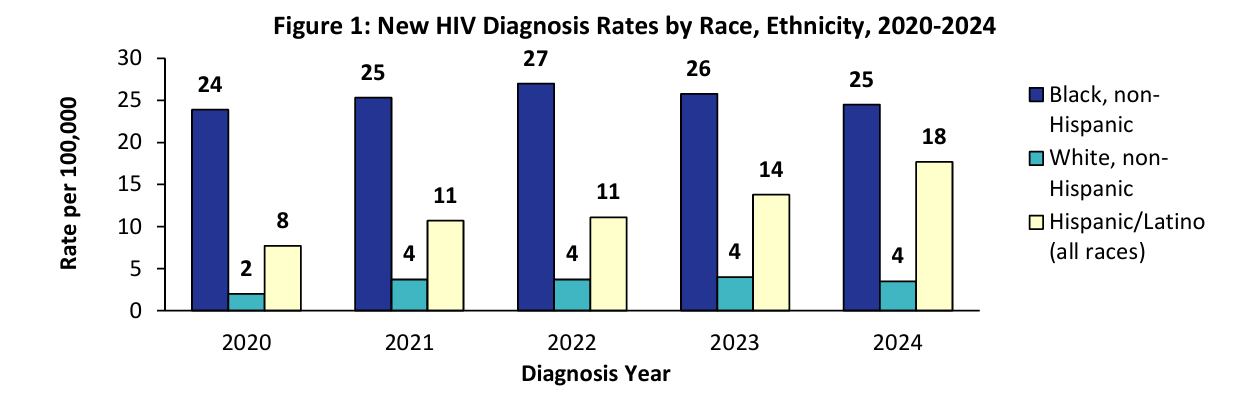
During the COVID-19 pandemic and social distancing measures, patients were less likely to seek routine screening and testing, and as a result Virginia reported fewer new cases during that time. The total number of HIV cases annually in Virginia have returned to pre-pandemic levels.  Certain communities continue to be impacted by HIV more than others.  Youth, ages 15-19, saw a 41% increase in new HIV cases from 2023 to 2024.  Black and Hispanic/Latino persons have seen a 27% increase in new cases each year since 2022.   

There are over 28,000 people living with HIV in the Commonwealth of Virginia.  More than 75% of people with HIV in Virginia are men, and over half are 50 or older.  While Black, non-Hispanic people make up 19% of the population in the Commonwealth, 56% of people with HIV identify as Black, non-Hispanic in Virginia. 

Find more detailed HIV statistics on the data and reports page and the HIV data dashboard. 

Scientific Progress 

Major advances in science have been made since HIV/AIDS was first discovered.  HIV testing is fast, reliable, and available at any local health department or healthcare provider.  Testing is the only way to know if you have HIV.  Not everyone has symptoms during the onset of the infection.  Having a sexually transmitted disease (STD) can make it easier to get or transmit HIV. 

Find HIV and STD testing near you on the VDH testing page.  Learn more about HIV prevention on the HIV prevention page. 

HIV Treatment  

Advances in HIV treatment help people with HIV live long and healthy lives.   

It is proven that when a person with HIV has reached and sustains an undetectable viral load, they will not transmit HIV to their partner sexually.  An undetectable viral load means that the number of copies of the virus in the body cannot be detected by certain tests.  This is often referred to as Undetectable=Untransmittable, or “U=U.”   

Getting into medical care and starting treatment immediately is important.  The sooner a person with HIV starts HIV treatment, the better their health outcomes will be. 

Have Questions or Need Help? 

If you or anyone you know has been diagnosed with HIV, help is available.  Financial assistance with the cost of medications or copays is available through local, state, or federal programs.  These programs can also help you find support groups or other social services in your area.  Learn more on our website, or call the Disease Prevention Hotline at (800) 533-4148.

Pass the Potatoes – Not the Germs

Serve up your Thanksgiving meal without the risk of food poisoning.  

Prevent the Spread of Germs 

Wash Your Hands 

  • Wash your hands with soap and water for at least 20 seconds before, during, and after food preparation and after using the bathroom or changing diapers. 

Prevent Cross-Contamination  

  • Keep raw turkey and its juices separate from foods that won’t be cooked while shopping in the store, when storing in the refrigerator at home, and while preparing meals. 
  • Use one cutting board for raw turkey and a separate cutting board for food that won’t be cooked such as raw fruits and vegetables.  
  • Never place cooked food or fresh produce on a plate, cutting board, or other surface that held raw turkey. 
  • Wash all cutting boards, utensils, dishes, and countertops with hot soapy water after preparing raw turkey. 


Prepare Your Turkey Properly 

Take the proper amount of time to thaw your turkey. 

  • Refrigerator method (recommended): 24 hours for every four to five pounds. 
  • Cold-water bath method: 30 minutes per pound. 
  • Microwave method: follow instructions in the owner’s manual. 
  • Never thaw turkey by leaving it on the counter at room temperature. 

Do not wash your turkey.  

  • Washing can actually increase the risk you will spread germs to other foods you’re preparing.   

Cook your turkey to the correct temperature.  

  • Turkey is done cooking when a minimum internal temperature of 165°F is reached. 
  • Thickest part of the breast. 
  • Innermost part of the thigh. 
  • Innermost part of the wing.  
  • If stuffed, make sure the innermost part of the stuffing also reaches 165°F. 


Be Smart About Leftovers 

Use the Two-Hour Rule 

  • Refrigerate leftovers  within two hours of cooking or coming out of the refrigerator. 
  • Discard any foods that sat out for more than two hours at room temperature. 
  • After two hours, perishable food enters the Danger Zone (between 40°F to 140°F) where bacteria can multiply quickly and cause the food to become unsafe. 

 Handle Leftovers in the Properly 

  • Store leftover food in small, shallow containers in the refrigerator or freezer. 
  • Shallow containers help cool leftovers more quickly than large containers. 
  • Leftovers can be safely eaten when stored in the refrigerator for up to four days (or, in other words, until the Monday after Thanksgiving).  
  • Leftovers stored in the freezer will be of the best quality when consumed within two to six months. 
  • When reheating leftovers in the microwave oven, cover and rotate the food to make sure food is reheated evenly.  
  • Use a food thermometer to check the internal temperature of food is 165°F.  


More Resources for a Safe Thanksgiving 

National Rural Health Day

National Rural Health Day  honors the dedication and resilience of rural health professionals, organizations, and communities across the country.   

About Rural America 

In the United States, rural areas make up 86% of the country’s land – with almost 20% of the country’s population living there. In Virginia, these numbers are similar: 88% of the state is rural, with 26% of Virginians live in these communities. 

Rural areas face a disproportionate rate of health challenges compared to urban areas, including: 

  • Shortage of qualified health care providers and limited access to specialized care 
  • Higher rates of poverty and food insecurity 
  • Higher rates of cigarette smoking, high blood pressure, and obesity 


Virginia State Office of Rural Health 

Virginia’s State Office of Rural Health (SORH) works to tackle the root causes of rural health disparities, improve access to quality healthcare and advance health equity in underserved areas. 

They do this by: 

  • Delivering technical support 
  • Providing updates on healthcare regulations 
  • Sharing essential resources 
  • Collaborating with community organizations and healthcare providers  

An example of SORH’s work is the supporting the launch of a Food as Medicine pilot. Its goal is to improve population health through food-based interventions. It also works to remove barriers to accessing healthy foods.   

These pilots connect hospital patients with fresh foods and produce at farmers markets. Patients receive: 

  • A produce prescription 
  • Grocery vouchers 
  • Culinary medicine education demonstrations. 

These pilots are currently at Lee County Community Hospital and Dickenson Community Hospital.  The Medicare Rural Hospital Flexibility Program provides funds for the program. 

Learn more about Virginia’s State Office of Rural Health.