

Every three years, the MAPP2Health Core Group — Blue Ridge Health District, Sentara Martha Jefferson Hospital, and UVA Health — team up to ask a powerful question: What do people in our community need to live healthier lives?
We use the MAPP 2.0 framework (Mobilizing for Action through Planning and Partnerships) to answer that question and guide this work. It’s a community-driven approach to public health that looks beyond symptoms to the root causes of health challenges.
For the 2024-2025 cycle, we convened a MAPP2Health Steering Committee made up of community leaders, local government staff, nonprofit partners, and residents from across the district. This group has advised the Core Group from start to finish — helping to design surveys, identify priorities, and shape recommendations.
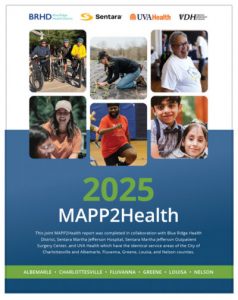
The result is the 2025 MAPP2Health Report (PDF) which includes insights from more than 1,100 residents across Charlottesville, Albemarle, Fluvanna, Greene, Louisa, and Nelson counties. But the report isn’t just about naming the region’s biggest health challenges. It also highlights community-driven solutions and calls on local governments, organizations, and neighbors to work together, advocate, and invest in systems that support healthier lives.
 What We Heard
-
Door-to-door surveys in Nelson County
-
One-on-one interviews
-
An online community survey
- An online stakeholder survey
-
A Photovoice project with high school students
-
Focus groups with people who are often left out of health policy and planning.
Top Health Priorities
From all the conversations and data, three urgent priorities emerged. These will guide the next three years of health improvement efforts:
People know what they need to stay healthy: affordable healthy food, safe spaces for physical activity, and access to mental health support. But many said they lacked the time, money, or systems to make that possible. Mental health, especially, came up again and again — residents want local, community-based services and safe places to connect and feel heard.
While most residents had insurance, many still struggled to get timely, affordable, and respectful care. Long waits (especially for dental and mental health), confusing systems, and high costs were major concerns. Spanish-speaking residents and LGBTQ+ community members, in particular, often felt unwelcome. People expect care that’s affordable, nearby, and delivered with respect but it was surprisingly hard to come by.
What’s Next
Next up: creating a Community Health Improvement Plan (CHIP) — a roadmap to turn recommendations into measurable action over the next three years.
Developing the CHIP will take all of us: residents, community leaders, nonprofits, businesses, and elected officials. Together, we’ll set clear goals, strategies, and ways to measure progress.