
Online Services | Commonwealth Sites | Help | Governor

Protecting You and Your Environment Virginia Department of Health
Home | VDH Programs | Find It! A-Z Index | Newsroom | Local Health Districts

Environmenal Health Program

Food Program

Checking foodAlthough the Commonwealth of Virginia , Board of Health, Food Regulations, 12 VAC 5-421 require yearly inspections, food establishments in the Alleghany and Roanoke City Health Districts are inspected by this department according to their priority or risk assessment. This could be from two to four yearly inspections, based on the menu items, and follow-up inspections as necessary.

Environmental Health Specialist Seniors ( EHSSs ) inspect food establishments that include: restaurants, short order, continental breakfast facilities located in tourist establishments, mobile units, seasonal concessions, temporary food events, school cafeterias, child care centers, hospitals, nursing homes, homes for adults and institutions.

scanningFood EHSS’s for the following areas are:


Milk Program

There is one milk processing plant in the Alleghany/Roanoke City Health Districts; Valley Rich Dairy, Inc. It is inspected monthly, advisory visits performed as necessary, equipment tests performed routinely, and milk and water samples collected.


On-Site Sewage Disposal Systems (Septic Tanks) & Private Home Wells

sewing linesThere are few septic tank applications submitted to the cities of Roanoke , Salem , Covington and Clifton Forge, because public sewer and water serve most of the population in these areas. However, many applications are received throughout the remainder of the district. When standard systems cannot be installed, alternative systems are suggested. New regulations are to become effective in the near future. These applications are performed in the following areas by the EHSSs :


Public Sewerage Systems

constructing systemsAs stated most citizens in municipal areas are served by public sewer and a large number of older sewer lines are becoming too small to accommodate the residential areas served or are breaking from age. This division investigates many complaints of broken sewer lines. In Roanoke City , smoke tests are performed by the Roanoke City Department of Utility Line Services and our Roanoke City exterminators accompany them on these tests. Roanoke City exterminators contact the property owners of violations found on private property and follow-up, in cooperation with the Roanoke City Plumbing Department, to make sure corrections are made.


Public Water Supplies

Public water supplies, such as the City of Roanoke , City of Salem , Town of Vinton , etc. are monitored by the Lexington Regional Office of Water Programs. However, there are some public water supplies, called non-community, non-transient water supplies presently monitored by the local health departments. Examples of these would be restaurants and motels. Within the next year, these water supplies will be transferred to and monitored by the Lexington Regional Office of Water Programs.


Rabies

Rabies hit the Roanoke Valley several years ago. This division works very closely with the Animal Control Division, reviews reports of all animal bites to insure proper procedures for quarantine, quarantine releases and notifications to victims are performed. When animals are not located for quarantine, personal calls and letters are issued to the victims to assure they are aware of the state health department’s position in obtaining rabies post-exposure shots. This division prepares animal heads for shipment to the DCLS in Abingdon for rabies testing.

Reminder: Rabies is a fatal disease and is one of the most important programs in the division.


TES (Tourist Establishments)

These are hotels, motels and bed and breakfast facilities. They are inspected and permitted initially when they open, and then by complaint. Permits are self-renewing. New regulations on TES establishments became effective February 1, 2002. Effective July 1, 2002, a Virginia Permit Fee Policy was passed by the General Assembly.

No Lead Person; each EHSS inspects these in their respective assigned geographical areas.


Summer Camps

These are camps that children normally attend during the summer months when school is not in session. The health department is responsible for inspection and permitting these facilities. The highlights of these regulations include approved water and sewage disposal facilities, clean rooms or cabins that are in good repair, approved kitchen facilities that are under restaurant standards and approved swimming facilities.


Campgrounds

Campgrounds may be as primitive as just having “pup tents” or may provide all the comforts of home, depending on the desires of the camper. Some campgrounds provide water hookups, sewage disposal, bathhouses and swimming facilities. As in summer camps, campgrounds are inspected and permitted by the health department.


Migrant Labor Camps

The facilities are for workers that travel from town to town seeking employment wherever farmers need them. These are inspected and permitted as any other facilities to ensure safe drinking water, proper sewage disposal facilities, specific regulations for housing accommodations such as number of people per bedroom and home kitchen setup.


Public Swimming Pools

All apartment complexes, fitness centers, YMCA, YWCA, and government owned public pools are inspected and permitted under local codes. Roanoke City and Roanoke County have local codes that require a $50 fee each pool season before a permit can be issued. Tourist establishment pools and spas are under state regulations as well as local codes.

Lead Person for both Districts: Tim Myers, EHSS

All EHSSs in their respective areas perform swimming pool inspections.


Housing

Until Nov. 1, 1996, the Roanoke City Health District investigated housing complaints that were health related matters such as no heat, no electricity, no water, roaches and rats. After that date, this program has been under the jurisdiction of the Building Department. The EHSSs are available to render expertise to building officials on health related problems in housing, however, all housing complaints are presented to the building department.


Vector Control (Rodents and Insects)

In the City of Roanoke , extermination work is not performed on private property; it is the property owner’s or occupant’s responsibility. City property is investigated by the Roanoke City ’s two exterminators. They investigate hundreds of complaints each year. A large amount of time is spent educating the public of preventative measures for rodent harborages and feeding areas. The exterminators also perform work on buildings owned by the city that are not under private contract, such as fire stations, libraries, city garage, recreation centers, and assist the exterminators at the water pollution control plant. In the other areas of the district, the EHSSs normally investigate any complaints called in, home visits are made, and advice and education is given.

 Roanoke City Exterminators: Laura Thomas and vacant position


Lead Program (Lead Based Paint)

When a physician reports a child (normally 5-years-old or younger), the EHSS and public health nurse jointly make visits to the child’s home, and other places they may spend a lot of their time, such as day care centers or babysitters, and advise the parents of proper diet and cleaning practices to reduce the lead levels within the child. Normally dust wipes and chipping paint are collected and sent to a private laboratory for analysis. Samples of soil and water are taken as needed to determine the source of lead in the child’s environment.

Until 1996, the services that were performed involved using an XK3 Instrument for readings of lead levels in paint.

Lead EHSS’s : Kathy Highfill , Bil Amerson and Charles Kennedy


Solid Waste

These are complaints of trash and garbage not properly contained for pickup by the local Department of Solid Waste Management. Trash, garbage and rat complaints are often received at the same location. Complaints of “bulk” items such as brush, old tires, junk, furniture, etc., are also investigated and property owners notified to remove.

City of Roanoke : Exterminators - Laura Thomas and vacant position

All other offices: EHSSs


General Environmental and Other Programs

This could cover any health problem not mentioned above; gray areas where there are no laws in black and white. These complaints are handled by either one of the exterminators in Roanoke City or EHSSs.


West Nile Virus

A database is maintained by one person at the Roanoke County office for all calls of dead bird sightings and birds sent to the DCLS lab for testing. Much education on the transmission of this disease has been given to citizens throughout the districts.


Radon

The Environmental Health Division does not have “black and white” rules and regulations on this health concern. One EHSS , Kathy Highfill , has been to special grant classes and has educational material to give to citizens.


For more Information

Information on all Environmental Health Rules and Regulations can be found the VDH Web Site under the Office of Environmental Health Services ( OEHS ).

Alleghany/Roanoke City Health Districts - Environmental Health (EH) Staff

Dick Tabb, EH Manager

Karen Saul, EH Supervisor

Roanoke City - Phone (540) 857-7807 Botetourt County – Phone (540) 473-8243

Kathy Hartman – Office Support

Jim Polniak –Office Support

Bil Amerson – EHSS

Rod Garnett - EHSS

Kathy Highfill – EHSS

Richard Sealey - EHSS

Martha Lees – EHSS

Gary Thomas - EHSS

Mike Leffue - EHSS

Tim Myers – EHSS

Roanoke County , Salem , Vinton - Phone (540) 857-7807

Alleghany County/Covington - Phone (540) 962-2173 

Ann Hawley – Office Support

Debra Bates – Office Support

Mike Houchins - EHSS

William “Billy” Fix - EHSS

Chuck Kennedy - EHSS

Cindy McDow – EHSS

Clifton Forge – Phone (540) 862-4131

Dave Taylor – EHSS Nancy Stogdale – Office Support

Dave Roberson - EHSS

Craig County – Phone (540) 864-5136

Nancy Surface – Office Support

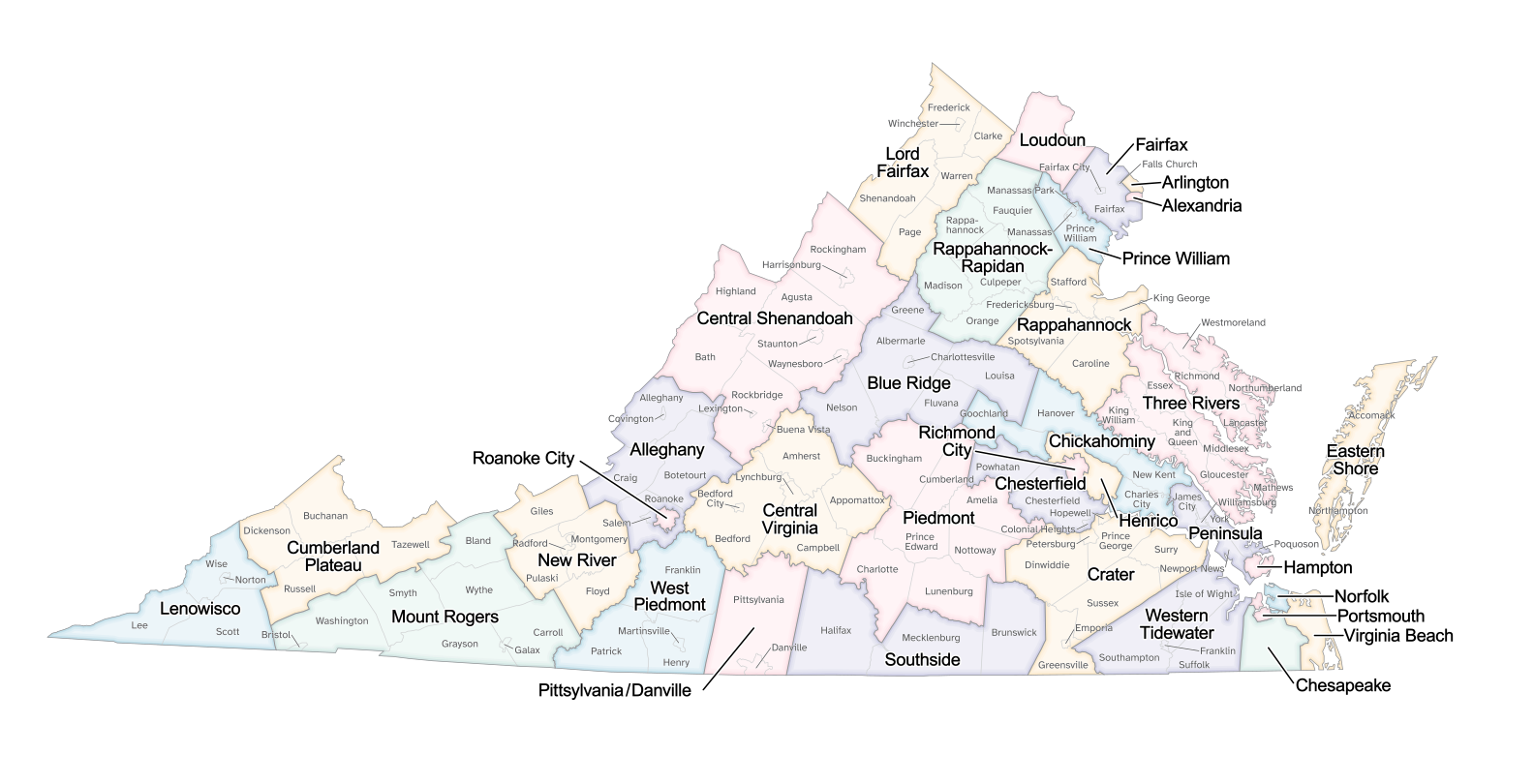
The Environmental Health Division of the Alleghany/Roanoke City Health Districts provides public health services to a population of approximately 264,000 citizens in eight localities of Southwest Virginia. The districts cover 1,637 square miles from Blue Ridge Parkway in Roanoke County , across Roanoke City , the “ Star City of the South,” to the West Virginia state border at Alleghany and Craig Counties . Program services include education, monitoring, and code enforcement of food sanitation, rabies control, public swimming pool sanitation, tourist establishment sanitation, onsite sewage disposal systems, wells, vector control, lead-based paint poisoning prevention, West Nile virus surveillance and numerous general environmental health complaints, issues and concerns.

The environmental health division is housed in four health department locations throughout the two districts:

The division consists of one environmental health manager senior, one environmental health supervisor, five office support staff, 14 environmental health specialist seniors ( EHSs ), and two exterminators. Eight EHSs are specialized in the food and general environmental programs , five are specialized in onsite and well programs and one performs all program functions.

During the calendar year 2002:

For further information concerning any program within the Environmental Health Division of the Alleghany/Roanoke City Health Districts, call the district office at the Roanoke County Health Department, (540) 857-7800, Ext. 124.


Comments or questions concerning this web page should be sent to:  roanokeweb@vdh.virginia.gov


Last Updated: 07-31-2007

Printable Version

E-mail This Page