
Online Services | Commonwealth Sites | Help | Governor

Protecting You and Your Environment Virginia Department of Health
Home | VDH Programs | Find It! A-Z Index | Newsroom | Administration | Jobs
VDH

Rabies

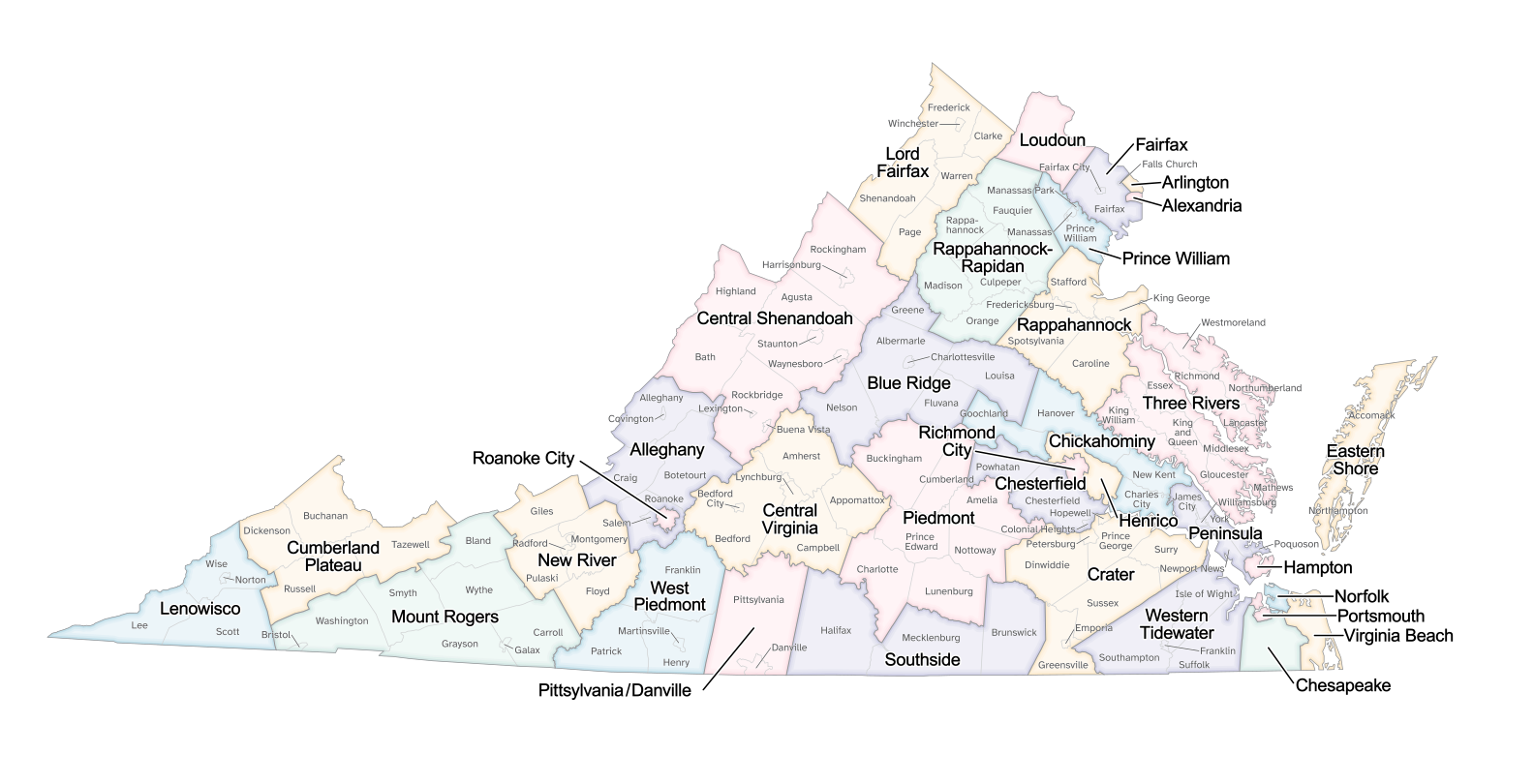
Your local Health Department works with animal control to investigate animal exposure reports and submits specimens to the state laboratory for rabies testing. We work with pet owners to ensure proper confinement and quarantines are conducted to protect public health and offer outreach and education about rabies to the community.
 

What is Rabies?

Rabies is a deadly disease that can be prevented but not cured. It is 100% fatal if not treated. It is caused by a virus that lives in the saliva and brain of rabid animals. It can be transmitted through bites, some scratches, and by getting saliva or brain tissue into an open wound or in the eyes, nose, or mouth.  If you are not sure if you have been exposed, contact your local health department to discuss.

What can I do if I have been exposed?

  • Don’t panic . . . but don’t ignore the bite, either. Wash the wound thoroughly with soap and lots of water. Washing thoroughly will greatly lessen the chance of infection. Give first aid as you would for any wound.
  • If possible, capture the animal under a large box or can, or at least identify it before it runs away. Don’t try to pick the animal up. Call an animal control or law enforcement officer to come get it.
  • If you are bitten by a domestic animal, try to get the owner’s contact information.  If you are bitten by a wild animal and you are able to safely euthanize it, try not to destroy the brain tissue.  Don’t kill wild animals at random because an animal may have tested positive for rabies in your area.  Only a few wild animals will be carrying rabies.
  • Call your doctor immediately. Explain how you got the bite and follow the doctor’s advice.
  • Contact your local Health Department.

Positive Rabies Testing By Species: Central Shenandoah Health District

2000-2011 Chart

VDH

Click here to download the PDF version.


Last Updated: 03-19-2012

Printable Version

E-mail This Page