
Impact of Pandemic Influenza
Seasonal Flu vs. Pandemic Flu
Prevention
Cold vs. Flu
Learn More
If a new and severe strain of flu were to begin spreading across the globe, Virginia would not be spared from its impact. The severity of the next pandemic cannot be predicted, but modeling studies suggest that its effect in the United States could be severe. In the absence of any control measures (vaccination or drugs), it has been estimated that in the United States a "medium-level" pandemic could cause:
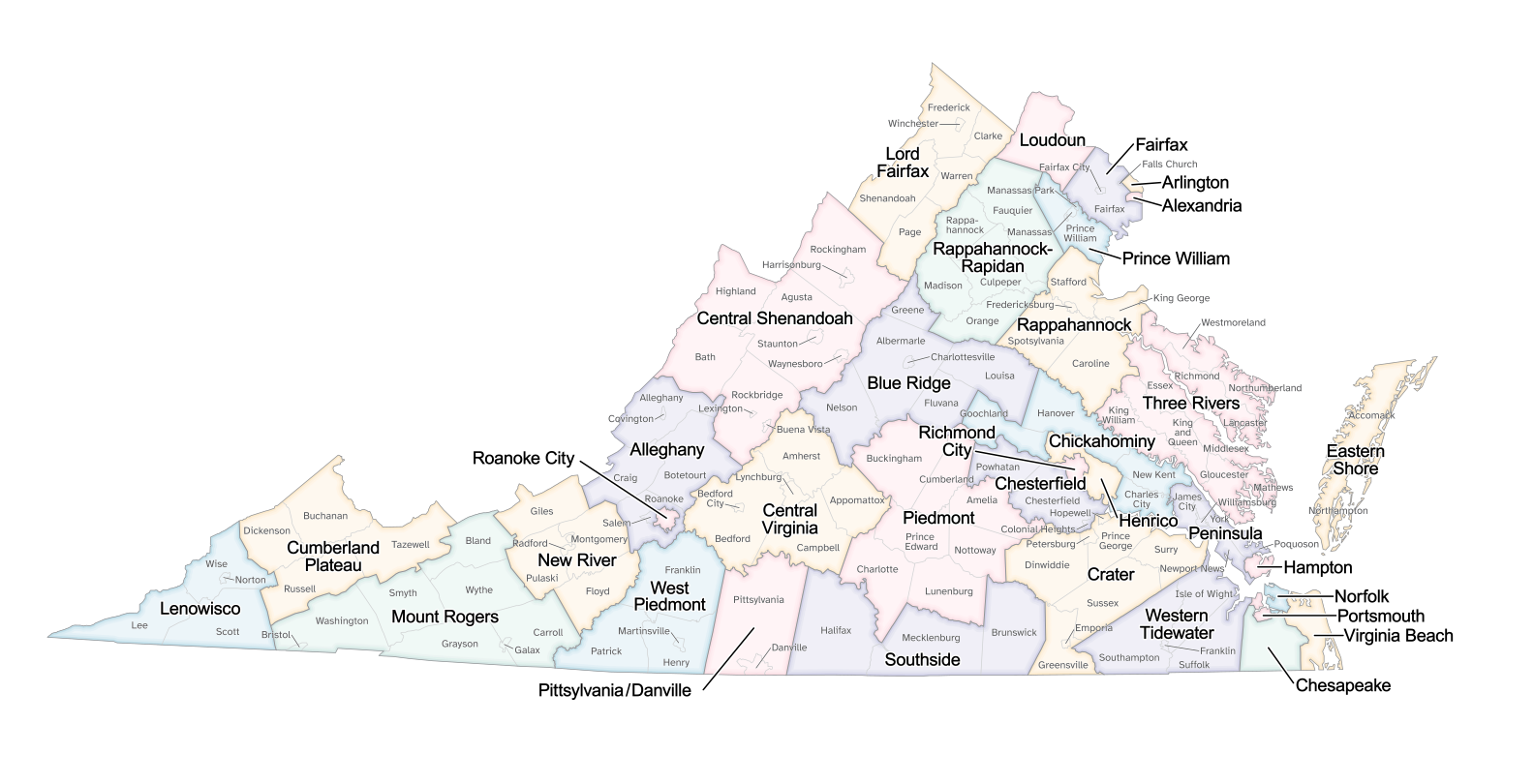
In Virginia, pandemic flu impact estimates include:
Flu pandemics are different from many of the threats for which public health and the health-care system are currently planning:
Seasonal Flu |
Pandemic Flu |
|---|---|
Outbreaks follow predictable seasonal patterns; occurs annually, usually in winter, in temperate climates |
Occurs rarely (three times in 20th century - last in 1968) |
Usually some immunity built up from previous exposure |
No previous exposure; little or no pre-existing immunity |
Healthy adults usually not at risk for serious complications; the very young, the elderly and those with certain underlying health conditions at increased risk for serious complications |
Healthy adults may be at increased risk for serious complications |
Health systems can usually meet public and patient needs |
Health systems may be overwhelmed |
Vaccine developed based on known flu strains and available for annual flu season |
Vaccine probably would not be available in the early stages of a pandemic |
Adequate supplies of antivirals are usually available |
Effective antivirals may be in limited supply |
Average U.S. deaths approximately 36,000/yr |
Number of deaths could be quite high (e.g., U.S. 1918 death toll approximately 675,000) |
Symptoms: fever, cough, runny nose, muscle pain. Deaths often caused by complications, such as pneumonia. |
Symptoms may be more severe and complications more frequent |
Generally causes modest impact on society (e.g., some school closing, encouragement of people who are sick to stay home) |
May cause major impact on society (e.g. widespread restrictions on travel, closings of schools and businesses, cancellation of large public gatherings) |
Every year in the United State, on average:
|
The effects of a severe pandemic could be much more damaging than those of a regular flu season. It could lead to high levels of illness, death, social disruption, and economic loss. Everyday life could be disrupted because so many people in so many places become seriously ill at the same time. Impacts could range from school and business closings to the interruption of basic services such a public transportation and food delivery. |
Protect yourself against the spread of the flu and other germs and viruses:
Symptoms |
Cold |
Flu |
Fever |
Rare in adults and older children. Can be up to 102 F in infants and small children. |
Usually 102 F. Can go up to 104 F. Usually lasts 3-4 days. |
Headache |
Rare |
Sudden onset. Can be severe. |
Muscle Aches |
Mild |
Usual. Often severe |
Tiredness and Weakness |
Mild |
Often extreme. Can last 2 or more weeks. |
Extreme Exhaustion |
Never |
Sudden onset. Can be severe. |
Runny Nose |
Often |
Sometimes |
Sneezing |
Often |
Sometimes |
Sore Throat |
Often |
Sometimes |
Cough |
Mild hacking cough |
Usual. Can become severe. |