RHHD Encourages Community Members to Seek Preventative Care, Screening for Tuberculosis

March 24, 2026
Media Contact: Bryan Hooten, 804-807-1727, bryan.hooten@vdh.virginia.gov

RHHD Encourage Community Members to Seek Preventative Care, Screening for Tuberculosis

March 24 is World TB Day

RICHMOND, Va. —Richmond and Henrico Health Districts (RHHD) encourage community members to seek preventative care, screening, and/or treatment for tuberculosis (TB). Tuberculosis is a disease caused by germs that are spread from person to person through the air. World TB Day is on March 24.

Local and state TB data

Data from the Virginia Department of Health (VDH) show that Richmond City (3.1) and Henrico County (3.0) had higher rates of TB cases per 100,000 people than Virginia (2.6) in 2024. In 2024, Virginia reported 225 cases of tuberculosis (TB), a 9% increase from the 207 cases reported in 2023. This increase was expected as local and national TB numbers continued to increase after declines in reported cases during the peaks of the COVID-19 pandemic. Virginia’s TB case rate increased from 2.4 cases per 100,000 persons in 2023 to 2.6 cases per 100,000 persons in 2024. Virginia’s 2024 rate, as it has in the past, remained below the national rate of 3 cases per 100,000 persons.

“Tuberculosis continues to have an impact on public health in our commonwealth and our districts,” said Richmond and Henrico Health Districts Director Elaine Perry, M.D. “World TB Day reminds us of the importance of prevention, diagnosis, and early treatment of this serious infectious disease.”

Impact of TB

TB usually affects the lungs, but it can also affect other parts of the body, such as the brain, the kidneys, or the spine. A person with TB can die if they do not get treatment. People with TB disease are most likely to spread the germs to people they spend time with every day, such as family members or coworkers. People who have been around someone who has TB disease should contact their doctor or local health department for tests. RHHD staff can help people determine which TB test they need.

There are two TB-related conditions: active tuberculosis disease and latent tuberculosis infection (LTBI) or inactive TB. People with active TB disease usually feel sick, have symptoms and can spread TB to others. People with LTBI do not feel sick, do not have symptoms, and cannot spread TB to others. Most people with inactive TB don’t know that they are infected. The RHHD Tuberculosis Program strives to prevent, identify, and treat tuberculosis in both its latent and active forms.

The general symptoms of active TB disease include:

  • Feelings of sickness or weakness
  • Weight loss
  • Fever
  • Night sweats

The symptoms of active TB disease of the lungs also include:

  • Coughing (especially a cough that won’t go away)
  • Chest pain
  • Coughing up of blood

TB testing and treatment

Call 804-482-5500 to schedule an appointment with the RHHD Tuberculosis Program. isit rhhd.gov for more information on RHHD clinical services, including screenings.

Active TB disease can be treated by taking several drugs for six to 12 months. It is very important that people who have TB disease take the drugs exactly as prescribed for the entire length of the treatment. People who stop taking the drugs too soon can become sick again. If the drugs are not taken correctly, germs that are still alive in the body may become resistant to those drugs. Treating inactive TB or LTBI prevents the future development of active TB disease. RHHD’s TB outreach workers make sure clients have what they need to stay on track with their medication.

People at higher risk of developing active TB from inactive TB include:

  • People with HIV
  • Children younger than 5 years of age
  • People recently infected with TB bacteria
  • People with inadequately treated active TB
  • Anyone who’s immune system is suppressed either from a medical condition or medications that are taking (TNF alpha antagonists, system steroids, etc.)
  • People with Diabetes
  • People with low body weight
  • People who are medically underserved

World TB Day is recognized each year on March 24. This annual event commemorates the date in 1882 when Dr. Robert Koch announced his discovery of Mycobacterium tuberculosis, the bacillus that causes TB.

Visit rhhd.gov for more health and safety information. Follow RHHD on Instagram (@richmondcity_hd) and Facebook.

# # #


RHHD Encourages Parents and Guardians to Schedule Primary Care Appointments for Children Before Summer

March 19, 2026
Media Contact: Bryan Hooten, 804-807-1727, bryan.hooten@vdh.virginia.gov

RHHD Encourages Parents and Guardians to Schedule Primary Care Appointments for Children Before Summer

 RICHMOND, Va. — The Richmond and Henrico Health Districts (RHHD) encourage families to schedule a wellness visit for children with their primary care provider before the summer months. These visits allow children to receive school-required immunizations and physicals before summer travel and activities.

Vaccines provide essential protection against serious diseases that can affect children. As of March 19, 2026, Virginia Department of Health (VDH) has already reported 14 cases of measles. VDH reported five cases of measles in all of 2025. A safe and effective vaccine that prevents measles is given as part of the measles, mumps and rubella (MMR) vaccine or the measles, mumps, rubella and varicella (MMRV) vaccine series.

Families can schedule appointments with a primary care physician or one of RHHD’s community partners. RHHD provides resources for families on Medicaid, Medicare, or who are uninsured at rhhd.gov/connect-pc. Please visit RHHD’s School Health Hub, Richmond Public Schools, or Henrico County Public Schools for more information.

“Spring is a great time for your child to see their primary care provider for a wellness visit,” said Richmond and Henrico Health Districts Director Elaine Perry, M.D. “A primary care provider will make sure your child gets the immunizations and physicals they need for school and sports. Taking care of these important visits now means kids will have more time for summer fun and will be ready for school in the fall.”

School-Required Immunizations

The Code of Virginia requires children entering daycare, public and private schools to give proof of vaccination before enrollment. The Code of Virginia also requires specific vaccinations for rising seventh and 12th graders. According to data from VDH, vaccination rates for Richmond City and Henrico County 13-year-olds are lower than Virginia statewide rates for the following vaccines:

  • meningococcal ACWY (MenACWY),
  • human papillomavirus (HPV)
  • tetanus, diphtheria, and pertussis (Tdap)

The Virginia childhood vaccine schedule aligns with the schedules of the American Academy of Pediatrics (APP) and the American Academy of Family Physicians (AAFP). All vaccines on these schedules are covered by Medicaid and private health insurance.

The Virginia Vaccines for Children Program (VVFC) provides free or low-cost vaccines for uninsured, underinsured, and Medicaid-enrolled children. Families can search for a nearby VFC at rhhd.gov/vfc.

Families with private insurance may schedule appointments with their primary care physician, a local pharmacy, or one of RHHD’s community partners. Families can learn more by visiting rhhd.gov/childhoodvax-partners.

Families without insurance or who are enrolled in Medicaid can schedule appointments at an RHHD clinic by calling 804-205-3500 and can find more information at rhhd.gov/childhoodvax. Students must bring a guardian, a copy of immunization records, and an insurance card if they have one.

School Physicals

The Code of Virginia requires children to have a school physical before starting public kindergarten or enrolling in elementary school for the first time. During a physical, a doctor can:

  • Identify potential health issues that could impact kids’ learning
  • Ensure kids have the immunizations they need
  • Promote healthy habits

Visit rhhd.gov for more health and safety information. Follow RHHD on Instagram (@richmondcity_hd) and Facebook.

# # #

Love Safely This Valentine’s Day

February 13, 2026
Media Contact: Bryan Hooten, 804-807-1727, bryan.hooten@vdh.virginia.gov


Love Safely This Valentine’s Day

Get Free Condoms from Richmond and Henrico Health Districts


RICHMOND, Va.– It’s no coincidence that Valentine’s Day is also National Condom Day! One of the simplest ways to show you care is to protect the health of those you love. Richmond and Henrico Health Districts (RHHD) provide free condoms to support safer and healthier sexual relationships.

Valentine’s Day is often associated with flowers, chocolates, and dinner dates. RHHD reminds you that protection should also be part of the plan.

“Using a condom is one of the most important steps you can take to protect your sexual health,” said Richmond and Henrico Health Districts Director Elaine Perry, M.D. “When used correctly, condoms are highly effective at preventing sexually transmitted infections (STIs) such as syphilis and HIV. Add condoms to your list when you are picking up flowers and chocolates. Let romance include protecting your sexual health and your partner’s!”

Virginia STI Data

Sexually Transmitted Infections (STIs) remain a serious public health concern in Virginia.  More than 54,000 STIs were reported in Virginia in 2024. The increase in syphilis diagnoses among women is of particular concern. The rate of newly diagnosed syphilis cases among women increased 144% from 2020 to 2024. For the same time period, newly diagnosed syphilis cases among all genders increased 117% in Richmond City and 65% in Henrico County.

Cases of congenital syphilis, when a pregnant person passes syphilis to a baby during pregnancy or childbirth, increased for the fifth straight year in Virginia. In 2024, 35 cases of congenital syphilis were reported among newly born infants, the highest case count observed in more than 30 years in Virginia.

Where to find free condoms

Because many STIs, including syphilis, often show no symptoms, you can spread them without knowing it. Using condoms consistently and correctly is an effective way to reduce the risk of STIs and unintended pregnancy.

The Virginia Department of Health distributes condoms statewide through its Condom Distribution Program, which is designed to reduce HIV and other STIs through free access to protection.

Free condoms are available at RHHD and through community partner organizations. Call 804-205-3500 to locate free condoms nearby.

Organizations interested in becoming distribution sites should contact the HIV-STD Hotline Supervisor at HIV-stdhotline@vdh.virginia.gov. Participating organizations may order up to 100,000 condoms per year.

RHHD can also help you decide if medicine to prevent HIV (PrEP) or STIs (DoxyPEP) is right for you. Call 804-664-2125 to get started.

Make this Valentine’s Day a night to remember, not a diagnosis you want to forget.

Visit rhhd.gov for more health and safety information. Follow RHHD on Instagram (@richmondcity_hd) and Facebook.


# # #

RHHD Commemorates National Black HIV/AIDS Awareness Day Feb. 7

February 5, 2026
Media Contact: Bryan Hooten, 804-807-1727, bryan.hooten@vdh.virginia.gov


RHHD Commemorates National Black HIV/AIDS Awareness Day Feb. 7


RICHMOND, Va. —Richmond and Henrico Health Districts (RHHD) commemorate National Black HIV/AIDS Awareness Day on Wednesday, Feb. 7, by encouraging Black and African American community members in Richmond City and Henrico County to get tested and seek treatment. This day creates the opportunity for healthcare providers and policy makers to reflect on the ways racism, discrimination, and mistrust in the health care system may affect those seeking and receiving HIV prevention and treatment services.

National, state, and regional HIV/AIDS data

According to the Centers for Disease Control and Prevention, in 2022, Black/African American persons made up approximately 12% of the population of the United States but accounted for 37% (11,900) of the estimated 31,800 new HIV infections.

Virginia Department of Health (VDH) data from 2023 show that Richmond City (26.5) and Henrico County (14.7) both had higher rates of new HIV diagnoses per 100,000 people (by health district) than Virginia as a whole (10). In the Central Region, which includes Richmond and Henrico, there were nearly twice as many Black people living with HIV than all other races and ethnicities combined.

“We are several decades removed from the hardest days of the HIV epidemic in the United States, but the stigma around HIV still persists,” said Richmond and Henrico Health Districts Director Elaine Perry, M.D. “Through education and ensuring access to preventive care and screening, we can continue the great progress that public health has made in reducing the effects of HIV on Black communities.”

RHHD HIV/STI services

RHHD offers clinic-based sexually transmitted infection (STI) and HIV testing appointments at its Cary Street, Henrico East, and Henrico West clinics. Visit rhhd.gov/sti for information and to view testing appointment options. Use rhhd.gov/VA-HIV-testing to search for Virginia-based HIV testing options near you.

RHHD also offers pre-exposure prophylaxis (PrEP). PrEP is a daily medication that is highly effective at helping prevent HIV. To learn more about PrEP, call 804-482-5493.

People living with HIV needing support from the Virginia Medication Assistance Program (VAMAP) can call 855-362-0658.


Community Partner Testing Options

The following RHHD community partners offer free STI and HIV testing services:

Use the CDC testing site locator to find a testing site near you.

Visit rhhd.gov for more health and safety information. Follow RHHD on Instagram (@richmondcity_hd) and Facebook.

# # #

Richmond and Henrico Health Districts Urges the Community to Prepare for Incoming Winter Storm

January 22, 2026
Media Contact: Bryan Hooten, 804-807-1727, bryan.hooten@vdh.virginia.gov

Richmond and Henrico Health Districts Urges the Community to Prepare for Incoming Winter Storm

RICHMOND, Va. – Richmond City and Henrico County are expected to be impacted by severe winter weather, including snow, ice, and extremely cold temperatures. Richmond and Henrico Health Districts (RHHD) urge you to prepare now to keep yourself, your family and your pets safe, warm and healthy during this storm.

“We have all experienced how disruptive winter weather can be to our daily lives,” said Richmond and Henrico Health Districts Director Elaine Perry, M.D. “Take time now to make sure your home, family, friends, and neighbors are ready for this winter storm. Prepare for the storm by organizing your emergency kits and medicines, insulating your home, and staying up to date on weather reports. During the storm, stay indoors as much as possible, ventilate emergency heat sources and check on friends and family. Let’s take care of ourselves and each other as winter weather affects our communities.”

Before the Storm

  • Make sure you have an emergency supply kit on hand and keep an emergency kit for your car.
  • Organize and protect your prescriptions, over-the-counter drugs, home-use medical devices, and vitamins. Talk to your doctor or pharmacist about how you can create an emergency supply of medicines.
  • Check your smoke and carbon monoxide
  • Replenish fuel for your car and heating sources.
  • Weatherproof your home by insulating exposed pipes and caulking and weather strip doors/windows.
  • Make sure you understand the warnings, watches and advisories and have multiple ways to receive alerts.
  • Write down the contact information and directions to your local Inclement Weather Shelter or warming center. Call 804-646-3111 or email homeless@rva.gov for more information.
    • City of Richmond Inclement Weather Shelter (IWS)
      1900 Chamberlayne Parkway
      Richmond, VA, 23222
      Open 5 p.m.-8 a.m.

      • The shelter may remain open after 8 a.m. when temperatures are less than or equal to 40°F, or when more than one inch of freezing rain or snow has fallen in 24-hours.
    • Richmond Public Library branches serve as warming spaces during normal operating hours.
    • Henrico County libraries and recreation centers are open to the public during normal operating hours.

During/After the Storm

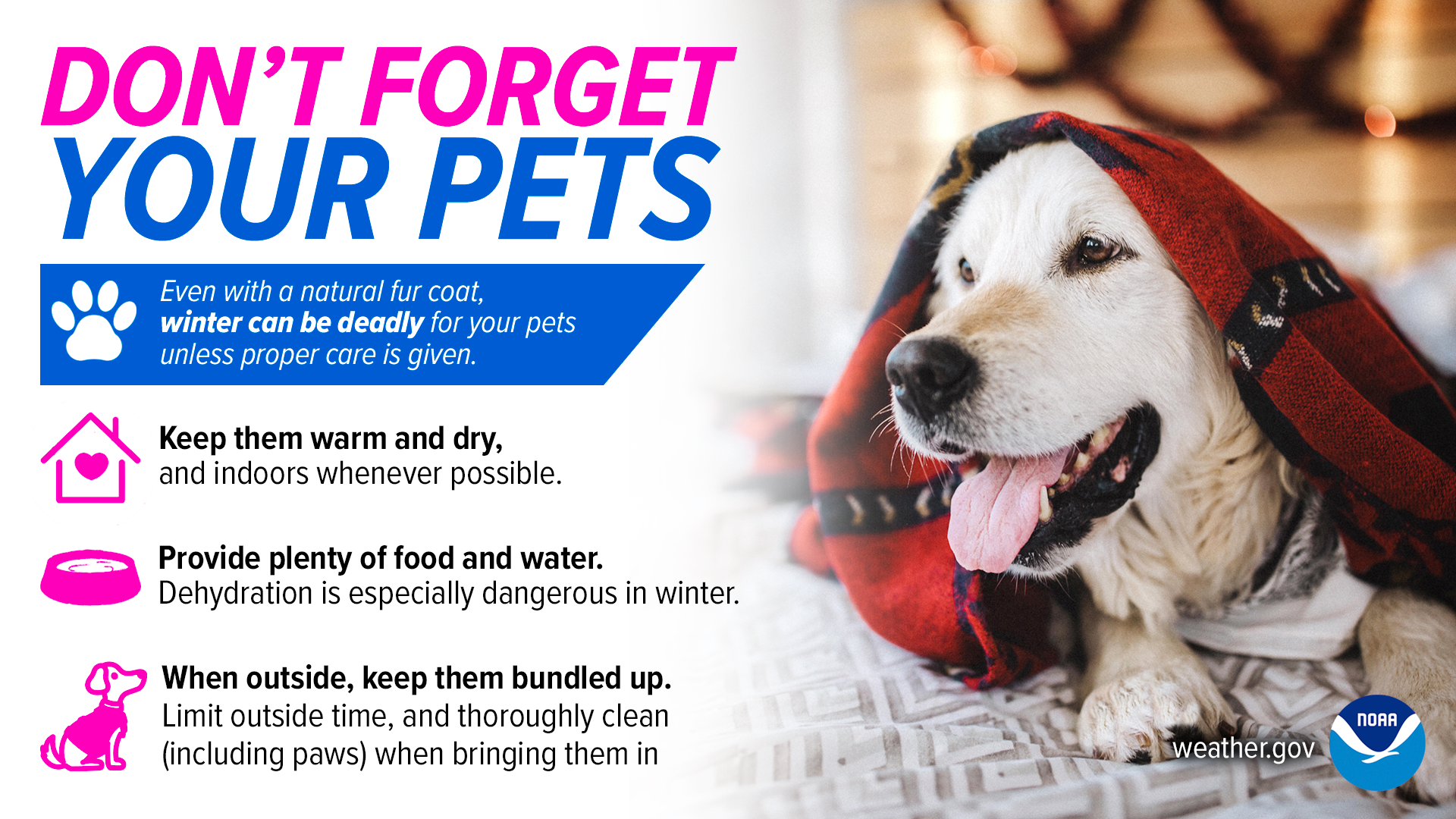
  • Bring your pets indoors and ensure they have water.
  • Stay indoors and limit your exposure to the cold.
  • Properly ventilate emergency heat sources.
  • Keep generators outside at least 20 feet from your home.20
  • Check on neighbors and family.

If you must go outside, take the following precautions to stay safe and prevent frostbite and hypothermia:

  • Wear proper footwear for traction. Take slow, short steps.
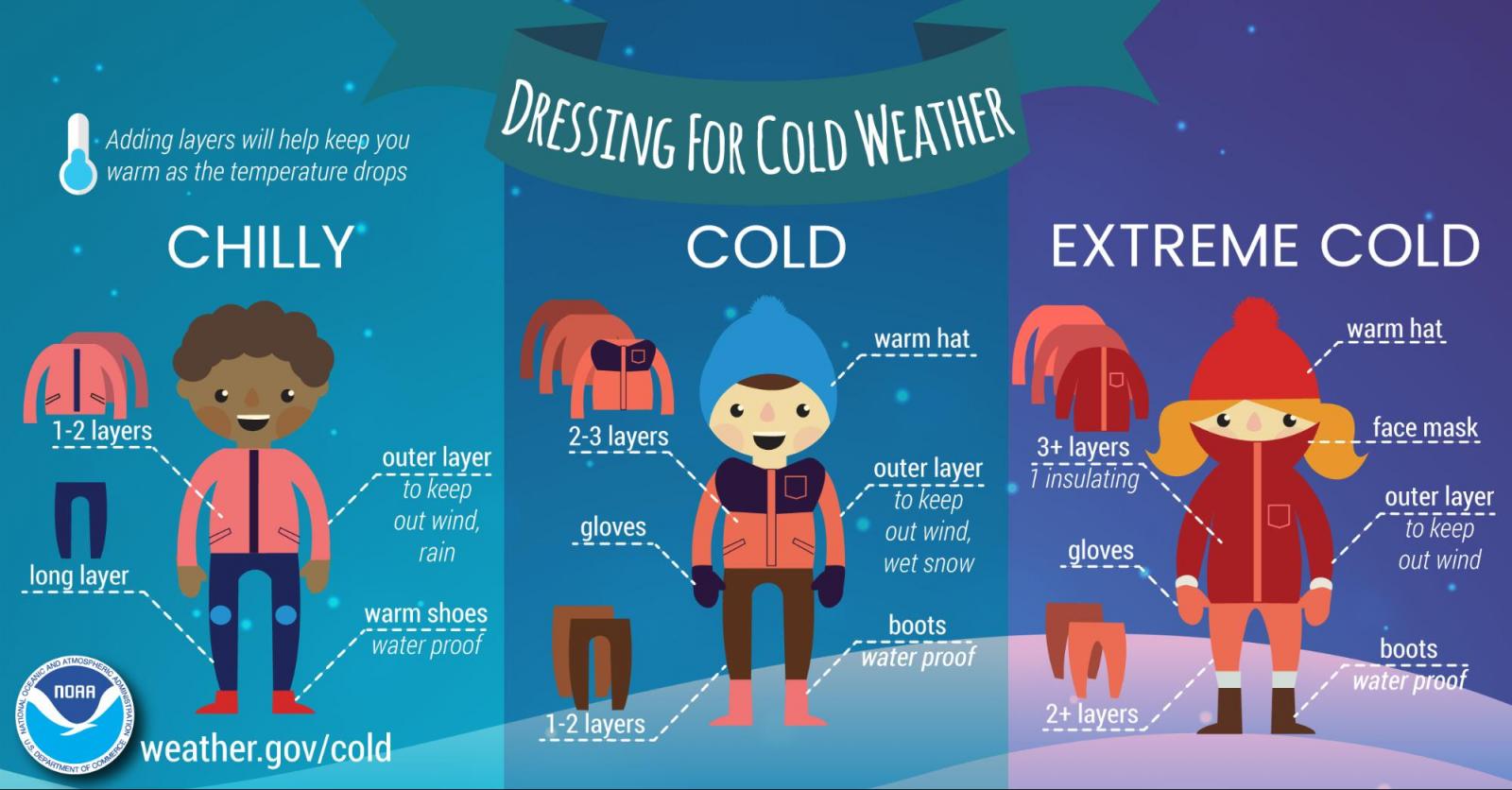
  • Dress warmly and in layers. Make sure you cover your head, fingers and toes.
  • Avoid getting wet and change out of wet clothes as soon as possible.
  • Stay hydrated. Drink warm beverages.
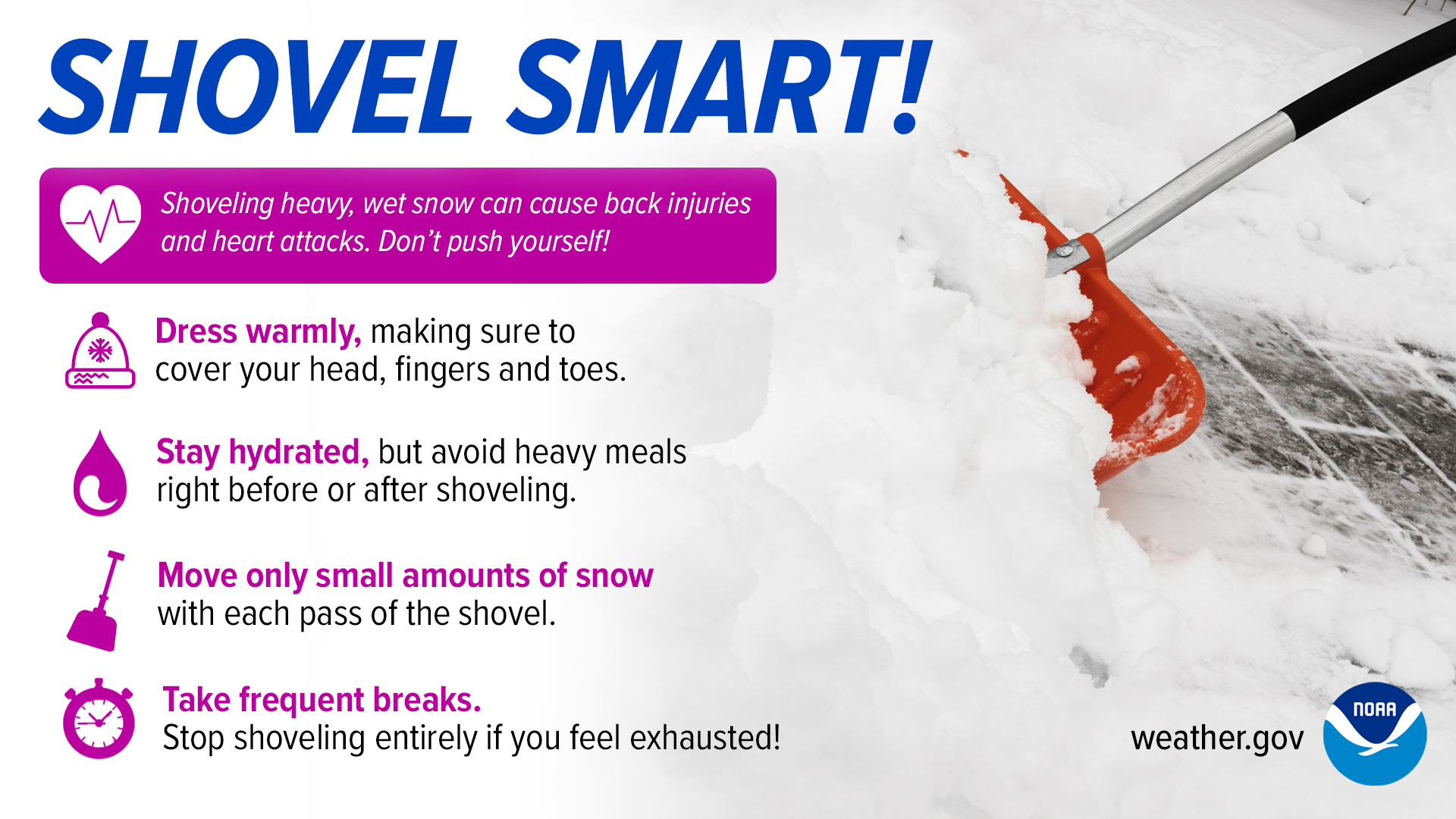
  • Take frequent breaks if shoveling snow or working outdoors.
  • Stay off the roads. If you must travel, check the road conditions and your route first. Allow extra time and follow these tips from the Virginia Department of Transportation.

RHHD wants you to stay safe, warm and healthy! Visit rhhd.gov for more health and safety information. Follow RHHD on Instagram (@richmondcity_hd) and Facebook.

# # #

Richmond and Henrico Health Districts Encourage Vaccination and Screening to Protect Against Cervical Cancer

January 20, 2026 Media Contact: Bryan Hooten, 804-807-1727, bryan.hooten@vdh.virginia.gov

Richmond and Henrico Health Districts Encourage Vaccination and Screening to Protect Against Cervical Cancer

January is Cervical Health Awareness Month

RICHMOND, Va. – In honor of Cervical Health Awareness Month, Richmond and Henrico Health Districts (RHHD) encourage community members to take action against cervical cancer. According to the Centers for Disease Control and Prevention (CDC), human papilloma virus (HPV) causes more than nine out of every 10 cases of cervical cancer. Almost all cervical cancer can be prevented by HPV vaccination.

  • Parents and guardians should make sure their children have their school-required HPV vaccination prior to starting 7th grade.
    • Parents and guardians can make appointments for school-required immunizations with their primary care provider, a local pharmacy, or at an in-school clinic.
  • Women ages 21 and older should talk to their doctor about cervical cancer screening.
    • The United States Department of Health and Human Services recently approved a self-administered test for cervical cancer for women aged 30-65 years at average risk. This test can be completed at home or at a doctor’s office. Insurance plans will be required to cover the full cost of self-collected HPV screenings by Jan. 1, 2027, with no cost to consumers.

“Making sure children get the HPV vaccine can help reduce their risk of developing cervical and other cancers,” said Richmond and Henrico Health Districts Director Elaine Perry, M.D. “We encourage our community to protect their health and the health of their children through vaccination and regular screenings for cervical and other cancers.”

HPV Vaccination

According to a recent systematic review published in the Cochrane Library, the HPV vaccination:

  • reduces the incidence of cervical cancer by around 80% in people vaccinated at or before age of 16;
  • reduces the incidence of high‐grade cervical pre‐cancer lesions, as well as anogenital warts;
  • is not associated with an increased risk of long‐term side effects or infertility;
  • is more effective when given at or before the age of 16 years, before onset of sexual activity.

In November 2024, The Journal of the American Medical Association (JAMA) published a research letter stating that studies from 2022 and 2023 indicated a 12 percent per year decline (overall, 65 percent reduction) in cervical cancer incidence from 2012 to 2019 among US women younger than 25 years who likely benefited from HPV vaccination.

A new nationwide cohort study from Sweden suggests that widespread HPV vaccination could substantially reduce the risk of precancerous lesions even among people who never received the vaccine.

HPV vaccination has been recommended for routine use in U.S. women since June 2006.

  • In Virginia, the HPV vaccine is required for all students, regardless of sex, prior to entry into 7th
  • Children who receive both doses of the vaccine before age 13 will receive the most protection.
  • Children who receive their first dose at the age of 15 or older will require three doses to complete the series.
  • The HPV vaccine is also recommended for people 26 years of age who did not start or complete the vaccination at an earlier age.
  • HPV vaccine recommendation for persons 27-45 years of age is based on shared clinical decision making.

According to data from VDH, as of Jan. 13, 2026, 74.1 percent of 13-year-olds in Richmond City and 73.3 percent of 13-year-olds in Henrico County have received at least one dose of the HPV vaccine series. Statewide, 76 percent of 13-year-olds have received least one dose of the HPV vaccine series.

As of Jan. 13, 2026, 47.4 percent of 18-year-olds in Richmond City and 70.4 percent of 18-year-olds in Henrico County have received the complete HPV vaccine series. Statewide, 62.7 percent of 18-year-olds have received the complete HPV vaccine series.

HPV and Cervical Cancer Data

According to data from CDC, HPV causes six different kinds of cancer, including almost all (91 percent) of cervical cancers. HPV also causes 70 percent of head and neck (oropharyngeal) cancers.

According to the National Cancer Institute’s State Cancer Profile, the rate of new cases of cervical cancer in Virginia has been decreasing steadily from 2017 to 2021. The rates of new cases in Richmond and Henrico were somewhat lower than the rate in Virginia during the same time period.

Screening and Care for Cervical Cancer

The Virginia Department of Health (VDH) offers Every Woman’s Life (EWL), a public health program that helps uninsured, income-eligible women gain access to free breast and cervical cancer screening services. Screening and early detection reduce death rates, improve treatment options, and greatly increase rates of survival. If a woman enrolled in EWL is diagnosed with breast or cervical cancer she may be eligible for Medicaid to pay for treatment. Community members can use this link to find a EWL provider near them.

To be eligible for EWL, a woman must be a Virginia resident between the ages of 18-64, meet federal income guidelines and be uninsured. Women 18-39 must be symptomatic or be determined to be high risk for breast and/or cervical cancer to be eligible.

Visit rhhd.gov/connect-pc to locate primary care providers in the Richmond and Henrico area. Visit rhhd.gov/childhoodvax for more information on school-required immunizations. For information about RHHD’s clinical health resources and HPV vaccination schedule, call 804-205-3500 or visit rhhd.gov.

Follow RHHD on Instagram (@richmondcity_hd) and Facebook.


# # #

Richmond and Henrico Health Districts Encourage Vaccination and Screening to Protect Against Cervical Cancer

January 20, 2026 Media Contact: Bryan Hooten, 804-807-1727, bryan.hooten@vdh.virginia.gov

Richmond and Henrico Health Districts Encourage Vaccination and Screening to Protect Against Cervical Cancer

January is Cervical Health Awareness Month

RICHMOND, Va. – In honor of Cervical Health Awareness Month, Richmond and Henrico Health Districts (RHHD) encourage community members to take action against cervical cancer. According to the Centers for Disease Control and Prevention (CDC), human papilloma virus (HPV) causes more than nine out of every 10 cases of cervical cancer. Almost all cervical cancer can be prevented by HPV vaccination.

  • Parents and guardians should make sure their children have their school-required HPV vaccination prior to starting 7th grade.
    • Parents and guardians can make appointments for school-required immunizations with their primary care provider, a local pharmacy, or at an in-school clinic.
  • Women ages 21 and older should talk to their doctor about cervical cancer screening.
    • The United States Department of Health and Human Services recently approved a self-administered test for cervical cancer for women aged 30-65 years at average risk. This test can be completed at home or at a doctor’s office. Insurance plans will be required to cover the full cost of self-collected HPV screenings by Jan. 1, 2027, with no cost to consumers.

“Making sure children get the HPV vaccine can help reduce their risk of developing cervical and other cancers,” said Richmond and Henrico Health Districts Director Elaine Perry, M.D. “We encourage our community to protect their health and the health of their children through vaccination and regular screenings for cervical and other cancers.”

HPV Vaccination

According to a recent systematic review published in the Cochrane Library, the HPV vaccination:

  • reduces the incidence of cervical cancer by around 80% in people vaccinated at or before age of 16;
  • reduces the incidence of high‐grade cervical pre‐cancer lesions, as well as anogenital warts;
  • is not associated with an increased risk of long‐term side effects or infertility;
  • is more effective when given at or before the age of 16 years, before onset of sexual activity.

In November 2024, The Journal of the American Medical Association (JAMA) published a research letter stating that studies from 2022 and 2023 indicated a 12 percent per year decline (overall, 65 percent reduction) in cervical cancer incidence from 2012 to 2019 among US women younger than 25 years who likely benefited from HPV vaccination.

A new nationwide cohort study from Sweden suggests that widespread HPV vaccination could substantially reduce the risk of precancerous lesions even among people who never received the vaccine.

HPV vaccination has been recommended for routine use in U.S. women since June 2006.

  • In Virginia, the HPV vaccine is required for all students, regardless of sex, prior to entry into 7th
  • Children who receive both doses of the vaccine before age 13 will receive the most protection.
  • Children who receive their first dose at the age of 15 or older will require three doses to complete the series.
  • The HPV vaccine is also recommended for people 26 years of age who did not start or complete the vaccination at an earlier age.
  • HPV vaccine recommendation for persons 27-45 years of age is based on shared clinical decision making.

According to data from VDH, as of Jan. 13, 2026, 74.1 percent of 13-year-olds in Richmond City and 73.3 percent of 13-year-olds in Henrico County have received at least one dose of the HPV vaccine series. Statewide, 76 percent of 13-year-olds have received least one dose of the HPV vaccine series.

As of Jan. 13, 2026, 47.4 percent of 18-year-olds in Richmond City and 70.4 percent of 18-year-olds in Henrico County have received the complete HPV vaccine series. Statewide, 62.7 percent of 18-year-olds have received the complete HPV vaccine series.

HPV and Cervical Cancer Data

According to data from CDC, HPV causes six different kinds of cancer, including almost all (91 percent) of cervical cancers. HPV also causes 70 percent of head and neck (oropharyngeal) cancers.

According to the National Cancer Institute’s State Cancer Profile, the rate of new cases of cervical cancer in Virginia has been decreasing steadily from 2017 to 2021. The rates of new cases in Richmond and Henrico were somewhat lower than the rate in Virginia during the same time period.

Screening and Care for Cervical Cancer

The Virginia Department of Health (VDH) offers Every Woman’s Life (EWL), a public health program that helps uninsured, income-eligible women gain access to free breast and cervical cancer screening services. Screening and early detection reduce death rates, improve treatment options, and greatly increase rates of survival. If a woman enrolled in EWL is diagnosed with breast or cervical cancer she may be eligible for Medicaid to pay for treatment. Community members can use this link to find a EWL provider near them.

To be eligible for EWL, a woman must be a Virginia resident between the ages of 18-64, meet federal income guidelines and be uninsured. Women 18-39 must be symptomatic or be determined to be high risk for breast and/or cervical cancer to be eligible.

Visit rhhd.gov/connect-pc to locate primary care providers in the Richmond and Henrico area. Visit rhhd.gov/childhoodvax for more information on school-required immunizations. For information about RHHD’s clinical health resources and HPV vaccination schedule, call 804-205-3500 or visit rhhd.gov.

Follow RHHD on Instagram (@richmondcity_hd) and Facebook.


# # #
RHHD Encourages Community Members to Get Vaccinated for Flu and COVID-19

December 3, 2025
Media Contact: Bryan Hooten, 804-807-1727, bryan.hooten@vdh.virginia.gov

RHHD Encourages Community Members to Get Vaccinated for Flu and COVID-19

RICHMOND, Va. – With the 2025-26 respiratory virus season officially underway, Richmond and Henrico Health Districts (RHHD) encourage everyone six months and older who lives, works, or plays in our community to receive their annual flu and COVID-19 vaccines.

The Centers for Disease Control and Prevention (CDC) reported a severe 2024-25 flu season with record high hospitalization rate in the U.S and the highest number of pediatric deaths during a regular, non-pandemic season. Last season, Virginia reported six influenza-associated pediatric deaths and 366 influenza outbreaks.

Vaccination Rates

Current local vaccination rates for flu and COVID-19 are lower than they have been in previous years. As of Dec. 2, 2025, 19.6 percent of Richmond City residents and 23.3 percent of Henrico County residents have received the 2025-2026 flu vaccine. Only 7.8 percent of Richmond City and 7.7 percent of Henrico County residents have received the 2025-2026 COVID-19 vaccine.

By Dec. 2, 2024, 19.7 percent of Richmond City residents and 25.7 percent of Henrico County residents had received the flu vaccine. During the same time period, 10 percent of Richmond residents and 11 percent of Henrico residents had received the COVID-19 vaccine.

“Vaccines are the best tool we have for preventing infection from flu and COVID-19,” said Richmond and Henrico Health Districts Director Elaine Perry, M.D. “Unfortunately, we are seeing fewer people get these safe and effective vaccines than in years past. Vaccines can protect you and your community from severe illness, hospitalization, and death as respiratory virus activity increases in the colder months. Just like we’ve seen with viruses like measles, more vaccinations mean reduced transmission, fewer outbreaks, and more time with friends and family.”

Where to Get Vaccines

You can get vaccinated for flu and COVID-19 at a local pharmacy or your primary care provider.

Virginia Vaccines for Children (VVFC) providers offer no-cost vaccines to children (younger than 19 years of age) who are uninsured or underinsured; Medicaid-eligible or Medicaid-enrolled; and/or American Indian or Alaska Native. Search for a VVFC provider near you by using rhhd.gov/vfc.

Virginia Vaccines for Adults (VVFA) providers offer no-cost vaccinations to adults who are uninsured or underinsured. People receiving VVFA vaccinations may be required to pay an admin fee, usually between $10 and $20. Search for a VVFA provider near you by using rhhd.gov/vfa.

Respiratory Virus Season

Flu season, the period of highest virus activity, normally begins in early October and ends in late May. While seasonal outbreaks can happen as early as October, during most seasons, activity peaks in January or February. COVID-19 spreads year-round but tends to be more common in the fall and winter.

People need flu and COVID-19 vaccines for two reasons. First, the body’s immune response from vaccination declines over time, so an annual vaccine is needed for optimal protection. Second, because these viruses are constantly changing, the formulation of these vaccines is reviewed each year and updated to target changing viruses.

As long as these viruses are circulating, it’s not too late to get your vaccines.

COVID-19 and Influenza Viruses

Influenza and COVID-19 are serious diseases caused by viruses that affects the respiratory tract. These viruses generally spread from person-to-person when an infected person coughs or sneezes. These viruses can be transmitted even before symptoms appear. A person usually becomes sick with flu one to three days following exposure to the virus. A person usually becomes sick with COVID-19 two to 14 days following exposure to the virus. Typical flu symptoms include fever, dry cough, sore throat, runny or stuffy nose, headache, muscle aches and extreme fatigue. Typical COVID-19 symptoms include fever, chills, cough, loss of taste or smell, severe fatigue, headaches, body aches, and sore throat.

How to Protect Yourself and Others

To minimize your risk of contracting or transmitting these viruses, follow these simple steps:

  • Get vaccinated.
  • Wash your hands frequently and thoroughly, for at least 20 seconds.
  • Cover your cough, either by using a disposable tissue or coughing into your sleeve, not your hand.
  • Stay at home when you are sick.

It is safe to get both the flu and COVID-19 vaccines at the same time. For more information, call RHHD at 804-205-3500.

Visit rhhd.gov for more health and safety information. Follow RHHD on Instagram (@richmondcity_hd) and Facebook.

# # #
RHHD Says Spooktacular Halloween Fun Starts with Safety

October 30, 2025

Media Contact: Bryan Hooten, 804-807-1727, bryan.hooten@vdh.virginia.gov

 RHHD Says Spooktacular Halloween Fun Starts with Safety
Tricks, Treats, and Top Safety Tips for Families

RICHMOND, Va. – With Halloween right around the corner, Richmond and Henrico Health Districts (RHHD) share some spooktacular safety tips to help every family have a night full of treats, laughter, and safe adventures. Get ready for a ghoulishly good time—let’s make this Halloween the best (and safest) one yet!

a safe (not scary) Halloween is easy and fun when you follow a few simple steps,” said Richmond and Henrico Health Districts Director Elaine Perry, M.D. “Keep costumes visible and fit for walking, stick to sidewalks, and cross the street at crosswalks and corners. Make sure treats are sealed in their original wrappers. Welcome trick-or-treaters with a well-lit front door and keep walkways free of tripping hazards. Let’s help our ghouls, ghosts, and goblins get home safely.”

RHHD encourages you to keep these quick tips in mind when trick or treating this Halloween season.

Costume Safety

  • Make sure costumes are bright or have reflective tape so drivers can see you at night.
  • Wear costumes that fit well to avoid tripping.
  • Use face paint instead of masks to keep your vision clear.

Trick-or-Treating

  • Children should always walk in groups and stay with an adult.
  • Use sidewalks whenever possible and cross streets at corners, following traffic signals.
  • Carry a flashlight or glow sticks to light your way.

Candy Safety

  • Wait until you get home to eat your treats so an adult can check them first.
  • Only eat candy that is sealed and in its original wrapper.
  • Avoid homemade treats unless you know who made them.

Home Safety

  • Keep your porch and walkways well-lit for visitors.
  • Remove anything from your yard that could cause someone to trip, or any fire hazards.

Following these tips will help make Halloween fun and safe for everyone. Have a happy Halloween!

If you have questions about Halloween safety, contact RHHD at 804-205-3500. Visit rhhd.gov for more health and safety information. Follow RHHD on Instagram (@richmondcity_hd) and Facebook.

# # #


Richmond and Henrico Health Districts Encourage Women to Focus on Breast Health

October 2, 2025

Media Contact: Bryan Hooten, 804-807-1727, bryan.hooten@vdh.virginia.gov

Richmond and Henrico Health Districts Encourage Women to Focus on Breast Health
October is Breast Cancer Awareness Month

RICHMOND, Va. – Richmond and Henrico Health Districts (RHHD) encourage women 25 years of age and older to talk with their health care provider about their risk for developing breast cancer. Women 40 and older should get regular breast screenings. October is Breast Cancer Awareness Month, a month devoted to educating people about breast cancer — including metastatic breast cancer (MBC) — and the importance of early detection and access to timely, high-quality care.

“Breast cancer screening helps find breast cancer early, when it is easier to treat,” said Richmond and Henrico Health Districts Director Elaine Perry, M.D. “We encourage people to talk to their health care provider about which breast cancer screening tests are right for them.”

Breast cancer screening and diagnosis information for Virginia and the U.S.

The U.S. Preventive Services Task Force recommends breast cancer screening start at age 40 and continue every two years until age 74 to better serve younger women. According to the Journal of the American Medical Association, data from 2015 to 2019 in the U.S. show a 2% increase in breast cancer diagnoses per year among women in their 40s. In 2023, an estimated 43,170 women died of breast cancer. Non-Hispanic White women have the highest incidence of breast cancer and non-Hispanic Black women have the highest mortality rate from breast cancer.

Breast cancer data for Richmond City and Henrico County

According to the National Cancer Institute’s State Cancer Profile, the rate of new cases of breast cancer in Virginia rose slightly between 2017 and 2021. The rate in Richmond was similar to the rate in Virginia. The rate in Henrico was somewhat higher than the rate in Virginia.

Virginia Department of Health (VDH) data from 2018-2022 show that female breast cancer was the second most common cancer in Richmond City, with about 129 cases per 100,000 people, just behind prostate cancer. In Henrico County, breast cancer was the most common cancer, with about 148 cases per 100,000 people, higher than prostate cancer at 137. In both areas, breast cancer rates were highest among White (non-Hispanic) women and second highest among Black non-Hispanic women.

How to find breast cancer screening providers

Use this tool from the U.S. Food and Drug Administration to search for mammography providers by zip code. Use rhhd.gov/connect-pc to locate primary care providers in the Richmond City and Henrico County area.

Breast health resources for uninsured and income-eligible women

The Virginia Department of Health (VDH) offers Every Woman’s Life (EWL), a public health program that helps uninsured, income-eligible women gain access to free breast and cervical cancer screening services. Screening and early detection reduce death rates, improve treatment options, and greatly increase rates of survival.

To be eligible for EWL, a woman must be a Virginia resident between the ages of 18-64, meet federal income guidelines and be uninsured. Women 18-39 must be symptomatic or be determined to be high risk for breast and/or cervical cancer to be eligible.

The EWL program provides a clinical breast exam, mammogram, pelvic exam, Pap test, and any diagnostic test required to reach a final diagnosis. If a woman enrolled in EWL is diagnosed with breast or cervical cancer she may be eligible for Medicaid to pay for treatment. People can use this link to find a EWL provider near them.

The Virginia Breast Cancer Foundation supports a Screening and Diagnostic Services Fund. This fund covers diagnostic mammograms, ultrasounds, biopsies, and MRIs for income-eligible, uninsured, and underinsured Virginians.

Visit rhhd.gov for more health and safety information. Follow RHHD on Instagram (@richmondcity_hd) and Facebook.

###