
Severe maternal morbidity (SMM) includes 21 unexpected outcomes of labor and delivery. These conditions have been increasing in recent years. SMM can affect the health for both the mother and baby, and can increase risk of death. Also, they may increase medical costs and time spent in hospital. It is important to review SMM trends to help improve the quality of maternal care.
Data in the below dashboard show in-hospital deliveries from hospital discharge data. SMM conditions are grouped into the following:
- Heart complications
- Bleeding complications
- Breathing complications
- Kidney complications
- Sepsis (severe infection)
- Other obstetric conditions
- Other medical conditions
Refer to 'About the Data' below the dashboard for more information and definitions. Use the dashboard filters to see data by year, SMM type, geography, and race/ethnicity.
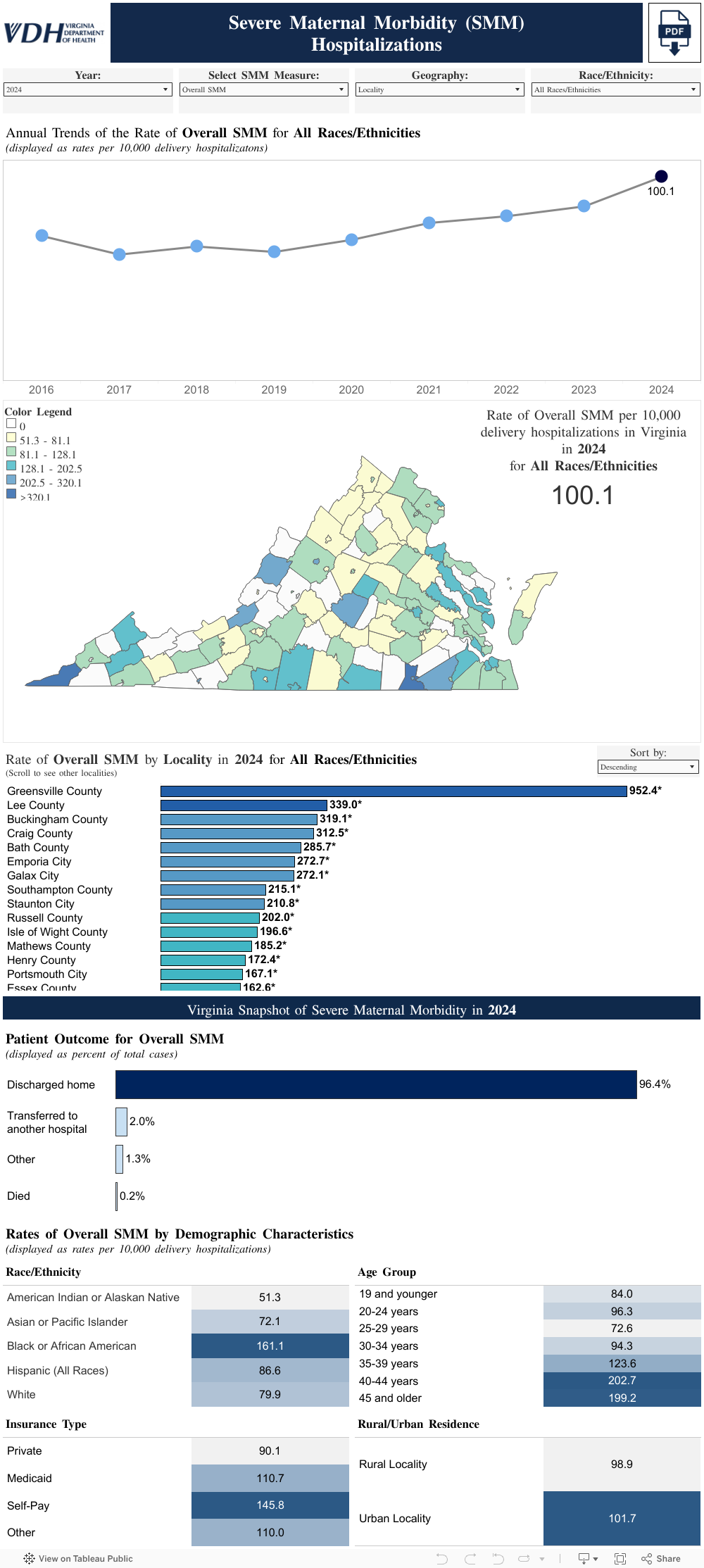
Hospitalization Data
Data Source: Inpatient hospitalization data are received from the Virginia Health Information (VHI) and maintained by the Virginia Department of Health (VDH). Data represent Virginia residents hospitalized during their delivery within Virginia. Virginia residents hospitalized out of state are not included. Patients discharged from an inpatient hospitalization more than once with the same diagnoses/conditions would be counted more than once in these statistics.
Severe Maternal Morbidity Definitions (numerator):
International Classification of Diseases, Tenth Revision (ICD-10) codes are used to identify SMM indicators. Definitions are based on the standardized definitions as published by Callaghan et al. Patients hospitalized with a SMM for any reason found in a diagnosis list of up to 20 available diagnoses are included. Blood transfusions were excluded as it may be underreported and may not reflect severe morbidity in the absence of other indicators. More information can be found on the CDC website.
Severe Morbidity Groupings:
- Heart Complications: Includes conditions such as acute myocardial infarction (heart attack), aneurysm, cardiac arrest, heart failure/arrest during surgery, acute heart failure, pulmonary edema, and procedures such as conversion of cardiac rhythm.
- Bleeding Complications: Includes conditions such as disseminated intravascular coagulation (blood clotting disorder), shock, hysterectomy
- Kidney Complications: Includes acute renal failure
- Breathing Complications: Includes conditions such as acute respiratory distress syndrome, and procedures such as temporary tracheostomy or ventilation
- Sepsis: Includes sepsis (severe infection)
- Other Medical Complications: Includes conditions such as puerperal cerebrovascular disorders (e.g., stroke), sickle cell disease with crisis
- Other Obstetric Complications: Includes conditions such as amniotic fluid embolism, eclampsia, severe anesthesia complications, air and thrombotic embolism
Delivery Hospitalization Definitions (denominator): International Classification of Diseases, Tenth Revision (ICD-10) diagnosis codes (Z37, O80, O82, O75.82), procedure codes (10D00Z0-10D00Z2, 10D07Z3-0D07Z8, 10E0XZZ), and diagnosis-related group codes (765-768, 774-775, 783-788, 796-798, 805-807) are used to identify delivery hospitalizations. Diagnosis and procedure codes for abortive, ectopic, and hydatidiform mole outcomes were excluded.
Ethnicity and Race: Only two ethnic classes are recognized in the data, Hispanic and Non-Hispanic, where the term Hispanic refers to persons who can trace their ancestry in some degree to the peoples of the Iberian Peninsula and the nations of Portugal and Spain. The term Latino is also used for Hispanic. Thus, a Hispanic person may be of any race. Presented race categories are limited to categories collected in the data. The race is reported as race of the hospitalized patient.
Other: Data are produced and processed from sources believed to be reliable and accurate at that point of time. No warranty expressed or implied is made regarding accuracy, adequacy, completeness, legality, reliability or usefulness of any information. Additionally, not all data elements are reported at the source. Please see Virginia Code §32.1 for information on data mandated to be conveyed by the patient and/or facility. This disclaimer applies to both isolated and aggregate uses of the data. Unknown/Unreported variables were removed from the tables. Counts lower than 20 and their associated rates should be interpreted with caution.